Industrial Cleaning Agent Waste
CN → US| HS Code | Tariff Rate | Origin | Destination | Doc |
|---|---|---|---|---|
| 3825610000 | 35.0% | CN | US | Official Doc |
| 3825690000 | 35.0% | CN | US | Official Doc |
| 2842909050 | 10.0% | CN | US | Official Doc |
| 2842909010 | 10.0% | CN | US | Official Doc |
| 3810905000 | 40.0% | CN | US | Official Doc |
Product Images
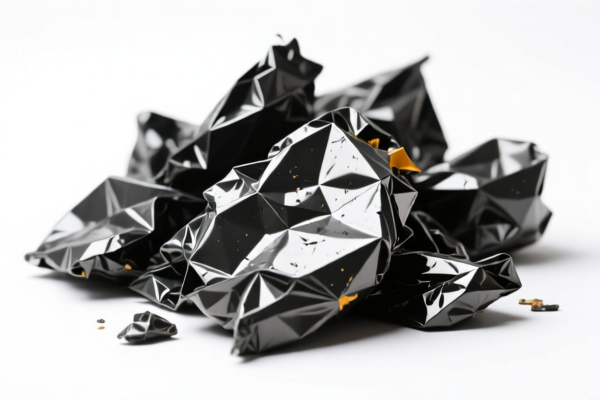
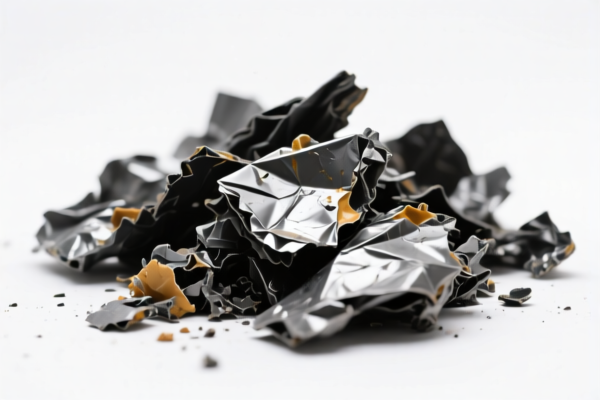
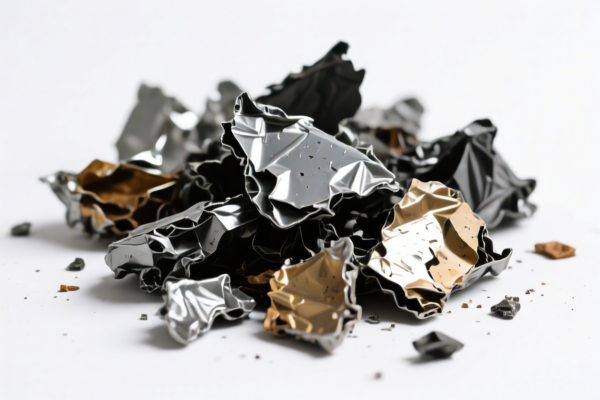
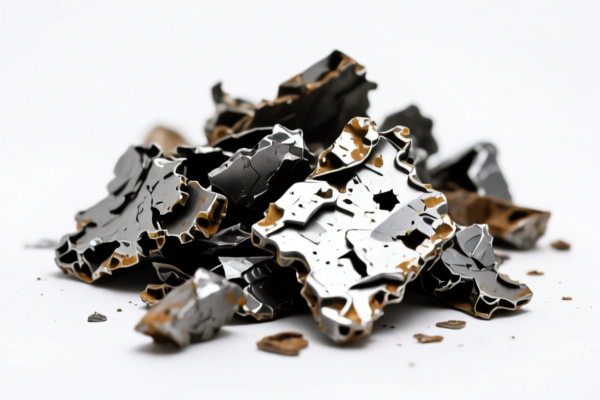
AI Analysis
🧪 Industrial Cleaning Agent Waste (Chemical Industrial Waste)
🌐 HS Code Reference & Customs Clearance Guide | 2026 Latest Tariff Analysis | Professional Clearance Strategy
📌 I. Product Definition & Classification: Understanding "Industrial Cleaning Agent Waste"
Industrial Cleaning Agent Waste refers to residual liquids or materials discarded during chemical or related industrial processes, specifically those involving the use of chemical cleaning agents. In international trade, these are categorized based on their chemical composition and origin:
Organic Waste: Primarily containing organic components, often resulting from solvent-based or organic acid cleaning processes.
Inorganic/Other Chemical Waste: Residues containing inorganic salts, acids, or other chemical compounds not specified elsewhere.
Dedicated Chemical Waste Categories: Specifically designated for chemical industry residues that do not fit into standard raw material categories.
⚠️ Key Distinction Point:
- If the waste is primarily organic in nature and originates from chemical industrial processes →归类 to 3825.61.00.00
- If the waste is other chemical industrial residue (not primarily organic) → 归类 to 3825.69.00.00
- If the waste falls under specific inorganic salt categories (e.g., selenates, tellurates, or other unspecified inorganic salts) → 归类 to 2842.90.90.50 / 2842.90.90.10
- If misclassified or broadly defined as auxiliary chemical preparations → 归类 to 3810.90.50.00
📦 II. HS Code Classification Details (2026 Latest Tariff Authority Reference)
| HS Code | Product Description | Application Scenario | Material Attribute |
|---|---|---|---|
3825.61.00.00 |
Waste and scrap from the chemical or allied industries, mainly containing organic components | Organic solvent waste, organic acid cleaning residues | ✅ Organic |
3825.69.00.00 |
Other waste and scrap from the chemical or allied industries | Inorganic cleaning waste, mixed chemical residues | ✅ Other Chemical |
2842.90.90.50 |
Other salts, including peroxy-salts, of inorganic acids or of peroxoacids (Other) | Inorganic salt-based cleaning waste, unspecified inorganic residuals | ✅ Inorganic Salt |
2842.90.90.10 |
Other salts, including peroxy-salts, of inorganic acids or of peroxoacids (Other, incl. selenates & tellurates) | Waste containing selenium/tellurium salts or similar inorganic compounds | ✅ Inorganic Salt (Special) |
3810.90.50.00 |
Other auxiliary preparations for metal surface treatment (e.g., pickling preparations) | Misclassified as "cleaning agent" rather than "waste"; auxiliary chemical preparations | ✅ Auxiliary Prep |
🔍 Important Reminder:
- All "Chemical Industry Waste" should ideally fall under 3825.xx.xx unless it clearly fits a specific chemical salt category (2842) or is misidentified as an auxiliary preparation (3810).
- Organic vs. Inorganic is the key determinant between3825.61and3825.69.
- If the waste contains specific inorganic salts (e.g., selenates), it may fall under2842, but this requires detailed chemical analysis.
- 3810 is typically for active cleaning preparations, not waste, so its inclusion here is due to potential misclassification logic in some systems.
💰 III. 2026 Latest Tariff Rate Breakdown (Including Surcharges, Policy Add-ons)
✅ Applicable Country: United States (US)
✅ Origin: China (CN)
✅ Effective Date: From November 10, 2025 (and subsequent imports)
🎯 1. 3825.61.00.00 —— Waste from Chemical Industries (Mainly Organic)
| Item | Content |
|---|---|
| Base Tariff | 0% (ad valorem) |
| USITC Additional Duty | +25% (under USITC Footnote 9903.88.01, Section 301) |
| IEEPA Additional Duty | +10% (for Chinese/HK products, effective Nov 10, 2025) |
| Total Tariff Rate | 35% |
| Tax Calculation | CIF Value × 35% |
| De Minimis Exemption Available? | ❌ No (deny_de_minimis) |
| Legal Basis Path | IEEPA:9903.01.25 → IEEPA:9903.01.24 → USITC:3825.61.00.00 → FOOTNOTE:9903.88.01 |
📌 Explanation:
- The "25% USITC Surcharge" is applied under Section 301 of the US Trade Act for Chinese-origin chemical wastes;
- The "10% IEEPA Surcharge" is imposed under the International Emergency Economic Powers Act;
- Total 35%, a high tariff, must be factored into cost planning!
🎯 2. 3825.69.00.00 —— Other Chemical Industry Waste
| Item | Content |
|---|---|
| Base Tariff | 0% |
| USITC Additional Duty | +25% |
| IEEPA Additional Duty | +10% |
| Total Tariff Rate | 35% |
| Tax Calculation | CIF × 35% |
| De Minimis Exemption Available? | ❌ No |
| Legal Basis Path | IEEPA:9901.25 → IEEPA:9903.01.24 → USITC:3825.69.00.00 → FOOTNOTE:9903.88.01 |
📌 Note:
- Same as above; applies to non-organic chemical industrial waste;
- Even if the waste is mixed or complex, as long as it originates from chemical industries and is not primarily organic, it falls here.
🎯 3. 2842.90.90.50 & 2842.90.90.10 —— Other Inorganic Salts (Waste Category Logic)
| Item | Content |
|---|---|
| Base Tariff | 0% (implicit, as base rate for these subheadings is typically 0% or low) |
| USITC Additional Duty | 0% |
| IEEPA Additional Duty | +10% |
| Total Tariff Rate | +10% |
| Tax Calculation | CIF × 10% |
| De Minimis Exemption Available? | ❌ No |
| Legal Basis Path | IEEPA:9903.01.24 → USITC:2842.90.90.50/10 |
📌 Note:
- These codes are applied when the waste is determined to be inorganic salts (e.g., from acid cleaning processes leaving behind metallic salts);
- The 10% IEEPA surcharge is the only additional duty;
- Significantly lower than 35%, but requires proof of chemical composition (inorganic salts vs. organic waste).
🎯 4. 3810.90.50.00 —— Auxiliary Preparations for Metal Surface Treatment (Misclassification Risk)
| Item | Content |
|---|---|
| Base Tariff | 5% |
| USITC Additional Duty | +25% |
| IEEPA Additional Duty | +10% |
| Total Tariff Rate | 40% |
| Tax Calculation | CIF × 40% |
| De Minimis Exemption Available? | ❌ No |
| Legal Basis Path | IEEPA:9903.01.25 → IEEPA:9903.01.24 → USITC:3810.90.50.00 → FOOTNOTE:9903.88.01 |
📌 Warning:
- This code is for active cleaning preparations, not waste;
- If declared incorrectly as "Industrial Cleaning Agent" instead of "Waste," the tariff jumps to 40%;
- High risk of audit and potential penalties for misdeclaration.
🛠️ IV. Customs Clearance Practical Advice (Avoid Pitfalls Guide)
✅ 1. Required Documentation Checklist (Missing items will cause delays)
| Document | Mandatory? | Notes |
|---|---|---|
| ✅ Chemical Composition Report | ✔️ | Must specify organic/inorganic content, pH, and key components |
| ✅ MSDS (Material Safety Data Sheet) | ✔️ | Required for hazardous waste classification |
| ✅ Waste Origin Declaration | ✔️ | Proof of source (chemical industrial process) |
| ✅ Commercial Invoice | ✔️ | Clearly state "Industrial Cleaning Agent Waste" and HS Code |
| ✅ Packing List | ✔️ | Detail packaging type and quantity |
| ✅ Environmental Compliance Certificate | ✔️ | For hazardous waste, proof of proper handling/disposal |
| ✅ Third-Party Lab Test Report | ✔️ | To confirm organic vs. inorganic composition |
✅ 2. Declaration Tips (Key Mnemonics)
🔥 "Waste vs. Prep, Organic vs. Inorganic, Code 3825 is King, 3810 is Trapping!"
| Scenario | Correct Declaration | Wrong Approach |
|---|---|---|
| Organic chemical waste | 3825.61.00.00 |
Declare as 3825.69 → 35% (same rate, but wrong description) |
| Inorganic chemical waste | 3825.69.00.00 |
Declare as 3810 → 40% (higher tariff, misclassification) |
| Inorganic salt residue | 2842.90.90.50 |
Declare as 3825 → 35% (higher than necessary if provable) |
| Active cleaning agent | 3810.90.50.00 |
Declare as waste → Penalty for fraud |
| Mixed waste with uncertain composition | 3825.69.00.00 |
Guessing 2842 without proof → Audit risk |
✅ 3. Special Circumstances Handling
| Situation | Handling Advice |
|---|---|
| Hazardous Waste | Must provide EPA/Environmental Agency permits; may require special handling fees |
| Reclaimed Solvent | If reclaimed for reuse, may qualify for different classification (check with customs) |
| Mixed Organic/Inorganic | Default to 3825.69.00.00 unless organic component >50% |
| OEM Chemical Waste | Provide client waste generation contract and processing agreement |
| Export from China | Ensure Chinese export licenses for chemical waste are obtained |
🌍 V. Global Market Clearance Comparison (2026 Latest)
| Country/Region | Recommended HS Code | Tariff | Certification | Notes |
|---|---|---|---|---|
| 🇺🇸 USA | 3825.61.00.00 / 3825.69.00.00 |
35% (CN) | EPA Manifest | 10% for 2842; 40% if misclassified |
| 🇨🇳 China | 3825.61.00.00 / 3825.69.00.00 |
5-10% | No extra surcharge | No Section 301 or IEEPA |
| 🇪🇺 EU | 3825.61.00.00 / 3825.69.00.00 |
0% (if non-hazardous) | REACH, SDS | No additional duties |
| 🇦🇺 Australia | 3825.61.00.00 |
5% | GHS Labels | No surcharges |
| 🇯🇵 Japan | 3825.61.00.00 |
0% | JIS Standards | No surcharges |
📌 Conclusion:
- USA is the most expensive market due to 35% tariffs (25% USITC + 10% IEEPA);
- China, EU, and Asia have significantly lower or zero tariffs for chemical waste;
- Misclassification as3810can increase costs to 40%, so precision is critical.
📌 VI. Common Errors & Pitfall Guide (Lessons Learned)
❌ Error 1: Declaring "Waste" as "Cleaning Agent"
👉 Consequence: Tariff jumps from 35% to 40% + potential fraud penalties
❌ Error 2: Failing to distinguish Organic vs. Inorganic
👉 Consequence: Incorrect code (3825.61 vs. 3825.69) → Minor rate difference but compliance risk
❌ Error 3: Not providing MSDS or Chemical Composition Report
👉 Consequence: Customs holds shipment for analysis → Delay + Storage Fees
❌ Error 4: Assuming all chemical waste falls under 3825.61
👉 Consequence: If primarily inorganic, may be challenged; better to use 3825.69 if uncertain
✅ Correct Practice:
"Industrial Chemical Waste, Organic Solvent Residue, pH 2-3, Primarily Ethanol/Acetone Mix, MSDS Attached, EPA Manifest Attached"
🎯 VII. Conclusion: Precision in Classification Saves Money!
🎯 Remember the Mantra:
🔹 "Waste is 3825, Prep is 3810 (Danger!)"
🔹 "Organic is .61, Inorganic is .69"
🔹 "Inorganic Salts are 2842 (Low Tariff!)"
🔹 "USA Tariff is 35%, Don't Get Caught!"
📌 Pro Tip:
If your chemical waste can be proven to contain specific inorganic salts (e.g., selenates, tellurates), declare under 2842 to save 25% in tariffs (10% vs. 35%).
Always request a pre-classification ruling from US Customs (CBP) to avoid penalties.
📣 Immediate Action:
📞 Contact a licensed customs broker + Provide MSDS + Apply for CBP Ruling
🚀 Ensure your chemical waste clears smoothly, minimizing costs and delays!
✨ Professional clearance starts with accurate classification!
💼 Every dollar saved in tariffs counts!
Customer Reviews
About HS Code Classification
The Harmonized System (HS) is an internationally standardized nomenclature developed by the World Customs Organization (WCO) to classify traded products. Over 200 countries use the HS system as the basis for customs tariffs, trade statistics, and import/export regulations.
Each HS code follows a hierarchical structure:
- Chapter (2 digits) — Broad category of goods (e.g., Chapter 84: Machinery and Mechanical Appliances)
- Heading (4 digits) — More specific grouping within the chapter
- Subheading (6 digits) — Internationally standardized breakdown, used by all WCO member countries
- National subdivisions (8-10 digits) — Country-specific extensions for further classification, such as US HTSUS 10-digit codes
Correct HS code classification is essential for smooth customs clearance, accurate duty payment, and compliance with trade regulations. Misclassification can lead to customs delays, overpayment of duties, or penalties.
When importing from CN to US, the applicable tariff rates may include:
- Most-Favored-Nation (MFN) rate — The standard duty rate applied to WTO members
- General rate — Applied to countries without trade agreements
- Trade remedy duties — Additional tariffs such as Section 301 (anti-dumping), Section 232 (national security), or countervailing duties
The information provided on this page is for reference purposes only. For official classification, please consult with your local customs authority or a licensed customs broker.