Industrial Coated Paper Roll
CN → US| HS Code | Tariff Rate | Origin | Destination | Doc |
|---|---|---|---|---|
| 4810131900 | 35.0% | CN | US | Official Doc |
| 4811512010 | 35.0% | CN | US | Official Doc |
| 4810132090 | 35.0% | CN | US | Official Doc |
| 4811516000 | 35.0% | CN | US | Official Doc |
| 4810221000 | 35.0% | CN | US | Official Doc |
Product Images
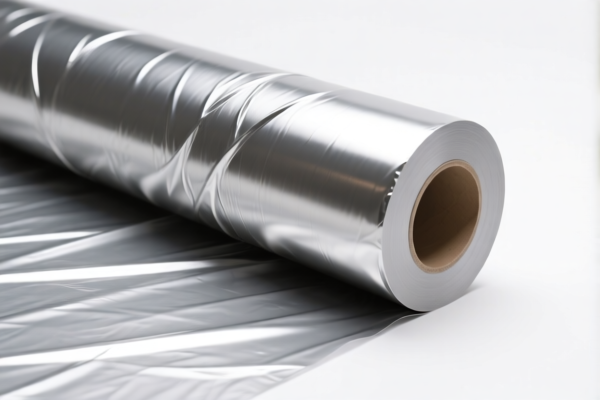
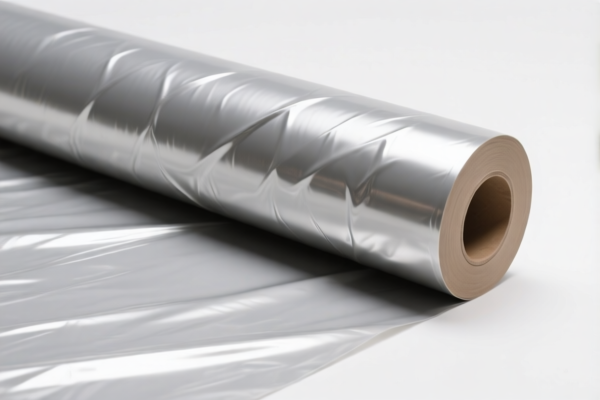

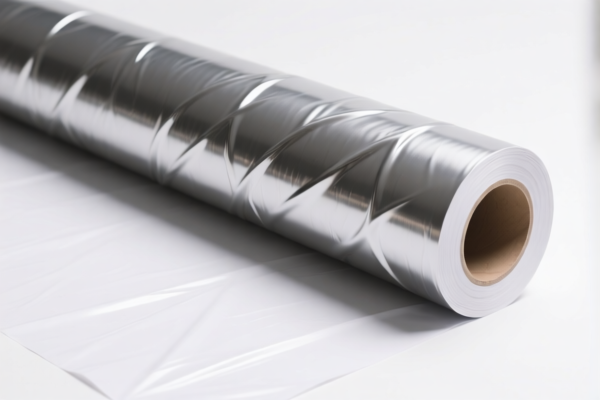
AI Analysis
📄 Industrial Coated Paper Rolls: The Ultimate HS Code & Tariff Survival Guide
🌐 HS Code Reference & Customs Clearance Guide | 2026 Latest Tariff Analysis | Professional Clearance Strategy
📌 I. Product Definition & Classification: Do You Really Understand "Industrial Coated Paper Rolls"?
Industrial Coated Paper Rolls are a specialized category of paper products where the base paper is coated with one or more layers of substances (such as clay, calcium carbonate, polymers, or other coatings) to enhance specific properties like printability, smoothness, moisture resistance, or barrier performance. Unlike standard printing paper, these are often used in industrial packaging, high-end labeling, flexible packaging substrates, and specialized graphic arts.
In international trade, the classification hinges on three key factors: 1. Material Composition: Is it chemical pulp, mechanical pulp, or recycled? Is the coating specific (e.g., clay vs. polymer)? 2. Form Factor: Is it in rolls (continuous) or cut sheets? (Our data specifies Rolls). 3. End Use: Is it for general printing/writing, or specific industrial applications like beverage container bases?
⚠️ Key Distinction Point:
- If the primary characteristic is general printing/writing (e.g., brochures, catalogs) → Often falls under 4810.13 or 4810.22.
- If the primary characteristic is specialized industrial use (e.g., containerboard base, specific barrier coating) → Often falls under 4811.51.
- Misclassification Risk: Declaring a specialized industrial roll as general printing paper can lead to severe penalties or delays, as the tariff treatments and regulatory requirements differ.
📦 II. HS Code Classification Details (2026 Latest Tariff Authority Comparison)
Based on the provided dataset, here are the 5 possible HS Codes for "Industrial Coated Paper Rolls," along with their specific justifications and tax implications.
| HS Code | Product Description | Justification for Classification | Key Characteristics |
|---|---|---|---|
4810.13.19.00 |
Coated Paper Rolls (General Printing/Writing) | Matches material feature "Coated" and form "Rolls". Primary use inferred for general printing or writing. | General purpose, high-quality print surface. |
4811.51.20.10 |
Coated Paper Rolls (Beverage Container Base) | Form is "Rolls", material is "Coated Paper". Use inferred as substrate for beverage containers. | Specific industrial application: packaging/barrier. |
4810.13.20.90 |
Coated Paper Rolls (General Printing/Writing) | Material matches "Coated Paper", form matches "Rolls". Falls under this sub-heading based on other principles. | General purpose, alternative sub-heading for coated paper. |
4811.51.60.00 |
Coated Paper Rolls (General Coated Paper) | Coating and paper form are consistent, no obvious conflict. Allows reasonable inference for general coated paper. | General industrial coated paper, no specific end-use specified. |
4810.22.10.00 |
Mechanical Pulp Coated Paper Rolls | Form is "Rolls", material is "Mechanical Pulp", use is "Coated Paper". | Specific raw material: mechanical pulp (lower quality/cheaper than chemical). |
🔍 Critical Note:
- All 5 codes listed above carry the same total tax rate of 35%.
- However, the legal justification differs. Customs officials will scrutinize the description of goods and supporting documents to ensure the HS Code matches the actual product.
- Misdeclaration Risk: If you declare4810.13.19.00(general printing) but the product is actually4811.51.20.10(beverage container base), it may be rejected if the usage is evident from the marketing materials or invoice.
💰 III. 2026 Latest Tariff Rate Breakdown (Including Surtaxes & Policy Add-ons)
✅ Applicable Country: United States (US)
✅ Country of Origin: China (CN)
✅ Effective Date: November 10, 2025 (and subsequent imports)
🎯 Uniform Tax Structure for All Listed HS Codes
| Item | Details |
|---|---|
| Base Duty Rate | 0.0% (Ad Valorem) Standard MFN rate for most paper products from China is often 0%. |
| Section 301 Surtax | +25.0% Imposed under US Trade Law Section 301 on Chinese goods. |
| Section 122 Surtax | +10.0% Imposed under Section 122 (often related to specific trade remedies or emergency measures). |
| Total Tax Rate | 35.0% (0% + 25% + 10%) |
| Tax Calculation | CIF Value × 35% Calculated on Cost, Insurance, and Freight. |
| De Minimis Exemption | ❌ NOT APPLICABLE Goods under 301/122 surcharges are generally excluded from $800 de minimis relief. |
| Legal Basis Path | Section 301: Footnote 9903.88.01 → Section 122: Specific Order → USITC: [HS Code] |
📌 Interpretation:
- The 25% Section 301 tax is the most significant component, targeting Chinese manufacturing.
- The 10% Section 122 tax adds an additional layer of cost, specific to certain categories of goods.
- Total 35%: This is a high-cost scenario for importers. You must factor this into your landed cost calculation immediately.
- No Exemptions: Unlike some other categories, these paper rolls do not qualify for de minimis (de minimis exemption is denied for goods subject to these surtaxes).
🛠️ IV. Customs Clearance Practical Advice (Battle-Tested Pitfall Avoidance Guide)
✅ 1. Essential Documentation Checklist (Missing Items = Delays)
| Document | Must Provide | Explanation |
|---|---|---|
| ✅ Product Specification Sheet | ✔️ | Must detail: Base paper type (chemical/mechanical), coating type (clay/polymer), gsm, width, length. |
| ✅ Commercial Invoice | ✔️ | Must clearly state: "Industrial Coated Paper Rolls", HS Code, Country of Origin (China), Unit Price. |
| ✅ Packing List | ✔️ | Details net/gross weight, number of rolls, palletization. |
| ✅ Certificate of Origin (CO) | ✔️ | Crucial for proving Chinese origin (triggers surtaxes). |
| ✅ Usage Declaration | ✔️ | Explicitly state the end-use (e.g., "For printing brochures" vs. "For beverage container bases"). |
| ✅ Third-Party Test Report | ✔️ | Optional but recommended: Proof of coating composition if challenged. |
✅ 2. Declaration Best Practices (Key Mantra)
🔥 "Match Material, Form, and Use! Don't Guess!"
| Scenario | Correct Declaration | Wrong Practice | Consequence |
|---|---|---|---|
| General Printing Paper | 4810.13.19.00 or 4810.13.20.90 |
Using 4811.51.20.10 |
Minor inconsistency, but may trigger review if use is unclear. |
| Beverage Container Base | 4811.51.20.10 |
Using 4810.13.19.00 |
High Risk: Customs may see "beverage" in marketing and reject the "general printing" claim. |
| Mechanical Pulp | 4810.22.10.00 |
Using 4810.13.x.x |
High Risk: Material mismatch. Mechanical pulp is cheaper; misdeclaring as chemical pulp is fraud. |
| General Coated Paper | 4811.51.60.00 |
Vague description "Paper Rolls" | Delays: Customs will ask for clarification, leading to storage fees. |
✅ 3. Special Handling Tips
| Situation | Recommendation |
|---|---|
| OEM Custom Coating | Provide a detailed specification sheet showing the coating layer thickness and composition. |
| Mixed Container | If shipping with other goods, ensure paper rolls are clearly separated and labeled to avoid confusion with other HS Codes. |
| Origin Change | If the paper is made in Vietnam or Malaysia, DO NOT declare China as origin. This triggers fraud penalties. |
| Price Valuation | Ensure the declared value reflects the true CIF value. Under-declaring to save on the 35% tax is a red flag. |
🌍 V. Global Market Clearance Comparison (2026 Update)
| Country/Region | Recommended HS Code | Estimated Duty (China Origin) | Key Certifications | Notes |
|---|---|---|---|---|
| 🇺🇸 USA | 4810.13.19.00 / 4811.51.20.10 etc. |
35% (Base 0% + 25% 301 + 10% 122) | None specific for paper | Highest cost due to surtaxes. |
| 🇨🇳 China | 4810.13.19.00 |
~5-13% | None | Import duty applies. |
| 🇪🇺 EU | 4810.13.19.00 |
6.5% | CE (if applicable), REACH | No Section 301 equivalent. |
| 🇦🇺 Australia | 4810.13.19.00 |
5% | None | AUKUS trade agreements may offer benefits. |
| 🇯🇵 Japan | 4810.13.19.00 |
6-8% | JIS | Moderate duty. |
📌 Conclusion:
- The USA is the most challenging market for Chinese industrial coated paper rolls due to the 35% total tariff.
- EU, Japan, and Australia offer significantly lower duty rates, but may have stricter environmental or chemical regulations (REACH, etc.).
- Strategy: If your primary market is the US, consider cost optimization or supply chain diversification to mitigate the 35% burden.
📌 VI. Common Errors & Pitfall Guide (Blood & Tears Lessons)
❌ Error 1: Declaring "Paper Rolls" without specifying "Coated"
👉 Consequence: Customs may classify under a different, potentially higher-tax category or reject the declaration for lack of detail.
❌ Error 2: Using 4811.51.20.10 for general printing paper
👉 Consequence: While the tax rate is the same (35%), it may trigger an audit on "industrial use" documentation, causing delays.
❌ Error 3: Ignoring the 10% Section 122 Tax
👉 Consequence: Under-budgeting. The 25% Section 301 tax is well-known, but the 10% Section 122 tax is often forgotten, leading to cash flow issues.
❌ Error 4: Claiming De Minimis Exemption for < $800 shipments
👉 Consequence: Severe Penalty. Goods subject to 301/122 surtaxes cannot use de minimis. All shipments are subject to the 35% tax.
✅ Correct Practice:
"Industrial Coated Paper Rolls, Clay-Coated, Mechanical Pulp Base, 120gsm, 1000mm Width, For General Printing, Origin: China, HS: 4810.13.19.00"
🎯 VII. Conclusion: Professional Declaration, Save Time, Reduce Costs!
🎯 Remember the Mantra:
🔹 "Coated Paper, Rolls Form, 35% Tax is the Norm."
🔹 "HS Code Must Match Material, Form, and Use."
🔹 "De Minimis is Denied, Plan for Landed Cost!"
📌 Pro Tip:
If your product is not for general printing but has a specific industrial function (e.g., thermal transfer backing, label liner), ensure you select the HS Code that best reflects that specific function (e.g., 4811.51.x.x). This may help in future legal challenges or if exemptions become available for specific industrial uses.
📣 Immediate Action Required:
📞 Contact a Licensed Customs Broker to review your specific product specs.
📄 Prepare Detailed Product Specifications (Material, Coating, Form).
💰 Budget for 35% Tax in your pricing model.
🚀 Ensure Smooth Clearance, Avoid Delays, Protect Margins!
✨ Professional Clearance Starts with Accurate Classification!
💼 Every Penny Saved on Misclassification is Profit Lost in Penalties!
Customer Reviews
About HS Code Classification
The Harmonized System (HS) is an internationally standardized nomenclature developed by the World Customs Organization (WCO) to classify traded products. Over 200 countries use the HS system as the basis for customs tariffs, trade statistics, and import/export regulations.
Each HS code follows a hierarchical structure:
- Chapter (2 digits) — Broad category of goods (e.g., Chapter 84: Machinery and Mechanical Appliances)
- Heading (4 digits) — More specific grouping within the chapter
- Subheading (6 digits) — Internationally standardized breakdown, used by all WCO member countries
- National subdivisions (8-10 digits) — Country-specific extensions for further classification, such as US HTSUS 10-digit codes
Correct HS code classification is essential for smooth customs clearance, accurate duty payment, and compliance with trade regulations. Misclassification can lead to customs delays, overpayment of duties, or penalties.
When importing from CN to US, the applicable tariff rates may include:
- Most-Favored-Nation (MFN) rate — The standard duty rate applied to WTO members
- General rate — Applied to countries without trade agreements
- Trade remedy duties — Additional tariffs such as Section 301 (anti-dumping), Section 232 (national security), or countervailing duties
The information provided on this page is for reference purposes only. For official classification, please consult with your local customs authority or a licensed customs broker.