Industrial Composite Panel
CN → US| HS Code | Tariff Rate | Origin | Destination | Doc |
|---|---|---|---|---|
| 4823908680 | 35.0% | CN | US | Official Doc |
| 4811512020 | 35.0% | CN | US | Official Doc |
| 4811512040 | 35.0% | CN | US | Official Doc |
| 4807009200 | 35.0% | CN | US | Official Doc |
| 4807009400 | 35.0% | CN | US | Official Doc |
Product Images

AI Analysis
🖥️ Industrial Composite Panel (Industrial Use)
🌐 HS Code Reference & Customs Clearance Guide | 2026 Latest Tariff Analysis | Professional Clearance Strategy
📌 I. Product Definition & Classification: Do You Really Understand "Industrial Composite Paperboard"?
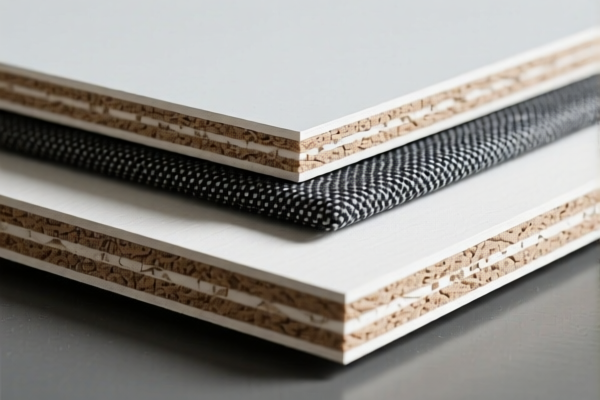
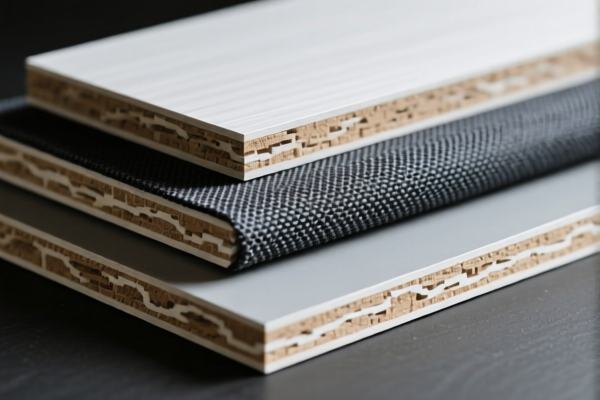
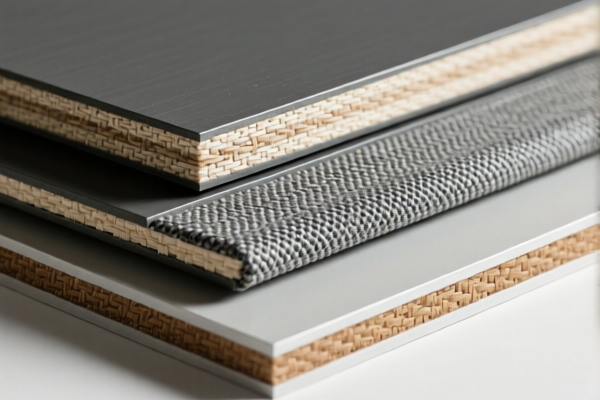
Industrial Composite Panels (in the context of this data) refer to paper-based or cardboard-based products used in industrial applications. They are not finished packaging boxes but rather intermediate materials, liners, or specialized paper products. In international trade, classification depends heavily on the material composition (pure cardboard vs. composite layers) and end-use (industrial vs. packaging).
⚠️ Key Classification Distinction:
- If the product is a composite (multiple layers/laminates) → Classify under Chapter 48.07 (Composite Paper/Board).
- If the product is a single-layer treated/coated cardboard → Classify under Chapter 48.11 (Treated/Coated Paper/Board).
- If the product is a generic industrial paper product not fitting specific categories → Classify under Chapter 48.23 (Other Paper Articles).
📦 II. HS Code Classification Details (2026 Latest Tariff Authority Mapping)
| HS Code | Product Description | Matching Logic from Data | Application Scenario |
|---|---|---|---|
4823.90.86.80 |
Other articles of paper, paperboard, cardboard, and other materials of subheadings 48.01 to 48.05: Other: Other | Material: Cardboard matches "paper products"; Form: Industrial use fits "other paper products" category. | Generic industrial cardboard parts, separators, or specialized industrial paper items. |
4811.51.20.20 |
Paper, paperboard, cardboard, sheets and strips, whether or not printed, surface-coated, covered, impregnated, etc.: Self-adhesive paper, paperboard, cardboard, and other articles of paper, paperboard, cardboard: Self-adhesive paper, paperboard, cardboard: Other | Basis: "Cardboard" matches "Cardboard/Raw Paper"; "Industrial Use" fits form/usage category. | Industrial cardboard with specific surface treatments or self-adhesive properties for industrial use. |
4811.51.20.40 |
Paper, paperboard, cardboard, sheets and strips, whether or not printed, surface-coated, covered, impregnated, etc.: Self-adhesive paper, paperboard, cardboard, and other articles of paper, paperboard, cardboard: Self-adhesive paper, paperboard, cardboard: Other | Point: Material is cardboard (fits coated/covered cardboard attributes); Industrial use fits "original paper for packaging" category. | Coated or covered cardboard sheets used as industrial raw materials or packaging liners. |
4807.00.92.00 |
Composite paper and paperboard (whether or not surface-coated or printed), without facing: Other: Other | Name: "Composite Paperboard" belongs to "Composite Paper or Cardboard"; matches material requirements. | Genuine composite cardboard made by bonding multiple layers, used industrially. |
4807.00.94.00 |
Composite paper and paperboard (whether or not surface-coated or printed), without facing: Other: Other | Name: "Composite Paperboard" matches "Composite Paper and Board" material; no conflict with form characteristics. | High-grade composite cardboard sheets without facing, suitable for industrial structural uses. |
🔍 Key Reminder:
- Composite (multi-layer bonding) ≠ Coated/Impregnated (surface treatment of single layer).
-4807codes apply to composite structures.
-4811codes apply to treated/coated single-layer materials.
-4823is a catch-all for other industrial paper articles not specified elsewhere.
💰 III. 2026 Latest Tariff Rate Breakdown (Including Surcharges & Policy Additions)
✅ Applicable Country: United States (US)
✅ Origin: China (CN)
✅ Effective Time: 2025 November 10 onwards (including subsequent imports)
🎯 1. 4823.90.86.80 — Other Paper Articles (Industrial Use)
| Item | Content |
|---|---|
| Base Tariff | 0% (ad valorem) |
| USITC Surcharge | +25% (under USITC Footnote for Section 301) |
| Section 122 Tariff | +10% (Specific trade remedy measure) |
| Total Tariff | 35.0% |
| Tax Calculation | CIF Value × 35% |
| De Minimis Exemption | ❌ Not Eligible (High tariff rates exceed de minimis thresholds) |
| Legal Basis Path | Section 301: 0100 → Section 122: 0100 → USITC:4823.90.86.80 |
📌 Explanation:
- "USITC Surcharge 25%" comes from Section 301 trade sanctions on Chinese goods;
- "Section 122 Tariff 10%" is a specific countermeasure;
- Total 35% is a high tariff rate, requiring careful cost assessment before shipment.
🎯 2. 4811.51.20.20 — Self-Adhesive/Treated Cardboard (Industrial)
| Item | Content |
|---|---|
| Base Tariff | 0% |
| USITC Surcharge | +25% |
| Section 122 Tariff | +10% |
| Total Tariff | 35.0% |
| Tax Calculation | CIF × 35% |
| De Minimis Exemption | ❌ Not Eligible |
| Legal Basis Path | Section 301: 0100 → Section 122: 0100 → USITC:4811.51.20.20 |
📌 Note:
- Same tariff structure as above;
- Applies to cardboard with surface treatments, coatings, or self-adhesive properties for industrial use.
🎯 3. 4811.51.20.40 — Coated/Covered Cardboard (Packaging/Industrial)
| Item | Content |
|---|---|
| Base Tariff | 0% |
| USITC Surcharge | +25% |
| Section 122 Tariff | +10% |
| Total Tariff | 35.0% |
| Tax Calculation | CIF × 35% |
| De Minimis Exemption | ❌ Not Eligible |
| Legal Basis Path | Section 301: 0100 → Section 122: 0100 → USITC:4811.51.20.40 |
📌 Note:
- Applies to coated or covered cardboard sheets used as raw materials for packaging or industrial lining.
🎯 4. 4807.00.92.00 — Composite Paperboard (Other)
| Item | Content |
|---|---|
| Base Tariff | 0% |
| USITC Surcharge | +25% |
| Section 122 Tariff | +10% |
| Total Tariff | 35.0% |
| Tax Calculation | CIF × 35% |
| De Minimis Exemption | ❌ Not Eligible |
| Legal Basis Path | Section 301: 0100 → Section 122: 0100 → USITC:4807.00.92.00 |
📌 Note:
- Applies to composite cardboard (multiple layers bonded together).
- Crucial to provide lamination process details if questioned.
🎯 5. 4807.00.94.00 — Composite Paperboard (Other)
| Item | Content |
|---|---|
| Base Tariff | 0% |
| USITC Surcharge | +25% |
| Section 122 Tariff | +10% |
| Total Tariff | 35.0% |
| Tax Calculation | CIF × 35% |
| De Minimis Exemption | ❌ Not Eligible |
| Legal Basis Path | Section 301: 0100 → Section 122: 0100 → USITC:4807.00.94.00 |
📌 Note:
- Similar to92.00, but different sub-category under composite paperboard.
- Ensure documentation reflects composite structure (layer bonding).
🛠️ IV. Customs Clearance Practical Advice (Real-World Pitfall Avoidance Guide)
✅ 1. Required Documentation Checklist (Mandatory)
| Document | Mandatory? | Description |
|---|---|---|
| ✅ Product Specification Sheet | ✔️ | Dimensions, material layers, coating type, weight per square meter |
| ✅ Material Composition Report | ✔️ | Proof of "composite" vs. "coated" (e.g., lamination process vs. surface treatment) |
| ✅ Product Photos (Clear) | ✔️ | Show cross-section (to verify composite layers) and surface finish |
| ✅ Commercial Invoice | ✔️ | Clearly state "Industrial Composite Paperboard" or "Coated Cardboard" |
| ✅ Packing List | ✔️ | Detail item weights, dimensions, and packaging type |
| ✅ Certificate of Origin (CO) | ✔️ | Required for tariff application (China origin triggers 35%) |
✅ 2. Declaration Tips (Key Mnemonic)
🔥 "Composite vs. Coated, Layer vs. Surface, Name Precision Saves Money!"
| Scenario | Correct Declaration | Incorrect Practice |
|---|---|---|
| Multi-layer bonded cardboard | 4807.xxxx.xxxx.xx (Composite) |
Misdeclaring as "Coated Paper" → Risk of reclassification |
| Single-layer treated/coated cardboard | 4811.51.20.xx (Coated/Treated) |
Misdeclaring as "Composite" → Unjustified complexity |
| Generic industrial paper parts | 4823.90.86.80 (Other) |
Misdeclaring as "Packaging" → Wrong duty treatment |
| Self-adhesive industrial board | 4811.51.20.20 |
Omitting "Self-Adhesive" → Potential audit flag |
✅ 3. Special Handling Cases
| Scenario | Handling Advice |
|---|---|
| OEM Custom Composite Board | Provide client order + technical drawings showing layer structure |
| Mixed Shipments (Coated + Composite) | Declare separately by HS Code to avoid classification errors |
| Cardboard with Metallic Coating | Verify if it qualifies as "Composite" (layering) vs. "Coated" (surface) |
| Industrial Liners for Machinery | Provide end-use statement: "For use as industrial separator/linner" |
🌍 V. Global Market Clearance Comparison (2026 Latest)
| Country/Region | Recommended HS Code | Tariff (China Origin) | Certification Requirements | Notes |
|---|---|---|---|---|
| 🇺🇸 United States | 4807.00.94.00 or 4811.51.20.40 |
35% (25% Section 301 + 10% Section 122) | None typically required | High tariff due to trade policies |
| 🇨🇳 China | 4807.00.92.00 |
0%~5% (depending on specific type) | None | Low tariff for domestic use |
| 🇪🇺 European Union | 4807.00.94.00 |
6.5% (standard MFN) | CE (if applicable) | No Section 301 surcharge |
| 🇦🇺 Australia | 4807.00.94.00 |
5% | RCM (if electrical components included) | No special surcharges |
| 🇯🇵 Japan | 4807.00.94.00 |
0%~8% | JIS Standards (if specified) | Low tariff for paper products |
📌 Conclusion:
- USA imposes 35% tariffs on these paper/cardboard products from China due to Section 301 and Section 122 measures.
- EU, Japan, Australia have significantly lower tariffs (0%~8%).
- Consider supply chain diversification if shipping to the US is cost-prohibitive.
📌 VI. Common Mistakes & Pitfall Guide (Blood & Tears Lessons)
❌ Mistake 1: Calling "Composite Paperboard" a simple "Cardboard Sheet"
👉 Consequence: Customs may reclassify to 4807 or 4811 based on material tests → Delays + Additional Duties.
❌ Mistake 2: Not declaring "Industrial Use" explicitly
👉 Consequence: Misclassification as "Packaging Material" → Different HS Code → Potential Penalties.
❌ Mistake 3: Omitting Layer Structure Details
👉 Consequence: Inability to distinguish between 4807 (Composite) and 4811 (Coated) → Audit Risk.
❌ Mistake 4: Assuming De Minimis Exemption Applies
👉 Consequence: With 35% tariff, low-value shipments still incur duties → Unexpected Costs.
✅ Correct Practice:
“Industrial Composite Paperboard, 3-Layer Kraft Liner with PE Coating, 1200mm x 1200mm, for Industrial Packaging Separators, Made in China.”
🎯 VII. Conclusion: Precision Classification Saves Costs!
🎯 Remember the Mnemonic:
🔹 "Composite = 4807, Coated = 4811, Other = 4823, All 35% in USA!"
🔹 "Document Layers, Declare Use, Avoid 35% Surprise!"
📌 Pro Tip:
- If your product is shipped from Vietnam, Mexico, or Malaysia, you may avoid Section 301 surcharges.
- Apply for a Pre-Ruling (Advance Ruling) from US CBP to confirm HS Code classification.
- Keep material test reports ready to prove "composite" vs. "coated" structure.
📣 Immediate Action:
📞 Contact a licensed customs broker + Provide technical datasheets + Request Pre-Ruling
🚀 Ensure smooth clearance, minimize duty costs, and maximize profit margins!
✨ Professional clearance starts with precise classification!
💼 Every cent of duty matters—calculate accurately!
Customer Reviews
About HS Code Classification
The Harmonized System (HS) is an internationally standardized nomenclature developed by the World Customs Organization (WCO) to classify traded products. Over 200 countries use the HS system as the basis for customs tariffs, trade statistics, and import/export regulations.
Each HS code follows a hierarchical structure:
- Chapter (2 digits) — Broad category of goods (e.g., Chapter 84: Machinery and Mechanical Appliances)
- Heading (4 digits) — More specific grouping within the chapter
- Subheading (6 digits) — Internationally standardized breakdown, used by all WCO member countries
- National subdivisions (8-10 digits) — Country-specific extensions for further classification, such as US HTSUS 10-digit codes
Correct HS code classification is essential for smooth customs clearance, accurate duty payment, and compliance with trade regulations. Misclassification can lead to customs delays, overpayment of duties, or penalties.
When importing from CN to US, the applicable tariff rates may include:
- Most-Favored-Nation (MFN) rate — The standard duty rate applied to WTO members
- General rate — Applied to countries without trade agreements
- Trade remedy duties — Additional tariffs such as Section 301 (anti-dumping), Section 232 (national security), or countervailing duties
The information provided on this page is for reference purposes only. For official classification, please consult with your local customs authority or a licensed customs broker.