Industrial Conveyor Belt Textile Reinforced
CN → US| HS Code | Tariff Rate | Origin | Destination | Doc |
|---|---|---|---|---|
| 5910009000 | 37.6% | CN | US | Official Doc |
| 5910001070 | 39.0% | CN | US | Official Doc |
| 8431390010 | 35.0% | CN | US | Official Doc |
| 4010354500 | 41.4% | CN | US | Official Doc |
| 5910001020 | 39.0% | CN | US | Official Doc |
Product Images
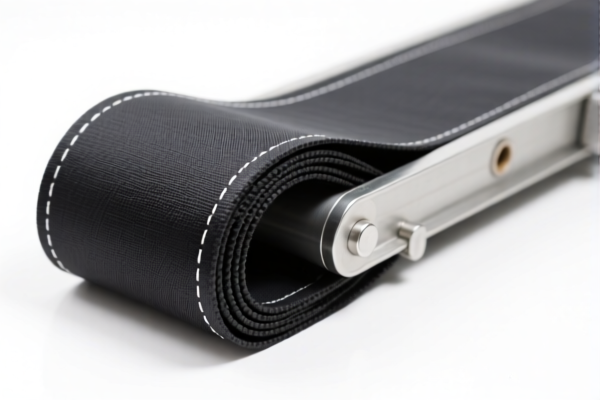
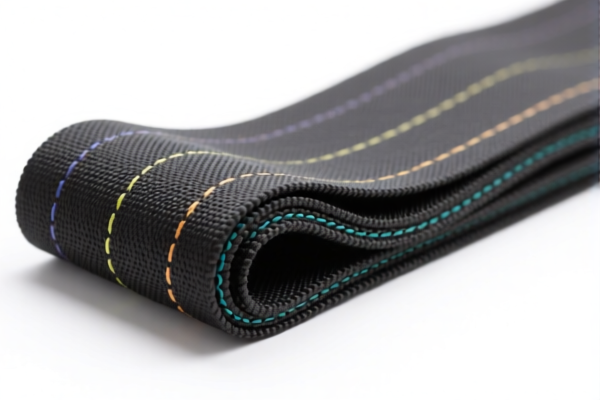


AI Analysis
🏭 Industrial Conveyor Belt – Textile Reinforced
🌐 HS Code Reference & Customs Clearance Guide | 2026 Latest Tariff Analysis | Strategic Compliance Strategy
📌 I. Product Definition & Classification: Do You Really Understand "Textile Reinforced Conveyor Belts"?
Industrial conveyor belts with textile reinforcement are critical components in material handling systems, widely used in mining, logistics, manufacturing, and bulk agriculture. In international trade, these products are not unified under a single HS Code. Their classification depends strictly on specific usage, structure, and material composition.
Misclassification leads to severe penalties, delayed clearance, or excessive duties. Below is the precise breakdown based on the latest 2026 tariff data.
⚠️ Key Distinction Points:
- If used for general conveying → Look at 5910 series.
- If used for power transmission (e.g., synchronous drives) → Look at 5910 or 4010 series.
- If declared as a spare part for machinery → Look at 8431 series.
- Material matters: "Textile reinforced" usually implies polyester, nylon, cotton, or aramid cores.
📦 II. HS Code Classification Details (2026 Latest Tariff Authoritative Comparison)
| HS Code | Product Description | Application Scenario | Tax Rate (China Origin → US) |
|---|---|---|---|
5910.00.90.00 |
Textile Reinforced Conveyor Belt | General purpose conveying, matching textile material & belt function | 37.6% |
5910.00.10.70 |
Textile Reinforced Conveyor Belt | Transmission/conveying specific use, textile material | 39.0% |
8431.39.00.10 |
Textile Reinforced Conveyor Belt | Spare part for conveyors, industrial component | 35.0% |
4010.35.45.00 |
Textile Reinforced Synchronous Belt | Endless synchronous belt form, textile material combination | 41.4% |
5910.00.10.20 |
Textile Reinforced Synchronous Belt | Synchronous belt use, synthetic fiber material | 39.0% |
🔍 Important Note:
- Do not confuse "Conveyor Belt" (5910) with "Transmission Belt" (4010or5910.10).
-8431.39.00.10is a strategic entry point: classified as a "part of machinery," it has a 0% base duty, resulting in the lowest total tax (35%). However, it requires proof that the belt is sold strictly as a replacement part for existing machinery, not as a standalone general-purpose belt.
-4010.35.45.00applies if the belt is an endless (joined) synchronous belt with textile reinforcement, often used in precision machinery. This has the highest tax (41.4%).
💰 III. 2026 Latest Tariff Rate Details (Including Surcharges & Policy Add-ons)
✅ Applicable Country: United States (US)
✅ Origin: China (CN)
✅ Effective Date: November 10, 2025 onwards
🎯 1. 5910.00.90.00 —— Textile Reinforced Conveyor Belt (General Use)
| Item | Content |
|---|---|
| Base Duty | 2.6% (ad valorem) |
| Section 301 Surcharge | +25.0% |
| Section 122 Surcharge | +10.0% |
| Total Tax Rate | 37.6% |
| Tax Calculation | CIF Value × 37.6% |
| De Minimis Exemption | ❌ Not Available (deny_de_minimis) |
| Legal Basis Path | Section 122: 9903.04.12 → Section 301: 9903.88.03 → USITC: 5910.00.90.00 |
📌 Explanation:
- This is the standard code for general textile-reinforced conveyor belts.
- The 25% Section 301 tariff is the main driver, plus 10% Section 122 for certain Chinese imports.
- Total burden: 37.6%. High cost for bulk imports.
🎯 2. 5910.00.10.70 —— Textile Reinforced Conveyor Belt (Transmission/Conveying Specific)
| Item | Content |
|---|---|
| Base Duty | 4.0% |
| Section 301 Surcharge | +25.0% |
| Section 122 Surcharge | +10.0% |
| Total Tax Rate | 39.0% |
| Tax Calculation | CIF Value × 39.0% |
| De Minimis Exemption | ❌ Not Available |
| Legal Basis Path | Section 122: 9903.04.11 → Section 301: 9903.88.03 → USITC: 5910.00.10.70 |
📌 Note:
- Slightly higher base duty (4.0%) than the general category.
- Used for belts specifically designed for both transmission and conveying functions.
🎯 3. 8431.39.00.10 —— Textile Reinforced Conveyor Belt (Spare Part for Machinery)
| Item | Content |
|---|---|
| Base Duty | 0.0% |
| Section 301 Surcharge | +25.0% |
| Section 122 Surcharge | +10.0% |
| Total Tax Rate | 35.0% |
| Tax Calculation | CIF Value × 35.0% |
| De Minimis Exemption | ❌ Not Available |
| Legal Basis Path | Section 122: 9903.04.09 → Section 301: 9903.88.03 → USITC: 8431.39.00.10 |
📌 Optimization Tip:
- This is the lowest tax rate (35%).
- Condition: You must prove the product is a "part" of a machine (e.g., conveyor system) and not a general consumer good.
- Risk: Customs may challenge this if the belt is sold separately without context of a larger machine. Provide installation manuals, compatibility lists, or OEM contracts to support this classification.
🎯 4. 4010.35.45.00 —— Textile Reinforced Synchronous Belt (Endless)
| Item | Content |
|---|---|
| Base Duty | 6.4% |
| Section 301 Surcharge | +25.0% |
| Section 122 Surcharge | +10.0% |
| Total Tax Rate | 41.4% |
| Tax Calculation | CIF Value × 41.4% |
| De Minimis Exemption | ❌ Not Available |
| Legal Basis Path | Section 122: 9903.04.07 → Section 301: 9903.88.03 → USITC: 4010.35.45.00 |
📌 Warning:
- This is the highest tax rate (41.4%).
- Applies only to endless synchronous belts (joined at ends) with textile reinforcement.
- If your product is a continuous roll or cut-to-length belt, do NOT use this code. Misclassification here leads to overpayment or rejection.
🎯 5. 5910.00.10.20 —— Textile Reinforced Synchronous Belt (Synthetic Fiber)
| Item | Content |
|---|---|
| Base Duty | 4.0% |
| Section 301 Surcharge | +25.0% |
| Section 122 Surcharge | +10.0% |
| Total Tax Rate | 39.0% |
| Tax Calculation | CIF Value × 39.0% |
| De Minimis Exemption | ❌ Not Available |
| Legal Basis Path | Section 122: 9903.04.11 → Section 301: 9903.88.03 → USITC: 5910.00.10.20 |
📌 Note:
- Specifically for synchronous belts made of artificial/synthetic fibers (e.g., polyester, nylon).
- Not for cotton or natural fiber belts.
🛠️ IV. Customs Clearance Practical Advice (Battle-Tested Pitfall Avoidance Guide)
✅ 1. Preparation Checklist (All Mandatory)
| Document | Required | Description |
|---|---|---|
| ✅ Product Specification Sheet | ✔️ | Must specify: Reinforcement material (Polyester/Nylon/Cotton), Tensile strength, Width, Thickness, Use Case |
| ✅ Technical Diagram/Structure | ✔️ | Show layers: Cover fabric, cord reinforcement, bottom fabric |
| ✅ Product Photos (Labeled) | ✔️ | Clear view of end joints (if endless), surface texture, and marking |
| ✅ Commercial Invoice | ✔️ | Describe as "Textile Reinforced Conveyor Belt" or "Spare Part for Conveyor System" |
| ✅ Packing List | ✔️ | Weight and dimensions of each roll/belt |
| ✅ Certificate of Origin (CO) | ✔️ | For China origin verification |
✅ 2. Declaration Strategy (Key Rules)
🔥 “Match the Use, Declare the Part, Avoid the Endless!”
| Scenario | Correct HS Code | Incorrect Practice | Consequence |
|---|---|---|---|
| General Conveyor Belt | 5910.00.90.00 |
Declare as "Rubber Belt" | Classification error → Delay |
| Spare Part for Existing Machine | 8431.39.00.10 |
Declare as "New Conveyor Belt" | Missed savings: 2.6% vs 0% base duty |
| Endless Synchronous Belt | 4010.35.45.00 |
Declare as "Conveyor Belt" | Overpayment: 41.4% vs 37.6% |
| Synthetic Fiber Synchronous Belt | 5910.00.10.20 |
Declare as "Natural Fiber Belt" | Misclassification → Penalty |
✅ 3. Special Handling Tips
| Situation | Recommendation |
|---|---|
| Selling as Spare Part | Provide a letter from the end-user stating it is a replacement part for an existing conveyor system. Support with 8431.39.00.10 classification. |
| Endless Belts | Clearly mark as "Endless Synchronous Belt" on invoice and product. Avoid vague terms like "Industrial Belt." |
| Material Composition | Specify "Polyester Cord" or "Nylon Fabric" in description. Avoid generic "Textile." |
| OEM Orders | Include customer PO and design specs to prove intended use. |
🌍 V. Global Market Comparison (2026 Latest)
| Country/Region | Recommended HS Code | Tariff (China Origin) | Certification | Note |
|---|---|---|---|---|
| 🇺🇸 USA | 8431.39.00.10 (Best) |
35.0% | None required for belt itself | Highest barrier due to 301/122 tariffs |
| 🇨🇳 China | 5910.00.90.00 |
5-10% | CCC (if applicable) | Lower domestic duties |
| 🇪🇺 EU | 5910.00.00 |
0% (if no anti-dumping) | CE (if machinery) | Check for anti-dumping duties on Chinese rubber/textile belts |
| 🇦🇺 Australia | 5910.00.00 |
5% | N/A | Moderate duties |
| 🇯🇵 Japan | 5910.00.00 |
0% | JIS | No major surcharges |
📌 Conclusion:
- USA is the most challenging market due to叠加 tariffs (301 + 122).
- Strategy: Aim for8431.39.00.10by positioning as a "Spare Part" to save 2.6% base duty and minimize overall cost.
- EU/Japan offer better access with lower tariffs, but check anti-dumping measures.
📌 VI. Common Mistakes & Pitfalls (Lessons from the Field)
❌ Mistake 1: Declaring a "Conveyor Belt" as "Part of Machine" without proof
👉 Result: Customs rejects 8431.39.00.10, reclassifies to 5910.00.90.00 → Pay 37.6% instead of 35.0%.
❌ Mistake 2: Calling an "Endless Synchronous Belt" a "Conveyor Belt"
👉 Result: May fall under 4010.35.45.00 (41.4%) if deemed precision transmission component → Overpay 3.8%.
❌ Mistake 3: Vague description "Industrial Belt"
👉 Result: Customs asks for clarification → Clearance Delayed by 7-14 days.
❌ Mistake 4: Ignoring Section 122 (10%)
👉 Result: Many forget this surcharge. It applies to most Chinese textile/rubber goods → Always budget for +10%.
✅ Correct Practice:
"Textile Reinforced Conveyor Belt, Polyester Core, 1200mm Width, for Bulk Material Handling, Model XYZ, Replacement Part for Conveyor System ABC"
🎯 VII. Conclusion: Precision Classification Saves Money!
🎯 Remember the Golden Rules:
🔹 "Spare Part = 35%, General = 37.6%, Synchronous = 39-41.4%"
🔹 "301 is 25%, 122 is 10%, Base Duty varies 0-6.4%"
🔹 "Prove the Use, Protect the Duty!"
📌 Pro Tip:
If your textile-reinforced belts are originating from Vietnam, Malaysia, or Thailand, you may qualify for IEEPA exemptions or lower tariffs.
For US imports, consider Advance Ruling (ACE Portal) to lock in the 8431.39.00.10 classification safely.
📣 Immediate Action:
📞 Engage a licensed customs broker + Provide technical drawings + Apply for Pre-Classification
🚀 Ensure smooth clearance, avoid audits, and maximize your profit margin!
✨ Professional Clearance Starts with Accurate Classification!
💼 Every percentage point of duty saved is pure profit!
Customer Reviews
About HS Code Classification
The Harmonized System (HS) is an internationally standardized nomenclature developed by the World Customs Organization (WCO) to classify traded products. Over 200 countries use the HS system as the basis for customs tariffs, trade statistics, and import/export regulations.
Each HS code follows a hierarchical structure:
- Chapter (2 digits) — Broad category of goods (e.g., Chapter 84: Machinery and Mechanical Appliances)
- Heading (4 digits) — More specific grouping within the chapter
- Subheading (6 digits) — Internationally standardized breakdown, used by all WCO member countries
- National subdivisions (8-10 digits) — Country-specific extensions for further classification, such as US HTSUS 10-digit codes
Correct HS code classification is essential for smooth customs clearance, accurate duty payment, and compliance with trade regulations. Misclassification can lead to customs delays, overpayment of duties, or penalties.
When importing from CN to US, the applicable tariff rates may include:
- Most-Favored-Nation (MFN) rate — The standard duty rate applied to WTO members
- General rate — Applied to countries without trade agreements
- Trade remedy duties — Additional tariffs such as Section 301 (anti-dumping), Section 232 (national security), or countervailing duties
The information provided on this page is for reference purposes only. For official classification, please consult with your local customs authority or a licensed customs broker.