Industrial Conveyor Belting Textile Reinforced
CN → US| HS Code | Tariff Rate | Origin | Destination | Doc |
|---|---|---|---|---|
| 5910009000 | 37.6% | CN | US | Official Doc |
| 5910001070 | 39.0% | CN | US | Official Doc |
| 8431390010 | 35.0% | CN | US | Official Doc |
| 8431390080 | 35.0% | CN | US | Official Doc |
| 4017000000 | 37.7% | CN | US | Official Doc |
Product Images

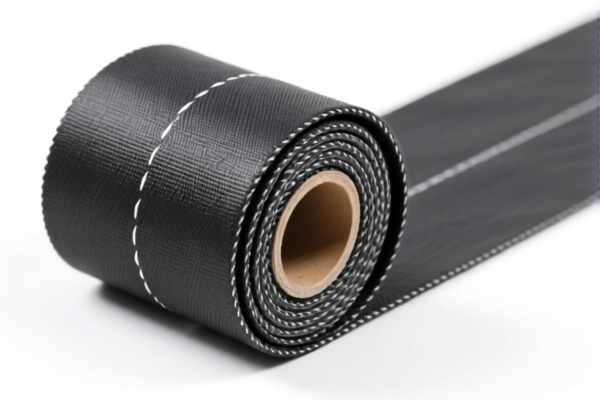
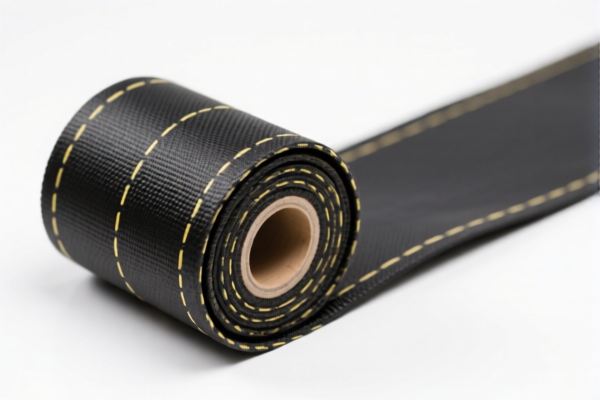
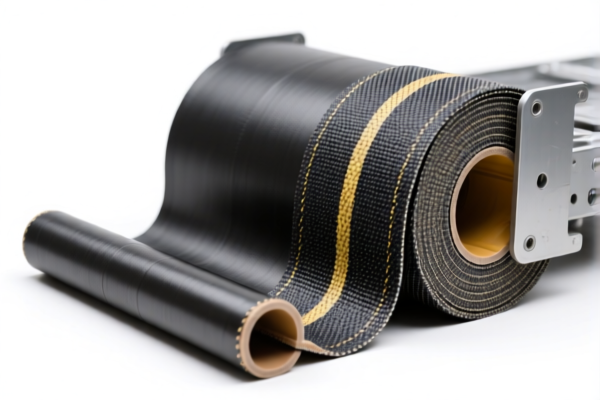
AI Analysis
🏭 Industrial Conveyor Belting: Textile Reinforced
🌐 HS Code Reference & Customs Clearance Guide | 2026 Latest Tariff Analysis | Strategic Import Strategy
📌 I. Product Definition & Classification: Do You Truly Understand "Textile Reinforced Conveyor Belting"?
Industrial conveyor belting is the backbone of modern logistics, mining, and manufacturing. When classified under US Customs regulations, "Textile Reinforced Conveyor Belting" is not a single entry but a cluster of potential codes depending on its material composition, function, and structural integrity.
In international trade, these belts are typically divided into three key categories:
- Finished Textile-Reinforced Belts (Ch. 59): Belts where the textile reinforcement (canvas, nylon, polyester) is the primary characteristic, embedded in rubber or other materials.
- Parts of Machinery (Ch. 84): Belts viewed strictly as replaceable components for specific conveyor systems, often made of harder materials or serving a specific mechanical function.
- Hard Rubber Products (Ch. 40): Belts made of rigid or semi-rigid rubber composites, lacking the flexible textile core typical of standard ch. 59 belts.
⚠️ Key Distinction Point:
- If the belt is flexible, uses textile fabric (nylon/polyester) as reinforcement, and is for general transmission/conveying → Chapter 59 (5910.00)
- If it is a hard/rigid rubber strip used for specific machine parts → Chapter 40 (4017.00)
- If it is declared purely as a spare part for a conveyor machine, regardless of material (in some interpretations) → Chapter 84 (8431.39)
📦 II. HS Code Classification Details (2026 Latest Tariff Authority Comparison)
Based on the provided data, here are the precise classifications for Textile Reinforced Industrial Conveyor Belting:
| HS Code | Product Description | Application Scenario | Material/Structure Attribute |
|---|---|---|---|
5910.00.90.00 |
Textile Reinforced Conveyor Belting, matched to textile material manufacturing and conveying use | General industrial conveying, material handling | ✅ Textile Reinforced |
5910.00.10.70 |
Textile Reinforced Conveyor Belting, matched to transmission/conveying use and textile material | Power transmission + conveying, textile-based | ✅ Textile Reinforced |
8431.39.00.10 |
Conveyor Belt as a Conveyor Machine Part, matched to industrial component attribute | Spare part for automated conveyor systems | ⚙️ Machine Part |
8431.39.00.80 |
Industrial Grade Conveyor Belt as Mechanical Conveying Component, matched to other machine parts | Generic mechanical drive parts, non-standard | ⚙️ Other Machine Parts |
4017.00.00.00 |
Industrial Grade Conveyor Belt, matched to Hard Rubber and Its Articles Material Attribute | Rigid/Hard Rubber Belts, specialized industrial use | 🧱 Hard Rubber |
🔍 Critical Reminder:
- Ch 59 Codes (5910.00.xx.xx) are for flexible belting with textile plies. This is the most common classification for standard textile-reinforced belts. - Ch 84 Codes (8431.39.xx.xx) are for parts. If the belt is imported separately as a spare part for a specific machine, customs may allow this, but it requires proof that it is a "part" and not a "machine" itself. - Ch 40 Code (4017.00.00.00) is for hard rubber. Do NOT use this for flexible textile belts; it is for rigid rubber components.
💰 III. 2026 Latest Tariff Rate Breakdown (Including Surtaxes, Policy Add-ons)
✅ Applicable Country: United States (US)
✅ Origin: China (CN)
✅ Effective Date: Current rates including Section 301 & Section 122 Add-ons
🎯 1. 5910.00.90.00 —— Textile Reinforced Conveyor Belt (General Conveying)
| Item | Detail |
|---|---|
| Base Tariff | 2.6% (ad valorem) |
| Section 301 Surcharge | +25.0% (US Trade Law Section 301) |
| Section 122 Surcharge | +10.0% (Executive Order 122/122-related duties) |
| Total Tax Rate | 37.6% |
| Tax Calculation | CIF Value × 37.6% |
| De Minimis Eligibility | ❌ No (deny_de_minimis) |
| Legal Path | USITC:5910.00.90.00 → Section 301 → Section 122 |
📌 Explanation:
- This is a standard textile-reinforced flexible belt.
- The high tax rate (37.6%) is driven by the 25% Section 301 tariff on Chinese goods and an additional 10% Section 122 tariff.
- Base rate is low (2.6%), but the add-ons make it expensive.
🎯 2. 5910.00.10.70 —— Textile Reinforced Conveyor Belt (Transmission/Conveying)
| Item | Detail |
|---|---|
| Base Tariff | 4.0% (ad valorem) |
| Section 301 Surcharge | +25.0% |
| Section 122 Surcharge | +10.0% |
| Total Tax Rate | 39.0% |
| Tax Calculation | CIF Value × 39.0% |
| De Minimis Eligibility | ❌ No (deny_de_minimis) |
| Legal Path | USITC:5910.00.10.70 → Section 301 → Section 122 |
📌 Note:
- Slightly higher base rate (4.0%) than5910.00.90.00.
- Used when the belt is specifically designed for both transmission and conveying functions.
- Same high surcharges apply. 39.0% is the highest base-rate scenario.
🎯 3. 8431.39.00.10 —— Conveyor Belt as Machine Part (Industrial Component)
| Item | Detail |
|---|---|
| Base Tariff | 0.0% (ad valorem) |
| Section 301 Surcharge | +25.0% |
| Section 122 Surcharge | +10.0% |
| Total Tax Rate | 35.0% |
| Tax Calculation | CIF Value × 35.0% |
| De Minimis Eligibility | ❌ No (deny_de_minimis) |
| Legal Path | USITC:8431.39.00.10 → Section 301 → Section 122 |
📌 Strategy Insight:
- Lowest Base Rate (0%)!
- This code classifies the belt as a part of a machine, not a standalone product.
- Risk: Customs may challenge this if the belt is not clearly identified as a spare part for a specific machine. Misclassification can lead to penalties.
🎯 4. 8431.39.00.80 —— Industrial Grade Conveyor Belt (Other Machine Parts)
| Item | Detail |
|---|---|
| Base Tariff | 0.0% (ad valorem) |
| Section 301 Surcharge | +25.0% |
| Section 122 Surcharge | +10.0% |
| Total Tax Rate | 35.0% |
| Tax Calculation | CIF Value × 35.0% |
| De Minimis Eligibility | ❌ No (deny_de_minimis) |
| Legal Path | USITC:8431.39.00.80 → Section 301 → Section 122 |
📌 Strategy Insight:
- Same 35.0% total as8431.39.00.10.
- Used for "other" mechanical parts not specified elsewhere.
- Similar classification risk as above. Requires strong documentation that it is a part.
🎯 5. 4017.00.00.00 —— Industrial Grade Conveyor Belt (Hard Rubber)
| Item | Detail |
|---|---|
| Base Tariff | 2.7% (ad valorem) |
| Section 301 Surcharge | +25.0% |
| Section 122 Surcharge | +10.0% |
| Total Tax Rate | 37.7% |
| Tax Calculation | CIF Value × 37.7% |
| De Minimis Eligibility | ❌ No (deny_de_minimis) |
| Legal Path | USITC:4017.00.00.00 → Section 301 → Section 122 |
📌 Warning:
- DO NOT USE for textile-reinforced flexible belts.
- This is for hard rubber articles.
- If you ship a flexible textile belt under this code, it will be rejected or reclassified, leading to delays and fines.
- Tax rate is 37.7%, higher than the Ch 84 options but lower than Ch 59 option5910.00.10.70.
🛠️ IV. Customs Clearance Practical Advice (Pitfall Avoidance Guide)
✅ 1. Required Documentation Checklist (Mandatory)
| Document | Must Provide | Explanation |
|---|---|---|
| ✅ Product Specification Sheet | ✔️ | Must clearly state: Reinforcement Material (e.g., Nylon, Polyester, Canvas), Cover Material (Rubber, PVC), Dimensions, Tensile Strength. |
| ✅ Technical Drawing/Structure Diagram | ✔️ | Critical to prove if it is Textile Reinforced (Ch 59) or Hard Rubber (Ch 40). |
| ✅ Product Photos (with Label) | ✔️ | Show the belt’s flexibility, texture, and any markings indicating "Textile Reinforced." |
| ✅ Commercial Invoice | ✔️ | Must accurately describe the item: e.g., "Textile Reinforced Rubber Conveyor Belt, for Industrial Use." Avoid vague terms like "Rubber Strip." |
| ✅ Certificate of Origin (CO) | ✔️ | If not from China, may affect tax rates. If from China, Section 301 applies. |
| ✅ Packing List | ✔️ | Detail weight, dimensions, and quantity. |
✅ 2. Declaration Strategy (Key Mantras)
🔥 "Flexible Textile → Ch 59; Part of Machine → Ch 84; Hard Rubber → Ch 40. Get it Wrong, Pay More or Get Stuck!"
| Scenario | Correct Declaration | Wrong Practice |
|---|---|---|
| Standard Flexible Belt (Nylon/Polyester ply) | 5910.00.90.00 or 5910.00.10.70 |
Declare as "Rubber Part" → Ch 40/84 mismatch |
| Belt as Spare Part (for specific machine) | 8431.39.00.10 / 8431.39.00.80 |
Declare as general "Conveyor Belt" → Ch 59 (higher tax) |
| Hard/Rigid Rubber Belt | 4017.00.00.00 |
Declare as "Textile Belt" → Misclassification |
✅ 3. Special Circumstances Handling
| Situation | Handling Advice |
|---|---|
| OEM Custom Belts | Provide customer order + design specs. Clearly state reinforcement material. |
| Mixed Material Belts | If the belt has both textile and steel cords, it may still fall under Ch 59 or Ch 84 depending on primary use. Consult a broker. |
| Belt with Metal Fasteners | Usually still classified under the belt’s primary material (Ch 59 or Ch 84). Do not separate unless asked. |
| Used/Recycled Belts | Additional environmental regulations may apply. Ensure compliance with EPA/USDA if applicable. |
🌍 V. Global Market Customs Comparison (2026 Latest)
| Country/Region | Recommended HS Code | Tariff (China Origin) | Certification Requirements | Remarks |
|---|---|---|---|---|
| 🇺🇸 USA | 5910.00.90.00 |
37.6% (Ch 59) 35.0% (Ch 84) |
No specific CE/FCC | High Tax due to Section 301 & 122. Ch 84 offers savings if declared as a part. |
| 🇨🇳 China | 5910.00.90.00 |
10% - 15% (Import Duty) | GB Standards | Lower base tax, no Section 301. |
| 🇪🇺 EU | 4010.36 (Similar) |
0% - 4.5% | CE + REACH | Different classification system (4010 vs 5910). |
| 🇯🇵 Japan | 4010.36 |
0% - 3.8% | JIS Standards | Free trade agreements may apply. |
📌 Conclusion:
- USA is the most challenging market due to Section 301 (25%) and Section 122 (10%) surcharges.
- Ch 84 (8431.39.xx.xx) offers the lowest total tax (35.0%) but carries higher classification risk.
- Ch 59 (5910.00.xx.xx) is the most accurate for textile-reinforced flexible belts but costs 37.6% - 39.0%.
- Ch 40 (4017.00.00.00) is only for hard rubber and should be avoided for textile belts.
📌 VI. Common Mistakes & Pitfall Guide (Lessons Learned)
❌ Mistake 1: Declaring a flexible textile belt as 8431.39.00.10 without proof it is a "part"
👉 Consequence: Customs may reject or reclassify to 5910.00.90.00 (37.6%), causing delays and potential fines.
❌ Mistake 2: Using 4017.00.00.00 for a flexible textile belt
👉 Consequence: Misclassification. The belt is not "hard rubber." High risk of seizure or heavy penalties.
❌ Mistake 3: Ignoring Section 122 Tariff
👉 Consequence: Underpaying tax by 10%. Customs will issue a bill for back taxes + interest.
❌ Mistake 4: Vague description: "Rubber Belt"
👉 Consequence: Customs cannot determine if it is Ch 59 (textile) or Ch 40 (hard rubber). Leads to hold.
✅ Correct Practice:
"Textile Reinforced Rubber Conveyor Belt, Nylon Plies, PVC Cover, for Industrial Packaging Line, Model XYZ, 2026 Manufacture"
🎯 VII. Conclusion: Precise Classification Saves Money!
🎯 Remember the Mantra:
🔹 "Flexible Textile → Ch 59 (37-39%); Part of Machine → Ch 84 (35%); Hard Rubber → Ch 40 (37.7%)."
🔹 "Section 301 is 25%, Section 122 is 10%. Total Tax is Heavy."
🔹 "If you can prove it's a 'part,' you save 2.6% - 4.0% base rate!"
📌 Pro Tip:
If your belt is originally from Vietnam, Mexico, or Thailand, you may be exempt from Section 301.
Recommendation: Apply for an Advance Ruling from US Customs (CBP) to confirm the correct HS Code (8431.39 vs 5910.00) before shipping. This avoids costly disputes at the border.
📣 Immediate Action:
📞 Contact your customs broker + Provide technical specs + Confirm Origin
🚀 Ensure Textile Reinforcement is clearly stated on the invoice to avoid Ch 40 errors.
💼 Your cost efficiency depends on this classification!
✨ Professional Customs Clearance Starts with Precise Classification!
💼 Every Percent of Tax Saved is Pure Profit!
Customer Reviews
About HS Code Classification
The Harmonized System (HS) is an internationally standardized nomenclature developed by the World Customs Organization (WCO) to classify traded products. Over 200 countries use the HS system as the basis for customs tariffs, trade statistics, and import/export regulations.
Each HS code follows a hierarchical structure:
- Chapter (2 digits) — Broad category of goods (e.g., Chapter 84: Machinery and Mechanical Appliances)
- Heading (4 digits) — More specific grouping within the chapter
- Subheading (6 digits) — Internationally standardized breakdown, used by all WCO member countries
- National subdivisions (8-10 digits) — Country-specific extensions for further classification, such as US HTSUS 10-digit codes
Correct HS code classification is essential for smooth customs clearance, accurate duty payment, and compliance with trade regulations. Misclassification can lead to customs delays, overpayment of duties, or penalties.
When importing from CN to US, the applicable tariff rates may include:
- Most-Favored-Nation (MFN) rate — The standard duty rate applied to WTO members
- General rate — Applied to countries without trade agreements
- Trade remedy duties — Additional tariffs such as Section 301 (anti-dumping), Section 232 (national security), or countervailing duties
The information provided on this page is for reference purposes only. For official classification, please consult with your local customs authority or a licensed customs broker.