Industrial Cork Gasket
CN → US| HS Code | Tariff Rate | Origin | Destination | Doc |
|---|---|---|---|---|
| 8484100000 | 37.5% | CN | US | Official Doc |
| 8484900000 | 37.5% | CN | US | Official Doc |
Product Images

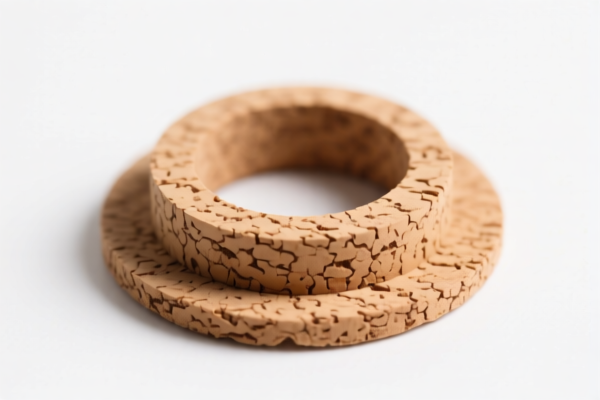
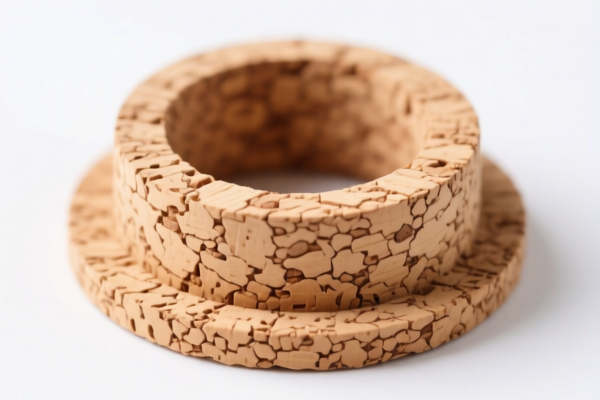
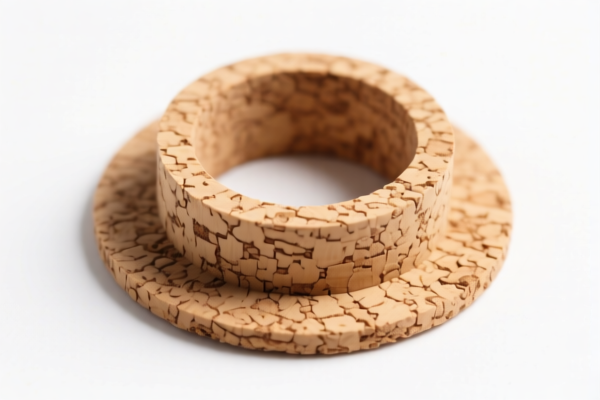
AI Analysis
🍷 Industrial Cork Gaskets (Sealing Solutions)
🌐 HS Code Reference & Customs Clearance Guide | 2026 Latest Tariff Analysis | Professional Clearance Strategy
📌 I. Product Definition & Classification: Do You Really Understand "Industrial Cork Gaskets"?
Industrial cork gaskets are critical sealing components used in high-temperature, high-pressure, and corrosive environments across automotive, aerospace, plumbing, and industrial machinery sectors. Unlike metal or plastic gaskets, cork offers superior elasticity, compressibility, and resilience. In international trade, they are not classified as raw materials (Chapter 45) but as mechanical joints/seals under Chapter 84.
They are primarily divided into two categories based on their composition:
- Metal-Composite Cork Gaskets: Cork sheets combined with metal liners, inserts, or washers for structural support or specific sealing requirements.
- Pure/Mechanical Cork Seals: Gaskets made entirely of compressed cork or cork-rubber mixtures, often falling under "Other" mechanical seals.
⚠️ Key Distinction Point:
- If the gasket includes metal sheeting layers (even thin liners) → Classified under 8484.10
- If the gasket is pure cork/rubber/mixed material without metal layers → Classified under 8484.90
📦 II. HS Code Classification Details (2026 Latest Tariff Authority Comparison)
| HS Code | Product Description | Application Scenario | Contains Metal Layers? |
|---|---|---|---|
8484.10.00.00 |
Gaskets of metal sheeting combined with other material or of two or more layers of metal | Cork gaskets with metal reinforcements, copper-washed cork gaskets, multi-layer metallic-cork seals | ✅ Yes |
8484.90.00.00 |
Other (Gaskets and similar joints; mechanical seals) | Pure cork gaskets, rubber-cork blends, non-metallic industrial seals | ❌ No |
🔍 Key Reminder:
- Even if the primary material is cork, if it is combined with metal sheeting (e.g., for durability or flange alignment), it MUST be classified under 8484.10. - Sets or assortments of dissimilar gaskets (e.g., mixed cork and metal gaskets in one package) are also subject to strict classification rules, often defaulting to the primary component or the more heavily taxed item if not separable.
💰 III. 2026 Latest Tariff Rate Details (Including Additional Taxes)
✅ Applicable Country: United States (US)
✅ Origin: China (CN)
✅ Effective Date: Current Trade Policy (Section 301 & IEEPA Measures)
🎯 1. 8484.10.00.00 —— Gaskets of Metal Sheetings Combined with Other Material (e.g., Metal-Composite Cork)
| Item | Content |
|---|---|
| Base Tariff | 2.5% (ad valorem) |
| Additional Tax (Section 301) | +25.0% |
| Total Tariff Rate | 27.5% |
| Tax Calculation | CIF Value × 27.5% |
| De Minimis Exemption | ❌ Not Applicable (Value usually exceeds threshold or is excluded by item type) |
| Legal Basis Path | USITC:8484.10.00.00 → USITC:Footnote 301.9903 |
📌 Explanation:
- The 2.5% base duty is standard for mechanical joints. - The +25% additional tariff is imposed under Section 301 of the Trade Act of 1974 against Chinese goods. - Total cost impact: 27.5%. This is a significant cost driver for metal-composite sealing components.
🎯 2. 8484.90.00.00 —— Other (e.g., Pure Cork or Non-Metallic Industrial Gaskets)
| Item | Content |
|---|---|
| Base Tariff | 0.0% |
| Additional Tax (Section 301) | 0.0% |
| Total Tariff Rate | 0.0% |
| Tax Calculation | Duty-Free |
| De Minimis Exemption | ✅ Applicable (if value < $800 per shipment) |
| Legal Basis Path | USITC:8484.90.00.00 → No Section 301 Footnote |
📌 Critical Note:
- Pure cork gaskets (without metal layers) enjoy 0% duty and 0% additional tariffs. - This creates a massive price advantage (27.5% savings) compared to metal-composite versions. - Caution: If you mistakenly declare a metal-composite gasket as "Other," customs may reclassify it, leading to back taxes + penalties.
🛠️ IV. Customs Clearance Practical Advice (Real-World Pitfall Avoidance Guide)
✅ 1. Required Documentation Checklist (No Exceptions)
| Document | Mandatory | Description |
|---|---|---|
| ✅ Product Specifications | ✔️ | Detailed description: Material composition (e.g., "90% cork, 10% rubber"), dimensions, thickness, compression rate. |
| ✅ Material Breakdown | ✔️ | Explicitly state if any metal components (washers, inserts, liners) are present. |
| ✅ Product Photos | ✔️ | Clear images of cross-sections (to show layering) and exterior. |
| ✅ Commercial Invoice | ✔️ | Must clearly state "Cork Gasket" and specify "Metal-Composite" or "Non-Metallic." |
| ✅ Packing List | ✔️ | Separate items if different HS codes are used in the same shipment. |
| ✅ Certificate of Origin | ✔️ | Crucial for proving origin (China vs. Vietnam/Thailand) to determine Section 301 applicability. |
✅ 2. Declaration Tips (Key Mnemonics)
🔥 “No Metal = Free, Metal = 27.5%!”
| Scenario | Correct Declaration | Incorrect Action |
|---|---|---|
| Pure Cork Gasket | 8484.90.00.00 |
Misdeclare as 8484.10 → Pay 27.5% unnecessarily |
| Cork + Metal Washer | 8484.10.00.00 |
Misdeclare as 8484.90 → Customs Penalty + Back Taxes |
| Mixed Assortment | Separate lines or declare primary | Combine into one line → Risk of reclassification |
| Raw Cork Sheets (Unformed) | Chapter 45 (Not Chapter 84) | Declare as 8484.90 → Wrong Chapter |
✅ 3. Special Handling Cases
| Situation | Handling Advice |
|---|---|
| OEM Custom Gaskets | Provide engineering drawings showing material layers. If metal is <5% by weight but structurally critical, still likely 8484.10. |
| Cork-Rubber Blends | If no metal is present, classify under 8484.90.00.00 (0% tax). |
| Gaskets with Adhesives | If the adhesive contains metal particles, consult customs broker; may trigger 8484.10. |
| Sets/Assortments | If a pouch contains both metal and non-metal gaskets, customs may classify the entire set under the highest duty rate (8484.10). Separate shipments if possible. |
🌍 V. Global Market Clearance Comparison (2026 Latest)
| Country/Region | Recommended HS Code | Tariff (China Origin) | Certification | Notes |
|---|---|---|---|---|
| 🇺🇸 USA | 8484.90.00.00 (Pure) / 8484.10 (Metal) |
0% / 27.5% | None required | Highest tariff impact for metal-composite types. |
| 🇨🇳 China | 8484.90.00.00 / 8484.10.00.00 |
~6-10% | None required | Lower base duties, no Section 301. |
| 🇪🇺 EU | 8484.90 / 8484.10 |
0-2% | REACH/ROHS | Generally low tariffs; no major trade wars. |
| 🇨🇦 Canada | 8484.90 / 8484.10 |
0-3.5% | None | MFN rates are favorable. |
| 🇦🇺 Australia | 8484.90 / 8484.10 |
0-5% | None | ChAFTA may offer zero duty if rules of origin met. |
📌 Conclusion:
- The US market is the most challenging due to the 27.5% duty on metal-composite gaskets. - Pure cork/rubber gaskets are tariff-free in the US, offering a strategic advantage for suppliers who can eliminate metal liners.
📌 VI. Common Mistakes & Pitfall Guide (Blood-Learning Lessons)
❌ Mistake 1: Declaring a cork gasket with a thin metal washer as 8484.90.00.00.
👉 Consequence: Customs reclassifies to 8484.10.00.00 → 27.5% back tax + 0.75% daily penalty!
❌ Mistake 2: Assuming all cork gaskets are raw materials (Chapter 45).
👉 Consequence: Goods held at border for reclassification delays → Storage fees + demurrage.
❌ Mistake 3: Packing metal and non-metal gaskets in one box and declaring as one HS code.
👉 Consequence: Customs may tax the entire shipment at the highest rate (27.5%) or require unboxing and re-sorting.
✅ Correct Approach:
“Industrial Cork Gasket, Compressed Cork-Rubber Blend, Non-Metallic, 2mm Thickness, Custom Cut” → 8484.90.00.00 (0%)
“Cork Gasket with Copper Liner, Metal Composite, 2mm Thickness” → 8484.10.00.00 (27.5%)
🎯 VII. Conclusion: Precision Classification Saves 27.5%!
🎯 Remember the Mantra:
🔹 “No Metal? Pay Zero. Metal? Pay 27.5%!”
🔹 “Layering Matters: Metal + Cork = 8484.10. Pure Cork = 8484.90.”
🔹 “Avoid Sets: Separate shipments to avoid rate contagion.”
📌 Pro Tip:
If your product can be redesigned to remove metal liners (using advanced rubber-cork blends or specialized shapes), you can save 27.5% in US duties.
For US-bound shipments, consider pre-clearance rulings from CBP if the composition is borderline.
📣 Take Action Now:
📞 Consult a licensed customs broker.
📄 Provide exact material composition sheets.
🚀 Optimize your product design to qualify for 0% duty where possible.
✨ Professional Clearance Starts with Accurate Classification!
💼 Your Profit Margin Depends on These 27.5%!
Customer Reviews
About HS Code Classification
The Harmonized System (HS) is an internationally standardized nomenclature developed by the World Customs Organization (WCO) to classify traded products. Over 200 countries use the HS system as the basis for customs tariffs, trade statistics, and import/export regulations.
Each HS code follows a hierarchical structure:
- Chapter (2 digits) — Broad category of goods (e.g., Chapter 84: Machinery and Mechanical Appliances)
- Heading (4 digits) — More specific grouping within the chapter
- Subheading (6 digits) — Internationally standardized breakdown, used by all WCO member countries
- National subdivisions (8-10 digits) — Country-specific extensions for further classification, such as US HTSUS 10-digit codes
Correct HS code classification is essential for smooth customs clearance, accurate duty payment, and compliance with trade regulations. Misclassification can lead to customs delays, overpayment of duties, or penalties.
When importing from CN to US, the applicable tariff rates may include:
- Most-Favored-Nation (MFN) rate — The standard duty rate applied to WTO members
- General rate — Applied to countries without trade agreements
- Trade remedy duties — Additional tariffs such as Section 301 (anti-dumping), Section 232 (national security), or countervailing duties
The information provided on this page is for reference purposes only. For official classification, please consult with your local customs authority or a licensed customs broker.