Industrial Film
CN → US| HS Code | Tariff Rate | Origin | Destination | Doc |
|---|---|---|---|---|
| 3919905060 | 40.8% | CN | US | Official Doc |
| 3920992000 | 39.2% | CN | US | Official Doc |
| 3921190090 | 41.5% | CN | US | Official Doc |
| 3921905050 | 39.8% | CN | US | Official Doc |
| 3919102055 | 40.8% | CN | US | Official Doc |
| 3920991000 | 41.0% | CN | US | Official Doc |
Product Images
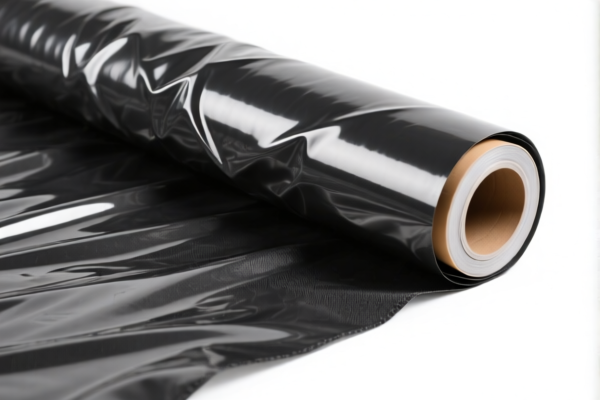
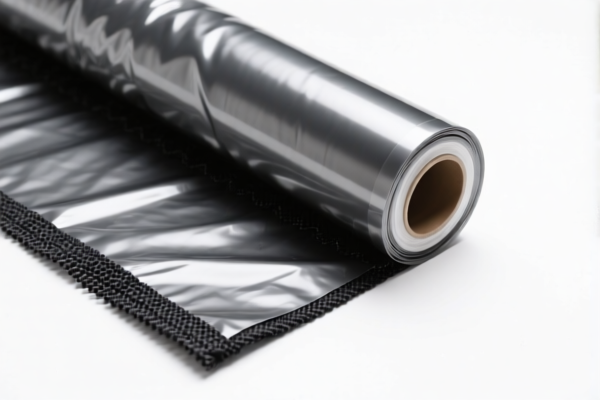
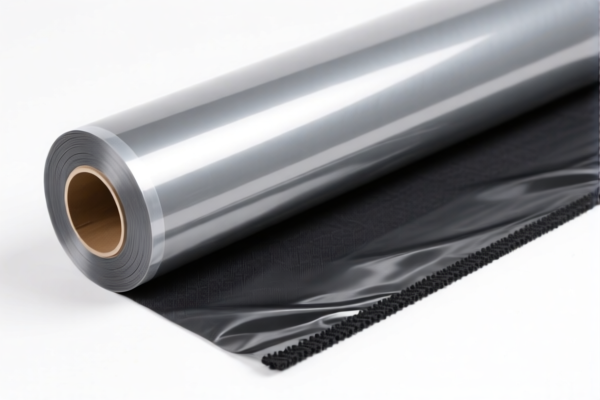
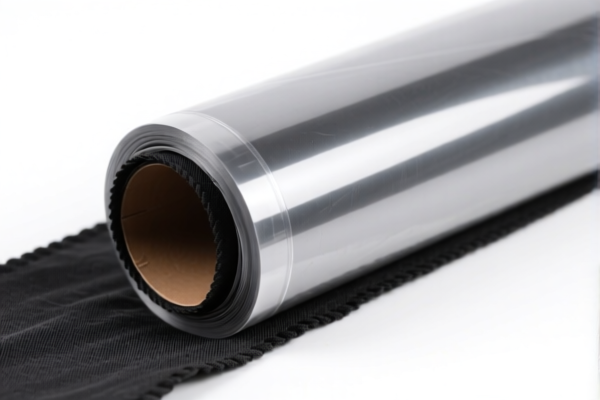
AI Analysis
🎞️ Industrial Film (Industrial Plastic Films)
🌐 HS Code Reference & Customs Clearance Guide | 2026 Latest Tariff Analysis | Professional Clearance Strategy
📌 I. Product Definition & Classification: Do You Really Understand "Industrial Film"?
"Industrial Film" is a broad term in international trade, typically referring to plastic films, sheets, foils, or tapes used for packaging, protection, insulation, or industrial processes. In the Harmonized System (HS), classification depends heavily on the physical form (self-adhesive vs. non-adhesive, rolled vs. cut) and the specific material composition (though often inferred as general plastic if not specified).
⚠️ Key Distinction Points:
- Self-Adhesive Films (Tapes/Backing) → Generally fall under Chapter 3919 (Plastics, self-adhesive);
- Non-Adhesive Rolls/Sheets → Generally fall under Chapter 3920 (Plastics, plates, sheets, film, foil, and strip, not reinforced, laminated, etc.);
- Other Plastic Articles → May fall under Chapter 3921 (Plastics, plates, sheets, film, foil, and strip, reinforced, laminated, backed, etc.).
📦 II. HS Code Classification Details (2026 Latest Tariff Authority Alignment)
Based on the provided data, here are the 6 most likely HS Code classifications for "Industrial Film," assuming the material is inferred as Plastic and the form is Film/Roll.
| HS Code | Product Description | Application Scenario | Tax Rate (Total) |
|---|---|---|---|
3919.90.50.60 |
Self-adhesive plastics, in rolls, other (Catch-all category) | Industrial backing tapes, self-adhesive protective films, no specific material conflict | 40.8% |
3920.99.20.00 |
Other plates, sheets, film, foil, and strip, of plastics, not reinforced/laminated | Flexible plastic films, non-adhesive rolls, general industrial use | 39.2% |
3921.19.00.90 |
Other plates, sheets, film, foil, and strip, of plastics, reinforced/laminated/backed | Plastic films/sheets with backing or reinforcement, no material conflict | 41.5% |
3921.90.50.50 |
Other plates, sheets, film, foil, and strip, of plastics, not elsewhere specified | Industrial-grade plastic films, no obvious material conflict | 39.8% |
3919.10.20.55 |
Self-adhesive plastics, in rolls, of non-cellular plastics | Self-adhesive industrial films, inferred as plastic, no form/material conflict | 40.8% |
3920.99.10.00 |
Other plates, sheets, film, foil, and strip, of plastics (Catch-all) | Plastic foil/film, not reinforced, general category | 41.0% |
🔍 Critical Note:
- Adhesive vs. Non-Adhesive: If the film has an adhesive backing (e.g., masking tape, protective film with glue), it likely belongs to 3919. If it is plain plastic film (e.g., shrink wrap, stretch film), it likely belongs to 3920.
- Reinforcement: If the film is laminated with paper, fabric, or other plastics, it may fall under 3921.
- "Catch-all" Codes: Codes ending in.90or.10are often fallback options when the exact plastic type (PE, PP, PVC) is not explicitly declared, leading to slightly higher or varied duty structures.
💰 III. 2026 Latest Tariff Rate Breakdown (Including Additional Taxes & Policy Surcharges)
✅ Applicable Country: United States (US)
✅ Origin: China (CN)
✅ Effective Date: November 10, 2025 (and subsequent imports)
🎯 1. 3919.90.50.60 & 3919.10.20.55 —— Self-Adhesive Plastic Films
| Item | Content |
|---|---|
| Base Duty Rate | 5.8% (ad valorem) |
| USITC Additional Tax | +25.0% (under USITC Footnote regarding Section 301 tariffs) |
| IEEPA Additional Tax | +10.0% (针对中国/香港产品,自2025年11月10日起) |
| Total Tax Rate | 40.8% |
| Tax Calculation | CIF Value × 40.8% |
| De Minimis Exemption | ❌ Not Eligible (deny_de_minimis) |
| Legal Basis Path | IEEPA:9903.01.25 → USITC:3919.90.50.60 / 3919.10.20.55 → FOOTNOTE:Section 301 |
📌 Explanation:
- The 5.8% is the standard MFN (Most Favored Nation) base duty for these self-adhesive plastic products.
- The 25% is the Section 301 tariff imposed on Chinese goods.
- The 10% is the IEEPA tariff specifically targeting Chinese imports under emergency economic powers.
- Total: 40.8%. This is a high-cost category. Accurate declaration of "self-adhesive" nature is crucial.
🎯 2. 3920.99.20.00 & 3920.99.10.00 —— Non-Adhesive Plastic Films
| Item | Content |
|---|---|
| Base Duty Rate | 4.2% (3920.99.20.00) / 6.0% (3920.99.10.00) |
| USITC Additional Tax | +25.0% |
| IEEPA Additional Tax | +10.0% |
| Total Tax Rate | 39.2% (3920.99.20.00) / 41.0% (3920.99.10.00) |
| Tax Calculation | CIF Value × Total Rate |
| De Minimis Exemption | ❌ Not Eligible (deny_de_minimis) |
| Legal Basis Path | IEEPA:9903.01.24 → USITC:3920.99.x.x → FOOTNOTE:Section 301 |
📌 Explanation:
-3920.99.20.00has a slightly lower base rate (4.2%), resulting in a 39.2% total.
-3920.99.10.00has a higher base rate (6.0%), resulting in a 41.0% total.
- Both are for non-adhesive plastic films/foils. The difference lies in the specific sub-category definition within "Other plastics."
🎯 3. 3921.19.00.90 & 3921.90.50.50 —— Reinforced/Laminated/Other Plastic Films
| Item | Content |
|---|---|
| Base Duty Rate | 6.5% (3921.19.00.90) / 4.8% (3921.90.50.50) |
| USITC Additional Tax | +25.0% |
| IEEPA Additional Tax | +10.0% |
| Total Tax Rate | 41.5% (3921.19.00.90) / 39.8% (3921.90.50.50) |
| Tax Calculation | CIF Value × Total Rate |
| De Minimis Exemption | ❌ Not Eligible (deny_de_minimis) |
| Legal Basis Path | IEEPA:9903.01.24/25 → USITC:3921.x.x.x.x → FOOTNOTE:Section 301 |
📌 Explanation:
- 3921 covers plastics that are reinforced, laminated, or backed. If your industrial film has a fabric or paper backing, use this chapter.
- 3921.19.00.90 (41.5%) is slightly more expensive due to a higher base rate (6.5%).
- 3921.90.50.50 (39.8%) is a "catch-all" for other plastic articles, with a lower base rate (4.8%).
🛠️ IV. Customs Clearance Practical Advice (Real-World Pitfall Avoidance)
✅ 1. Required Documentation Checklist (Non-Negotiable)
| Document | Must Provide | Description |
|---|---|---|
| ✅ Product Specification Sheet | ✔️ | Dimensions, thickness, width, material type (e.g., PE, PP, PVC), adhesive type (if any) |
| ✅ Material Composition Statement | ✔️ | Explicitly state "100% Plastic" or specific polymer type to avoid misclassification |
| ✅ Product Photos (Labeled) | ✔️ | Show the roll, the film surface, and any adhesive side (if applicable) |
| ✅ Commercial Invoice | ✔️ | Clearly state "Industrial Plastic Film" and HS Code. Avoid vague terms like "Packaging Material" |
| ✅ Packing List | ✔️ | Detail net/gross weight, number of rolls, and dimensions per roll |
| ✅ Certificate of Origin | ✔️ | Required for proof of Chinese origin (triggering Section 301 tariffs) |
✅ 2. Declaration Tips (Key Mantra)
🔥 "Adhesive is 3919, Non-Adhesive is 3920, Reinforced is 3921. Be Specific, Avoid Fallbacks!"
| Scenario | Correct Declaration | Incorrect Action |
|---|---|---|
| Self-Adhesive Protective Film | 3919.10.20.55 or 3919.90.50.60 |
Declaring as "Plastic Film" (3920) → Under-declaration Risk |
| Stretch/Shrink Film (Non-Adhesive) | 3920.99.20.00 |
Declaring as "Self-Adhesive Tape" (3919) → Over-taxation |
| Film with Paper Backing | 3921.19.00.90 |
Declaring as "Plastic Film" (3920) → Classification Error |
| Unspecified "Industrial Film" | Use 3921.90.50.50 or 3920.99.10.00 with full disclosure |
Vague description → Customs Hold/Inspection Delay |
✅ 3. Special Handling Cases
| Situation | Handling Advice |
|---|---|
| Mixed Adhesive/Non-Adhesive | Separate shipments if possible. Mixed lots may trigger full audit. |
| Composite Materials (e.g., Plastic + Aluminum Foil) | If metal content is significant, may shift to Chapter 76 or 8548. Confirm material % ratio. |
| Sample Shipments | Even samples of plastic film from China are subject to 39.2%–41.5% duties. Do not assume de minimis exemption. |
| Recycled Plastic Film | If >50% recycled content, provide Recycled Material Certificate. May affect environmental compliance but not tariff rate. |
🌍 V. Global Market Comparison (2026 Latest)
| Country/Region | Recommended HS Code | Duty Rate (CN Origin) | Certification Requirements | Notes |
|---|---|---|---|---|
| 🇺🇸 USA | 3920.99.20.00 |
39.2% - 41.5% | FDA (if food contact), Prop 65 | Highest tariffs globally due to Section 301 + IEEPA |
| 🇨🇳 China | 3920.99.20.00 |
5.0% - 7.0% | CCC (if applicable) | No additional surtaxes |
| 🇪🇺 EU | 3920.99.20.00 |
0% - 2.5% | REACH, RoHS | No Section 301 equivalent |
| 🇬🇧 UK | 3920.99.20.00 |
0% - 2.5% | UKCA, REACH | Post-Brexit tariffs generally low |
| 🇦🇺 Australia | 3920.99.20.00 |
5.0% | RCM | No major surtaxes |
📌 Conclusion:
- USA is the most expensive market for Chinese industrial films due to layered tariffs (Base + 301 + IEEPA).
- Total duty exceeds 39%, significantly impacting profit margins.
- Consider supply chain diversification (e.g., Vietnam, Mexico) if targeting the US market to avoid IEEPA penalties.
📌 VI. Common Mistakes & Pitfall Guide (Lessons Learned)
❌ Mistake 1: Declaring "Plastic Film" without specifying adhesive nature
👉 Consequence: Customs may classify under the wrong code, leading to back taxes + penalties.
❌ Mistake 2: Assuming "De Minimis" applies to small shipments
👉 Consequence: NO exemption. All plastic films from China are subject to full duties.
❌ Mistake 3: Using "Tape" for non-adhesive film
👉 Consequence: Incorrect classification under 3919, leading to overpayment or underpayment issues.
❌ Mistake 4: Ignoring Material Composition
👉 Consequence: If the film contains >10% non-plastic (e.g., metal, fabric), it may fall under Chapter 76 or 54, with different tax structures.
✅ Correct Practice:
"Polyethylene Industrial Stretch Film, Non-Adhesive, 12 Micron Thickness, 500mm Width, Roll Packed, HS 3920.99.20.00, Made in China"
🎯 VII. Conclusion: Professional Declaration, Cost Optimization, Compliance!
🎯 Remember the Mantra:
🔹 "Adhesive is 3919, Non-Adhesive is 3920, Reinforced is 3921. Check the glue, check the backing!"
🔹 "Total Tax is 39%–41.5%, De Minimis is ZERO, Compliance is KEY!"
📌 Pro Tip:
If your industrial film is food-grade, ensure you have FDA Compliance Documentation to avoid additional regulatory hurdles in the US, even though it doesn't change the tariff rate.
For high-value projects, consider applying for an Advance Ruling from CBP to confirm the HS Code and avoid post-import audits.
📣 Immediate Action:
📞 Consult a licensed customs broker + Provide material specs + Verify HS Code pre-clearance
🚀 Ensure smooth customs clearance, minimize tariff burden, and maximize export profit!
✨ Professional Clearance Starts with Accurate Classification!
💼 Every Percent of Duty Saved is Profit Earned!
Customer Reviews
About HS Code Classification
The Harmonized System (HS) is an internationally standardized nomenclature developed by the World Customs Organization (WCO) to classify traded products. Over 200 countries use the HS system as the basis for customs tariffs, trade statistics, and import/export regulations.
Each HS code follows a hierarchical structure:
- Chapter (2 digits) — Broad category of goods (e.g., Chapter 84: Machinery and Mechanical Appliances)
- Heading (4 digits) — More specific grouping within the chapter
- Subheading (6 digits) — Internationally standardized breakdown, used by all WCO member countries
- National subdivisions (8-10 digits) — Country-specific extensions for further classification, such as US HTSUS 10-digit codes
Correct HS code classification is essential for smooth customs clearance, accurate duty payment, and compliance with trade regulations. Misclassification can lead to customs delays, overpayment of duties, or penalties.
When importing from CN to US, the applicable tariff rates may include:
- Most-Favored-Nation (MFN) rate — The standard duty rate applied to WTO members
- General rate — Applied to countries without trade agreements
- Trade remedy duties — Additional tariffs such as Section 301 (anti-dumping), Section 232 (national security), or countervailing duties
The information provided on this page is for reference purposes only. For official classification, please consult with your local customs authority or a licensed customs broker.