Industrial Film Roll
CN → US| HS Code | Tariff Rate | Origin | Destination | Doc |
|---|---|---|---|---|
| 3920992000 | 39.2% | CN | US | Official Doc |
| 3920200055 | 39.2% | CN | US | Official Doc |
| 3919905040 | 40.8% | CN | US | Official Doc |
| 3919905060 | 40.8% | CN | US | Official Doc |
| 4811512010 | 35.0% | CN | US | Official Doc |
Product Images
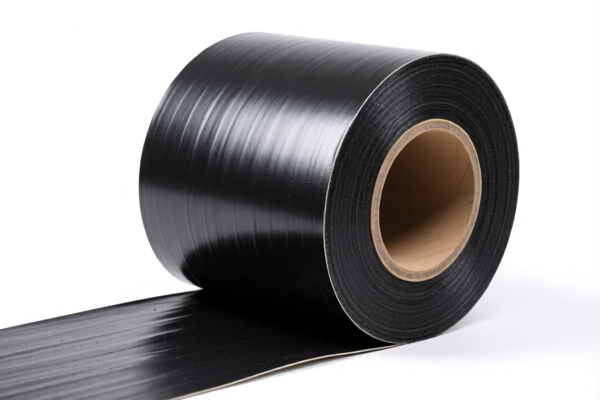
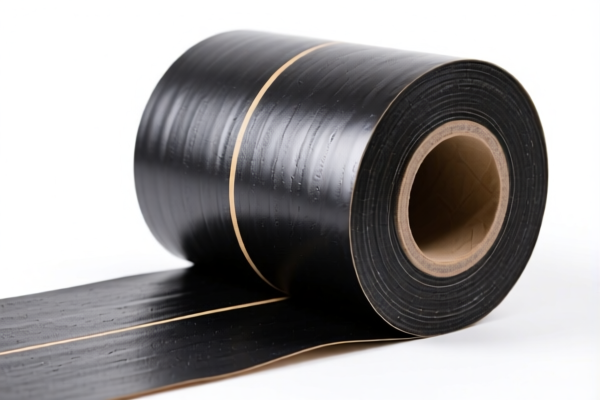
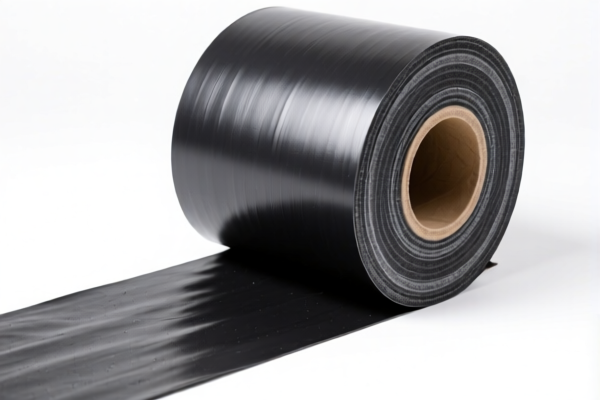
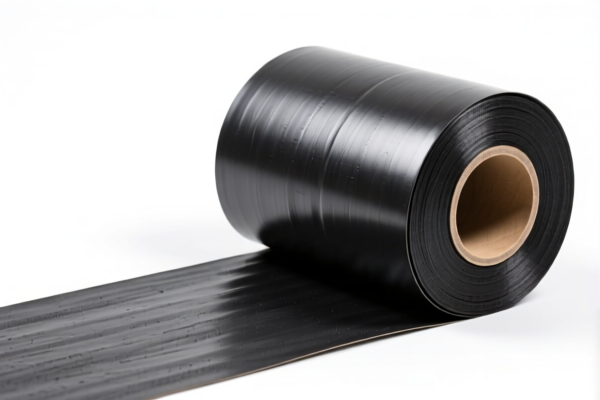
AI Analysis
🎬 Industrial Film Roll (Plastic/Polymer Films)
🌐 HS Code Reference & Customs Clearance Guide | 2026 Latest Tariff Analysis | Professional Clearance Strategy
📌 I. Product Definition: What is an "Industrial Film Roll"?
Industrial Film Rolls generally refer to flexible plastic or polymer sheets produced in continuous rolls, used for packaging, protection, insulation, or industrial coating. In international trade, classification depends heavily on material composition, physical state (rolled, self-adhesive, or non-adhesive), and processing level.
⚠️ Key Distinction:
- If it is a self-adhesive film (sticky on one side) → Likely 3919
- If it is a flat sheet/roll but not self-adhesive → Likely 3920
- If it is made of paper/cardboard instead of plastic → Likely 4811
- If it is a composite where paper is the essential character → 4811
📦 II. HS Code Classification Matrix (Based on Provided Data)
The following table maps the provided HS Codes to their logical deduction paths based on the data {"content":[{"type":"text","text":"[{\"hscode\":\"3920.99.20.00\",\"summary\":\"...\"},{\"hscode\":\"3920.20.00.55\",\"summary\":\"...\"},{\"hscode\":\"3919.90.50.40\",\"summary\":\"...\"},{\"hscode\":\"3919.90.50.60\",\"summary\":\"...\"},{\"hscode\":\"4811.51.20.10\",\"summary\":\"...\"}]"}.
| HS Code | Product Description & Material Inference | Form Factor | Key Identifier |
|---|---|---|---|
| 3920.99.20.00 | Other plates, sheets, film, strip, and foil of plastics | Film, Tape, Sheet | Generic plastic film; "Other" category under Chapter 39 |
| 3920.20.00.55 | Other plates, sheets, film, strip, and foil of plastics of polymers of ethylene | Film | Polymer-based; Likely PE/LLDPE; "Other" bottom-category |
| 3919.90.50.40 | Self-adhesive plates, sheets, film, roll and other forms of plastics | Rolled Film | Self-adhesive plastic roll; "Other" bottom-category |
| 3919.90.50.60 | Self-adhesive plates, sheets, film, roll and other forms of plastics | Rolled Film | Self-adhesive plastic; Matches description of self-adhesive films/rolls |
| 4811.51.20.10 | Paper, paperboard, cellulose wadding and webs of cellulose fibre-based articles | Rolled Paper/Cardboard | Paper-based semi-finished; Coated or processed |
🔍 Critical Logic:
- Plastic vs. Paper: The most common error is misclassifying paper-based films (e.g., kraft liner, coated paper rolls) as plastic. If the material is plastic/polymer, use 3919 or 3920. If it is paper, use 4811.
- Adhesive vs. Non-Adhesive: If the film has an adhesive backing (glued), it belongs to 3919. If it is plain (no glue), it belongs to 3920.
💰 III. 2026 Latest Tariff Rate Breakdown (Detailed Tax Clauses)
✅ Applicable Country: United States (US)
✅ Country of Origin: China (CN)
✅ Effective Time: Ongoing (Section 301 & IEEPA measures)
All items in the provided dataset carry a high effective tariff rate due to US trade policies against Chinese goods. The structure is consistent: Base Duty + Section 301 (25%) + Section 122 Clause (10%).
🎯 1. Plastic Films (Non-Adhesive)
A. 3920.99.20.00 – Other Plastic Films
| Item | Content |
|---|---|
| Base Duty | 4.2% |
| Section 301 Surcharge | +25.0% |
| Section 122 Clause | +10.0% |
| Total Tax Rate | 39.2% |
| Calculation | CIF Value × 39.2% |
| Legal Path | HTSUS:3920.99.20.00 → USITC Footnote:301(25%) → IEEPA:122(10%) |
📌 Explanation:
- Base 4.2%: Standard Most Favored Nation (MFN) rate for "Other" plastic sheets/films.
- 25% Surcharge: Imposed under Trade Act of 1974, Section 301 (List 3/4A items).
- 10% Clause: Likely refers to specific administrative or retaliatory clauses (referred to as "122 Clause" in the data source), adding further burden.
B. 3920.20.00.55 – Polyethylene Films
| Item | Content |
|---|---|
| Base Duty | 4.2% |
| Section 301 Surcharge | +25.0% |
| Section 122 Clause | +10.0% |
| Total Tax Rate | 39.2% |
| Calculation | CIF Value × 39.2% |
| Legal Path | HTSUS:3920.20.00.55 → USITC Footnote:301(25%) → IEEPA:122(10%) |
📌 Note:
- Even though it specifies "polymers of ethylene" (likely PE film), the total tax remains 39.2%.
- This is a "catch-all" (bottom) category for PE films not specifically listed elsewhere.
🎯 2. Self-Adhesive Plastic Films
C. 3919.90.50.40 – Other Self-Adhesive Plastic Rolls
| Item | Content |
|---|---|
| Base Duty | 5.8% |
| Section 301 Surcharge | +25.0% |
| Section 122 Clause | +10.0% |
| Total Tax Rate | 40.8% |
| Calculation | CIF Value × 40.8% |
| Legal Path | HTSUS:3919.90.50.40 → USITC Footnote:301(25%) → IEEPA:122(10%) |
D. 3919.90.50.60 – Self-Adhesive Plastic Rolls (Specific Description)
| Item | Content |
|---|---|
| Base Duty | 5.8% |
| Section 301 Surcharge | +25.0% |
| Section 122 Clause | +10.0% |
| Total Tax Rate | 40.8% |
| Calculation | CIF Value × 40.8% |
| Legal Path | HTSUS:3919.90.50.60 → USITC Footnote:301(25%) → IEEPA:122(10%) |
📌 Warning:
- Self-adhesive films (3919) have a higher base duty (5.8%) than non-adhesive films (3920, 4.2%).
- Total Tax is 40.8%, which is 1.6% higher than non-adhesive plastic films.
- Ensure the product is truly self-adhesive. If it’s just a roll of plastic without glue, misclassifying here will lead to penalties.
🎯 3. Paper-Based Industrial Films
E. 4811.51.20.10 – Coated/Processed Paper Rolls
| Item | Content |
|---|---|
| Base Duty | 0.0% |
| Section 301 Surcharge | +25.0% |
| Section 122 Clause | +10.0% |
| Total Tax Rate | 35.0% |
| Calculation | CIF Value × 35.0% |
| Legal Path | HTSUS:4811.51.20.10 → USITC Footnote:301(25%) → IEEPA:122(10%) |
📌 Advantage:
- Lowest Total Tax (35.0%) among all options!
- Base Duty is 0%.
- Critical Check: The product MUST be paper or paperboard. If it is plastic, this classification is illegal and will result in severe fraud penalties.
🛠️ IV. Customs Clearance Practical Advice (Pitfall Avoidance)
✅ 1. Documentation Checklist (Mandatory)
| Document | Requirement | Why? |
|---|---|---|
| Product Specification Sheet | Must specify Material (Plastic vs. Paper), Thickness, Width, Adhesive Status | To determine HS Code (3919/3920 vs. 4811) |
| Material Safety Data Sheet (MSDS) | If plastic/polymer | Proves chemical composition (e.g., PE, PP, PET) |
| Photo of Product & Label | Clear view of roll core, surface texture, and any "Self-Adhesive" markings | Visual proof for customs inspectors |
| Commercial Invoice | Must state "Industrial Film Roll, [Material], Non-Adhesive/Self-Adhesive" | Prevents ambiguity |
| Packing List | Net/Gross weight, number of rolls | Weight is used for duty calculation base |
✅ 2. Declaration Tips (Key Mantra)
🔥 "Material First, Adhesive Second, Paper vs. Plastic Decides Tax!"
| Scenario | Correct HS Code | Tax Rate | Error Consequence |
|---|---|---|---|
| Plastic Film, NO Glue | 3920.99.20.00 or 3920.20.00.55 |
39.2% | Declaring as 3919 (Adhesive) → 40.8% (Overpay) |
| Plastic Film, WITH Glue | 3919.90.50.40 or 3919.90.50.60 |
40.8% | Declaring as 3920 (Non-adhesive) → Penalty + Fraud |
| Paper Film/Cardboard Roll | 4811.51.20.10 |
35.0% | Declaring as Plastic → Heavy Penalty + Seizure |
| Plastic Coated Paper | 4811.51.20.10 (if paper is essential) |
35.0% | Must prove paper is essential character |
✅ 3. Special Considerations
| Situation | Advice |
|---|---|
| "Is it Plastic or Paper?" | Conduct a burn test or solvent test. If it melts/smells like plastic → HS 39. If it chars/smells like paper → HS 48. |
| Composite Materials | If the film is plastic on one side and paper on the other, classify based on the essential character (usually the functional layer). |
| Sample vs. Bulk | Always submit a physical sample with the first shipment for a Pre-Ruling (Advance Ruling) from US CBP. |
| Section 301 Exclusions | Check if this specific HS Code had exclusions in previous years (most 3919/3920/4811 items are NOT excluded). |
🌍 V. Global Market Comparison (2026)
| Market | Recommended HS Code | Est. Total Tax (China Origin) | Notes |
|---|---|---|---|
| 🇺🇸 USA | See Table above | 35.0% – 40.8% | High tariffs due to Section 301 & IEEPA |
| 🇨🇳 China (Import) | 3920 / 3919 / 4811 |
5% – 10% | Lower base duty, no Section 301 |
| 🇪🇺 EU | 3920 / 3919 |
6.5% – 7.5% | No Section 301 equivalent; EUTR compliance needed |
| 🇬🇧 UK | 3920 / 3919 |
6.5% – 7.5% | Post-Brexit tariff; no US-style surcharges |
| 🇯🇵 Japan | 3920 / 3919 |
0% – 3.5% | Very low tariffs; FTA benefits possible |
📌 Conclusion:
- USA is the most expensive market for industrial films from China.
- Paper films (4811) offer the lowest tax (35%) in the US but require strict material verification.
- Plastic films (3919/3920) are taxed uniformly high (39-41%).
📌 VI. Common Mistakes & Blood Tears Lessons
❌ Mistake 1: Calling a Plastic Roll a "Paper Roll" to get 35% tax
👉 Consequence: Customs inspection reveals plastic → Seizure + Fine + Blacklist
❌ Mistake 2: Calling a Non-Adhesive Plastic Roll a "Self-Adhesive Roll"
👉 Consequence: Overpay 1.6% tax (39.2% vs 40.8%) → Lost profit
❌ Mistake 3: Not specifying "Material" in the description
👉 Consequence: Customs assumes the highest taxable option (usually 3919) → Delays + Extra Duty
✅ Correct Declaration Example:
"Industrial Plastic Film Roll, Polyethylene (PE), Non-Adhesive, Width 50cm, Thickness 0.05mm, For Packaging Use, Made in China"
🎯 VII. Conclusion: Precision is Profit!
🎯 Remember the Mantra:
🔹 "Plastic? Check Glue. Plastic+Glue = 40.8%. Plastic+NoGlue = 39.2%. Paper? 35.0%. Wrong Label = Penalty!"
🔹 "Tax Rate Chases Material, Not Name. Declare Accurately, Pay Less!"
📌 Pro Tip:
If your film is plastic but very thin or specialty engineered, check for Exclusions or Special Regime Codes (e.g., HTS 3920.99.60). However, based on the provided data, 3919/3920/4811 are the only valid paths.
📣 Immediate Action:
📞 Contact a Licensed Customs Broker
📄 Provide a Physical Sample for Pre-Ruling
📉 Evaluate Cost-Benefit: Is switching to Paper-based (4811) feasible to save 5-6% in tax?
✨ Professional Clearance Starts with Accurate Classification!
💼 Every Percent of Tax Saved is Pure Profit!
Customer Reviews
About HS Code Classification
The Harmonized System (HS) is an internationally standardized nomenclature developed by the World Customs Organization (WCO) to classify traded products. Over 200 countries use the HS system as the basis for customs tariffs, trade statistics, and import/export regulations.
Each HS code follows a hierarchical structure:
- Chapter (2 digits) — Broad category of goods (e.g., Chapter 84: Machinery and Mechanical Appliances)
- Heading (4 digits) — More specific grouping within the chapter
- Subheading (6 digits) — Internationally standardized breakdown, used by all WCO member countries
- National subdivisions (8-10 digits) — Country-specific extensions for further classification, such as US HTSUS 10-digit codes
Correct HS code classification is essential for smooth customs clearance, accurate duty payment, and compliance with trade regulations. Misclassification can lead to customs delays, overpayment of duties, or penalties.
When importing from CN to US, the applicable tariff rates may include:
- Most-Favored-Nation (MFN) rate — The standard duty rate applied to WTO members
- General rate — Applied to countries without trade agreements
- Trade remedy duties — Additional tariffs such as Section 301 (anti-dumping), Section 232 (national security), or countervailing duties
The information provided on this page is for reference purposes only. For official classification, please consult with your local customs authority or a licensed customs broker.