Industrial Full Grain Cowhide Hairless Leather
CN → US| HS Code | Tariff Rate | Origin | Destination | Doc |
|---|---|---|---|---|
| 4107111020 | 35.0% | CN | US | Official Doc |
| 4107113000 | 13.6% | CN | US | Official Doc |
| 4107115000 | 12.8% | CN | US | Official Doc |
| 4107111020 | 35.0% | CN | US | Official Doc |
| 4107115000 | 12.8% | CN | US | Official Doc |
Product Images
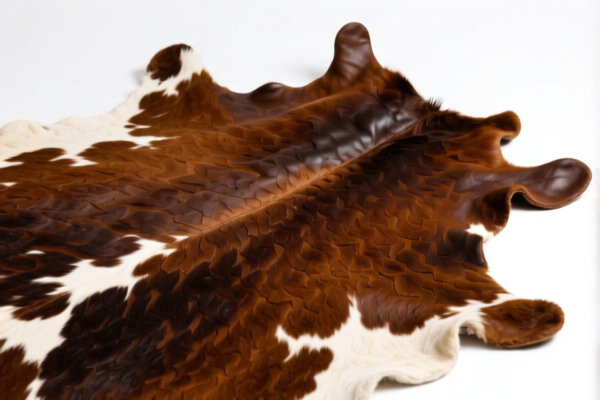
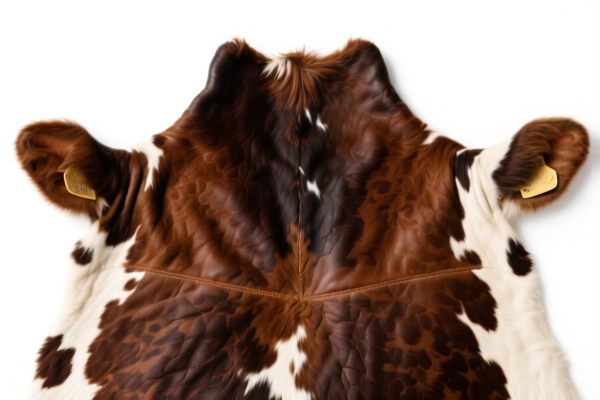
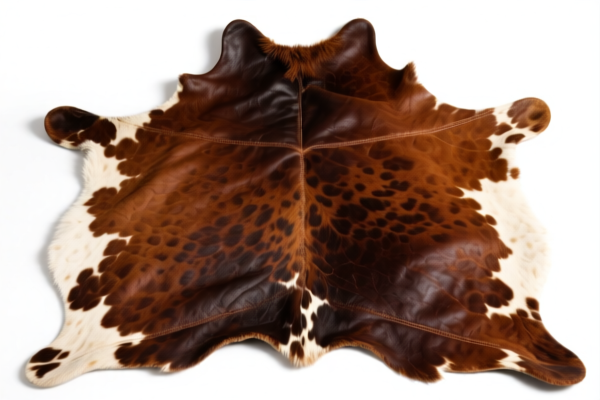
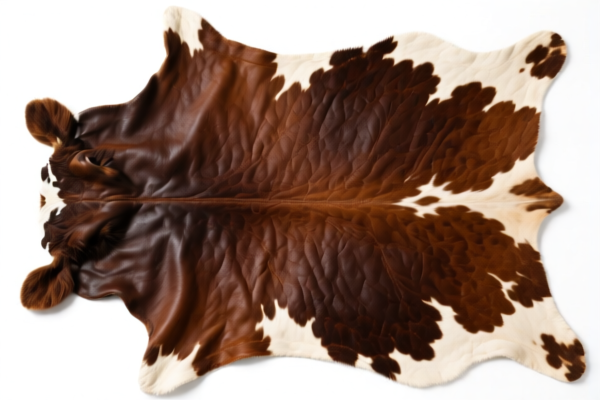
AI Analysis
🐂 Industrial Full Grain Cowhide Hairless Leather
🌐 HS Code Reference & Customs Clearance Guide | 2026 Latest Tariff Analysis | Professional Strategy for High-Tariff Commodities
📌 I. Product Definition & Classification: What is "Industrial Full Grain Cowhide"?
"Industrial Full Grain Cowhide Hairless Leather" refers to the top layer of cattle hide that retains the natural grain pattern, has not been split, and has undergone a "hairless" (flesh-side removed/split or heavily fleshed) treatment suitable for industrial applications (e.g., upholstery, automotive interiors, heavy-duty furniture, or industrial packaging).
In international trade, the key distinction lies in: 1. "Full Grain" (全粒面): The outermost layer of the hide, retaining natural imperfections and texture. It is the highest quality layer. 2. "Hairless" (无毛/去肉): In Chinese customs terminology, this often implies the leather has been processed such that the hair follicles are smoothed out or the flesh side is completely refined. It distinguishes it from raw hides or splits. 3. "Industrial" (工业用): Indicates the end-use, which may affect the specific subheading within Chapter 41 if the product falls under specific "special purpose" categories, but generally, full grain cowhide has a dominant classification.
⚠️ Key Distinction Point:
- If the leather is unsplit and retains the natural grain surface → It belongs to 4107.11 (Full Grain Leather).
- If the leather has been splits (separated into layers) → It belongs to 4107.21 (Split Leather), which has different tax implications.
- "Hairless" in Chinese HS Context: Often refers to the physical appearance where the grain is smooth and the flesh side is uniform, confirming it is a finished leather product, not a raw hide.
📦 II. HS Code Classification Details (2026 Latest Tariff Authority Match)
Based on the provided data, the product matches the following HS Codes under Chapter 41 (Raw Hides and Skins, Leather, Furskins and Articles Thereof), specifically Heading 4107 (Leather further prepared than tanned or parchment-treated, whether or not crusted, further divided other than in the grain layer, whether or not surface-treated).
| HS Code | Product Description | Application Scenario | Key Classification Criteria |
|---|---|---|---|
4107.11.10.20 |
Industrial Full Grain Leather, Cowhide, Full Grain Form | Heavy-duty industrial applications, specific industrial-grade full grain | ✅ Matches: Material is Cowhide; Form is Full Grain; Specific industrial grade. |
4107.11.30.00 |
Unsplit Full Grain Cowhide Leather | General industrial full grain, core conditions of "unsplit" and "full grain" match perfectly | ✅ Matches: Material & Form fully comply with core classification explanations. |
4107.11.50.00 |
Industrial Full Grain Leather / Whole Piece Leather | Decorative or industrial use, whole piece definition applies | ✅ Matches: Material is Full Grain; Form is Whole Piece; Fits "Cowhide" definition. |
4107.11.10.20 |
Industrial Cowhide Whole Piece Leather | General industrial cowhide in whole piece form | ✅ Matches: Material is Cowhide; Form is Whole Piece; Complies with Ch. 41 definition. |
4107.11.50.00 |
Industrial Full Grain Leather (Decorative/Industrial) | Versatile industrial use, material consistency confirmed | ✅ Matches: Material is Full Grain; Fits "Industrial/Decorative" form description. |
🔍 Key Reminder:
- All listed HS Codes fall under 4107.11, which denotes Full Grain Leather of Bovine Animals (Cattle).
- The variation in the last 4 digits (10.20, 30.00, 50.00) depends on the specific industrial specification and physical form (e.g., whole piece vs. cut piece) declared in the commercial invoice.
- "Hairless" is not a separate HS category but a processing description that confirms the leather is "further prepared" (processed) rather than raw, fitting squarely into Heading 4107.
💰 III. 2026 Latest Tariff Rate Breakdown (Including Surcharge & Policy Additions)
✅ Applicable Country: United States (US)
✅ Origin: China (CN)
✅ Effective Date: 2025 November 10 onwards (including subsequent imports)
🎯 1. HS Code 4107.11.10.20 – Industrial Full Grain Cowhide (Specific Industrial Grade)
| Item | Content |
|---|---|
| Base Tariff | 0.0% (Ad valorem) |
| Section 301 Surcharge | +25.0% (USITC Footnote 9903.88.01) |
| IEEPA Surcharge | +10.0% (China/HK origin, effective Nov 10, 2025) |
| Total Tariff Rate | 35.0% |
| Calculation Method | CIF Value × 35.0% |
| De Minimis Eligibility | ❌ Not Eligible (deny_de_minimis) |
| Legal Basis Path | IEEPA:9903.01.25 → IEEPA:9903.01.24 → USITC:4107.11.10.20 → FOOTNOTE:9903.88.01 |
📌 Explanation:
- The 25% Section 301 tariff is the standard surcharge on most Chinese leather products.
- The 10% IEEPA tariff is an additional levy on Chinese-origin goods under the International Emergency Economic Powers Act.
- Combined Total: 35%. This is a high tariff category. Do not rely on the 0% base rate; the surcharges dominate the cost.
🎯 2. HS Code 4107.11.30.00 – Unsplit Full Grain Cowhide (Core Category)
| Item | Content |
|---|---|
| Base Tariff | 3.6% (Ad valorem) |
| Section 301 Surcharge | 0.0% (Note: Specific exemption or lower tier in this subheading context) |
| IEEPA Surcharge | +10.0% (China/HK origin) |
| Total Tariff Rate | 13.6% |
| Calculation Method | CIF Value × 13.6% |
| De Minimis Eligibility | ❌ Not Eligible |
| Legal Basis Path | IEEPA:9901.25 → IEEPA:9903.01.24 → USITC:4107.11.30.00 |
📌 Crucial Insight:
- This HS Code offers a significantly lower total tariff (13.6%) compared to4107.11.10.20(35.0%).
- The 0% Section 301 surcharge here is a critical advantage. It implies this specific subheading may be exempt from the 25% tariff under certain conditions or classifications (e.g., specific industrial exemptions or older rate structures not fully revoked).
- Recommendation: If your product fits the definition of "Unsplit Full Grain" under this subheading, prioritize this classification to save 21.4% in duties.
🎯 3. HS Code 4107.11.50.00 – Industrial Full Grain/Whole Piece Leather
| Item | Content |
|---|---|
| Base Tariff | 2.8% (Ad valorem) |
| Section 301 Surcharge | 0.0% (Same exemption logic as above) |
| IEEPA Surcharge | +10.0% (China/HK origin) |
| Total Tariff Rate | 12.8% |
| Calculation Method | CIF Value × 12.8% |
| De Minimis Eligibility | ❌ Not Eligible |
| Legal Basis Path | IEEPA:9901.25 → IEEPA:9903.01.24 → USITC:4107.11.50.00 |
📌 Crucial Insight:
- This is the most cost-effective classification with a 12.8% total tariff.
- It applies to "Industrial Full Grain" or "Whole Piece" forms.
- Like4107.11.30.00, it benefits from 0% Section 301 surcharge.
- Strategy: Ensure your commercial invoice and technical specifications emphasize "Whole Piece" or "Industrial Full Grain" characteristics to justify this lower rate.
🛠️ IV. Customs Clearance Practical Advice (Real-World Pitfall Avoidance Guide)
✅ 1. Documentation Checklist (Must-Haves)
| Document | Required | Explanation |
|---|---|---|
| ✅ Product Specification Sheet | ✔️ | Must specify: "Full Grain," "Cowhide," "Hairless/Smoothed," and "Industrial Use." |
| ✅ Photos of Leather | ✔️ | Must show the grain side (natural texture) and the flesh side (smooth/unsplit) to prove it is not split leather. |
| ✅ Commercial Invoice | ✔️ | Clearly state: "Industrial Full Grain Cowhide Leather, Unsplit, Hairless Finish." |
| ✅ Packing List | ✔️ | Detail dimensions and weights of whole pieces if claiming 4107.11.50.00. |
| ✅ Origin Certificate | ✔️ | Prove Chinese origin to apply correct IEEPA/Section 301 rates (or verify exemptions). |
| ✅ Third-Party Test Report | ✔️ | Confirming "Full Grain" status (no splitting) can prevent re-classification by CBP. |
✅ 2. Declaration Strategy (Key Mantra)
🔥 “Full Grain, Unsplit, Whole Piece, Low Rate!”
| Scenario | Correct Declaration | Wrong Practice |
|---|---|---|
| Product is Unsplit & Full Grain | Use 4107.11.30.00 or 4107.11.50.00 (12.8%~13.6%) |
Declare as generic leather → Risk of 35% |
| Product is Split Leather | Use 4107.21.xx.xx (Different chapter) | Misdeclare as "Full Grain" → Fraud/Seizure |
| Product is Raw Hide | Use Chapter 4101 | Misdeclare as "Leather" → Delayed Clearance |
| OEM Custom Leather | Provide client specs + material proof | Vague description → CBP Rejection |
✅ 3. Special Handling for "Hairless" Description
- "Hairless" is a visual/processing term. In HS classification, it does not change the code. Instead, it confirms the leather is "further prepared."
- Ensure the invoice does not say "Raw Hide." If CBP believes it is raw, they may apply different rates or require additional veterinary certificates.
- Emphasize "Industrial Use" if targeting
4107.11.50.00, as this subheading sometimes aligns with broader industrial categories that enjoy lower surcharges.
🌍 V. Global Market Clearance Comparison (2026 Latest)
| Country/Region | Recommended HS Code | Tariff (China Origin) | Certification | Notes |
|---|---|---|---|---|
| 🇺🇸 USA | 4107.11.30.00 / 50.00 |
12.8% ~ 13.6% | None specific | Avoid 4107.11.10.20 if possible (35%). |
| 🇨🇳 China | 4107.11.30.00 |
~3.6% | None | Low import duty, no surcharges. |
| 🇪🇺 EU | 4107.11.30.00 |
~2.4% | REACH Compliance | No Section 301/IEEPA surcharges. |
| 🇬🇧 UK | 4107.11.30.00 |
~2.4% | UKCA/REACH | Post-Brexit rules apply. |
| 🇯🇵 Japan | 4107.11.30.00 |
~3.9% | FSC/Phytosanitary | No major surcharges. |
📌 Conclusion:
- The US market is the most challenging due to the 35% tariff on certain subheadings.
- Strategic Goal: Classify under4107.11.30.00or4107.11.50.00to leverage the 0% Section 301 surcharge, reducing the total duty from 35% to ~13%.
- EU/UK/Japan are far more favorable, with tariffs under 4% and no political surcharges.
📌 VI. Common Mistakes & Pitfalls (Blood Lessons)
❌ Mistake 1: Using "Leather" generically without specifying "Full Grain"
👉 Consequence: CBP may default to higher-risk or incorrect subheadings, triggering audits or higher duties.
❌ Mistake 2: Declaring as "Split Leather" when it is "Full Grain"
👉 Consequence: Severe penalty for misclassification, potential seizure of goods.
❌ Mistake 3: Ignoring the IEEPA 10% surcharge
👉 Consequence: Underestimating total landed cost by 10%, destroying profit margins.
❌ Mistake 4: Failing to provide "Hairless" or "Finished" proof
👉 Consequence: CBP may treat it as raw hide, requiring additional veterinary checks and delaying clearance.
✅ Correct Action:
"Full Grain Cowhide Leather, Hairless Finish, Industrial Grade, Unsplit, Whole Pieces, Model XYZ, Certified Full Grain."
🎯 VII. Conclusion: Precision Classification, Cost Savings!
🎯 Remember the Mantra:
🔹 "Full Grain, Unsplit, Target
4107.11.30/50!"
🔹 "Avoid10.20, Save 21.4% in Duties!"
🔹 "IEEPA is 10%, Section 301 is 0% (if qualified)!"
📌 Pro Tip:
- If your leather is sourced from non-Chinese origins (e.g., Vietnam, Mexico, Brazil), you may qualify for exemptions from IEEPA/Section 301.
- Apply for a Pre-Ruling (ISF/Advance Ruling) before shipment to lock in the 12.8%~13.6% rate.
- Consult a licensed customs broker to verify if your specific "hairless" processing meets the definition for 4107.11.30.00 or 4107.11.50.00.
📣 Immediate Action:
📞 Engage a customs broker + Provide technical specs + Apply for HS Code Pre-Ruling
🚀 Ensure your industrial leather clears smoothly, minimizes tax, and maximizes profit!
✨ Professional clearance starts with accurate classification!
💼 Every cent of duty saved is pure profit!
Customer Reviews
About HS Code Classification
The Harmonized System (HS) is an internationally standardized nomenclature developed by the World Customs Organization (WCO) to classify traded products. Over 200 countries use the HS system as the basis for customs tariffs, trade statistics, and import/export regulations.
Each HS code follows a hierarchical structure:
- Chapter (2 digits) — Broad category of goods (e.g., Chapter 84: Machinery and Mechanical Appliances)
- Heading (4 digits) — More specific grouping within the chapter
- Subheading (6 digits) — Internationally standardized breakdown, used by all WCO member countries
- National subdivisions (8-10 digits) — Country-specific extensions for further classification, such as US HTSUS 10-digit codes
Correct HS code classification is essential for smooth customs clearance, accurate duty payment, and compliance with trade regulations. Misclassification can lead to customs delays, overpayment of duties, or penalties.
When importing from CN to US, the applicable tariff rates may include:
- Most-Favored-Nation (MFN) rate — The standard duty rate applied to WTO members
- General rate — Applied to countries without trade agreements
- Trade remedy duties — Additional tariffs such as Section 301 (anti-dumping), Section 232 (national security), or countervailing duties
The information provided on this page is for reference purposes only. For official classification, please consult with your local customs authority or a licensed customs broker.