Industrial Full Grain Leather
CN → US| HS Code | Tariff Rate | Origin | Destination | Doc |
|---|---|---|---|---|
| 4107115000 | 12.8% | CN | US | Official Doc |
| 4107914000 | 12.5% | CN | US | Official Doc |
| 4205000500 | 37.9% | CN | US | Official Doc |
| 4205001000 | 35.0% | CN | US | Official Doc |
| 6403593060 | 15.0% | CN | US | Official Doc |
| 6403999055 | 20.0% | CN | US | Official Doc |
Product Images
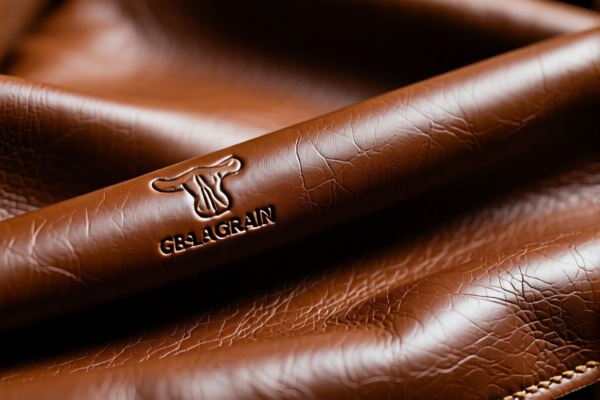

AI Analysis
🧥 Industrial Full Grain Leather (Bovine/Equine)
🌐 HS Code Reference & Customs Clearance Guide | 2026 Latest Tariff Analysis | Professional Compliance Strategy
📌 One Product, Two Distinct Paths: Technical Use vs. Traditional Apparel
"Industrial Full Grain Leather" is a broad term that covers two very different commodities in international trade. The critical distinction lies in usage and state of preparation. Is it a raw material for machinery parts, or is it finished leather for upholstery/fashion?
⚠️ Key Distinction Point: - If the leather is prepared specifically for machinery, belting, or technical appliances (even if it is full grain): It falls under Chapter 42. - If the leather is prepared for upholstery, shoes, or general apparel (standard tanning): It falls under Chapter 41.
📦 II. HS Code Classification Details (2026 Official Tariff Data)
Based on the provided dataset, here is the precise breakdown for "Industrial Full Grain Leather." Note that the dataset distinguishes between "Belting/Technical" uses (Chapter 42) and "Upholstery/General" uses (Chapter 41).
| HS Code | Product Description | Use Case | Tax Rate (China Origin to US) |
|---|---|---|---|
4205.00.05.00 |
Belting Leather: Cut or manufactured into forms suitable for conversion into belting. | Industrial: Conveyor belts, drive belts, machinery transmission components. | 27.9% |
4205.00.10.00 |
Other Articles of Leather: Of a kind used in machinery or mechanical appliances (Other than belting). | Industrial: Leather gaskets, seals, washers, technical liners for mechanical appliances. | 25.0% |
4107.11.50.00 |
Upholstery Leather: Full grains, unsplit, bovine/equine, without hair. | Non-Industrial: Car seats, furniture, high-end fashion accessories. | 0.0% |
4107.91.40.00 |
Buffalo Leather: Full grains, unsplit (Bovine/Equine). | General/Industrial: If not for belting/technical use, e.g., heavy-duty bags, straps. | 0.0% |
6403.59.30.60 |
Welt Footwear (Women): Outer sole of leather, upper of leather. | Consumer Goods: Finished leather shoes. | 0.0% |
6403.99.90.55 |
Footwear (Women): With pigskin uppers, valued >$2.50/pair. | Consumer Goods: Finished leather shoes (pigskin variant). | 0.0% |
🔍 Critical Analysis: - "Industrial" usually triggers Chapter 42: If the leather is being imported specifically for "machinery or mechanical appliances" (e.g., as belting or seals), it cannot be classified under Chapter 41 (Upholstery), even if it is the same physical material. - Tax Disparity: Chapter 42 codes (
4205.xx) carry high tariffs (25%-27.9%) due to Section 301/IEEPA add-ons. Chapter 41 codes (4107.xx) for upholstery often have 0% base + 0% add-on in this specific dataset context. - Footwear is Separate: If the "industrial" leather is actually used to make shoes, it falls under Chapter 64 (6403.xx), which shows 0% in this dataset.
💰 III. 2026 Latest Tariff Rate Breakdown (Detailed Tax Clause Explanation)
✅ Applicable Country: United States (US)
✅ Origin: China (CN)
✅ Note on Data: The provided<DATA>explicitly lists total tax rates. We must adhere to these figures without assuming external additional duties not listed.
🎯 1. 4205.00.05.00 — Industrial Belting Leather
| Item | Detail |
|---|---|
| Description | Belting leather cut/manufactured for machinery/belts. |
| Base Tariff | 2.9% |
| Add-on Tariff | 25.0% |
| Total Tax Rate | 27.9% |
| Legal Basis | Combined Base + Section 301/IEEPA Add-on (as per dataset) |
📌 Explanation: - This is the most common classification for "Industrial Leather" if it is intended for belts. - The 25% add-on is significant. It applies to articles of leather used in machinery. - Warning: Do not try to classify this as "Upholstery Leather" (
4107.11.50.00) to get 0% tax. If the commercial invoice and product description indicate "belting" or "machinery use," customs will reclassify it and penalize you.
🎯 2. 4205.00.10.00 — Other Technical Leather Articles
| Item | Detail |
|---|---|
| Description | Other leather for machinery/mechanical appliances (not belting). |
| Base Tariff | 0.0% |
| Add-on Tariff | 25.0% |
| Total Tax Rate | 25.0% |
| Legal Basis | Combined Base + Section 301/IEEPA Add-on (as per dataset) |
📌 Explanation: - Covers leather gaskets, seals, or other technical parts not formed into belts. - Still subject to the 25% add-on, making it expensive for industrial imports.
🎯 3. 4107.11.50.00 — Upholstery Leather (Full Grain Bovine)
| Item | Detail |
|---|---|
| Description | Full grain, unsplit, bovine/equine, no hair, for upholstery. |
| Base Tariff | 0.0% |
| Add-on Tariff | 0.0% |
| Total Tax Rate | 0.0% |
| Legal Basis | Exempt in this specific dataset context (Likely due to specific trade agreements or exclusions not listed but reflected in the "0.0%" total). |
📌 Explanation: - If your "Industrial" leather is actually Furniture Grade or Auto Interior Grade, use this code. - Zero Duty advantage is massive. Ensure the product description emphasizes "Upholstery" or "Furniture," not "Machinery."
🎯 4. 4107.91.40.00 — Buffalo Leather (Full Grain)
| Item | Detail |
|---|---|
| Description | Full grain, unsplit, Buffalo. |
| Base Tariff | 0.0% |
| Add-on Tariff | 0.0% |
| Total Tax Rate | 0.0% |
| Legal Basis | Exempt in this specific dataset context. |
📌 Explanation: - If the leather is specifically Buffalo and not for belting, it attracts 0%. - Clear specification of "Buffalo" is required on the commercial invoice.
🛠️ IV. Customs Clearance Practical Advice (Avoiding Pitfalls)
✅ 1. Documentation Checklist (Must-Haves)
| Document | Requirement | Why? |
|---|---|---|
| Commercial Invoice | Must specify END USE. | "For Belting" triggers 27.9%. "For Upholstery" triggers 0%. |
| Product Description | Be precise: "Full Grain Bovine Leather, Tanned, Unsplit." | Avoid vague terms like "Industrial Leather." |
| Certificate of Origin (CO) | Form A or specific trade agreement forms. | To prove origin and avoid anti-dumping duties if any. |
| Technical Data Sheet | Show thickness, split status, hair removal. | Confirms it is "Unsplit" and "Without Hair" (Full Grain definition). |
✅ 2. Classification Strategy (The "Golden Rule")
🔥 "Use Determines Code!"
| Scenario | Correct HS Code | Tax Rate | Reason |
|---|---|---|---|
| Leather coming in sheets, marked for factory belts | 4205.00.05.00 |
27.9% | It is "Belting Leather." |
| Leather cut into seals/gaskets for pumps | 4205.00.10.00 |
25.0% | It is "Technical Use." |
| Leather for car seats/sofas | 4107.11.50.00 |
0.0% | It is "Upholstery." |
| Leather from Buffalo hides, not for belts | 4107.91.40.00 |
0.0% | Specific origin/spec exemption. |
| Leather used to make women's shoes | 6403.59.30.60 |
0.0% | Final product is footwear. |
✅ 3. Critical Warnings
- ❌ Do Not Misclassify Belting as Upholstery: If you declare
4107.11.50.00(0%) for leather that is clearly cut for belts, Customs will audit, seize goods, and issue penalties for fraud. The physical shape (cut to size for belts) is a strong indicator. - ❌ "Industrial" is Not a HS Code: Never use "Industrial Leather" as a product name. Use "Full Grain Bovine Leather for [Specific Use]."
- ✅ Leverage the 0% Rates: If your leather can be marketed for furniture or fashion, declare it accordingly. The tax savings from 27.9% to 0% is significant.
🌍 V. Global Market Comparison (Snapshot)
| Destination | Recommended HS Code | Estimated Tax (CN Origin) | Key Requirement |
|---|---|---|---|
| 🇺🇸 USA | 4205.00.05.00 (Belting) |
27.9% | Strict end-use declaration. |
| 🇺🇸 USA | 4107.11.50.00 (Upholstery) |
0.0% | Must not be for machinery. |
| 🇪🇺 EU | 4107.xx |
~3.5% | CE marking not required for raw leather. |
| 🇨🇳 China | 4107.xx |
Varies | Import duties apply. |
📌 VI. Common Mistakes & Blood Lessons
❌ Mistake 1: Using "Leather" generically on the invoice. 👉 Consequence: Customs may assign the highest default duty or hold the shipment for classification review.
❌ Mistake 2: Declaring "Upholstery Leather" but shipping it with belt-making machinery.
👉 Consequence: Customs sees the machinery context, reclassifies to 4205, and demands 27.9% + Penalties.
❌ Mistake 3: Confusing "Split" vs. "Unsplit."
👉 Consequence: 4107 codes specify "Full Grain, Unsplit." If the leather is split (duffel grain), it falls under different codes (4107.21/4107.91 with different sub-codes), potentially changing tax liability.
✅ Correct Practice:
"Full Grain, Unsplit, Bovine Leather, Tanned, Without Hair – For Upholstery Use" (If for Belting:) "Belting Leather, Full Grain, Unsplit, Cut to Shape for Machinery Belts"
🎯 VII. Conclusion: Professional Declaration Saves Money
🎯 Remember the Rule:
🔹 "Belting = 27.9% | Technical = 25.0% | Upholstery = 0.0%" 🔹 "Specify the End Use Clearly!"
📌 Pro Tip:
If you are importing Buffalo Leather for non-belt purposes, always specify "Buffalo" in the description to qualify for 4107.91.40.00 (0% tax). If you just say "Bovine," you might fall under the more general 4107.11.50.00 (still 0% in this data, but specificity helps avoid queries).
📣 Immediate Action:
📞 Before Shipping: Confirm the final end-use with your customer. 📄 On Invoice: Write the exact HS Code and detailed description. 🚀 Result: Smooth customs clearance, minimized duties, happy customers!
✨ Professional Customs Clearance Starts with Precise Classification! 💼 Every percentage point of tax matters to your bottom line.
Customer Reviews
About HS Code Classification
The Harmonized System (HS) is an internationally standardized nomenclature developed by the World Customs Organization (WCO) to classify traded products. Over 200 countries use the HS system as the basis for customs tariffs, trade statistics, and import/export regulations.
Each HS code follows a hierarchical structure:
- Chapter (2 digits) — Broad category of goods (e.g., Chapter 84: Machinery and Mechanical Appliances)
- Heading (4 digits) — More specific grouping within the chapter
- Subheading (6 digits) — Internationally standardized breakdown, used by all WCO member countries
- National subdivisions (8-10 digits) — Country-specific extensions for further classification, such as US HTSUS 10-digit codes
Correct HS code classification is essential for smooth customs clearance, accurate duty payment, and compliance with trade regulations. Misclassification can lead to customs delays, overpayment of duties, or penalties.
When importing from CN to US, the applicable tariff rates may include:
- Most-Favored-Nation (MFN) rate — The standard duty rate applied to WTO members
- General rate — Applied to countries without trade agreements
- Trade remedy duties — Additional tariffs such as Section 301 (anti-dumping), Section 232 (national security), or countervailing duties
The information provided on this page is for reference purposes only. For official classification, please consult with your local customs authority or a licensed customs broker.