Industrial Grade Antioxidant
CN → US| HS Code | Tariff Rate | Origin | Destination | Doc |
|---|---|---|---|---|
| 2942003500 | 41.5% | CN | US | Official Doc |
| 2833402000 | 38.7% | CN | US | Official Doc |
| 2942005000 | 38.7% | CN | US | Official Doc |
| 2833406050 | 38.1% | CN | US | Official Doc |
Product Images
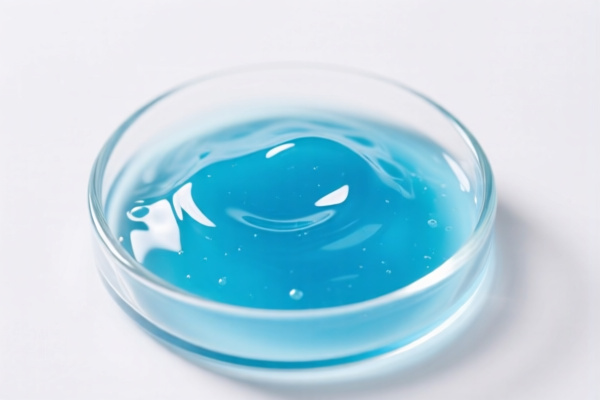

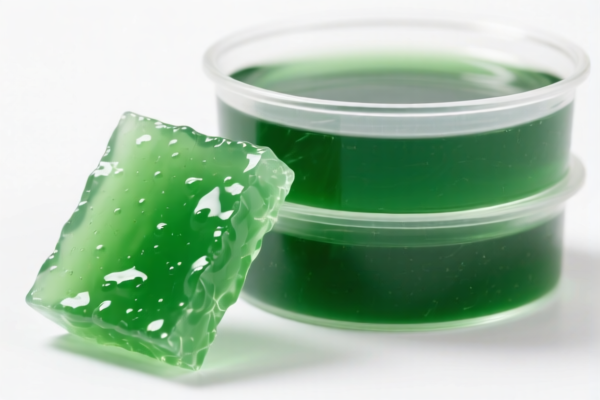
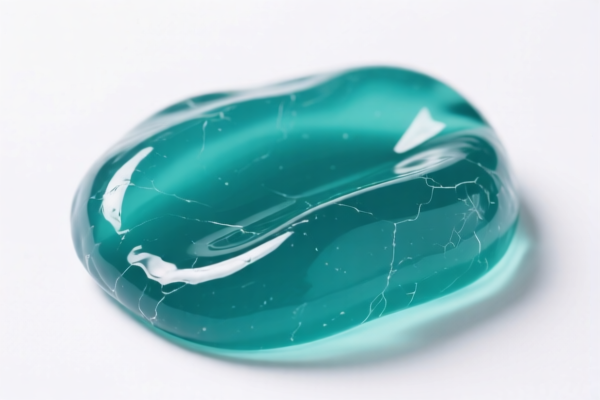
AI Analysis
🧪 Industrial Grade Antioxidant (Industrial Grade Oxidation Inhibitor)
🌐 HS Code Reference & Customs Clearance Guide | 2026 Latest Tariff Analysis | Professional Clearance Strategy
📌 I. Product Definition & Classification: Do You Really Understand “Industrial Grade Antioxidant”?
Industrial Grade Antioxidants (often referred to as Oxidation Inhibitors in chemical trade) are chemical additives used to prevent or delay the oxidation of materials (such as oils, fuels, polymers, and food products). In international trade, the classification is highly sensitive to chemical structure, leading to divergent HS Codes and tax rates.
Two Main Categories in Customs Classification: 1. Inorganic Sulfates/Thiosulfates/Disulfates (e.g., Persulfates): Classified under Chapter 28 (Inorganic Chemicals). 2. Organic Compounds (e.g., Phenolic esters, Amine-based inhibitors): Classified under Chapter 29 (Organic Chemicals).
⚠️ Critical Distinction Point:
- If the antioxidant is a persulfate or inorganic salt (e.g., Ammonium Persulfate, Sodium Persulfate) →归入 Chapter 28 (e.g., 2833.40.xx)
- If the antioxidant is an organic compound (e.g., Butylated Hydroxytoluene (BHT), Irganox types) →归入 Chapter 29 (e.g., 2942.00.xx)
- Misclassification Risk: Declaring an organic antioxidant as inorganic (or vice versa) triggers severe penalties, duty re-calculation, and potential shipment rejection.
📦 II. HS Code Classification Matrix (2026 Latest Tariff Authority Mapping)
Based on the provided data, here is the precise breakdown for "Industrial Grade Antioxidant" imports into the USA (implied by "Section 122" and "Add-on Tariffs"):
| HS Code | Product Description Summary | Chemical Nature | Key Classification Criteria |
|---|---|---|---|
2833.40.20.00 |
Industrial Grade Antioxidant classified as Persulfate Chemical Additive | Inorganic | Specific HS for Persulfates |
2833.40.60.50 |
Industrial Grade Antioxidant in Other Persulfates (Fallback Category) | Inorganic | Generic Persulfate category |
2942.00.35.00 |
Industrial Grade Antioxidant as Organic Compound (Aromatic/Modified Aromatic Functional Additive) | Organic | Aromatic functional group |
2942.00.50.00 |
Industrial Grade Antioxidant as Other Organic Compound | Organic | Non-specific organic additive |
🔍 Key Reminder:
- Persulfates (2833) are inorganic salts used mainly in semiconductor manufacturing or polymerization initiators (though sometimes called "inhibitors" in specific contexts, the data explicitly links them to persulfates).
- Organic Antioxidants (2942) are typically phenols, amines, or phosphites used in plastics, fuels, and lubricants.
- Do NOT mix these categories. The chemical identity (CAS number) is the ultimate decider.
💰 III. 2026 Latest Tariff Rate Breakdown (Including Add-on Taxes & Policy Surcharges)
✅ Applicable Country: United States (US)
✅ Country of Origin: China (CN)
✅ Effective Date: Current tariffs apply (Section 301 & Section 122 measures active)
🎯 1. Inorganic Persulfate Categories (2833.40.20.00 & 2833.40.60.50)
These codes fall under Chapter 28 (Inorganic Chemicals).
| Item | 2833.40.20.00 (Specific Persulfate) |
2833.40.60.50 (Other Persulfates) |
|---|---|---|
| Base Tariff Rate | 3.7% | 3.1% |
| Section 301 Add-on Tariff | +25.0% | +25.0% |
| Section 122 Tariff | +10.0% | +10.0% |
| Total Tax Rate | 38.7% | 38.1% |
| Tax Calculation | CIF Value × 38.7% | CIF Value × 38.1% |
| De Minimis Exemption | ❌ NOT Eligible (deny_de_minimis) | ❌ NOT Eligible (deny_de_minimis) |
| Legal Basis Path | USITC:2833.40.20.00 → Section 301 → Section 122 |
USITC:2833.40.60.50 → Section 301 → Section 122 |
📌 Explanation:
- Base Rate: Low for inorganic chemicals (3–4%).
- Section 301 (25%): Standard trade war tariff on many Chinese chemicals.
- Section 122 (10%): Additional tariff imposed under the Trade Expansion Act of 1962 (specific to certain chemical categories or national security concerns).
- Total: Nearly 40%. This is a high-cost entry.
🎯 2. Organic Antioxidant Categories (2942.00.35.00 & 2942.00.50.00)
These codes fall under Chapter 29 (Organic Chemicals). Note that 2942 is often a "basket" or residual category for specific organic additives.
| Item | 2942.00.35.00 (Aromatic/Modified Aromatic) |
2942.00.50.00 (Other Organic) |
|---|---|---|
| Base Tariff Rate | 6.5% | 3.7% |
| Section 301 Add-on Tariff | +25.0% | +25.0% |
| Section 122 Tariff | +10.0% | +10.0% |
| Total Tax Rate | 41.5% | 38.7% |
| Tax Calculation | CIF Value × 41.5% | CIF Value × 38.7% |
| De Minimis Exemption | ❌ NOT Eligible (deny_de_minimis) | ❌ NOT Eligible (deny_de_minimis) |
| Legal Basis Path | USITC:2942.00.35.00 → Section 301 → Section 122 |
USITC:2942.00.50.00 → Section 301 → Section 122 |
📌 Explanation:
- Aromatic Organics (2942.00.35.00) are taxed higher due to a higher base rate (6.5% vs 3.7%).
- Non-specific Organics (2942.00.50.00)are slightly cheaper (38.7% total).
- Warning: If the product is a common antioxidant like BHT or Irganox, it usually belongs to Chapter 29 under specific headings (e.g., 2909, 2910). The provided data suggests these are residual "Other Organic" classifications, which may imply lack of specific subheading. Always verify if a more specific HS Code exists (e.g.,2909.49,2910.90) to potentially avoid the "Other" high-tax bucket.
🛠️ IV. Customs Clearance Practical Advice (Avoid Pitfalls)
✅ 1. Documentation Checklist (Mandatory)
| Document | Required? | Description |
|---|---|---|
| ✅ Safety Data Sheet (SDS) | ✔️ Critical | Must list chemical composition, CAS numbers, and hazardous class (GHS). |
| ✅ Certificate of Analysis (COA) | ✔️ Critical | Proves purity and chemical identity (Organic vs. Inorganic). |
| ✅ Product Specification Sheet | ✔️ | Detailed formula, usage, and physical state (powder, liquid). |
| ✅ Commercial Invoice | ✔️ | Must clearly state: "Industrial Grade Antioxidant, HS Code: [Correct Code]". |
| ✅ Packing List | ✔️ | Net weight, gross weight, number of packages. |
| ✅ CAS Number | ✔️ | Essential for CBP (Customs and Border Protection) to verify HS Code accuracy. |
⚠️ Key Tip:
- SDS and COA must match. Discrepancies between the SDS (chemical name) and the Invoice (HS Code) will trigger an audit.
- Do not use generic names like "Chemical Additive" on the invoice. Use the specific chemical name (e.g., "Butylated Hydroxytoluene" or "Ammonium Persulfate").
✅ 2. Declaration Strategy (Key Keywords)
| Scenario | Correct Declaration | Incorrect Declaration |
|---|---|---|
| Organic Antioxidant (e.g., BHT) | "BHT, 99% Pure, Organic Antioxidant, HS 2942.00.50.00" |
"Chemical Additive" or "Inorganic Salt" |
| Inorganic Persulfate | "Ammonium Persulfate, Industrial Grade, Inorganic Chemical, HS 2833.40.20.00" |
"Antioxidant" (if it's actually a persulfate initiator) |
| Mixed Shipment | Split lines: Line 1: Organic... Line 2: Inorganic... | Combined line with lowest tax rate → Fraud Risk |
🔥 Golden Rule:
"Identity Dictates Code, Code Dictates Tax. Don't Gamble with 'Antioxidant'."
✅ 3. Special Circumstances Handling
| Situation | Handling Advice |
|---|---|
| CAS Number Change | If the formula changes (e.g., from Phenolic to Amine-based), re-evaluate HS Code. A change from Organic to Inorganic changes the tax from ~41% to ~38% (or vice versa depending on base rate). |
| Section 122 Eligibility | Confirm if the specific chemical product is exempt from Section 122. Some chemical precursors may have exemptions, but "Antioxidants" as additives are generally not exempt. |
| De Minimis (Section 321) | ❌ NOT APPLICABLE. Both organic and inorganic antioxidants under these HS codes are excluded from the $800 de minimis exemption. Full duty applies even for small samples. |
| Pre-Ruling Recommendation | If the chemical structure is complex (e.g., a polymer-bound antioxidant), apply for an Advance Ruling from US CBP. Guessing 2942.00.50.00 vs 2942.00.35.00 can save 2.8% (41.5% vs 38.7%). |
🌍 V. Global Market Comparison (2026)
| Market | Recommended HS Code (Example) | Est. Total Duty | Notes |
|---|---|---|---|
| 🇺🇸 USA | 2942.00.35.00 / 2833.40.20.00 |
38%–41.5% | High tariffs due to Sec 301 + Sec 122. |
| 🇨🇳 China | 2920.90.90 / 2833.29.00 |
5%–9% | Lower base rates, no Section 122. |
| 🇪🇺 EU | 2920.90 / 2833.29 |
0%–6.5% | No Section 122. GSP may apply for some developing countries. |
| 🇬🇧 UK | 2920.90 / 2833.29 |
0%–6.5% | Post-Brexit tariff schedule. |
| 🇦🇺 Australia | 2920.90 / 2833.29 |
5% | ChAFTA may reduce to 0% if originating from China. |
📌 Conclusion:
- The USA is the most expensive market for Industrial Grade Antioxidants due to Section 122 (10%) and Section 301 (25%).
- EU and UK are more tariff-friendly but require strict REACH/EPR compliance.
- Australia/Canada may offer zero-duty opportunities under FTA agreements if origin rules are met.
📌 VI. Common Mistakes & Pitfall Guide (Lessons Learned)
❌ Mistake 1: Declaring an Organic antioxidant as Inorganic to avoid the 6.5% base rate.
👉 Consequence: CBP rejects the declaration, assesses back duties + penalties, and delays shipment by 2–4 weeks.
❌ Mistake 2: Assuming "Antioxidant" is a generic enough term for CBP.
👉 Consequence: CBP uses its own lab analysis. If they determine it's a Persulfate (inorganic), they will reclassify to 2833, potentially changing the tax base. If it's Organic, they may assign a different 29xx code with a higher rate.
❌ Mistake 3: Using Section 321 (De Minimis) for small sample shipments.
👉 Consequence: Shipment seized. Chemical additives with these HS codes are excluded from de minimis. You must file a formal entry and pay full duty.
❌ Mistake 4: Ignoring Section 122.
👉 Consequence: Missing the 10% surcharge. CBP audits will catch this, leading to immediate payment demands and interest.
✅ Correct Approach:
"Butylated Hydroxytoluene (BHT), 99% Pure, Organic Antioxidant for Plastics Stabilization, CAS 128-37-0, HS 2942.00.50.00"
🎯 VII. Conclusion: Precision Classification Saves Money!
🎯 Remember the Mantra:
🔹 "Chemical Identity First, HS Code Second, Tax Third."
🔹 "Organic vs. Inorganic: A 2.8% Difference, But A 100% Compliance Risk."
🔹 "No De Minimis for Chemicals! Prepare for Full Duty!"
📌 Pro Tip:
If you are importing large volumes, consider:
1. Advance Ruling: Request a binding opinion from US CBP on the specific HS Code.
2. Supply Chain Diversification: Source antioxidants from Vietnam, Thailand, or India to potentially avoid US Section 301 tariffs (if origin rules are met).
3. Tariff Engineering: Consult a chemist to see if modifying the antioxidant formula (e.g., esterification) can shift it to a lower-tariff chemical category.
📣 Immediate Action:
📞 Contact a Licensed Customs Broker
📄 Provide SDS + COA + CAS Number
🚀 Secure Your HS Code Today to Avoid Port Delays!
✨ Professional Customs Clearance Starts with Accurate Classification!
💼 Every Percent of Duty Saved is Pure Profit!
Customer Reviews
About HS Code Classification
The Harmonized System (HS) is an internationally standardized nomenclature developed by the World Customs Organization (WCO) to classify traded products. Over 200 countries use the HS system as the basis for customs tariffs, trade statistics, and import/export regulations.
Each HS code follows a hierarchical structure:
- Chapter (2 digits) — Broad category of goods (e.g., Chapter 84: Machinery and Mechanical Appliances)
- Heading (4 digits) — More specific grouping within the chapter
- Subheading (6 digits) — Internationally standardized breakdown, used by all WCO member countries
- National subdivisions (8-10 digits) — Country-specific extensions for further classification, such as US HTSUS 10-digit codes
Correct HS code classification is essential for smooth customs clearance, accurate duty payment, and compliance with trade regulations. Misclassification can lead to customs delays, overpayment of duties, or penalties.
When importing from CN to US, the applicable tariff rates may include:
- Most-Favored-Nation (MFN) rate — The standard duty rate applied to WTO members
- General rate — Applied to countries without trade agreements
- Trade remedy duties — Additional tariffs such as Section 301 (anti-dumping), Section 232 (national security), or countervailing duties
The information provided on this page is for reference purposes only. For official classification, please consult with your local customs authority or a licensed customs broker.