Industrial Grade Aromatic Disinfectant
CN → US| HS Code | Tariff Rate | Origin | Destination | Doc |
|---|---|---|---|---|
| 3402903000 | 39.0% | CN | US | Official Doc |
| 3402905050 | 38.7% | CN | US | Official Doc |
| 3307490000 | 41.0% | CN | US | Official Doc |
| 3307900000 | 40.4% | CN | US | Official Doc |
| 3808941000 | 41.5% | CN | US | Official Doc |
Product Images
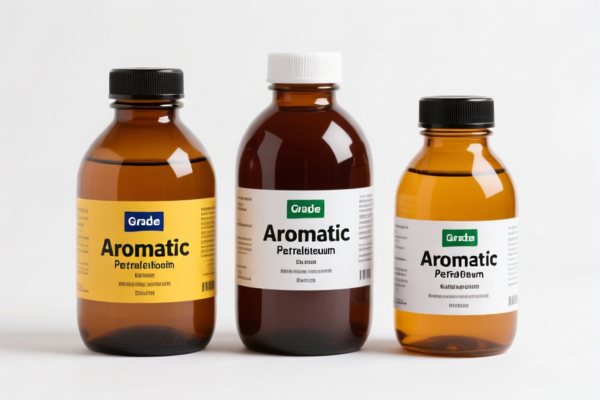


AI Analysis
🧴 Industrial Grade Aromatic Disinfectant: The Ultimate Clearance & HS Code Guide (2026 Edition)
🌐 Global Trade Alert | Chemical & Sanitary Products | 2026 Tax & Customs Compliance
📌 Decoding the "Aromatic Disinfectant" Maze: Why the Last Digit Matters!
In the world of industrial cleaning, the line between a surfactant, a disinfectant, and a room fragrance is razor-thin. A misclassified "Aromatic Disinfectant" can lead to skyrocketing duties (up to 41.5% vs. 38.7%) or, worse, seizure by Customs.
This guide breaks down the 4 Critical HS Codes for your industrial aromatic disinfectant, analyzing the exact classification logic, tax implications, and how to avoid the "Chemical vs. Fragrance" trap.
📦 I. HS Code Classification Matrix: The 4 Battlegrounds
Your product fits into four distinct categories based on its primary function and chemical composition. The difference? A single character in the code!
| HS Code | Primary Classification | The "Aromatic" Connection | The "Disinfectant" Connection | Risk Profile |
|---|---|---|---|---|
3402.90.30.00 |
Anionic/Non-ionic Surface Active Agents | ✅ High: Explicitly contains "aromatic or modified aromatic" surfactants. | ✅ High: Used for cleaning & disinfection. | 🟡 Medium (Clear logic) |
3307.49.00.00 |
Perfumes & Deodorants (Fragrance) | ✅ Defining: "Aromatic" = Fragrance/Room Scent. | ⚠️ Low: Treated as a scenting agent, not a killer. | 🔴 High (Fragrance duty is high!) |
3307.90.00.00 |
Other Perfumes/Cosmetics | ✅ Yes: Broad "other" category for scents. | ⚠️ Yes: Includes deodorizing/disinfecting preparations. | 🟡 Medium |
3808.94.10.00 |
Insecticides/Rodenticides (Specialized) | ✅ Yes: "Aromatic" active ingredients. | ✅ Yes: "Disinfectant" = Biocide use. | 🔴 High (Industrial biocide rate) |
3402.90.50.50 |
Other Chemical Preparations | ⚠️ Inferred: Chemical basis, but "Aromatic" is secondary. | ✅ Yes: Excludes cleaning; focuses on disinfection. | 🟢 Lowest Tax (Best Case) |
⚠️ The Trap: If you claim it's a "Fragrance" (
3307), you pay 41.0%. If you prove it's a "Chemical Disinfectant" (3402.90.50.50), you pay 38.7%. That 2.3% difference is pure profit loss!
💰 II. 2026 Tariff Rate Deep Dive: The Math Behind the Duty
🎯 Target Market: United States (US)
🇨🇳 Origin: China (CN)
📅 Valid For: 2026 Import Cycle
🔥 Case A: The "Chemical Disinfectant" (Best Rate)
HS Code: 3402.90.50.50
Classification Logic: Pure chemical preparation for disinfection, not cleaning or fragrance.
| Tax Component | Rate | Legal Basis |
|---|---|---|
| Base Duty (MFN) | 3.7% | Standard Chemical Preparation Rate |
| Section 301 (USITC) | +25.0% | "Add-on" Tariff for Chinese Chemicals |
| 122 Clause (US) | +10.0% | Specific List for Chemical Preparations |
| TOTAL EFFECTIVE RATE | 38.7% | CIF × 38.7% |
📌 Why it wins: This code classifies the product as a functional chemical disinfectant rather than a consumer fragrance, avoiding the higher "Perfume" surcharge.
🔥 Case B: The "Surface Active Agent" (The "Aromatic" Trap)
HS Code: 3402.90.30.00
Classification Logic: Explicitly contains aromatic surfactants used for cleaning.
| Tax Component | Rate | Legal Basis |
|---|---|---|
| Base Duty (MFN) | 4.0% | Surfactant Rate |
| Section 301 (USITC) | +25.0% | Same 301 tariff on chemicals |
| 122 Clause (US) | +10.0% | Same 122 tariff |
| TOTAL EFFECTIVE RATE | 39.0% | CIF × 39.0% |
⚠️ Risk: If your product is marketed as a "Cleaning Agent" with fragrance, this is the default. 0.3% higher than the pure disinfectant code.
🔥 Case C: The "Fragrance" Penalty (Highest Rates)
HS Code: 3307.49.00.00 or 3307.90.00.00
Classification Logic: If the primary function is "Deodorizing" or "Scenting," not disinfecting.
| Tax Component | Rate | Legal Basis |
|---|---|---|
| Base Duty (MFN) | 6.0% - 5.4% | Perfume/Deodorant Rate (Higher base) |
| Section 301 (USITC) | +25.0% | Aggressive tariff on cosmetics/perfume |
| 122 Clause (US) | +10.0% | Applies to chemical preparations |
| TOTAL EFFECTIVE RATE | 41.0% - 41.5% | CIF × 41.0%~41.5% |
🚨 Warning: Customs Officers often default to 3307 if the packaging highlights "Aromatic" or "Fresh Scent" more than "Kill 99.9% Germs." Avoid this at all costs!
🔥 Case D: The "Industrial Biocide" (High Base Rate)
HS Code: 3808.94.10.00
Classification Logic: Treated as a specialized insecticide/rodenticide agent with aromatic properties.
| Tax Component | Rate | Legal Basis |
|---|---|---|
| Base Duty (MFN) | 6.5% | Specific Biocide Rate |
| Section 301 (USITC) | +25.0% | Standard 301 |
| 122 Clause (US) | +10.0% | Standard 122 |
| TOTAL EFFECTIVE RATE | 41.5% | CIF × 41.5% |
📌 Note: This code is for industrial-grade disinfectants with specific biocidal claims. High base rate makes it the most expensive option.
🛠️ III. Clearance Strategy: How to Secure the 38.7% Rate
✅ Step 1: The "Function-First" Labeling Strategy
🔥 Rule: "Kill Germs, Don't Just Scent Rooms!"
| ✅ Do This | ❌ Don't Do This |
|---|---|
| Label as: "Industrial Disinfectant & Sanitizer" | Label as: "Room Air Freshener" |
| Highlight: "Kills 99.9% of Bacteria/Viruses" | Highlight: "Long-lasting Fragrance" |
| INCI List: Focus on Disinfectant Actives (e.g., Quats, Alcohols) | INCI List: Focus on Perfume/Oils |
HS Code: 3402.90.50.50 |
HS Code: 3307.xxxx (Risk!) |
✅ Step 2: Technical Documentation for Customs
To prevent Customs from arbitrarily shifting your code to 3307 (Fragrance), you must provide:
- Technical Safety Data Sheet (SDS): Must explicitly state the active disinfecting ingredient is the primary function, not the scent.
- EPA Registration (or equivalent): If claiming disinfection, show the EPA Registration Number for the specific active ingredients.
- Product Test Report: A lab report proving log reduction of pathogens (e.g., E. coli, Staph), NOT just a "scent intensity" test.
- Packaging Photos: Ensure the front label does not feature flowers/perfume imagery as the dominant visual.
✅ Step 3: The "Industrial Grade" Defense
If your product is "Industrial Grade," you can argue for 3808.94.10.00 or 3402.90.50.50 over 3307 by emphasizing:
* Bulk Packaging: (Drums, IBCs, 50L+).
* Usage Context: "Factory floor sanitation," "Hospital sterilization," not "Home living room."
📌 IV. Quick Comparison: The Cost of a Misstep
| Scenario | HS Code Used | Total Tax | 10,000 USD Cargo Value Duty |
|---|---|---|---|
| Perfect Strategy | 3402.90.50.50 (Chemical) |
38.7% | $3,870 |
| Common Mistake | 3402.90.30.00 (Surfactant) |
39.0% | $3,900 |
| Fragrance Trap | 3307.49.00.00 (Perfume) |
41.0% | $4,100 |
| Biocide Trap | 3808.94.10.00 (Insecticide) |
41.5% | $4,150 |
💡 Profit Impact: Choosing the wrong code costs you $280 per $10k shipment. For large containers, this is thousands of dollars in lost margin.
🚀 V. Final Verdict & Action Plan
- Primary Goal: Push for
3402.90.50.50(38.7%). This is the sweet spot for "Chemical Disinfectant." - Secondary Goal: If it has strong aromatic surfactants, accept
3402.90.30.00(39.0%)—it's still better than fragrance. - Avoid:
3307codes unless the product is purely a scent and has no registered disinfectant claim. - Documentation: Your SDS and EPA Label are your shields against Customs auditors.
🎯 Pro Tip: In your commercial invoice, write:
"Industrial Grade Aromatic Disinfectant (HS: 3402.90.50.50) - Functional chemical preparation for sanitization, not a fragrance product."
📌 Stay Safe, Stay Compliant!
Don't let a "sweet smell" cost you your profit margin. 🧪🚫💸
✨ Need a Pre-Clearance Ruling? Contact your local Customs Broker with the EPA Registration Number and SDS to lock in the 38.7% rate before your next shipment!
Customer Reviews
About HS Code Classification
The Harmonized System (HS) is an internationally standardized nomenclature developed by the World Customs Organization (WCO) to classify traded products. Over 200 countries use the HS system as the basis for customs tariffs, trade statistics, and import/export regulations.
Each HS code follows a hierarchical structure:
- Chapter (2 digits) — Broad category of goods (e.g., Chapter 84: Machinery and Mechanical Appliances)
- Heading (4 digits) — More specific grouping within the chapter
- Subheading (6 digits) — Internationally standardized breakdown, used by all WCO member countries
- National subdivisions (8-10 digits) — Country-specific extensions for further classification, such as US HTSUS 10-digit codes
Correct HS code classification is essential for smooth customs clearance, accurate duty payment, and compliance with trade regulations. Misclassification can lead to customs delays, overpayment of duties, or penalties.
When importing from CN to US, the applicable tariff rates may include:
- Most-Favored-Nation (MFN) rate — The standard duty rate applied to WTO members
- General rate — Applied to countries without trade agreements
- Trade remedy duties — Additional tariffs such as Section 301 (anti-dumping), Section 232 (national security), or countervailing duties
The information provided on this page is for reference purposes only. For official classification, please consult with your local customs authority or a licensed customs broker.