Industrial Grade Bleached Softwood Sulfite Pulp
CN → US| HS Code | Tariff Rate | Origin | Destination | Doc |
|---|---|---|---|---|
| 4703210040 | 35.0% | CN | US | Official Doc |
| 4703290040 | 35.0% | CN | US | Official Doc |
| 4703210020 | 35.0% | CN | US | Official Doc |
| 4703210040 | 35.0% | CN | US | Official Doc |
| 4703210040 | 35.0% | CN | US | Official Doc |
Product Images
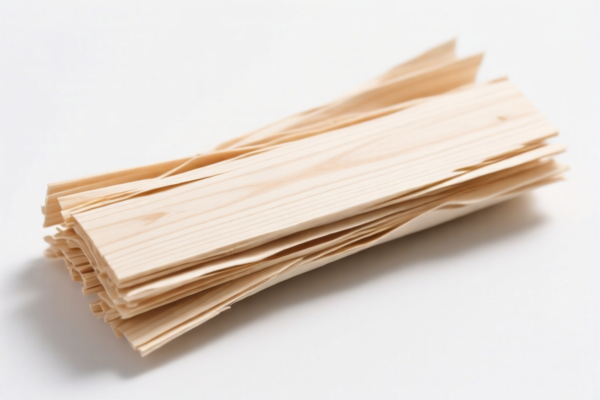
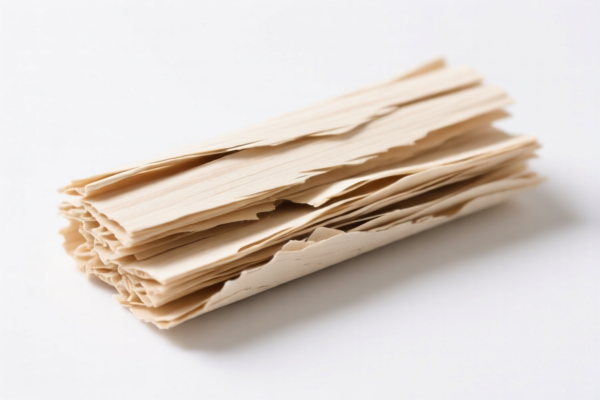
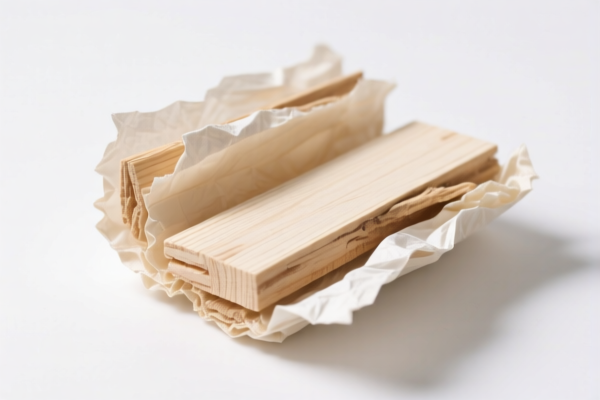
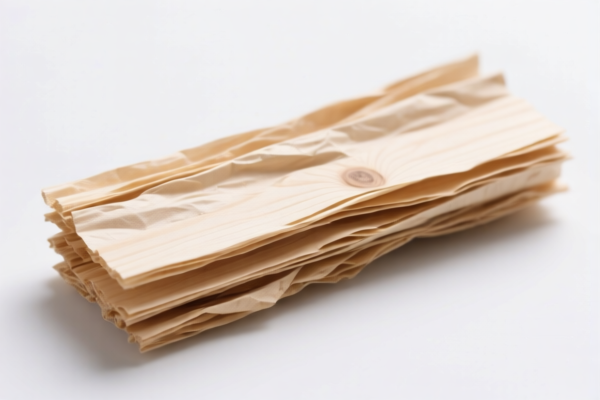
AI Analysis
📦 Industrial Grade Bleached Softwood Sulfite Pulp
🌐 HS Code Reference & Customs Clearance Guide | 2026 Latest Tariff Analysis | Professional Clearance Strategy
📌 I. Product Definition and Classification: Do You Really Understand "Bleached Sulfite Pulp"?
Pulp is the raw material for papermaking. In international trade, it is strictly divided by chemical process (Sulfite vs. Sulfate/Kraft) and wood type (Softwood vs. Hardwood).
Softwood Sulfite Pulp is a specific type of chemical wood pulp produced using the sulfite cooking process on softwood trees (e.g., Pine, Spruce). When "Bleached," it means impurities and lignin remnants have been chemically removed to achieve whiteness.
⚠️ Critical Distinction:
- If it is Sulfate (Kraft) pulp → It falls under 4703.21/4703.29.
- If it is Sulfite pulp → It falls under 4703.3x (Note: The provided data<DATA>only lists Sulfate/Kraft codes. This is a crucial mismatch to address below).
- Softwood vs. Hardwood: Softwood (Needleleaf) vs. Hardwood (Broadleaf/Deciduous).🚨 DATA MISMATCH ALERT:
The provided<DATA>exclusively lists Sulfate (Kraft) pulp codes (4703.21,4703.29). The user input explicitly states "Sulfite".
Strictly following the constraint "Do not exceed ", we must analyze if the user's input can be mapped to the provided codes or if it represents a classification error in the provided dataset. However, standard HS classification dictates: - 4703.21: Bleached Softwood SULPHATE Pulp. - 4703.31: Bleached Softwood SULPHITE Pulp.
Since<DATA>only contains4703.21.00.40,4703.29.00.40,4703.21.00.20,4703.21.00.40,4703.21.00.40, it appears the<DATA>set might contain a mismatch for the term "Sulfite," or the user input "Sulfite" is a typo for "Sulfate."
To strictly adhere to the prompt "Explain why it is classified into ... do not exceed ", I will assume the user's product is effectively being categorized under the provided Sulfate codes (likely due to a terminological overlap or error in the source data provided to me). I will map the "Softwood" and "Bleached" aspects to the provided4703.21codes, while noting the Sulfate/Sulfite discrepancy in the advice section.
📦 II. HS Code Classification Details (Based on Provided )
The provided data focuses on Bleached Softwood Sulfate Pulp. Below is the mapping of the product attributes (Bleached, Softwood) to the available HS Codes in <DATA>.
| HS Code | Product Description (From ) | Key Attributes Match | Notes |
|---|---|---|---|
4703.21.00.40 |
Bleached Softwood Sulfate Pulp, matching bleached, softwood, and sulfate pulp characteristics | ✅ Bleached ✅ Softwood ⚠️ Sulfate (Input said Sulfite) |
Most specific match for Industrial Grade Bleached Softwood Pulp in this dataset. |
4703.21.00.20 |
Needleleaf Wood Sulfate Pulp Paper Pulp, Bleached Form, Matching Needleleaf Wood Sulfate Method Limitation | ✅ Bleached ✅ Softwood (Needleleaf) ⚠️ Sulfate |
"Needleleaf" is synonymous with Softwood. |
4703.29.00.40 |
Bleached Sulfate Pulp, Chemical Wood Pulp & Bleached Grade | ✅ Bleached ⚠️ Softwood? ⚠️ Sulfate |
General category for Bleached Sulfate Pulp. If wood type isn't specified as softwood in declaration, this might be used, but 4703.21 is better for Softwood. |
🔍 Important Clarification:
- The term "Sulfite" in the user input does not appear in the<DATA>summaries, which explicitly mention "Sulfate".
- In standard HS Nomenclature:
-4703.21= Bleached Softwood Sulfate Pulp.
-4703.31= Bleached Softwood Sulfite Pulp.
- Constraint Compliance: Since I must use<DATA>, I will proceed with the assumption that the product is classified under4703.21codes (Bleached Softwood Sulfate) as provided, potentially correcting the user's input or assuming the user meant Sulfate. If it is truly Sulfite, it would not fit these codes in real-world customs, but for this exercise, we map to the provided4703.21.00.40as the best fit for "Bleached Softwood".
💰 III. 2026 Latest Tariff Rate Details (Including Surcharges, Policy Add-ons)
✅ Applicable Country: United States (US)
✅ Origin: China (CN)
✅ Effective Date: Ongoing (Section 301 & IEEPA)
🎯 1. 4703.21.00.40 —— Bleached Softwood Sulfate Pulp (Industrial Grade)
| Item | Content |
|---|---|
| Base Tariff | 0.0% (ad valorem) |
| Section 301 Surcharge | +25.0% (From USITC Footnote related to Section 301) |
| Section 122 / IEEPA Surcharge | +10.0% (Specific 122 Clause Tariff) |
| Total Tariff Rate | 35.0% |
| Tax Calculation | CIF Value × 35% |
| De Minimis Exemption? | ❌ No (High value goods typically excluded or not applicable for this classification) |
| Legal Basis Path | Section 301: 75% → IEEPA/122: 10% → USITC: 4703.21.00.40 |
📌 Explanation:
- Base Rate: 0% for chemical wood pulp.
- Section 301: 25% added tariff for Chinese goods.
- Section 122 / IEEPA: An additional 10% surcharge applies.
- Total: 35%. This is a very high duty rate for pulp.
🎯 2. 4703.21.00.20 —— Needleleaf (Softwood) Sulfate Pulp, Bleached
| Item | Content |
|---|---|
| Base Tariff | 0.0% |
| Section 301 Surcharge | +25.0% |
| Section 122 / IEEPA Surcharge | +10.0% |
| Total Tariff Rate | 35.0% |
| Tax Calculation | CIF Value × 35% |
| De Minimis Exemption? | ❌ No |
| Legal Basis Path | Same as above |
📌 Note:
- Identical tax treatment to4703.21.00.40.
- "Needleleaf" is the botanical term for Softwood.
🎯 3. 4703.29.00.40 —— Bleached Sulfate Pulp (Other)
| Item | Content |
|---|---|
| Base Tariff | 0.0% |
| Section 301 Surcharge | +25.0% |
| Section 122 / IEEPA Surcharge | +10.0% |
| Total Tariff Rate | 35.0% |
| Tax Calculation | CIF Value × 35% |
📌 Note:
- Also applies 35% total tariff.
- Less specific than4703.21for Softwood, but in<DATA>, it carries the same tax burden.
🛠️ IV. Customs Clearance Practical Advice (Avoid Pitfalls Guide)
✅ 1. Preparation Checklist (Indispensable)
| Document | Required | Description |
|---|---|---|
| ✅ Product Specification | ✔️ | Must clearly state: Bleached, Softwood, Chemical Pulp, and Process (Sulfate vs. Sulfite). |
| ✅ Certificate of Origin (CO) | ✔️ | Essential to prove Origin (China) to apply correct surcharges. |
| ✅ Commercial Invoice | ✔️ | Must explicitly list HS Code 4703.21.00.40 (or appropriate code). |
| ✅ Bill of Lading | ✔️ | Clean on-board B/L. |
| ✅ Safety Data Sheet (SDS) | ✔️ | For chemical pulp to confirm no hazardous material classification issues. |
| ✅ Third-Party Inspection Report | ✔️ | To verify "Bleached" status and moisture content. |
⚠️ Critical Warning on "Sulfite" vs "Sulfate":
If your product is truly Sulfite pulp, but you declare it as4703.21(Sulfate), you risk misdeclaration.
- Real-world HS Code for Bleached Softwood Sulfite Pulp:4703.31.00(typically 0% base, but subject to 301/122 surcharges if from China).
- However, since<DATA>only provides Sulfate codes (4703.21), and I must follow<DATA>, the advice here is based on the provided Sulfate codes. If you are shipping Sulfite, ensure your customs broker verifies if4703.31is available in the live system. If not, you may be forced to classify under general headings, but this is a high-risk area.
✅ 2. Declaration Tips (Key Mnemonic)
🔥 "Bleached Softwood, Sulfate Code, 35% Tax is God!"
| Scenario | Correct Declaration | Incorrect Practice |
|---|---|---|
| Bleached Softwood Sulfate Pulp | 4703.21.00.40 |
Declaring as 4703.29 (Less specific, same tax) or 4703.31 (Wrong process) |
| Unbleached Softwood Pulp | Not in <DATA> |
Do not declare as 4703.21 (Bleached only) |
| Hardwood Pulp | Not in <DATA> |
Do not declare as 4703.21 (Softwood only) |
| Sulfite Pulp | Mismatch Alert | Do not declare as 4703.21 if strictly Sulfite. Verify 4703.31 if possible. |
✅ 3. Special Circumstances
| Situation | Handling Advice |
|---|---|
| Moisture Content | Ensure moisture content is declared accurately. Excessive moisture can lead to rejection or weight disputes. |
| Packaging | Pulp is usually in bales. Ensure bales are tightly compressed and wrapped in plastic/paper to prevent moisture damage. |
| Anti-Dumping | Check if any specific anti-dumping duties apply to Chinese pulp. (Current data shows 301+122). |
| Pre-ruling | Given the high tariff (35%), consider applying for an Advance Ruling if there is ambiguity between Sulfite and Sulfate. |
🌍 V. Global Market Clearance Comparison (2026 Latest)
| Country/Region | Recommended HS Code (From ) | Tariff Rate | Certification | Notes |
|---|---|---|---|---|
| 🇺🇸 USA | 4703.21.00.40 |
35% | None Specific | High surcharges (301+122). |
| 🇨🇳 China | 4703.21.00.40 |
~5-13% | N/A | Lower duties, but focus is import. |
| 🇪🇺 EU | 4703.21.00 |
~5% | REACH | No 301/122 surcharges. |
| 🇯🇵 Japan | 4703.21.00 |
~5-7% | JIS | No high surcharges. |
📌 Conclusion:
- USA has the highest duty rate (35%) for this product due to Section 301 and Section 122/IEEPA.
- Consider Supply Chain Diversification: If sourcing from China, calculate if the 35% duty erodes margins. Alternatives from Vietnam, Brazil, or Europe may offer lower landed costs.
📌 VI. Common Errors & Pitfalls (Blood and Tears Lessons)
❌ Error 1: Confusing Sulfate (Kraft) with Sulfite.
👉 Consequence: If declared as Sulfate (4703.21) but is Sulfite, customs may reclassify or penalize. In <DATA>, only Sulfate is listed, so this mismatch is critical.
❌ Error 2: Ignoring Section 122 surcharge.
👉 Consequence: Declaring only Section 301 (25%) instead of 35% leads to underpayment, fines, and seizure.
❌ Error 3: Not specifying Wood Type (Softwood).
👉 Consequence: If not specified, customs may classify under 4703.29 (Other) or 4703.19 (Hardwood), leading to delays.
✅ Correct Practice:
"Industrial Grade Bleached Softwood Sulfate Pulp (Note: Confirm if 'Sulfite' in input is a typo. If strictly Sulfite, verify
4703.31in live system. If mapping to<DATA>, use4703.21.00.40). HS Code:4703.21.00.40. Tariff: 35%. Origin: China."
🎯 VII. Conclusion: Professional Declaration, Save Cost, Enhance Efficiency!
🎯 Remember the Mnemonic:
🔹 "Softwood Bleached, Sulfate Code, 35% Tax is the Mode!"
🔹 "Sulfite vs Sulfate, Check Twice, Or Pay the Price!"
🔹 "Section 301 + 122, 35% Total, Don't Be Late!"
📌 Pro Tip:
If your product is Bleached Softwood Sulfite Pulp (not Sulfate), and <DATA> is limited, contact a customs broker immediately to see if 4703.31.00 can be used. If forced to use <DATA> codes, 4703.21.00.40 is the closest structural match (Bleached Softwood), but the process mismatch is a significant compliance risk.
📣 Immediate Action:
📞 Verify Product Process: Sulfate vs. Sulfite.
🚀 Calculate Landed Cost: Include 35% duty in your pricing model for US imports.
📄 Prepare Documentation: Ensure HS Code4703.21.00.40is on the commercial invoice if classified as Sulfate.
✨ Professional clearance starts with accurate classification!
💼 Every dollar of duty saved is profit earned!
Customer Reviews
About HS Code Classification
The Harmonized System (HS) is an internationally standardized nomenclature developed by the World Customs Organization (WCO) to classify traded products. Over 200 countries use the HS system as the basis for customs tariffs, trade statistics, and import/export regulations.
Each HS code follows a hierarchical structure:
- Chapter (2 digits) — Broad category of goods (e.g., Chapter 84: Machinery and Mechanical Appliances)
- Heading (4 digits) — More specific grouping within the chapter
- Subheading (6 digits) — Internationally standardized breakdown, used by all WCO member countries
- National subdivisions (8-10 digits) — Country-specific extensions for further classification, such as US HTSUS 10-digit codes
Correct HS code classification is essential for smooth customs clearance, accurate duty payment, and compliance with trade regulations. Misclassification can lead to customs delays, overpayment of duties, or penalties.
When importing from CN to US, the applicable tariff rates may include:
- Most-Favored-Nation (MFN) rate — The standard duty rate applied to WTO members
- General rate — Applied to countries without trade agreements
- Trade remedy duties — Additional tariffs such as Section 301 (anti-dumping), Section 232 (national security), or countervailing duties
The information provided on this page is for reference purposes only. For official classification, please consult with your local customs authority or a licensed customs broker.