Industrial Grade Dodecyl Sulfate
CN → US| HS Code | Tariff Rate | Origin | Destination | Doc |
|---|---|---|---|---|
| 3402399010 | 38.7% | CN | US | Official Doc |
| 3402399050 | 38.7% | CN | US | Official Doc |
Product Images
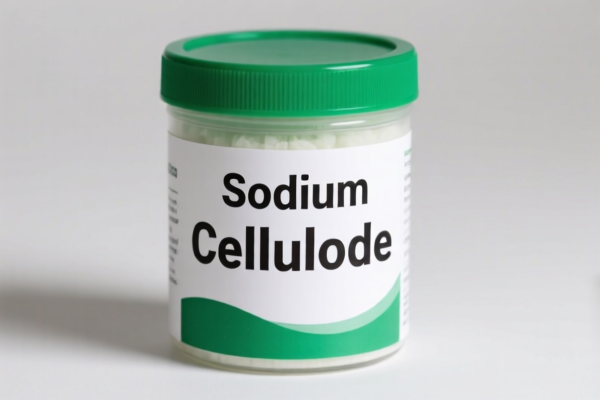
AI Analysis
🧪 Industrial Grade Dodecyl Sulfate (Surface-Active Agents)
🌐 HS Code Reference & Customs Clearance Guide | 2026 Latest Tariff Analysis | Professional Compliance Strategy
📌 I. Product Definition & Classification: What is "Dodecyl Sulfate" Really?
Dodecyl Sulfate (often referring to Sodium Dodecyl Sulfate, SDS, or Ammonium Lauryl Sulfate, ALS) is an anionic organic surface-active agent. In international trade, it is classified under Heading 3402: Organic surface-active agents (other than soap); surface-active preparations, washing preparations... and cleaning preparations.
It is NOT soap (Heading 3401), even if derived from natural oils, because it is chemically synthesized or esterified into sulfate salts. It is primarily used in industrial detergents, emulsifiers, and wetting agents.
⚠️ Key Distinction Point:
- If it is a pure salt of sulfated alcohols (e.g., Sodium Dodecyl Sulfate) →归入 3402.39.90.10
- If it is a mixed anionic agent or other unspecified anionic surface-active agent →归入 3402.39.90.50
📦 II. HS Code Classification Details (2026 Latest Tariff Authority Mapping)
Based on the provided data, there are two specific HS codes for this product, depending on the precise chemical composition and retail packaging status.
| HS Code | Product Description | Applicable Scenario | Key Characteristic |
|--------|--------------------------|--------------------------|
| 3402.39.90.10 | Salts of sulfated alcohols | Pure Sodium/Ammonium Dodecyl Sulfate; Industrial bulk chemical | ✅ Specific chemical type: Sulfated alcohol salt |
| 3402.39.90.50 | Other anionic organic surface-active agents | Mixed formulations; Other anionic agents not specified as sulfated alcohol salts | ✅ General category: Other anionic agent |
🔍 Critical Reminder:
- Both codes fall under 3402.39.90 (Anionic organic surface-active agents, other).
- Do NOT misclassify as "Soap" (3401) or "Detergent Bars" (3401). These are pure active agents or preparations, not finished soap bars.
- If the product is put up for retail sale (e.g., small bottles for home use), it may still be 3402, but the description must specify "put up for retail sale." However, "Industrial Grade" implies bulk/industrial use, so 3402.39 is appropriate.
💰 III. 2026 Latest Tariff Rate Details (Including Surtaxes & Policy Add-ons)
✅ Applicable Country: United States (US)
✅ Origin: China (CN)
✅ Effective Date: November 10, 2025 onwards (including subsequent imports)
🎯 1. 3402.39.90.10 — Salts of Sulfated Alcohols
| Item | Content |
|---|---|
| Base Tariff Rate | 3.7% (ad valorem) |
| Surtax (Section 301) | +25.0% (From USITC Footnote 9903.88.01 / Trade Act 301) |
| Total Tax Rate | 28.7% |
| Tax Calculation | CIF Value × 28.7% |
| De Minimis Eligibility | ❌ Not Eligible (Deny de minimis) |
| Legal Basis Path | USITC:3402.39.90.10 → FOOTNOTE:9903.88.01 (25% surtax) |
📌 Explanation:
- "Base 3.7%": Standard Most Favored Nation (MFN) duty for anionic surfactants.
- "+25% Surtax": Applies to all Chinese-origin goods under this HTS code due to Section 301 tariffs.
- Total 28.7%: This is a high-cost item. You must calculate landed cost accurately.
- No De Minimis: Imports under $800 cannot be cleared under Section 321; full duties apply.
🎯 2. 3402.39.90.50 — Other Anionic Organic Surface-Active Agents
| Item | Content |
|---|---|
| Base Tariff Rate | 3.7% (ad valorem) |
| Surtax (Section 301) | +25.0% (From USITC Footnote 9903.88.01 / Trade Act 301) |
| Total Tax Rate | 28.7% |
| Tax Calculation | CIF Value × 28.7% |
| De Minimis Eligibility | ❌ Not Eligible (Deny de minimis) |
| Legal Basis Path | USITC:3402.39.90.50 → FOOTNOTE:9903.88.01 (25% surtax) |
📌 Note:
- Identical Tax Structure: Even though the product description is broader ("Other"), the tariff rate is exactly the same as3402.39.90.10.
- Why two codes? Customs may require specific chemical naming. If you are unsure if your Dodecyl Sulfate is strictly a "sulfated alcohol salt" (which it is), use.10. If it’s a blend, use.50. Always prioritize.10if pure.
🛠️ IV. Customs Clearance Practical Advice (Real-World Pitfall Avoidance)
✅ 1. Required Documentation Checklist (No Exceptions)
| Document | Mandatory? | Explanation |
|---|---|---|
| ✅ Product Specification Sheet | ✔️ | Must list CAS Number (e.g., 151-21-3 for SDS), purity, and chemical name. |
| ✅ Certificate of Origin (CO) | ✔️ | Essential for proving China origin (which triggers the 25% surtax). |
| ✅ Commercial Invoice | ✔️ | Must clearly state: "Industrial Grade Sodium Dodecyl Sulfate, Anionic Surfactant, Not Soap." |
| ✅ Safety Data Sheet (SDS) | ✔️ | Required for hazardous material handling (though not always dangerous, it’s a chemical). |
| ✅ Packing List | ✔️ | Net/Gross weight, container number, and seal number. |
✅ 2. Declaration Strategy (Key Mnemonic)
🔥 "Name is CAS, Type is Anionic, Not Soap, Tax is High!"
| Scenario | Correct Declaration | Incorrect Action |
|---|---|---|
| Pure Sodium Dodecyl Sulfate | 3402.39.90.10 + "Salts of sulfated alcohols" |
Call it "Detergent" → Risk of reclassification |
| Mixed Surfactant Blend | 3402.39.90.50 + "Other anionic agents" |
Call it "Soap" → Heading 3401 (Wrong category) |
| Retail Bottles (Home Use) | Still 3402.39.90.xx |
Assume different code for retail → Incorrect |
| Small Sample (<$800) | Full Duty 28.7% | Try to use De Minimis ($0 duty) → Denied! |
✅ 3. Special Circumstances Handling
| Situation | Handling Advice |
|---|---|
| OEM Private Label | Provide brand authorization letter; HS Code remains the same regardless of label. |
| Bulk vs. Retail | Both fall under 3402. The key is chemical identity, not packaging size. |
| Origin Fraud | Do not falsely declare as "Made in Vietnam" or "Made in Thailand" unless actually produced there. US CBP checks supply chains aggressively. |
| Chemical Name Precision | Use IUPAC name: Sodium dodecyl sulfate or Sodium lauryl sulfate. Avoid vague terms like "Cleaning Agent." |
🌍 V. Global Market Clearance Comparison (2026 Latest)
| Country/Region | Recommended HS Code | Tariff Rate | Certification Required | Notes |
|---|---|---|---|---|
| 🇺🇸 USA | 3402.39.90.10 |
28.7% (China) | TSCA Compliance | High duty due to Section 301 |
| 🇨🇳 China | 3402.39.90 |
5–8% | None | Low import duty |
| 🇪🇺 EU | 3824.70.90 |
0–6.5% | REACH Registration | EU classifies under "Other chemical products" |
| 🇬🇧 UK | 3402.39.90 |
0–6.5% | UK REACH | Post-Brexit rules apply |
| 🇦🇺 Australia | 3402.39.90 |
5% | AICIS | No surtax |
📌 Conclusion:
- USA is the most expensive market for Chinese-origin Dodecyl Sulfate due to the 28.7% total duty.
- EU/UK may offer lower tariffs if properly classified under 3824 (other chemical products), but requires strict REACH compliance.
- Always calculate landed cost including the 25% surtax before quoting prices to US clients.
📌 VI. Common Errors & Pitfalls Guide (Lessons Learned)
❌ Error 1: Declaring as "Soap" (Heading 3401)
👉 Consequence: Incorrect classification → Penalties + Back Taxes + Audit.
Reason: Dodecyl sulfate is not a fatty acid salt derived directly from saponification; it’s a sulfate ester.
❌ Error 2: Assuming De Minimis ($800) applies
👉 Consequence: Seizure of goods + $500+ administrative fees.
Reason: Surtaxed goods are explicitly excluded from Section 321.
❌ Error 3: Vague Description "Surfactant"
👉 Consequence: Customs exam → Delay of 2–4 weeks → Demurrage charges.
Reason: CBP requires chemical name and CAS number.
❌ Error 4: Misclassifying as "Washing Preparations" (3402.20)
👉 Consequence: May still be 3402.39, but if it’s a preparation (mixed with water/fillers), it could be different.
Note: Pure salts are 3402.39. Mixtures may be 3402.20 (Washing preparations) but often still subject to similar duties. Check exact formulation.
✅ Correct Practice:
"Sodium Dodecyl Sulfate, Industrial Grade, CAS 151-21-3, Anionic Surface-Active Agent, Not Soap, For Use in Emulsification."
🎯 VII. Conclusion: Professional Declaration, Save Costs, Avoid Risks!
🎯 Remember the Mnemonic:
🔹 "CAS is King, Type is Anionic, Not Soap, 28.7% Tax!"
🔹 "No De Minimis for Surtaxed Goods, Declare Accurately or Face Penalties!"
📌 Tips:
- If your Dodecyl Sulfate is produced in Vietnam or Malaysia, you may qualify for 0% surtax (if rules of origin are met).
- Apply for a Binding Ruling (BBR) from US CBP if you are unsure about the exact chemical classification. This provides legal certainty.
- Consider tariff engineering: If possible, blend with other components to change the chemical classification (consult a chemist).
📣 Immediate Action:
📞 Contact a licensed customs broker + Provide CAS Number + Verify Origin
🚀 Ensure your product clears smoothly, avoids seizures, and manages tax costs effectively!
✨ Professional clearance starts with accurate classification!
💼 Every percentage point of duty affects your bottom line!
Customer Reviews
About HS Code Classification
The Harmonized System (HS) is an internationally standardized nomenclature developed by the World Customs Organization (WCO) to classify traded products. Over 200 countries use the HS system as the basis for customs tariffs, trade statistics, and import/export regulations.
Each HS code follows a hierarchical structure:
- Chapter (2 digits) — Broad category of goods (e.g., Chapter 84: Machinery and Mechanical Appliances)
- Heading (4 digits) — More specific grouping within the chapter
- Subheading (6 digits) — Internationally standardized breakdown, used by all WCO member countries
- National subdivisions (8-10 digits) — Country-specific extensions for further classification, such as US HTSUS 10-digit codes
Correct HS code classification is essential for smooth customs clearance, accurate duty payment, and compliance with trade regulations. Misclassification can lead to customs delays, overpayment of duties, or penalties.
When importing from CN to US, the applicable tariff rates may include:
- Most-Favored-Nation (MFN) rate — The standard duty rate applied to WTO members
- General rate — Applied to countries without trade agreements
- Trade remedy duties — Additional tariffs such as Section 301 (anti-dumping), Section 232 (national security), or countervailing duties
The information provided on this page is for reference purposes only. For official classification, please consult with your local customs authority or a licensed customs broker.