Industrial Grade Full Grain Hairless Cowhide
CN → US| HS Code | Tariff Rate | Origin | Destination | Doc |
|---|---|---|---|---|
| 4107111020 | 35.0% | CN | US | Official Doc |
| 4107113000 | 13.6% | CN | US | Official Doc |
| 4107115000 | 12.8% | CN | US | Official Doc |
| 4107111020 | 35.0% | CN | US | Official Doc |
| 4107115000 | 12.8% | CN | US | Official Doc |
Product Images
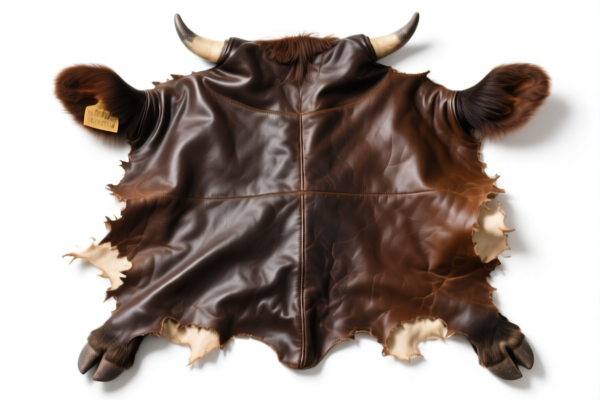
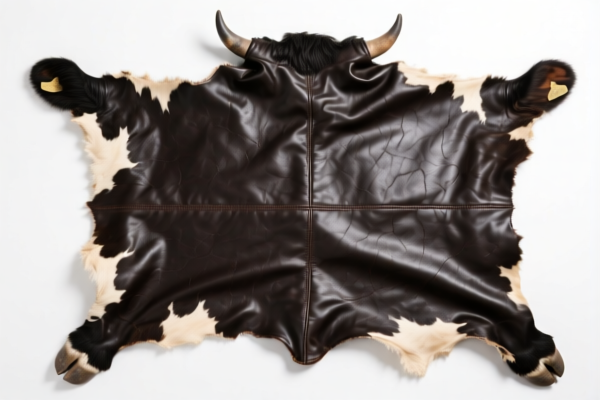
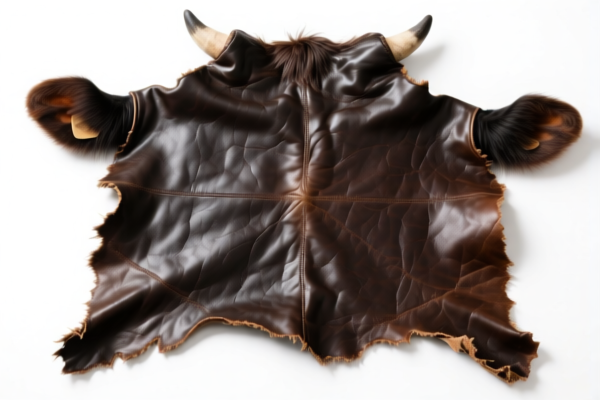
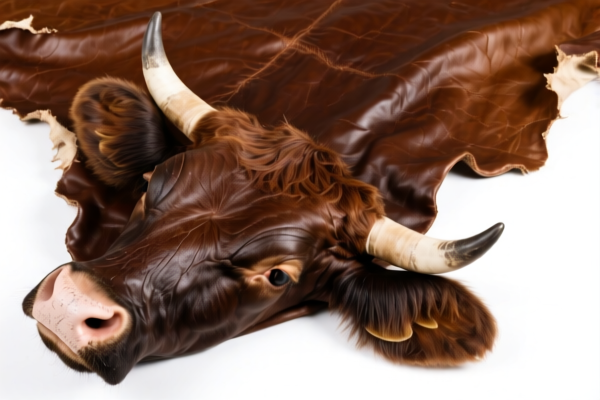
AI Analysis
🐄 Industrial Grade Full Grain Hairless Cowhide (Unsplit Leather)
🌐 HS Code Reference & Customs Clearance Guide | 2026 Latest Tariff Analysis | Professional Clearance Strategy
📌 I. Product Definition & Classification: What is "Industrial Grade Full Grain Hairless Cowhide"?
In international trade, "Industrial Grade Full Grain Hairless Cowhide" refers to raw or semi-processed leather intended for heavy-duty applications. It is crucial to distinguish between the physical state (split vs. unsplit) and the intended use (industrial vs. decorative) to determine the correct HS Code.
Key Distinction Points: * "Full Grain" (全粒面): The leather retains the natural grain surface of the hide. It has not been sanded or buffed to remove imperfections. * "Hairless" (无毛): The hair has been removed through the tanning process. * "Industrial Grade" (工业级): Implies the leather is used for non-luxury applications, such as belts, straps, upholstery, or machinery parts, rather than high-fashion accessories. * "Unsplit" (未剖分) vs. "Split" (剖分): This is the most critical factor for HS Code determination. * If the leather is unsplit (one single layer of grain), it generally falls under 4107. * If the leather is split (sliced horizontally), it typically falls under 4115 or 4106 depending on processing.
⚠️ Critical Clarification:
Based on the provided<DATA>, the goods are classified under Heading 4107 (Leather of bovine animals, full grain, other than suede). The distinction lies in whether it is "other than" (未剖分/unsplit) or specifically categorized under industrial usage with potential trade restrictions.
📦 II. HS Code Classification Details (2026 Latest Tariff Authority Comparison)
| HS Code | Product Description | Applicability Scenario | Tax Rate (Total) | Trade Restriction |
|---|---|---|---|---|
4107.11.30.00 |
Unsplit Full-Grain Cowhide (Other than Suede) | Standard industrial/unsplit leather; no 301/122 additional tariffs applied to this specific subcode in the data source. | 13.6% | ❌ No 301/122 Additional Tariffs listed in summary |
4107.11.50.00 |
Industrial Full-Grain Cowhide (Other) | Broad industrial use; subject to 122-Clause tariffs. | 12.8% | ⚠️ Subject to 122-Clause Tariff (10%) |
4107.11.10.20 |
Industrial Full-Grain Cowhide (Specific Sub-category) | Specific industrial classification often linked to stricter trade measures. | 35.0% | ⚠️ Subject to 301-Clause (25%) + 122-Clause (10%) |
🔍 Key Insight:
-4107.11.30.00is the most favorable code among the options, with the lowest total tax rate (13.6%). It specifically mentions "unsplit" (未剖分).
-4107.11.10.20carries the highest burden (35.0%) due to the combination of 25% Section 301 tariffs and 10% Section 122 tariffs.
-4107.11.50.00is an intermediate option with 12.8% total tax, subject only to the 10% Section 122 tariff.
💰 III. 2026 Latest Tariff Rate Breakdown (Including Additional Duties & Policy Add-ons)
✅ Applicable Country: United States (US)
✅ Origin: China (CN)
✅ Effective Time: As per current trade policy (2025-2026)
🎯 1. 4107.11.10.20 – Industrial Full-Grain Cowhide (High Tariff Category)
| Item | Content |
|---|---|
| Base Rate | 0.0% (Ad Valorem) |
| Section 301 Additional Tariff | +25.0% (Trade Act of 1974, Section 301) |
| Section 122 Additional Tariff | +10.0% (Trade Enforcement Act, Section 122) |
| Total Tariff Rate | 35.0% |
| Tax Calculation | CIF Value × 35.0% |
| De Minimis Exemption | ❌ Not Eligible (De Minimis does not apply to China-origin goods under Section 301/122) |
| Legal Basis Path | USITC: 4107.11.10.20 → Trade Act: Section 301 (25%) → Trade Enforcement: Section 122 (10%) |
📌 Explanation:
- This code attracts the maximum hit in the provided data.
- The 25% is due to ongoing US-China trade tensions (Section 301).
- The 10% is a specific enforcement tariff (Section 122).
- Total Cost Impact: For every $10,000 of goods, you pay $3,500 in duties alone.
🎯 2. 4107.11.50.00 – Industrial Full-Grain Leather (Moderate Tariff)
| Item | Content |
|---|---|
| Base Rate | 2.8% (Ad Valorem) |
| Section 301 Additional Tariff | 0.0% (Not listed in source) |
| Section 122 Additional Tariff | +10.0% |
| Total Tariff Rate | 12.8% |
| Tax Calculation | CIF Value × 12.8% |
| De Minimis Exemption | ❌ Not Eligible |
| Legal Basis Path | USITC: 4107.11.50.00 → Trade Enforcement: Section 122 (10%) |
📌 Note:
- This code offers a significant saving compared to4107.11.10.20(12.8% vs 35.0%).
- It is subject only to the 10% Section 122 tariff.
- Suitable if the product can be classified under "other industrial leather" rather than the specific sub-category requiring 301 tariffs.
🎯 3. 4107.11.30.00 – Unsplit Full-Grain Cowhide (Lowest Tariff)
| Item | Content |
|---|---|
| Base Rate | 3.6% (Ad Valorem) |
| Section 301 Additional Tariff | 0.0% (Not listed in source) |
| Section 122 Additional Tariff | 0.0% (Not listed in source) |
| Total Tariff Rate | 13.6% |
| Tax Calculation | CIF Value × 13.6% |
| De Minimis Exemption | ❌ Not Eligible |
| Legal Basis Path | USITC: 4107.11.30.00 |
📌 Advantage:
- This is the most cost-effective option in the dataset.
- Key requirement: The leather must be explicitly "Unsplit" (未剖分). If your product is split, you cannot use this code.
- No additional Section 301 or 122 tariffs are listed for this specific subcode in the source data.
🛠️ IV. Customs Clearance Practical Advice (Battle-Tested Pitfall Guide)
✅ 1. Essential Documentation Checklist
| Document | Required | Explanation |
|---|---|---|
| ✅ Product Specification Sheet | ✔️ | Must specify: "Full Grain," "Unsplit" (if claiming 4107.11.30.00), "Tanned," "Hair-Removed." |
| ✅ Technical Data Sheet | ✔️ | Include thickness, area, and intended industrial use. |
| ✅ Photographs | ✔️ | Show the grain surface (full grain) and cross-section (to prove it is unsplit if applicable). |
| ✅ Commercial Invoice | ✔️ | Clearly state "Industrial Grade Full Grain Cowhide, Unsplit" or "Industrial Full Grain Leather." |
| ✅ Bill of Lading/Air Waybill | ✔️ | Ensure consistent description. |
| ✅ Certificate of Origin | ✔️ | For US-China trade, origin is critical for tariff assessment. |
✅ 2. Declaration Strategy (Key Mnemonics)
🔥 "Unsplit is Gold, Split is Gold-Mine, Industrial is Heavy, Check 122 Twice!"
| Scenario | Correct Declaration | Incorrect Declaration | Consequence |
|---|---|---|---|
| Unsplit Full Grain | 4107.11.30.00 "Unsplit Full-Grain Cowhide" |
4107.11.50.00 or 4107.11.10.20 |
Overpayment of tax (13.6% vs 12.8%/35.0%) |
| Split Full Grain | NOT 4107.11.xxxx | 4107.11.30.00 |
Rejection/Fine (Split leather belongs to 4106/4115) |
| Industrial Use | 4107.11.50.00 "Industrial Full-Grain Leather" |
4107.11.10.20 |
Overpayment (12.8% vs 35.0%) |
| Specific Industrial Sub-cat | 4107.11.10.20 "Industrial Full-Grain Cowhide (Specific)" |
4107.11.30.00 |
Undervaluation risk if misclassified |
✅ 3. Special Considerations
| Scenario | Handling Advice |
|---|---|
| "Full Grain" vs. "Corrected Grain" | Ensure the invoice says "Full Grain." Corrected grain may fall under different subheadings or have different tax treatments. |
| "Hairless" vs. "Suede" | The term "Hairless" confirms hair removal. Do not use "Suede" unless it is actually suede (suede is split leather). Suede is not full grain. |
| Section 122 Tariff (10%) | This tariff is often overlooked. Always check if your HS Code is subject to Section 122. Codes 4107.11.10.20 and 4107.11.50.00 are subject to it. 4107.11.30.00 is not listed with this tariff in the source. |
| Section 301 Tariff (25%) | Only applies to 4107.11.10.20 in this dataset. Avoid this code if possible by optimizing classification to 4107.11.30.00 or 4107.11.50.00. |
🌍 V. Global Market Comparison (2026 Latest)
| Country/Region | Recommended HS Code | Tariff (China Origin) | Certification | Notes |
|---|---|---|---|---|
| 🇺🇸 USA | 4107.11.30.00 |
13.6% (Lowest) | No special certs | Avoid 4107.11.10.20 due to 35% rate |
| 🇨🇳 China | 4107.11.30.00 |
~10-13% | N/A | Import duties apply |
| 🇪🇺 EU | 4107.11 |
12-13% | CE (if finished goods) | No Section 122/301 equivalent |
| 🇬🇧 UK | 4107.11 |
12-13% | UKCA | Post-Brexit tariff structure similar to EU |
| 🇦🇺 Australia | 4107.11 |
5-10% | RCM | Lower tariffs than US |
📌 Conclusion:
- The US market is the most expensive due to Section 301 and 122 tariffs.
- Strategic Goal: Classify under4107.11.30.00(13.6%) if the leather is unsplit.
- If not unsplit, aim for4107.11.50.00(12.8%) to avoid the 25% Section 301 tariff.
- Avoid4107.11.10.20unless absolutely necessary, as it incurs a 35% total tax burden.
📌 VI. Common Mistakes & Pitfalls (Lessons Learned)
❌ Mistake 1: Classifying Split Leather as Full Grain
👉 Consequence: Misclassification, penalties, and possible seizure. Split leather belongs to 4106 or 4115, not 4107.11.
❌ Mistake 2: Ignoring Section 122 Tariff
👉 Consequence: Unexpected 10% tax bill. Many importers only check Section 301 (25%) and forget Section 122 (10%).
❌ Mistake 3: Using "Suede" in Description for Full Grain
👉 Consequence: Customs may reclassify as suede (split leather), leading to different duties and potential penalties.
❌ Mistake 4: Failing to Specify "Unsplit"
👉 Consequence: If you claim 4107.11.30.00 but the leather is split, you will be downgraded to a higher-tariff category or face penalties.
✅ Correct Practice:
"Industrial Grade, Full Grain, Unsplit, Tanned Cowhide, Hair-Removed, for Belt/Strap Use"
HS Code:4107.11.30.00
Total Tax: 13.6%
🎯 VII. Conclusion: Professional Classification, Cost Optimization!
🎯 Remember the Key Takeaways:
🔹 "Unsplit is King" →
4107.11.30.00at 13.6%
🔹 "Industrial but Not Split" →4107.11.50.00at 12.8% (Note: Base rate 2.8% + 10% Sec 122)
🔹 "Specific Industrial Subcat" →4107.11.10.20at 35.0% (Avoid if possible)
🔹 "Split Leather" → Not 4107.11 → Go to 4106/4115
📌 Pro Tip:
- Always request a Pre-Ruling (Advance Ruling) from US Customs (CBP) if your shipment volume is high.
- Ensure your Product Description matches the HS Code precisely.
- Document the "Unsplit" nature with cross-section photos.
📣 Immediate Action:
📞 Contact your customs broker with the technical sheets.
🚀 Optimize your HS Code to4107.11.30.00or4107.11.50.00to save 22.2% or 22.2% in taxes respectively, compared to4107.11.10.20.
✨ Smart Clearance, Start with Precise Classification!
💼 Every Percent Matters in Global Trade!
Customer Reviews
About HS Code Classification
The Harmonized System (HS) is an internationally standardized nomenclature developed by the World Customs Organization (WCO) to classify traded products. Over 200 countries use the HS system as the basis for customs tariffs, trade statistics, and import/export regulations.
Each HS code follows a hierarchical structure:
- Chapter (2 digits) — Broad category of goods (e.g., Chapter 84: Machinery and Mechanical Appliances)
- Heading (4 digits) — More specific grouping within the chapter
- Subheading (6 digits) — Internationally standardized breakdown, used by all WCO member countries
- National subdivisions (8-10 digits) — Country-specific extensions for further classification, such as US HTSUS 10-digit codes
Correct HS code classification is essential for smooth customs clearance, accurate duty payment, and compliance with trade regulations. Misclassification can lead to customs delays, overpayment of duties, or penalties.
When importing from CN to US, the applicable tariff rates may include:
- Most-Favored-Nation (MFN) rate — The standard duty rate applied to WTO members
- General rate — Applied to countries without trade agreements
- Trade remedy duties — Additional tariffs such as Section 301 (anti-dumping), Section 232 (national security), or countervailing duties
The information provided on this page is for reference purposes only. For official classification, please consult with your local customs authority or a licensed customs broker.