Industrial Grade Linoleate
CN → US| HS Code | Tariff Rate | Origin | Destination | Doc |
|---|---|---|---|---|
| 1521100060 | 17.5% | CN | US | Official Doc |
| 1521904000 | 17.5% | CN | US | Official Doc |
| 3823194000 | 20.7% | CN | US | Official Doc |
| 2916155100 | 39.4% | CN | US | Official Doc |
| 3823192000 | 19.8% | CN | US | Official Doc |
Product Images
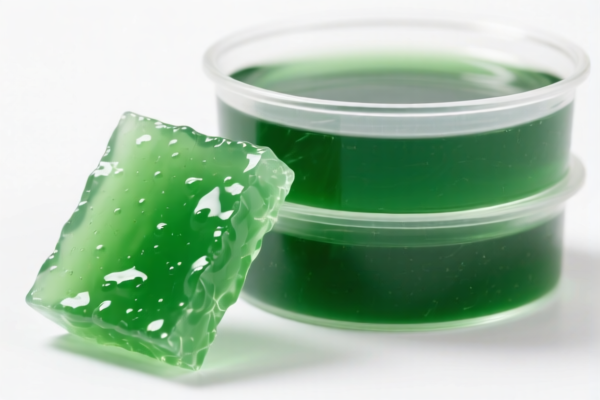

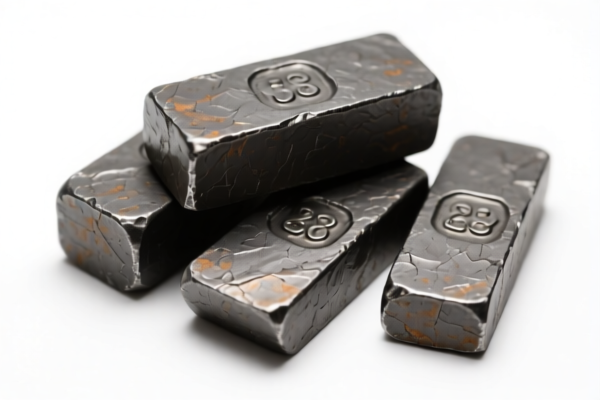
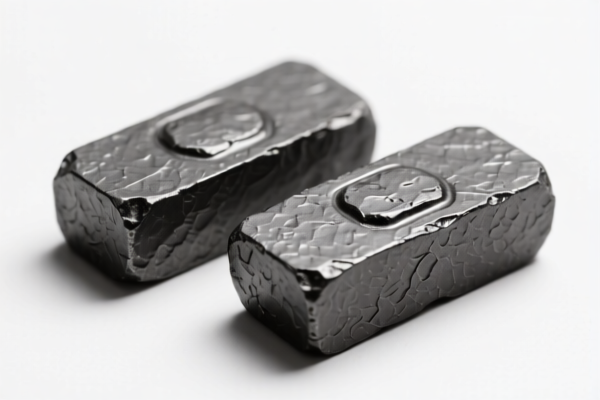
AI Analysis
🌿 Industrial Grade Linoleate (Linolenic Acid Derivatives)
🌐 HS Code Reference & Customs Clearance Guide | 2026 Latest Tariff Analysis | Professional Clearance Strategy
📌 I. Product Definition & Classification: What Exactly is "Industrial Grade Linoleate"?
Linoleate, often chemically referred to as Linolenic Acid or its derivatives (salts/esters), is a polyunsaturated fatty acid derived from plant sources (such as linseed, soybean, or sunflower oils). In international trade, the classification depends heavily on whether it is classified as a natural wax/oil derivative or an industrial single-carboxylic fatty acid.
⚠️ Key Distinction Point:
- If classified under Chapter 15 (Animal or Vegetable Fats and Oils): It is treated as a refined plant oil/wax derivative.
- If classified under Chapter 38 (Miscellaneous Chemical Products): It is treated as an industrial chemical raw material ("Industrial Single Carboxylic Fatty Acid").
- CRITICAL WARNING: Classification under Chapter 29 (Organic Chemicals) is generally incorrect for simple fatty acids like Linoleic/Linolenic acid unless they are highly purified esters or ethers with specific organic functions, leading to significantly higher tariffs.
📦 II. HS Code Classification Details (2026 Latest Tariff Authority Comparison)
| HS Code | Product Description | Application Scenario | Classification Logic |
|---|---|---|---|
1521.10.00.60 |
Vegetable Waxes (excluding tallow glycerides); Linoleic Acid as a plant-oil derivative | Plant-derived fatty acids, biological lubricants, cosmetics base | ✅ Plant Origin: Fits "Vegetable Waxes/Oils" category |
1521.90.40.00 |
Other Animal or Vegetable Waxes; Linoleic Acid as a non-triglyceride oil derivative | Refined fatty acids, non-glyceride lipid derivatives | ✅ Derivative: Fits "Non-triglyceride Oil Derivative" |
3823.19.40.00 |
Industrial Single-Carboxylic Fatty Acids; Refined Linoleic Acid for industrial use | Chemical synthesis, industrial surfactants, plasticizers | ✅ Industrial: Fits "Industrial Single-Carboxylic Fatty Acid" |
3823.19.20.00 |
Industrial Single-Carboxylic Fatty Acids; Refined for specific industrial uses | Industrial refining, generic fatty acid usage | ✅ Industrial: Fits "Refined/Industrial Fatty Acid" |
2916.15.51.00 |
Unsaturated Acyclic Monocarboxylic Acids; Linoleic Acid (Organic Chemical) | High-Purity chemical research, pharmaceutical intermediates | ❌ Misclassification Risk: Treats as pure organic chemical, triggering higher tariffs |
🔍 Key Reminder:
- "Industrial Grade" usually implies use in manufacturing (lubricants, plastics, coatings), favoring Chapter 38 or Chapter 15 over Chapter 29.
- Classification under 2916.15.51.00 attracts the highest tariffs due to the "25% Additional Tariff" (Section 301) on organic chemicals.
- Always provide CAS Number and Purity Level to customs to avoid misclassification between Chapter 15, 38, and 29.
💰 III. 2026 Latest Tariff Rate Breakdown (Including Additional Taxes & Policy Surcharges)
✅ Applicable Country: United States (US)
✅ Origin: China (CN)
✅ Effective Date: November 10, 2025 (and subsequent imports)
🎯 1. 1521.10.00.60 —— Vegetable Waxes (Linoleic Acid as Plant Oil Derivative)
| Item | Content |
|---|---|
| Base Tariff | 0.0% (ad valorem) |
| Section 301 Additional Tariff | +7.5% |
| Section 122 Tariff | +10% |
| Total Rate | 17.5% |
| Tax Calculation | CIF Value × 17.5% |
| De Minimis Exemption | ❌ Not Eligible (Deny De Minimis) |
| Legal Basis Path | IEEPA:9903.01.24 → USITC:1521.10.00.60 → FOOTNOTE:122 |
📌 Explanation:
- This is one of the lower tariff brackets for fatty acids.
- It relies on the argument that Linoleic Acid is a derivative of vegetable oils (Chapter 15), not a distinct organic chemical.
- Total 17.5% is manageable for most industrial supply chains.
🎯 2. 1521.90.40.00 —— Other Waxes (Non-Triglyceride Derivative)
| Item | Content |
|---|---|
| Base Tariff | 0.0% |
| Section 301 Additional Tariff | +7.5% |
| Section 122 Tariff | +10% |
| Total Rate | 17.5% |
| Tax Calculation | CIF Value × 17.5% |
| De Minimis Exemption | ❌ Not Eligible |
| Legal Basis Path | IEEPA:9903.01.24 → USITC:1521.90.40.00 → FOOTNOTE:122 |
📌 Note:
- Similar to above, but captures fatty acids that don't fit the strict "wax" definition of 1521.10.
- Total 17.5% remains the same. Favorable for cost control.
🎯 3. 3823.19.40.00 —— Industrial Single-Carboxylic Fatty Acids
| Item | Content |
|---|---|
| Base Tariff | 3.2% |
| Section 301 Additional Tariff | +7.5% |
| Section 122 Tariff | +10% |
| Total Rate | 20.7% |
| Tax Calculation | CIF Value × 20.7% |
| De Minimis Exemption | ❌ Not Eligible |
| Legal Basis Path | IEEPA:9903.01.24 → USITC:3823.19.40.00 → FOOTNOTE:122 |
📌 Explanation:
- Classifying as an industrial chemical (Chapter 38) incurs a small base duty (3.2%).
- Total 20.7% is only 3.2% higher than the Chapter 15 options.
- Recommended if the product is heavily refined for specific industrial chemical synthesis.
🎯 4. 2916.15.51.00 —— Unsaturated Acyclic Monocarboxylic Acids (Organic Chemical)
| Item | Content |
|---|---|
| Base Tariff | 4.4% |
| Section 301 Additional Tariff | +25.0% (Critical!) |
| Section 122 Tariff | +10% |
| Total Rate | 39.4% |
| Tax Calculation | CIF Value × 39.4% |
| De Minimis Exemption | ❌ Not Eligible |
| Legal Basis Path | IEEPA:9903.01.25 → USITC:2916.15.51.00 → FOOTNOTE:301 |
📌 WARNING:
- AVOID THIS CODE IF POSSIBLE.
- The 25% Section 301 tariff makes this the most expensive option.
- This code is typically reserved for highly purified organic acids used in pharmaceuticals or fine chemicals, not general industrial grade linoleate.
🎯 5. 3823.19.20.00 —— Industrial Single-Carboxylic Fatty Acids (Generic)
| Item | Content |
|---|---|
| Base Tariff | 2.3% |
| Section 301 Additional Tariff | +7.5% |
| Section 122 Tariff | +10% |
| Total Rate | 19.8% |
| Tax Calculation | CIF Value × 19.8% |
| De Minimis Exemption | ❌ Not Eligible |
| Legal Basis Path | IEEPA:9903.01.24 → USITC:3823.19.20.00 → FOOTNOTE:122 |
📌 Note:
- A middle-ground option in Chapter 38.
- Total 19.8% is slightly higher than Chapter 15 (17.5%) but significantly lower than Chapter 29 (39.4%).
🛠️ IV. Customs Clearance Practical Advice (Combat Pitfalls Guide)
✅ 1. Preparation Checklist (All Documents Required)
| Document | Mandatory | Explanation |
|---|---|---|
| ✅ Technical Data Sheet (TDS) | ✔️ | Must specify "Linoleic Acid" or "Linoleate," CAS number, and purity (e.g., 90%, 95%). |
| ✅ Structure Diagram | ✔️ | Show chemical structure to prove it is a fatty acid (C18:2), not a complex organic derivative. |
| ✅ Product Photos | ✔️ | Clear image of label showing "Industrial Grade," not "Food/Pharma Grade." |
| ✅ Commercial Invoice | ✔️ | Description must match HS code logic (e.g., "Refined Plant Fatty Acid"). |
| ✅ Certificate of Origin (CO) | ✔️ | Essential for verifying Chinese origin to apply correct tariffs. |
| ✅ Packaging List | ✔️ | Detail net/gross weight to prevent quantity disputes. |
✅ 2. Declaration Tips (Key Mnemonic)
🔥 "Plant Origin Low Rate, Industrial Medium, Chemical High Rate!"
🇺🇸 "If it's Plant-Based, Aim for Ch15. If Chemical, Avoid Ch29!"
| Scenario | Correct Declaration | Wrong Practice |
|---|---|---|
| General Industrial Use | 1521.10.00.60 or 3823.19.20.00 |
Misreporting as 2916.15.51.00 → 39.4% Tariff! |
| High-Purity Pharma Grade | 2916.15.51.00 |
N/A (This is the correct code, but pay the tax) |
| Mixed with Solvents | Not a single substance → Requires different HS | Reporting as pure Linoleate |
✅ 3. Special Situation Handling
| Situation | Handling Advice |
|---|---|
| "Linoleate" vs. "Linolenic Acid" | Clarify in description. If it's the acid, use fatty acid codes. If it's an ester (e.g., Methyl Linoleate), check if it still fits Chapter 38 or moves to Chapter 29. |
| Food Grade vs. Industrial Grade | Industrial grade is safer for Chapter 15/38. Food grade might require FDA prior notice, but tariff classification remains similar. |
| Bulk Liquid vs. Solid | Physical state does not change HS code, but packaging description must be accurate. |
🌍 V. Global Market Comparison (2026 Latest)
| Country/Region | Recommended HS Code | Tariff (China Origin) | Certification | Notes |
|---|---|---|---|---|
| 🇺🇸 USA | 1521.10.00.60 / 3823.19.20.00 |
17.5% - 19.8% | None specific | Avoid 2916 (39.4%) |
| 🇨🇳 China | 2916.15.00.00 |
4.4% - 5% | N/A | Import into China is cheaper; export from China to US is costly. |
| 🇪🇺 EU | 1521.10.00.00 |
0% - 5% | REACH Registration | EU does not have Section 301/122 tariffs. |
| 🇬🇧 UK | 1521.10.00.00 |
0% - 5% | UK REACH | Post-Brexit rules apply. |
| 🇦🇺 Australia | 1521.10.00.00 |
5% | None | FTA may apply for some goods, check LST. |
📌 Conclusion:
- The US market is the most challenging due to Section 301 and Section 122 tariffs.
- EU and other markets are much friendlier, with tariffs often at 0-5%.
- For US imports,1521.10.00.60is the most cost-effective choice (17.5%).
📌 VI. Common Errors & Pitfall Guide (Lessons Learned)
❌ Error 1: Classifying Industrial Linoleate as 2916.15.51.00
👉 Consequence: Tax jumps from 17.5% to 39.4% → Double the cost!
❌ Error 2: Vague Description "Fatty Acid"
👉 Consequence: Customs may reclassify to the highest duty rate (Chapter 29) due to lack of proof.
👉 Fix: Specify "Linoleic Acid, Industrial Grade, Plant-Derived."
❌ Error 3: Ignoring Section 122 Tariff
👉 Consequence: Unexpected 10% surcharge on top of Section 301.
👉 Fix: Include 10% in cost calculations for all Chapter 15/38 imports.
❌ Error 4: Confusing Linoleate (Salt/Ester) with Linoleic Acid
👉 Consequence: If it's a metal salt (e.g., Zinc Linoleate), it may fall under Chapter 28 or 38.23.
👉 Fix: Provide exact chemical formula (C18H32O2 for acid, salts for others).
✅ Correct Practice:
"Linoleic Acid (Industrial Grade), CAS 112-80-1, Purity 90%, Refined from Linseed Oil, Not for Human Consumption"
🎯 VII. Conclusion: Precise Classification, Cost Savings!
🎯 Remember the Mnemonic:
🔹 "Plant-Based = 17.5% (Ch15), Industrial = 19.8-20.7% (Ch38), Chemical = 39.4% (Ch29)!"
🔹 "Avoid Chapter 29 for bulk fatty acids; it’s a tariff trap!"
🔹 "Section 122 adds 10% to everything from China!"
📌 Pro Tip:
If your Linoleate is sourced from Vietnam, India, or Malaysia, you may qualify for lower Section 301 rates or exclusions.
Recommend applying for a Customs Ruling (Pre-Ruling) before shipment to lock in the 17.5% rate under 1521.10.00.60.
📣 Immediate Action:
📞 Contact a licensed customs broker + Provide CAS Number + Request Pre-Ruling
🚀 Clear your Linoleate smoothly, keep tariffs at 17.5%, and protect your margins!
✨ Professional Clearance Starts with Accurate Classification!
💼 Every percentage point saved is pure profit!
Customer Reviews
About HS Code Classification
The Harmonized System (HS) is an internationally standardized nomenclature developed by the World Customs Organization (WCO) to classify traded products. Over 200 countries use the HS system as the basis for customs tariffs, trade statistics, and import/export regulations.
Each HS code follows a hierarchical structure:
- Chapter (2 digits) — Broad category of goods (e.g., Chapter 84: Machinery and Mechanical Appliances)
- Heading (4 digits) — More specific grouping within the chapter
- Subheading (6 digits) — Internationally standardized breakdown, used by all WCO member countries
- National subdivisions (8-10 digits) — Country-specific extensions for further classification, such as US HTSUS 10-digit codes
Correct HS code classification is essential for smooth customs clearance, accurate duty payment, and compliance with trade regulations. Misclassification can lead to customs delays, overpayment of duties, or penalties.
When importing from CN to US, the applicable tariff rates may include:
- Most-Favored-Nation (MFN) rate — The standard duty rate applied to WTO members
- General rate — Applied to countries without trade agreements
- Trade remedy duties — Additional tariffs such as Section 301 (anti-dumping), Section 232 (national security), or countervailing duties
The information provided on this page is for reference purposes only. For official classification, please consult with your local customs authority or a licensed customs broker.