Industrial Grade Palm Oil
CN → US| HS Code | Tariff Rate | Origin | Destination | Doc |
|---|---|---|---|---|
| 3823194000 | 20.7% | CN | US | Official Doc |
| 1522000000 | 21.3% | CN | US | Official Doc |
| 3823192000 | 19.8% | CN | US | Official Doc |
| 1511100000 | 17.5% | CN | US | Official Doc |
| 1511900000 | 17.5% | CN | US | Official Doc |
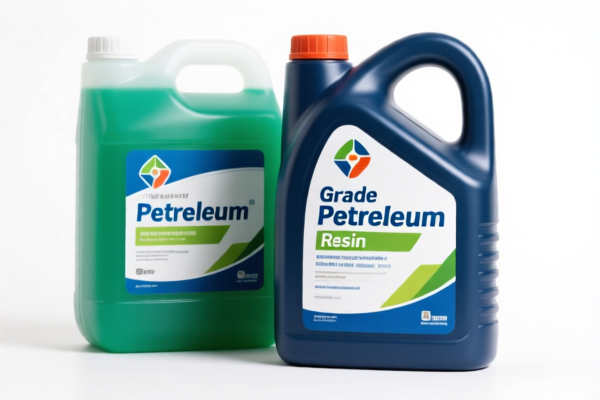
Product Images


AI Analysis
🌴 Industrial Grade Palm Oil: HS Code Classification & Global Clearance Strategy (2026 Update)
🌐 HS Code Reference & Clearance Guide | 2026 Tariff Schedule Full Analysis | Professional Customs Strategy
📌 I. Product Definition & Classification: Do You Really Know "Industrial Grade Palm Oil"?
Industrial Grade Palm Oil is a versatile commodity derived from the fruit of the oil palm (Elaeis guineensis). In international trade, it is not treated as a single product but rather as a spectrum of processed fats and fatty acids, depending on its purity, chemical state, and intended use.
It is generally categorized into three distinct chemical/functional forms: 1. Crude/Refined Vegetable Oils (Unmodified): The base fat itself (HS Chapter 15). 2. Industrial Fatty Acids: Chemically split/processed oils used for soap making, lubricants, and plastics (HS Chapter 38). 3. Degummed/Refined Acid Oils: By-products or intermediate stages (HS Chapter 38).
⚠️ Critical Distinction Point:
- If the product is unmodified crude or refined palm oil (fat material) → Classify under Chapter 15 (e.g.,1511.10.00,1511.90.00,1522.00.00).
- If the product is chemically split into fatty acids (industrial grade single carboxylic acid) → Classify under Chapter 38 (e.g.,3823.19.40,3823.19.20).
📦 II. HS Code Classification Details (2026 Latest Tariff Authority)
| HS Code | Product Description | Application Scenario | Material Attribute |
|---|---|---|---|
1511.10.00.00 |
Crude Palm Oil (Unmodified) | Raw material for food or further refining; Basic fat form | ✅ Raw/Primary Fat |
1511.90.00.00 |
Refined Palm Oil / Fractionated | Industrial processing, lubricants, non-food applications | ✅ Refined Fat |
1522.00.00.00 |
Degras / Animal/Vegetable Fat Residues | Industrial grease production, soap making feedstock | ✅ Fat Substance / Residue |
3823.19.20.00 |
Industrial Single Carboxylic Fatty Acids | Soap making, surfactants, plasticizers | ✅ Split Acid |
3823.19.40.00 |
Refined Acid Oil (Industrial Grade) | High-purity industrial fatty acid source | ✅ Refined Acid Oil |
🔍 Key Reminder:
- Chapter 15 covers the oil as fat. If you are selling "Palm Oil" in its bulk liquid form, even if "Industrial Grade," it often falls here unless chemically split.
- Chapter 38 covers the fatty acids derived from the oil. If the product is labeled "Fatty Acid" or "Acid Oil" and intended for chemical synthesis, it moves here.
- No Material Conflict: All HS Codes listed below are compatible with "Palm Oil" material attributes as per the 2026 classification rules.
💰 III. 2026 Latest Tariff Rate Analysis (Base, Additional, & Policy Surcharges)
✅ Applicable Country: United States (US)
✅ Country of Origin: China (CN)
✅ Effective Date: November 10, 2025 (Including subsequent imports)
✅ Tax Logic: Base Tariff + Section 301 (Add-on) + Section 122 (10%) = Total Effective Rate
🎯 1. 3823.19.40.00 —— Industrial Refined Acid Oil
| Item | Content |
|---|---|
| Base Tariff | 3.2% |
| Section 301 Add-on | +7.5% |
| Section 122 Tariff | +10% |
| Total Tariff Rate | 20.7% |
| Tax Calculation | CIF Value × 20.7% |
| De Minimis Exemption | ❌ No (Subject to full tariffs) |
| Legal Path | 122:3823.19.40 + 301:3823 |
📌 Interpretation:
This code applies to Refined Acid Oil where the material is palm-derived. The total tax of 20.7% includes a significant 10% "122条款" surcharge (specific to certain chemical imports from China).
🎯 2. 1522.00.00.00 —— Palm Oil (Fat Substance / Residue)
| Item | Content |
|---|---|
| Base Tariff | 3.8% |
| Section 301 Add-on | +7.5% |
| Section 122 Tariff | +10% |
| Total Tariff Rate | 21.3% |
| Tax Calculation | CIF Value × 21.3% |
| De Minimis Exemption | ❌ No |
| Legal Path | 122:1522 + 301:1522 |
📌 Interpretation:
Used for palm oil classified as fat substance or residues. This has the highest total tax (21.3%) among the options, making it critical to verify if the product truly fits "residue" vs. "refined acid."
🎯 3. 3823.19.20.00 —— Industrial Single Carboxylic Fatty Acids
| Item | Content |
|---|---|
| Base Tariff | 2.3% |
| Section 301 Add-on | +7.5% |
| Section 122 Tariff | +10% |
| Total Tariff Rate | 19.8% |
| Tax Calculation | CIF Value × 19.8% |
| De Minimis Exemption | ❌ No |
| Legal Path | 122:3823.19.20 + 301:3823 |
📌 Interpretation:
The lowest total tax (19.8%) among the industrial chemical options. Ideal if the product is explicitly defined as Single Carboxylic Fatty Acids derived from palm.
🎯 4. 1511.10.00.00 & 1511.90.00.00 —— Crude & Refined Palm Oil
| Item | Content |
|---|---|
| Base Tariff | 0.0% |
| Section 301 Add-on | +7.5% |
| Section 122 Tariff | +10% |
| Total Tariff Rate | 17.5% |
| Tax Calculation | CIF Value × 17.5% |
| De Minimis Exemption | ❌ No |
| Legal Path | 122:1511 + 301:1511 |
📌 Interpretation:
Best Value Option (17.5%). Applies to Crude (1511.10) or Refined/Fractionated (1511.90) palm oil where the chemical structure remains unmodified fat. If your product is simply "Industrial Palm Oil" without acid splitting, this is the optimal code.
🛠️ IV. Clearance Practical Suggestions (Real-World Pitfall Avoidance)
✅ 1. Material Declaration Checklist (Must-Have)
| Document | Required? | Critical Note |
|---|---|---|
| COA (Certificate of Analysis) | ✔️ | Must show Fatty Acid Profile vs. Triglyceride Content. This determines Chapter 15 vs. 38. |
| Technical Data Sheet (TDS) | ✔️ | Clearly state: "Crude Palm Oil," "Refined Palm Oil," or "Fatty Acid Mixture." |
| Process Flow Diagram | ✔️ | Shows if the oil was "split" (hydrolyzed) or just "refined." |
| Commercial Invoice | ✔️ | Must use precise English terms (e.g., "Industrial Fatty Acid" vs. "Industrial Palm Oil"). |
| Packing List | ✔️ | Indicate net weight vs. gross weight; avoid "mixture" if pure. |
✅ 2. Declaration Strategy (Key Mantra)
🔥 "Name Defines Code, Acid vs. Fat, Split Decides Tax!"
| Scenario | Correct HS Code | Incorrect Code | Risk |
|---|---|---|---|
| Raw/Refined Palm Oil (Unsplit) | 1511.10.00.00 or 1511.90.00.00 |
3823.19.20.00 |
Under-declaration → Audit/Fine + Back Taxes. |
| Split Fatty Acids (Hydrolyzed) | 3823.19.20.00 or 3823.19.40.00 |
1511.10.00.00 |
Over-declaration → Loss of tax savings (17.5% vs 19.8%). |
| Acid Oil Residue | 1522.00.00.00 |
1511.90.00.00 |
Classification ambiguity → Potential customs hold. |
✅ 3. Special Scenarios Handling
| Situation | Strategy |
|---|---|
| Product is "Palm Oil" but used for Soap | If it is crude/refined, use Chapter 15 (1511). Do not use Chapter 38 unless it is chemically "Fatty Acid." |
| Product is "Acid Oil" (By-product) | If it is a by-product of refining, verify if it is "Residue" (1522) or "Fatty Acid" (3823). 1522 has a higher tax (21.3%). |
| OEM / Private Label | Ensure the TDS matches the HS definition. "Industrial Grade" is not a code; it is a usage description. |
| Mixtures | If mixed with other vegetable oils, the code may change entirely (check specific blending rules). |
🌍 V. Global Market Comparison (2026 Update)
| Region | Recommended HS Code | Base Rate | 301/122 Add-ons | Total Est. Cost |
|---|---|---|---|---|
| 🇺🇸 USA | 1511.10.00.00 / 3823.19.20.00 |
0.0% - 3.2% | +7.5% + 10% | 17.5% - 21.3% |
| 🇨🇳 China | 1511.10.00.00 / 3823.19.20.00 |
0.0% - 3.2% | 0% | 0.0% - 3.2% |
| 🇪🇺 EU | 1511.10.00.00 / 3823.19.20.00 |
0.0% - 6.0% | 0% | 0.0% - 6.0% |
| 🇦🇺 Australia | 1511.10.00.00 / 3823.19.20.00 |
0.0% | 0% | 0.0% (AUSFTA) |
📌 Conclusion:
- USA imposes the highest total tariff (17.5%–21.3%) due to Section 301 and 122.
- China has 0% base tariff for these items, making it a strategic hub for re-export (if rules of origin are met).
- Optimal Strategy: If possible, aim for Chapter 15 (1511) codes (17.5%) as they have the lowest base tariff (0.0%) compared to Chapter 38 codes (which start at 2.3% or 3.2%).
📌 VI. Common Mistakes & Pitfall Avoidance (Lessons Learned)
❌ Mistake 1: Calling "Fatty Acids" "Palm Oil" to avoid 122 clauses.
👉 Consequence: Customs detects chemical difference (Acid vs. Fat) → Seizure + Penalty.
❌ Mistake 2: Declaring "Industrial Palm Oil" without specifying "Crude" vs. "Refined."
👉 Consequence: Ambiguity leads to Manual Inspection → Delays.
❌ Mistake 3: Using 1522 (Residue) when the product is actually "Refined Oil."
👉 Consequence: Overpaying 3.8% (Total 21.3% vs 17.5%).
✅ Correct Approach:
"Industrial Refined Palm Oil (Crude/Refined), Non-Edible Grade, CIF Value, No Chemical Modification."
Code:1511.10.00.00or1511.90.00.00(Lowest Tax).
🎯 VII. Conclusion: Precision Classification for Maximum Profit
🎯 Remember the Mantra:
🔹 "Fat = 1511 (17.5%), Acid = 3823 (19.8-20.7%), Residue = 1522 (21.3%)."
🔹 "HS Code determines destiny; 2.3% difference in base rate saves thousands."
📌 Pro Tip:
If your palm oil is sourced from Vietnam, Malaysia, or Thailand, you may qualify for Section 301 Exemptions, lowering rates to 0%~5%.
Action Plan: Apply for Pre-Classification Rulings before shipment to secure the 17.5% (1511) rate and avoid the 21% traps.
📣 Immediate Action:
📞 Contact a professional Customs Broker + Provide COA/TDS + Request Advance Ruling
🚀 Let your Industrial Palm Oil clear smoothly, efficiently, and profitably!
✨ Professional Customs, Starting with Accurate Classification!
💼 Every cent of your cost is worth precise calculation!
Customer Reviews
About HS Code Classification
The Harmonized System (HS) is an internationally standardized nomenclature developed by the World Customs Organization (WCO) to classify traded products. Over 200 countries use the HS system as the basis for customs tariffs, trade statistics, and import/export regulations.
Each HS code follows a hierarchical structure:
- Chapter (2 digits) — Broad category of goods (e.g., Chapter 84: Machinery and Mechanical Appliances)
- Heading (4 digits) — More specific grouping within the chapter
- Subheading (6 digits) — Internationally standardized breakdown, used by all WCO member countries
- National subdivisions (8-10 digits) — Country-specific extensions for further classification, such as US HTSUS 10-digit codes
Correct HS code classification is essential for smooth customs clearance, accurate duty payment, and compliance with trade regulations. Misclassification can lead to customs delays, overpayment of duties, or penalties.
When importing from CN to US, the applicable tariff rates may include:
- Most-Favored-Nation (MFN) rate — The standard duty rate applied to WTO members
- General rate — Applied to countries without trade agreements
- Trade remedy duties — Additional tariffs such as Section 301 (anti-dumping), Section 232 (national security), or countervailing duties
The information provided on this page is for reference purposes only. For official classification, please consult with your local customs authority or a licensed customs broker.