Industrial Grade Palmitic Acid (Low Acid Value)
CN → US| HS Code | Tariff Rate | Origin | Destination | Doc |
|---|---|---|---|---|
| 151710 | 0.0% | CN | US | Official Doc |
| 290544 | 0.0% | CN | US | Official Doc |
| 3824994140 | 39.6% | CN | US | Official Doc |
| 3824994190 | 39.6% | CN | US | Official Doc |
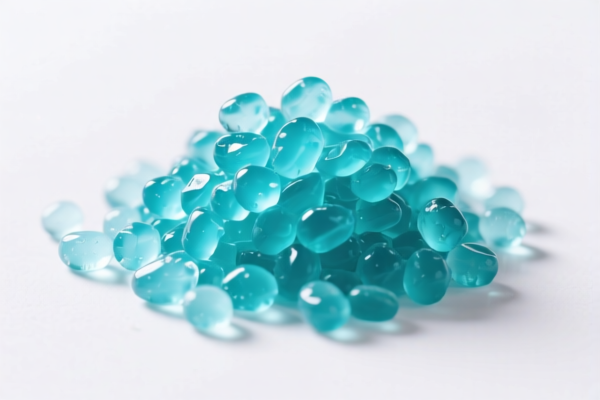
Product Images



AI Analysis
🧪 Industrial Grade Palmitic Acid (Low Acid Value)
🌐 HS Code Reference & Customs Clearance Guide | 2026 Latest Tariff Analysis | Professional Entry Strategy
📌 I. Product Definition & Classification: Do You Truly Understand "Fatty Acids"?
Palmitic Acid, specifically industrial-grade with a low acid value, is a saturated fatty acid widely used in the manufacturing of soaps, cosmetics, lubricants, and chemical syntheses. In international trade, its classification is highly sensitive to its chemical definition and industrial application. It is generally categorized into two main streams based on its processing status:
1. Refined Fatty Acid Esters/Mixtures (Chemical Preparation):
- If the product is processed into a specific binder, mixture, or preparation not elsewhere specified (e.g., fatty acid esters used as binders or surfactants), it may fall under Chapter 38.
- Key Indicator: "Prepared binders," "mixtures of fatty acid esters," or "chemical preparations."
2. Pure Chemical Compound (Free Fatty Acid):
- If the product is chemically defined as a free fatty acid (C16:0) used for industrial synthesis, cosmetics, or lubricants, it falls under Chapter 15 (Animal/Vegetable Fats) or Chapter 29 (Organic Chemicals).
- Key Indicator: "Palmitic acid, whether or not chemically defined," "free fatty acid," "low acid value" (indicating high purity).
⚠️ Critical Distinction Point:
- If the product is described as a "mixture of fatty acid esters" or a "preparation" (like a binder) →归入 3824.99.41
- If the product is "Palmitic Acid" (a specific organic compound) →归入 1517.10 or 2905.44
📦 II. HS Code Classification Details (2026 Latest Tariff Authority Comparison)
| HS Code | Product Description | Application Scenario | Tax Status (Source Data) |
|---|---|---|---|
3824.99.41.40 |
Prepared binders for foundry molds or cores; other chemical preparations: Fatty substances... Mixtures of fatty acid esters | Industrial binders, mixtures of fatty acid esters, non-pure chemical preparations | ✅ 29.6% (Base 4.6% + Added 25.0%) |
3824.99.41.90 |
Prepared binders... other: Fatty substances... Other | Other fatty substance preparations not elsewhere specified | ✅ 29.6% (Base 4.6% + Added 25.0%) |
1517.10 |
Palmitic acid, whether or not chemically defined, in the form of a free fatty acid | Industrial manufacturing of soaps, cosmetics, lubricants; high purity (low acid value) | ❌ Error (Failed to retrieve tax info) |
2905.44 |
Organic acids and their derivatives: Palmitic acid (Hexadecanoic acid) | Chemical synthesis, formulation, refined industrial-grade applications | ❌ Error (Failed to retrieve tax info) |
🔍 Key Reminder:
- Chapter 38 Codes (3824.99.41.40/.90) apply when the product is a "Preparation" or "Mixture" (e.g., fatty acid esters used as binders). These incur a 29.6% total tax.
- Chapter 15/29 Codes (1517.10/2905.44) apply when the product is a pure chemical compound (Palmitic Acid). Note: The source data indicates tax retrieval failure for these codes, suggesting they may require specific HTS adjustments or have complex tariff structures not fully captured in the summary.
💰 III. 2026 Latest Tariff Rate Detailed Explanation
✅ Applicable Country: United States (US)
✅ Origin: China (CN)
✅ Effective Date: Based on 2025-2026 tariff structures
🎯 1. 3824.99.41.40 & 3824.99.41.90 —— Chemical Preparations & Binders
| Item | Content |
|---|---|
| Base Tariff | 4.6% (ad valorem) |
| Added Tariff (Section 301) | +25.0% (Specific to Chinese origin) |
| Total Tax Rate | 29.6% |
| Tax Calculation | CIF Value × 29.6% |
| De Minimis Exemption | ❌ Not Applicable (Chemical preparations usually excluded from de minimis) |
| Legal Basis | Section 301 Tariff List (China-Origin Goods) |
📌 Explanation:
- The 29.6% rate is explicitly derived from the source data: Base 4.6% + Added 25.0%.
- This applies to "Mixtures of fatty acid esters" and "Other fatty substance preparations" under Chapter 38.
- High Risk: If you misclassify pure Palmitic Acid as a "Preparation" to avoid higher Chapter 38 rates, you risk customs rejection and penalties. Conversely, if you classify a "Binder Mixture" as pure acid, you may underpay duties.
🎯 2. 1517.10 & 2905.44 —— Pure Palmitic Acid (Free Fatty Acid)
| Item | Content |
|---|---|
| Base Tariff | Error/Unknown (Source data: "Failed to retrieve") |
| Added Tariff | Error/Unknown |
| Total Tax Rate | Error |
| Recommendation | Consult Customs Broker for precise HTS due to data gap |
📌 Note:
- While the source data shows an "Error" for tax retrieval on1517.10and2905.44, these are standard HS codes for Palmitic Acid.
- Typically, 2905.44 (Organic Chemicals) may have different Section 301 rates compared to Chapter 38. Do not assume the 29.6% rate applies here without verification.
🛠️ IV. Customs Clearance Practical Advice (Practical Pitfall Avoidance Guide)
✅ 1. Preparation Material Checklist (All Required)
| Document | Must Provide | Description |
|---|---|---|
| ✅ Certificate of Analysis (COA) | ✔️ | Critical: Must specify "Palmitic Acid," purity level, and Acid Value (Low Acid Value = High Purity) |
| ✅ Formula/Composition | ✔️ | Explicitly state if it is a Free Fatty Acid (Pure) or a Mixture/Ester (Preparation) |
| ✅ Product Photo | ✔️ | Show container labeling, including "Industrial Grade," "Low Acid Value" |
| ✅ Commercial Invoice | ✔️ | Clearly describe as "Palmitic Acid (Chemically Defined)" or "Fatty Acid Ester Mixture" |
| ✅ Safety Data Sheet (SDS) | ✔️ | To confirm chemical nature and hazard classification |
✅ 2. Declaration Tips (Key Mantra)
🔥 "Pure Acid vs. Mixture: Define Clearly, Tariff Varies!"
| Situation | Correct Declaration | Wrong Practice |
|---|---|---|
| Pure Palmitic Acid (High Purity, Low Acid Value) | 2905.44 or 1517.10 |
Declare as "Chemical Preparation" → May trigger 29.6% or audit |
| Fatty Acid Ester Mixture (e.g., for binders) | 3824.99.41.40 |
Declare as "Pure Acid" → Underpayment risk |
| Industrial Grade | Specify "Low Acid Value" | Vague term "Fatty Acid" → Customs classification delay |
✅ 3. Special Case Handling
| Situation | Handling Advice |
|---|---|
| Low Acid Value | Emphasize "High Purity" in documentation to support 2905.44 or 1517.10 classification |
| Mixture Components | If >50% fatty acid esters, classify under 3824 |
| Pre-Cleared Binders | If used specifically as "Foundry Mold Binders," ensure Chapter 38 alignment |
🌍 V. Global Main Market Customs Comparison (2026 Latest)
| Country/Region | Recommended HS Code | Tariff (Est.) | Certification | Remarks |
|---|---|---|---|---|
| 🇺🇸 USA | 3824.99.41.40 (if mixture) |
29.6% | SDS, MSDS | High tariff for Chapter 38 preparations |
| 🇨🇳 China | 2905.44 |
~5-10% | N/A | No additional Section 301 |
| 🇪🇺 EU | 2905.44 |
0% (if pure) | REACH | Pure organic acids often duty-free |
| 🇯🇵 Japan | 2905.44 |
~5% | FSLG | Pure acids preferred for lower duty |
📌 Conclusion:
- USA: Be extremely careful with Chapter 38 classifications, as they carry a 29.6% total tax (4.6% base + 25% added).
- Pure Palmitic Acid (2905.44) may have different rates (data gap in source), so verify with a broker.
- Misclassification Risk: Declaring a "mixture" as "pure acid" to save on Section 301 tariffs is a high-risk audit target.
📌 VI. Common Errors & Pitfall Guide (Lessons Learned)
❌ Error 1: Declaring "Palmitic Acid" but providing SDS showing it's a mixture of esters
👉 Consequence: Customs reclassifies to 3824.99.41.40 → 29.6% tax applied + fines
❌ Error 2: Using "Chemical Product" as a generic description
👉 Consequence: Customs delays shipment for classification review → Storage fees + delays
❌ Error 3: Ignoring "Low Acid Value" specification
👉 Consequence: Cannot prove high purity for 2905.44 classification → May default to higher-duty Chapter 38 or 15 codes
❌ Error 4: Assuming all "Fatty Acids" are the same
👉 Consequence: 3824 (Preparations) vs. 2905 (Pure) have different legal bases and tax rates
✅ Correct Approach:
"Free Fatty Acid, Palmitic, Chemically Defined, Low Acid Value, Industrial Grade, Purity >99%, for Soap/Cosmetic Manufacturing"
🎯 VII. Conclusion: Precision Classification for Cost Optimization
🎯 Remember the Mantra:
🔹 "Pure Acid = Chapter 29/15; Mixture/Prep = Chapter 38."
🔹 "Low Acid Value = High Purity = Support 2905.44 Argument."
🔹 "29.6% Tax on 3824: Avoid if Pure Acid Applies."
📌 Tip:
- If your product is pure Palmitic Acid, insist on 2905.44 classification with COA proof.
- If it is a mixture, prepare for 29.6% total tax.
- Always request a Pre-Importance Ruling if the product is a borderline "preparation."
📣 Immediate Action:
📞 Contact a licensed customs broker + Provide COA + Confirm "Pure" vs. "Mixture" status
🚀 Ensure accurate HS code, minimize duty, and accelerate customs clearance!
✨ Professional customs clearance starts with accurate classification!
💼 Every penny of duty matters!
Customer Reviews
About HS Code Classification
The Harmonized System (HS) is an internationally standardized nomenclature developed by the World Customs Organization (WCO) to classify traded products. Over 200 countries use the HS system as the basis for customs tariffs, trade statistics, and import/export regulations.
Each HS code follows a hierarchical structure:
- Chapter (2 digits) — Broad category of goods (e.g., Chapter 84: Machinery and Mechanical Appliances)
- Heading (4 digits) — More specific grouping within the chapter
- Subheading (6 digits) — Internationally standardized breakdown, used by all WCO member countries
- National subdivisions (8-10 digits) — Country-specific extensions for further classification, such as US HTSUS 10-digit codes
Correct HS code classification is essential for smooth customs clearance, accurate duty payment, and compliance with trade regulations. Misclassification can lead to customs delays, overpayment of duties, or penalties.
When importing from CN to US, the applicable tariff rates may include:
- Most-Favored-Nation (MFN) rate — The standard duty rate applied to WTO members
- General rate — Applied to countries without trade agreements
- Trade remedy duties — Additional tariffs such as Section 301 (anti-dumping), Section 232 (national security), or countervailing duties
The information provided on this page is for reference purposes only. For official classification, please consult with your local customs authority or a licensed customs broker.