Industrial Grade Plastic Pipe Fittings
CN → US| HS Code | Tariff Rate | Origin | Destination | Doc |
|---|---|---|---|---|
| 3917400095 | 40.3% | CN | US | Official Doc |
| 8481809050 | 37.0% | CN | US | Official Doc |
| 8481805090 | 38.0% | CN | US | Official Doc |
| 3917400050 | 40.3% | CN | US | Official Doc |
| 3917400050 | 40.3% | CN | US | Official Doc |
Product Images

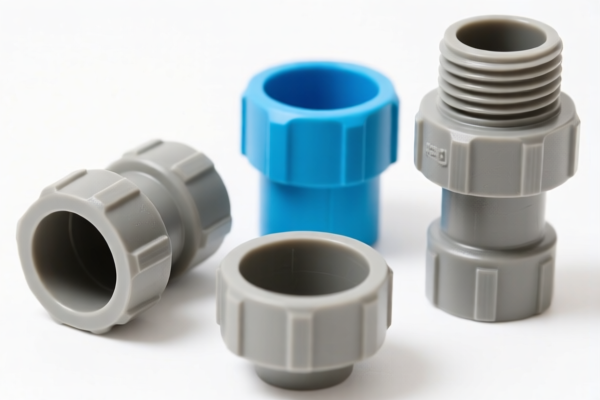
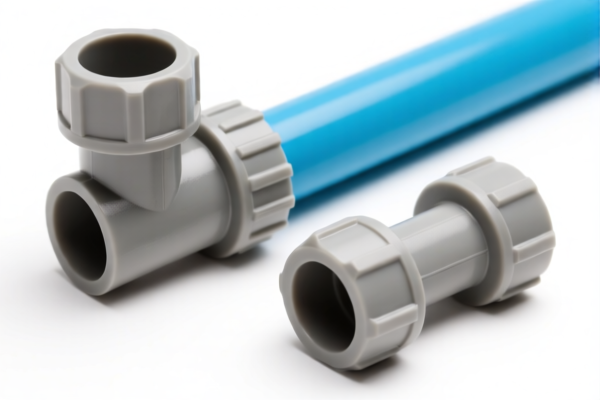
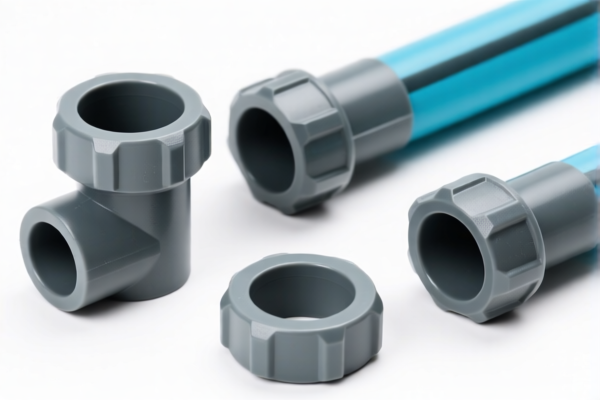
AI Analysis
🏭 Industrial Grade Plastic Pipe Fittings: The Ultimate Clearance Guide | 2026 HS Code & Tax Breakdown
🌐 HS Code Reference & Clearance Strategy | 2026 Latest Tariff Analysis | Professional Customs Compliance
📌 1. Product Definition & Classification: What Are "Industrial Plastic Pipe Fittings"?
Industrial-grade plastic pipe fittings are critical components used in fluid transport systems for agriculture, chemical processing, water management, and general industrial infrastructure. Unlike consumer-grade household plumbing, these fittings are designed to withstand higher pressures, corrosive substances, and harsh environmental conditions.
Key Characteristics: * Material: Typically HDPE (High-Density Polyethylene), PVC (Polyvinyl Chloride), PP (Polypropylene), or specialized engineering plastics. * Form: Elbows, tees, couplings, valves, flanges, and adapters. * Application: Agricultural irrigation, industrial chemical transport, municipal water systems.
⚠️ Critical Classification Dilemma: - Are they "Parts of Plastics" (Chapter 39)? If they are simple connectors, elbows, or sleeves made of plastic, they often fall under HS 3917. - Are they "Valves/Plumbing Fittings" (Chapter 84)? If they have functional mechanisms (like a valve core, check-valve, or pressure-regulating mechanism), they may fall under HS 8481.
📦 2. HS Code Classification Matrix (2026 Official Tariff Data)
Based on the provided dataset, here are the 5 specific HS Codes and their corresponding tax profiles for Chinese-origin Industrial/Agri-Grade Plastic Fittings imported into the US.
| HS Code | Product Description (from Data) | Total Tax Rate | Tax Breakdown | Key Classification Logic |
|---|---|---|---|---|
| 3917.40.00.95 | Agricultural plastic pipe fittings, plastic material, pipe fitting form, matches plastic accessory category. | 40.3% | Base: 5.3% Trade War: 25.0% Section 122: 10.0% |
Classified as a Plastic Accessory/Part. Simple geometric form (elbow/tee) without complex mechanical valving. |
| 8481.80.90.50 | Agricultural plastic pipe fittings, plastic material, matches "Other Appliances/Fixtures" category definition. | 37.0% | Base: 2.0% Trade War: 25.0% Section 122: 10.0% |
Classified as a Plumbing Fixture/Accessory. Often used for simple stop-cocks or non-valve plastic connectors deemed "fixtures." |
| 8481.80.50.90 | Agricultural plastic pipe fittings, pipe device form, other non-metallic material. | 38.0% | Base: 3.0% Trade War: 25.0% Section 122: 10.0% |
Classified as a Pipe Device/Fitting. Emphasizes the "pipe device" nature and non-metallic composition. |
| 3917.40.00.50 | Agricultural plastic pipe fittings, plastic material, non-pressurized pipe accessory usage. | 40.3% | Base: 5.3% Trade War: 25.0% Section 122: 10.0% |
Classified as a Non-Pressurized Plastic Part. Specific to low-pressure agricultural applications. |
| 3917.40.00.50 | Plastic pipe fitting valves, plastic material, pipe accessory usage consistency. | 40.3% | Base: 5.3% Trade War: 25.0% Section 122: 10.0% |
Note: Despite mentioning "valves" in summary, this HS Code is still 3917. This suggests it is a plastic component of a valve, not a mechanical valve itself. |
🔍 Key Insight: - HS 3917.40.00.50 and 3917.40.00.95 both carry the highest tax burden (40.3%). - HS 8481.80.90.50 offers the lowest tax burden (37.0%) among the options, but requires strict justification that the item is a "fixture" or "appliance" part rather than a raw plastic part.
💰 3. Detailed Tariff Structure & Legal Basis (US Imports from China)
For all items in this category, the total tax rate is composed of three distinct layers. This is a high-tax category due to US-China trade policies.
🎯 Layer 1: Base Tariff (MFN Rate)
- 3917 Series: 5.3% (for code .50 and .95)
- 8481 Series: 2.0% (for code .90.50) or 3.0% (for code .50.90)
- Explanation: This is the standard Most Favored Nation (MFN) duty for plastics or mechanical appliances.
🎯 Layer 2: Section 301 / Trade War Tariff
- Rate: +25.0%
- Legal Basis: USITC Footnote for Chapter 39 and Chapter 84 (List 4A/3B items).
- Explanation: Most Chinese plastic fittings and plumbing fixtures are subject to this retaliatory tariff.
🎯 Layer 3: Section 122 / Special Additional Tariff
- Rate: +10.0%
- Legal Basis: IEEPA (International Emergency Economic Powers Act) or specific Section 122 provisions applied to certain Chinese imports.
- Explanation: This is a specific additional duty often applied to agricultural or industrial supplies from China.
🧮 Total Effective Tax Rate Calculation
| HS Code | Base | Sec 301 | Sec 122 | TOTAL |
|---|---|---|---|---|
| 3917.40.00.95 | 5.3% | 25.0% | 10.0% | 40.3% |
| 8481.80.90.50 | 2.0% | 25.0% | 10.0% | 37.0% |
| 8481.80.50.90 | 3.0% | 25.0% | 10.0% | 38.0% |
| 3917.40.00.50 | 5.3% | 25.0% | 10.0% | 40.3% |
⚠️ De Minimis Exemption Status: ❌ NOT ELIGIBLE. These goods cannot use the $800 de minimis exemption (Section 321) for bulk commercial imports. They must go through formal entry.
🛠️ 4. Customs Clearance Strategy & Optimization
✅ Step 1: Determine the Correct HS Code (The 40.3% vs 37.0% Dilemma)
Strategy: Aim for HS 8481.80.90.50 (37.0%) if possible.
-
How to Justify 8481?
- Describe the item as a "Plastic Pipe Fixture" or "Fitting for Plumbing Systems."
- Highlight that it is an integral part of a pipe system, similar to a valve or tap, even if it doesn't move.
- Avoid using words like "Part," "Accessory," or "Component of Plastic Products" which strongly trigger Chapter 39 (40.3%).
-
When to Accept 3917?
- If the item is a simple elbow, tee, or reducer with no specific plumbing fixture designation.
- If it is strictly a non-pressurized agricultural connector.
✅ Step 2: Documentation Requirements
| Document | Requirement | Purpose |
|---|---|---|
| Commercial Invoice | Must list "Plastic Pipe Fittings" clearly. | Identify the product. |
| Product Description | Specify material (e.g., HDPE, PVC), size, pressure rating, and application (Agricultural/Industrial). | Justify HS Code choice. |
| Material Certificate | Proof of plastic type (HDPE/PVC/PP). | Verify Chapter 39 vs. 8481 nuances. |
| Picture of Product | Clear shot of the fitting, including any markings. | Help Customs officer visualize. |
| HS Code Pre-Ruling | HIGHLY RECOMMENDED. | Avoids random classification by CBP officers. |
✅ Step 3: Naming & Description Best Practices
📝 Bad Description: "Plastic Pipe Part for Agriculture" → Triggers 3917 (40.3%) 📝 Good Description: "Agricultural Irrigation Plastic Pipe Fitting (Fixture), Non-Valve Type" → May trigger 8481 (37.0%) or 3917 (40.3%) depending on CBP interpretation.
💡 Pro Tip: If the fitting has a threaded connection or is designed to connect to standard plumbing threads, argue for HS 8481. If it is glued/sweated/slide-fit, it leans toward HS 3917.
🌍 5. Global Market Comparison (Quick Reference)
| Market | Typical HS Code | Base Tariff | Additional Duties | Total Estimate |
|---|---|---|---|---|
| 🇺🇸 USA | 3917.40.00.95 / 8481.80.90.50 | 2-5% | +35% (Sec 301 + Sec 122) | 37% - 40.3% |
| 🇨🇳 China (Import) | 3917.40.00.90 / 8481.80.90.00 | 6.5% - 8% | None | ~7-8% |
| 🇪🇺 EU | 3917.21.00 / 8481.80 | 4.5% - 6% | None | ~5-6% |
| 🇬🇧 UK | 3917.21.00 / 8481.80 | 4.5% - 6% | None | ~5-6% |
| 🇦🇺 Australia | 3917.21.00 / 8481.80 | 5% | None | 5% |
📌 Conclusion: The US market is significantly more expensive due to trade tariffs. Cost-saving strategies should focus on tariff engineering (choosing 8481 over 3917) or supply chain diversification (though this data assumes Chinese origin).
🚨 6. Common Pitfalls & Risk Management
❌ Pitfall 1: Over-describing as "Valves" * If you call a simple plastic elbow a "Valve," Customs may reject it for misclassification. * ✅ Fix: Use "Fitting," "Connector," or "Adapter." Only use "Valve" if it has a moving part to control flow.
❌ Pitfall 2: Ignoring Section 122 * Many importers forget the extra 10%. * ✅ Fix: Budget for 35-40% total landed cost, not just the base tariff.
❌ Pitfall 3: Mixing HS Codes in One Shipment * Declaring some items as 3917 and others as 8481 without clear separation. * ✅ Fix: Provide a detailed packing list with separate HS codes for different types of fittings to avoid blanket scrutiny.
🎯 7. Final Recommendation
For Industrial Grade Plastic Pipe Fittings:
- Best Cost Option: Try to classify under HS 8481.80.90.50 (37.0%) by emphasizing the "fixture/appliance" nature of the fitting.
- Safest Option: Classify under HS 3917.40.00.50 or 3917.40.00.95 (40.3%) if the product is a simple non-valve connector.
- Action Item: Apply for a CBP Pre-Ruling before shipping large volumes. The difference between 37% and 40.3% is 3.3%, which can amount to thousands of dollars on high-volume shipments.
🚀 Bottom Line: Precision in naming and documentation is your best tool to mitigate the ~40% effective tariff rate in the US market.
✨ Clearance Success Starts with Accurate Classification!
💼 Maximize Profit, Minimize Risk.
Customer Reviews
About HS Code Classification
The Harmonized System (HS) is an internationally standardized nomenclature developed by the World Customs Organization (WCO) to classify traded products. Over 200 countries use the HS system as the basis for customs tariffs, trade statistics, and import/export regulations.
Each HS code follows a hierarchical structure:
- Chapter (2 digits) — Broad category of goods (e.g., Chapter 84: Machinery and Mechanical Appliances)
- Heading (4 digits) — More specific grouping within the chapter
- Subheading (6 digits) — Internationally standardized breakdown, used by all WCO member countries
- National subdivisions (8-10 digits) — Country-specific extensions for further classification, such as US HTSUS 10-digit codes
Correct HS code classification is essential for smooth customs clearance, accurate duty payment, and compliance with trade regulations. Misclassification can lead to customs delays, overpayment of duties, or penalties.
When importing from CN to US, the applicable tariff rates may include:
- Most-Favored-Nation (MFN) rate — The standard duty rate applied to WTO members
- General rate — Applied to countries without trade agreements
- Trade remedy duties — Additional tariffs such as Section 301 (anti-dumping), Section 232 (national security), or countervailing duties
The information provided on this page is for reference purposes only. For official classification, please consult with your local customs authority or a licensed customs broker.