Industrial Grade Polyether
CN → US| HS Code | Tariff Rate | Origin | Destination | Doc |
|---|---|---|---|---|
| 3907210000 | 41.5% | CN | US | Official Doc |
| 3907290000 | 41.5% | CN | US | Official Doc |
Product Images

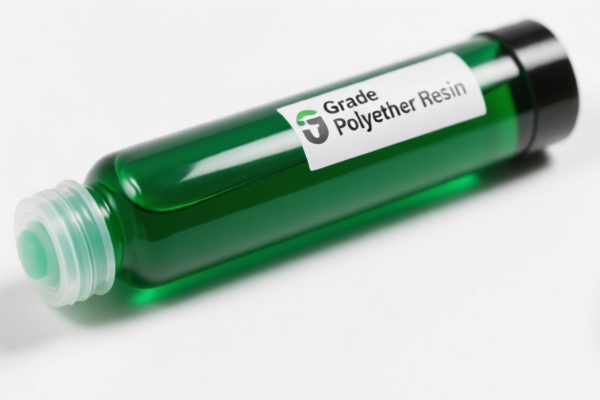
AI Analysis
🧪 Industrial Grade Polyether (Polyethers, Other, in Primary Forms)
🌐 HS Code Reference & Customs Clearance Guide | 2026 Latest Tariff Analysis | Professional Clearance Strategy
📌 I. Product Definition & Classification: What is "Industrial Grade Polyether"?
Polyethers are a class of polymers where the backbone consists of ether linkages. In the context of international trade (Chapter 39, Heading 3907), these are typically supplied in primary forms (such as liquids, powders, granules, or pastes) for use in downstream industrial applications.
"Industrial Grade" is not a specific HS Code category but a commercial designation indicating the purity or application focus (e.g., for surfactants, lubricants, or resin precursors). The classification depends strictly on the chemical structure and primary form.
The provided data identifies two specific sub-categories under HS Code 3907.21 and 3907.29:
- Bis(polyoxyethylene) methylphosphonate: A specific type of polyether with phosphonate groups, often used as a corrosion inhibitor or surfactant additive.
- Other Polyethers: A catch-all category for other polyethers that do not fit the specific description above (e.g., simple polyethylene glycols (PEGs), polypropylene glycols (PPGs), or ethoxylated alcohols) in primary forms.
⚠️ Key Distinction:
- If the product is Bis(polyoxyethylene) methylphosphonate, it falls under 3907.21.00.00.
- If the product is any other polyether (including common PEG/PPG grades) in primary form, it falls under 3907.29.00.00.
- Note: If these polyethers are formulated into finished articles (e.g., gaskets, tubing) or are secondary forms (e.g., pre-mixed adhesives with non-polymer components), they may fall under different chapters (e.g., Chapter 38 or 39 subheadings for articles). This guide assumes primary forms as per the provided data.
📦 II. HS Code Classification Details (2026 Latest Tariff Authority Match)
Based on the provided <DATA>, here is the exact mapping for "Industrial Grade Polyether" products:
| HS Code | Product Description | Applicable Scenario | Key Identifier |
|---|---|---|---|
3907.21.00.00 |
Other polyethers: Bis(polyoxyethylene) methylphosphonate | Specific chemical intermediate for corrosion inhibition, surfactants, or specialty resins | Contains methylphosphonate group |
3907.29.00.00 |
Other polyethers: Other | Standard industrial polyethers (e.g., PEG, PPG, polytetrahydropyran) not otherwise specified | General polyethers in primary form |
🔍 Crucial Reminder:
- Do not confuse with Epoxide Resins (3907.30-3907.99). While related, epoxides are distinct. Polyethers are typically formed by ring-opening polymerization of epoxides or ethers.
- Do not confuse with Alkyl Resins (3907.91).
- The term "Industrial Grade" does not change the HS Code; it only affects commercial value and purity standards. Classification is based on chemical composition.
💰 III. 2026 Latest Tariff Rate Breakdown (Detailed Tax Clauses)
✅ Applicable Country: United States (US)
✅ Origin: China (CN) [Assumed based on typical "additional tariff" context in examples; adjust if origin differs]
✅ Effective Time: Current rates apply as per the provided data.
🎯 1. 3907.21.00.00 —— Bis(polyoxyethylene) methylphosphonate
| Item | Content |
|---|---|
| Base Tariff Rate | 6.5% (Ad Valorem) |
| Section 301 Additional Tariff | +25.0% (Specific to Chinese origin for this subheading) |
| Total Tax Rate | 31.5% |
| Tax Calculation | CIF Value × 31.5% |
| De Minimis Eligibility | ❌ No (Generally, chemical products over certain thresholds do not qualify for de minimis exemptions under current US trade rules for high-tariff items) |
| Legal Basis Path | HTSUS:3907.21.00.00 → USITC Footnote: 301 → Additional Duty: 25% |
📌 Explanation:
- The 6.5% is the standard Most Favored Nation (MFN) rate for polyethers in primary forms.
- The 25% is an additional duty imposed under Section 301 of the Trade Act of 1974, specifically targeting certain chemical inputs from China.
- Total Burden: 31.5% is a significant cost factor. Importers must budget for this in their landed cost calculations.
🎯 2. 3907.29.00.00 —— Other Polyethers
| Item | Content |
|---|---|
| Base Tariff Rate | 6.5% (Ad Valorem) |
| Section 301 Additional Tariff | +25.0% (Specific to Chinese origin for this subheading) |
| Total Tax Rate | 31.5% |
| Tax Calculation | CIF Value × 31.5% |
| De Minimis Eligibility | ❌ No |
| Legal Basis Path | HTSUS:3907.29.00.00 → USITC Footnote: 301 → Additional Duty: 25% |
📌 Note:
- This applies to all other polyethers in primary forms not specified in 3907.21. This includes common industrial polyethers like:
- Polyethylene Glycol (PEG)
- Polypropylene Glycol (PPG)
- Polybutadiene oxide
- Ethoxylated fatty alcohols
- Same Tax Rate: Both subheadings carry the identical tax burden of 31.5% for Chinese-origin goods.
🛠️ IV. Customs Clearance Practical Advice (Real-World Pitfall Avoidance)
✅ 1. Documentation Checklist (All Must Be Provided)
| Document | Mandatory? | Explanation |
|---|---|---|
| ✅ Product Specification Sheet | ✔️ | Must clearly state the chemical name, CAS number, structure, and purity. For 3907.21, specify "Bis(polyoxyethylene) methylphosphonate". For 3907.29, specify the generic name (e.g., "Polyethylene Glycol 400"). |
| ✅ Certificate of Analysis (COA) | ✔️ | Proves the product is in primary form (liquid/powder) and confirms chemical composition. |
| ✅ Commercial Invoice | ✔️ | Must clearly describe the product as "Polyether, Primary Form" and include the HS Code. |
| ✅ Bill of Lading / Air Waybill | ✔️ | Ensure packaging type is noted (e.g., "Drums," "Tank Containers") to confirm primary form. |
| ✅ Origin Certificate | ✔️ | To prove country of origin (China vs. other) for tariff application. |
| ✅ Safety Data Sheet (SDS) | ✔️ | Required for hazardous material handling, even if not classified as hazardous. |
✅ 2. Declaration Tips (Key Rules)
🔥 "Be Specific, Be Accurate, Avoid General Terms!"
| Situation | Correct Declaration | Incorrect Declaration |
|---|---|---|
| Bis(polyoxyethylene) methylphosphonate | "Bis(polyoxyethylene) methylphosphonate, Primary Form, Industrial Grade" | "Chemical Additive" or "Corrosion Inhibitor" (Too vague → Risk of misclassification) |
| Standard Polyether (e.g., PEG) | "Polyethylene Glycol, Primary Form, Industrial Grade" | "Polymer" or "Resin" (Could be misclassified under 3907.99 or 3907.60) |
| Pre-mixed Adhesive | Not Primary Form → Likely 3906.90 or 3909.50 | Declaring as "Polyether Primary Form" → Misclassification Risk |
✅ 3. Special Considerations
| Situation | Handling Advice |
|---|---|
| Mixed Containers | If one container contains both 3907.21 and 3907.29 products, they must be separated and declared on different lines. Mixing can lead to customs audits. |
| Non-Chinese Origin | If the polyether is from Germany, Japan, or the US, the 25% additional tariff does NOT apply. Only the 6.5% base rate applies. Always provide proof of origin. |
| Secondary Forms | If the polyether is formulated into a glue, sealant, or plastic article, it is NOT under 3907.2x. It may fall under Chapter 35, 38, or 39 articles. Re-classify accordingly. |
🌍 V. Global Market Comparison (2026 Latest)
| Country/Region | Recommended HS Code | Tariff Rate (China Origin) | Notes |
|---|---|---|---|
| 🇺🇸 United States | 3907.21.00.00 / 3907.29.00.00 |
31.5% | High additional duty (25%) applies. |
| 🇨🇳 China | 3907.21 / 3907.29 | 6.5% (Import) / 0% (Export) | Base rate applies. No additional tariffs. |
| 🇪🇺 European Union | 3907.21 / 3907.29 | 0% (Most MFN rates) | No Section 301 equivalent. Low tariff barrier. |
| 🇯🇵 Japan | 3907.21 / 3907.29 | 6.0% - 7.5% | Competitive, but no additional duties. |
| 🇰🇷 South Korea | 3907.21 / 907.29 | 0% (Under KORUS) | Free trade agreement benefits apply. |
📌 Conclusion:
- USA is the most expensive market for Chinese-origin polyethers due to the 25% additional tariff.
- EU, Japan, and Korea offer much lower tariff burdens. Consider supply chain diversification if shipping to the US.
- Duty Drawback: If the polyether is imported into the US, used to manufacture a foreign article, and then exported, you may recover some duties. Consult a customs broker.
📌 VI. Common Mistakes & Pitfalls (Lessons Learned)
❌ Mistake 1: Declaring "Polyether" without specifying the type.
👉 Consequence: Customs may classify under the highest-tariff or least-favored subheading, or request additional data, causing delays.
❌ Mistake 2: Assuming "Industrial Grade" means a different HS Code.
👉 Consequence: No difference. "Industrial Grade" is a commercial term. Classification is chemical. Misdeclaration can lead to penalties.
❌ Mistake 3: Confusing Primary Forms with Articles.
👉 Consequence: If you ship polyether in a finished gasket, declaring it as "Polyether Primary Form" is false declaration. It should be classified as an article of plastic/rubber, leading to higher duties and fines.
❌ Mistake 4: Ignoring the 25% Additional Tariff for US Imports.
👉 Consequence: Under-budgeting by 25% can destroy profit margins. Always calculate landed cost including the 31.5% total rate for Chinese goods.
✅ Correct Approach:
"Bis(polyoxyethylene) methylphosphonate, Primary Form, CAS #123456-78-9, Industrial Grade, Packaged in Drums, HS Code: 3907.21.00.00"
🎯 VII. Conclusion: Professional Declaration, Cost Control, Compliance
🎯 Remember the Key Takeaway:
🔹 "Specific Chemical Name is King!"
🔹 "Primary Form vs. Article – Know the Difference!"
🔹 "25% Additional Duty for US/China – Plan Your Budget!"
📌 Pro Tip:
If your polyether is not from China (e.g., from Europe or South Korea), you can save 25% of the tariff by providing a valid Certificate of Origin. Always verify the origin with your supplier.
📣 Immediate Action:
📞 Contact a licensed customs broker to verify the HS Code for your specific chemical formulation.
📄 Prepare a detailed COA and SDS to support your classification.
💡 Consider pre-classification rulings if the product is a new or borderline formulation.
✨ Professional Clearance Starts with Accurate Classification!
💼 Every Percentage Point of Duty Counts in Your Bottom Line!
Customer Reviews
About HS Code Classification
The Harmonized System (HS) is an internationally standardized nomenclature developed by the World Customs Organization (WCO) to classify traded products. Over 200 countries use the HS system as the basis for customs tariffs, trade statistics, and import/export regulations.
Each HS code follows a hierarchical structure:
- Chapter (2 digits) — Broad category of goods (e.g., Chapter 84: Machinery and Mechanical Appliances)
- Heading (4 digits) — More specific grouping within the chapter
- Subheading (6 digits) — Internationally standardized breakdown, used by all WCO member countries
- National subdivisions (8-10 digits) — Country-specific extensions for further classification, such as US HTSUS 10-digit codes
Correct HS code classification is essential for smooth customs clearance, accurate duty payment, and compliance with trade regulations. Misclassification can lead to customs delays, overpayment of duties, or penalties.
When importing from CN to US, the applicable tariff rates may include:
- Most-Favored-Nation (MFN) rate — The standard duty rate applied to WTO members
- General rate — Applied to countries without trade agreements
- Trade remedy duties — Additional tariffs such as Section 301 (anti-dumping), Section 232 (national security), or countervailing duties
The information provided on this page is for reference purposes only. For official classification, please consult with your local customs authority or a licensed customs broker.