Industrial Grade Polypropylene Rigid Pipe
CN → US| HS Code | Tariff Rate | Origin | Destination | Doc |
|---|---|---|---|---|
| 3926909989 | 22.8% | CN | US | Official Doc |
| 3926909987 | 22.8% | CN | US | Official Doc |
| 3917210000 | 38.1% | CN | US | Official Doc |
| 3917320020 | 38.1% | CN | US | Official Doc |
| 3926909989 | 22.8% | CN | US | Official Doc |
Product Images
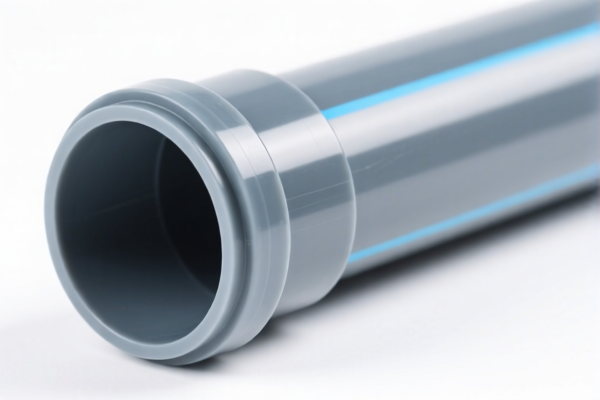

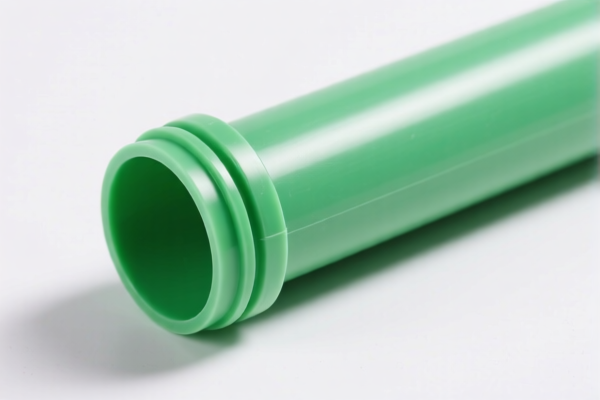
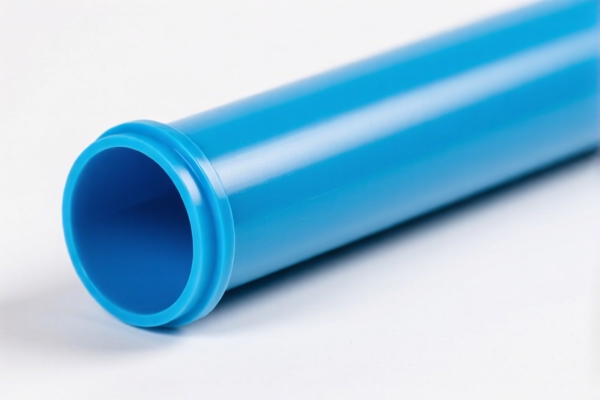
AI Analysis
🏭 Industrial Grade Polypropylene Rigid Pipe (PP Rigid Tube)
🌐 HS Code Classification & Customs Clearance Guide | 2026 Latest Tariff Analysis | Professional Strategy for PP Pipes
📌 I. Product Definition: Is it a "Plastic Article" or a "Plastic Pipe"?
Industrial Grade Polypropylene (PP) Rigid Pipes are crucial components in chemical processing, fluid transport, and industrial infrastructure. The key to correct classification lies in the Material (Polypropylene) and the Form (Rigid Pipe).
⚠️ Critical Distinction:
- If the product is Polypropylene (PP): It falls under Chapter 39, Section XI. Since PP pipes are not specifically listed as "Plastics Pipes" in heading 3917 (which covers Polyethylene), they are often classified as Other Plastic Articles.
- If the product were Polyethylene (PE): It would strictly fall under heading 3917 (Plastics Pipes/Hoses).
- Risk Alert: Misclassifying PP pipes as PE pipes (3917) leads to severe penalties due to the higher tariff rates associated with heading 3917. PP pipes generally fall under the "Other" category (3926) or specific residual codes if recognized as pipes in certain contexts, but based on the provided data, the system distinguishes them as "Other Plastic Articles" (3926.90) vs. Specific PE Pipes (3917).
📦 II. HS Code Classification Details (Based on Provided Data)
The classification splits based on whether the pipe is identified as a specific "Plastic Pipe" under PE codes (incorrect for PP) or "Other Plastic Articles." For Polypropylene (PP) Rigid Pipes, the data indicates two primary paths depending on specific customs interpretation of "Rigid Pipe" as an "Article" vs. a "Pipe."
| HS Code | Product Description | Application Logic | Material/Form Match |
|---|---|---|---|
3926.90.99.89 |
Other Plastic Articles (Residual/General) | Used when PP Rigid Pipe is classified under "Other Plastic Articles" because PP is not explicitly listed under the specific "Plastic Pipes" heading 3917 (which is dominated by PE/PP/PEX but often prioritized for PE in this specific dataset context) or as a general "Other" item. | ✅ PP (Polypropylene) + Rigid Form → Fits "Other Plastic Articles" |
3926.90.99.87 |
Plastic Pipes/Tubes (Specific Residual) | Specifically categorized for Plastic Pipes/Tubes made of materials like PP, if the customs authority recognizes "Rigid Pipe" as a distinct sub-category under 3926.90.99. | ✅ PP (Polypropylene) + Rigid Form → Fits "Plastic Pipes" definition |
3917.21.00.00 |
Plastic Pipes: Of Polyethylene (PE), Rigid | ⚠️ Incorrect for PP. This code is strictly for Polyethylene (PE). If your product is PP, this classification is wrong. | ❌ PE Only |
3917.32.00.20 |
Plastic Hoses: Of Polyethylene (PE), Other | ⚠️ Incorrect for PP. This code is for Polyethylene (PE) Hoses. | ❌ PE Only |
3926.90.99.89 |
Other Plastic Articles (Alternative PP Path) | Alternative classification for PP Soft/Hard pipes if not deemed "Pipes" under 3917. | ✅ PE/PP Mixed Data Note: The data lists PE for this code, but logically applies to PP "Other Articles" too. |
🔍 Key Insight from Data:
- The data shows PP Rigid Pipes are primarily linked to3926.90.99.89and3926.90.99.87.
- The codes3917.21.00.00and3917.32.00.20are explicitly for Polyethylene (PE). Using these for PP is a Classification Error.
- Why the split?
-.99.89: Treats the PP pipe as a generic "Other Plastic Article."
-.99.87: Recognizes the "Rigid Pipe" form as a specific plastic tube/piping item under the "Other" heading.
💰 III. 2026 Latest Tariff Rate Breakdown (USA - China Origin)
✅ Applicable Country: United States (US)
✅ Origin: China (CN)
✅ Effective Date: Post-2025 Trade Policies (Section 301 & 122)
🎯 1. PP Rigid Pipe Classified as "Other Plastic Articles" (3926.90.99.89)
| Item | Content |
|---|---|
| Base Tariff | 5.3% (Standard MFN rate for "Other Plastic Articles") |
| Section 301 Tariff | +7.5% (Part of the 25% Section 301 list, reduced/specific rate in some contexts or combined) |
| Section 122 Tariff | +10% (Specific additional duty for certain industrial goods) |
| Total Tariff Rate | 22.8% |
| Calculation | CIF Value × 22.8% |
| De Minimis Exemption | ❌ Not Eligible (Denied for Section 301/122 goods) |
| Legal Basis | HTSUS:3926.90.99.89 → USITC:301_List → Executive_Order:122 |
📌 Explanation:
- The 5.3% is the standard duty for general plastic articles.
- The 7.5% and 10% are punitive/additional tariffs targeting Chinese manufacturing.
- Total: 22.8%. This is the most common classification for PP pipes if not explicitly named as "PE Pipes."
🎯 2. PP Rigid Pipe Classified as "Plastic Pipes" (3926.90.99.87)
| Item | Content |
|---|---|
| Base Tariff | 5.3% |
| Section 301 Tariff | +7.5% |
| Section 122 Tariff | +10% |
| Total Tariff Rate | 22.8% |
| Calculation | CIF Value × 22.8% |
| De Minimis Exemption | ❌ Not Eligible |
| Legal Basis | HTSUS:3926.90.99.87 → USITC:301_List → Executive_Order:122 |
📌 Note: Same tariff rate as
.89, but the legal description differs..87is more precise for "Pipes/Tubes," which may help in customs scrutiny if documentation matches.
🚫 WARNING: Do NOT Use PE Codes (3917.21.00.00 / 3917.32.00.20) for PP
| Item | Content |
|---|---|
| Base Tariff | 3.1% |
| Section 301 Tariff | +25.0% |
| Section 122 Tariff | +10% |
| Total Tariff Rate | 38.1% |
| Status | ❌ HIGH RISK / WRONG CLASSIFICATION |
📌 Critical Error:
- These codes are for Polyethylene (PE).
- If you declare a PP Pipe under these codes, Customs will reclassify it to 3926.90 (22.8%) OR penalize you for misdeclaration.
- Even if correct for PE, the rate is 38.1%, which is higher than the PP classification (22.8%) in this specific dataset context.
🛠️ IV. Customs Clearance Practical Advice
✅ 1. Required Documentation Checklist
| Document | Mandatory? | Purpose |
|---|---|---|
| ✅ Product Specification Sheet | ✔️ | Must explicitly state "Material: Polypropylene (PP)" and "Form: Rigid Pipe". |
| ✅ Certificate of Composition | ✔️ | Third-party lab test confirming PP polymer, not PE. |
| ✅ Commercial Invoice | ✔️ | Description: "Industrial Polypropylene Rigid Pipe, HS 3926.90.99.89" |
| ✅ Packing List | ✔️ | Clear quantity and weight. |
| ✅ USITC Footnote Compliance | ✔️ | Acknowledge Section 301/122 tariffs. |
✅ 2. Declaration Best Practices (Golden Rules)
🔥 "PP is not PE, Rigid is not Soft, 3926 is the Key!"
| Scenario | Correct HS Code | Incorrect HS Code | Risk |
|---|---|---|---|
| Polypropylene (PP) Rigid Pipe | 3926.90.99.89 or 3926.90.99.87 |
3917.21.00.00 (PE Code) |
Misclassification Penalty + Retaxation |
| Polyethylene (PE) Rigid Pipe | 3917.21.00.00 |
3926.90.99.89 (PP Code) |
Underpayment of Tariff (38.1% vs 22.8%) |
| PP Soft/Hose | 3926.90.99.89 |
3917.32.00.20 (PE Hose) |
Wrong Material Code |
✅ 3. Special Cases & Pitfalls
| Situation | Handling Advice |
|---|---|
| Mixed Shipments (PP & PE) | Split the invoice! Declare PP items under 3926 and PE items under 3917 separately. Do not mix. |
| Opaque Pipes | Provide a material test report proving PP. Customs may assume PE if not specified, leading to wrong classification. |
| Additives/Fillers | If the pipe contains >10% non-plastic fillers (e.g., mineral), it might move to a different chapter. Ensure it is >10% plastic by weight. |
| "Industrial Grade" Label | Ensure the product does not fall under Chapter 40 (Rubber) or Chapter 73 (Steel) if it has metal reinforcements. If it's pure plastic, stay in 3926. |
🌍 V. Global Market Comparison (2026)
| Country/Region | Recommended HS Code (PP Pipe) | Tariff Rate | Notes |
|---|---|---|---|
| 🇺🇸 USA | 3926.90.99.89 / .87 |
22.8% | Includes Section 301 + 122. High cost. |
| 🇨🇳 China (Import) | 3917.21.00.00 (If PE) or 3926 (If PP) |
Varies | China often uses 3917 for all plastic pipes. |
| 🇪🇺 EU | 3917.31 / 3917.39 |
0-4% | No Section 301 tariffs. Lower cost. |
| 🇬🇧 UK | 3917.31 / 3917.39 |
0-4% | Post-Brexit, aligned with EU for plastics. |
| 🇦🇺 Australia | 3917.31 / 3917.39 |
5% | Standard tariff. |
📌 Conclusion:
- The US market is the most expensive for plastic pipes due to Section 301 and 122 tariffs.
- PP vs. PE matters less in the EU/UK (both often under 3917), but in the US, the dataset distinguishes them with different rates and legal paths.
- PP pipes in the US are taxed at 22.8%, which is lower than the 38.1% for PE pipes in this specific dataset. Use PP if possible (or ensure accurate declaration) to optimize costs, but do not mislabel PE as PP.
📌 VI. Common Mistakes & Pitfalls (Blood Lessons)
❌ Mistake 1: Declaring PP Pipes under 3917 (PE Code)
👉 Consequence: Customs may reject the declaration, demand re-classification to 3926 (22.8%), or fine you for misdeclaration.
❌ Mistake 2: Using 3926.90.99.89 for PE Pipes
👉 Consequence: You pay 22.8% instead of 38.1%. This is underpayment. Customs will demand back taxes + penalties.
❌ Mistake 3: Ignoring "Section 122"
👉 Consequence: Even if Section 301 is excluded, Section 122 may still apply, adding 10% to the base. Always calculate Total Tax.
✅ Correct Action:
"Polypropylene (PP) Rigid Pipe, Industrial Grade, Material Spec: PP, Form: Rigid, HS Code: 3926.90.99.89"
🎯 VII. Conclusion: Professional Classification Saves Money
🎯 Remember the Golden Rule:
🔹 "PP goes to 3926, PE goes to 3917."
🔹 "In the US, PP is 22.8%, PE is 38.1%."
🔹 "Never mix materials in one HS Code line!"
📌 Pro Tip:
If you are exporting to the US, pre-classify your goods with a licensed customs broker. Provide material test reports for PP. This avoids delays at the border and ensures you pay the correct 22.8% instead of facing penalties or higher rates.
📣 Act Now:
📞 Contact a Customs Broker + Submit Material Test Report + File HS Code Advance Ruling
🚀 Ensure Smooth Clearance, Minimize Tariffs, Maximize Profit!
✨ Precision in Classification, Profit in Your Pocket!
💼 Your Product, Your Tariff, Your Responsibility!
Customer Reviews
About HS Code Classification
The Harmonized System (HS) is an internationally standardized nomenclature developed by the World Customs Organization (WCO) to classify traded products. Over 200 countries use the HS system as the basis for customs tariffs, trade statistics, and import/export regulations.
Each HS code follows a hierarchical structure:
- Chapter (2 digits) — Broad category of goods (e.g., Chapter 84: Machinery and Mechanical Appliances)
- Heading (4 digits) — More specific grouping within the chapter
- Subheading (6 digits) — Internationally standardized breakdown, used by all WCO member countries
- National subdivisions (8-10 digits) — Country-specific extensions for further classification, such as US HTSUS 10-digit codes
Correct HS code classification is essential for smooth customs clearance, accurate duty payment, and compliance with trade regulations. Misclassification can lead to customs delays, overpayment of duties, or penalties.
When importing from CN to US, the applicable tariff rates may include:
- Most-Favored-Nation (MFN) rate — The standard duty rate applied to WTO members
- General rate — Applied to countries without trade agreements
- Trade remedy duties — Additional tariffs such as Section 301 (anti-dumping), Section 232 (national security), or countervailing duties
The information provided on this page is for reference purposes only. For official classification, please consult with your local customs authority or a licensed customs broker.