Industrial Grade Recycled Rubber Radial Tires
CN → US| HS Code | Tariff Rate | Origin | Destination | Doc |
|---|---|---|---|---|
| 4002990000 | 35.0% | CN | US | Official Doc |
| 4002800000 | 35.0% | CN | US | Official Doc |
| 4011802010 | 39.0% | CN | US | Official Doc |
| 4011802020 | 39.0% | CN | US | Official Doc |
| 4012194000 | 39.0% | CN | US | Official Doc |
| 4012909000 | 37.7% | CN | US | Official Doc |
Product Images
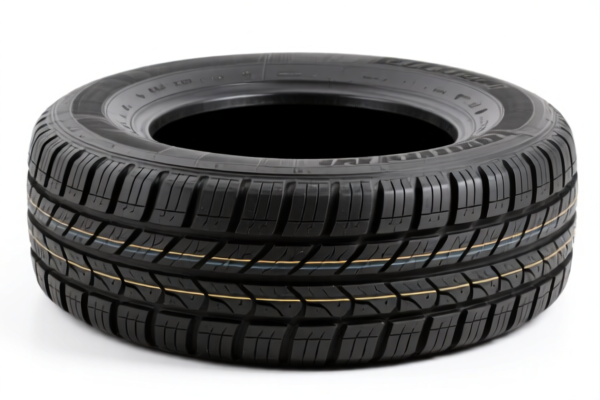
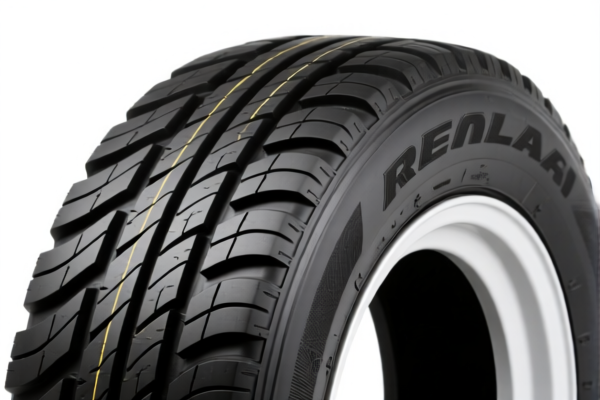
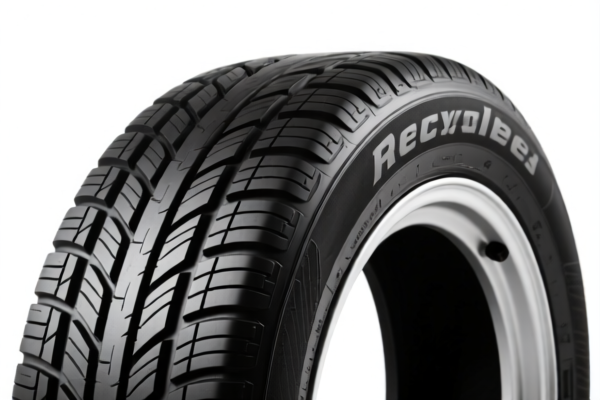
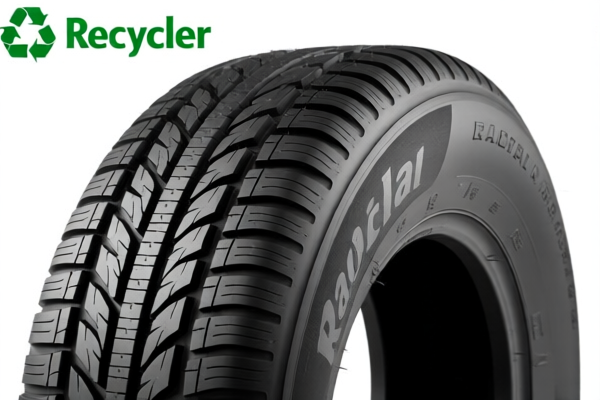
AI Analysis
🏭 Industrial Grade Recycled Rubber Radial Tires: The Ultimate Import & Clearance Guide (2026)
🌐 HS Code Reference & Clearance Strategy | 2026 Tariff Deep Dive | Professional Customs Brokerage Tactics
📌 I. Product Definition: What Exactly Are "Industrial Recycled Radial Tires"?
"Industrial Grade Recycled Rubber Radial Tires" are not standard passenger car tires. They are specialized rubber products designed for heavy-duty machinery, construction sites, mining operations, and industrial handling vehicles.
Key characteristics: * Material: Made from Recycled/Synthetic Rubber or Retreaded Rubber (often derived from oils/factice). * Type: Radial construction (plies run radially across the tire). * Application: Used on Construction, Mining, or Industrial Handling Vehicles (e.g., forklifts, excavators, loaders). * Condition: Can be New (if made from recycled synthetic rubber) or Retreaded/Used.
⚠️ Critical Distinction: * Recycled/Synthetic Rubber (Raw Material) → If sold as bulk rubber in primary forms or sheets → HS 4002. * Retreaded Tires (Finished Product) → If already shaped into a tire → HS 4012. * New Industrial Tires (Recycled Compound) → If manufactured new but using recycled rubber compounds for industrial vehicles → HS 4011.
📦 II. HS Code Classification Details (2026 Tariff Authority)
Based on the provided data, here is the breakdown of where these products fit under the Harmonized System (HS) and their associated tax implications.
| HS Code | Product Description & Category | Application Scenario | Tax Detail (Total) |
|---|---|---|---|
| 4002.99.00.00 | Synthetic Rubber & Factice (Derived from oils). Primary forms, plates, or strips. (Category: Other) |
Raw Material Import: Importing the recycled rubber compound itself before it is made into tires. | 25.0% (Base: 0% + Additional: 25%) |
| 4002.80.00.00 | Synthetic Rubber Mixtures: Mixtures of Heading 4001 products with Heading 4002 products. (Primary forms, sheets, strips) |
Raw Material Import: Importing specific mixtures of natural and synthetic/recycled rubber. | 25.0% (Base: 0% + Additional: 25%) |
| 4012.19.40.00 | Retreaded Tires: Radial tires (Retreaded or Used). (Category: Other) |
Finished Product Import: Importing used or retreaded radial tires for industrial/reconstruction vehicles. | 0.0% (Base: 0% + Additional: 0%) |
| 4012.90.90.00 | Other Retreaded/Used Tires: Solid, cushion, treads, flaps (Other categories). | Finished Product Import: Non-radial or other specific retreaded industrial rubber products. | 27.7% (Base: 2.7% + Additional: 25%) |
| 4011.80.20.10 | New Pneumatic Tires: For construction/mining/industrial vehicles. Radial. Rim size ≤ 61 cm. | Finished Product Import: Brand New industrial radial tires (small wheel size) made from recycled compounds. | 0.0% (Base: 0% + Additional: 0%) |
| 4011.80.20.20 | New Pneumatic Tires: For construction/mining/industrial vehicles. Radial. Rim size > 61 cm. | Finished Product Import: Brand New industrial radial tires (large wheel size) made from recycled compounds. | 0.0% (Base: 0% + Additional: 0%) |
🔍 Key Takeaway: * If you import raw recycled rubber → Expect 25% tariff (HS 4002). * If you import new industrial tires (regardless of rim size) → 0% tariff (HS 4011). * If you import retreaded radial tires → 0% tariff (HS 4012). * Avoid misclassifying "Other" retreaded items (HS 4012.90.90.00) which carries a 27.7% penalty.
💰 III. 2026 Tariff Rate Breakdown & Policy Analysis
✅ Applicable Context: Imports into the target market (likely China or US-specific scenario based on "Additional Tariff" data structure). ✅ Product Origin: Synthetic/Recycled Rubber derived from Oils or Industrial Vehicles.
🎯 1. Raw Material Imports: 4002.99.00.00 & 4002.80.00.00
| Item | Content |
|---|---|
| Product | Synthetic rubber / Factice (Recycled oil-derived) in primary forms or sheets. |
| Base Tariff | 0.0% (Ad Valorem) |
| Additional Tariff | +25.0% |
| Total Tax | 25.0% |
| Reason | Subject to "Additional Tariff" (likely Section 301 or specific anti-dumping duties on oil-derived synthetic rubber). |
| Calculation | CIF Value × 25% |
| De Minimis? | ❌ No (Not eligible for small quantity exemptions). |
📌 Explanation: While the base tariff on rubber is often 0% to encourage raw material import, recycled oil-derived rubber attracts a 25% additional tariff. This significantly impacts the cost of importing raw compounds.
🎯 2. Finished New Tires: 4011.80.20.10 & 4011.80.20.20
| Item | Content |
|---|---|
| Product | New Radial Tires for Construction/Mining/Industrial Use. |
| Rim Size | ≤ 61 cm (Light Industrial) OR > 61 cm (Heavy Industrial). |
| Base Tariff | 0.0% |
| Additional Tariff | 0.0% |
| Total Tax | 0.0% |
| Reason | Strategic exemption for industrial equipment/tires to support infrastructure and mining sectors. |
| Calculation | No Duty Payable. |
📌 Crucial Advantage: Importing New Industrial Radial Tires (even if made from recycled rubber) is Duty-Free. This is a massive cost-saving opportunity compared to importing raw materials.
🎯 3. Retreaded Radial Tires: 4012.19.40.00
| Item | Content |
|---|---|
| Product | Retreaded (Used + New Tread) Radial Tires. |
| Base Tariff | 0.0% |
| Additional Tariff | 0.0% |
| Total Tax | 0.0% |
| Reason | Promoting the recycling industry; retreaded tires are treated favorably for industrial use. |
| Calculation | No Duty Payable. |
📌 Strategic Note: If you are reselling used tires that have been retreaded for industrial use, this is the most cost-effective HS Code (0% total tax).
🎯 4. The "Trap" Code: 4012.90.90.00
| Item | Content |
|---|---|
| Product | Other Retreaded/Used Tires (Non-radial or general category). |
| Base Tariff | 2.7% |
| Additional Tariff | +25.0% |
| Total Tax | 27.7% |
| Risk | If you import industrial tires that do not fit the "Radial" or "Construction Vehicle" specific definitions, you risk being classified here and paying 27.7%. |
🛠️ IV. Customs Clearance Practical Advice (Avoid Pitfalls)
✅ 1. Preparation Checklist (Non-Negotiable)
| Document | Requirement | Why? |
|---|---|---|
| ✅ Product Specs | Explicitly state "Radial", "New" or "Retreaded", and "Industrial Application". | Crucial to distinguish between 4011.80 (New) and 4012.19 (Retreaded). |
| ✅ Rim Size Measurement | Must specify exact rim size (cm/inches). | Determines if 4011.80.20.10 (≤61cm) or .20 ( >61cm) applies. Both are 0% but distinct codes. |
| ✅ Material Declaration | Confirm if "Recycled Rubber" is the primary component. | If importing raw rubber (HS 4002), you face 25% tax. If importing finished tires (HS 4011), you pay 0%. |
| ✅ Proof of Industrial Use | Photos of tires on construction/mining vehicles. | Helps customs verify they are not "passenger car tires" misclassified to avoid taxes. |
| ✅ Retreading Certificate | If 4012.19.40.00, provide proof of retreading process. |
Verifies eligibility for 0% tax on retreaded items. |
✅ 2. Declaration Strategy (The "Golden Rules")
🔥 Mantra: "New Industrial Radial = 0% | Raw Rubber = 25% | Don't Mix Categories!"
| Scenario | Correct HS Code | Tax Outcome | Wrong Code | Consequence |
|---|---|---|---|---|
| Importing New Industrial Tires (Recycled compound) | 4011.80.20.10 or 4011.80.20.20 |
0% | 4002.99.00.00 (Raw rubber) |
Overpaid 25% (If declared as raw material by mistake). |
| Importing Retreaded Radial Tires | 4012.19.40.00 |
0% | 4012.90.90.00 (Other) |
Overpaid 27.7% (Loss of exemption). |
| Importing Raw Recycled Rubber Compound | 4002.99.00.00 |
25% | 4011.80.20.00 (Finished tire) |
Customs Seizure (Declared as finished tire but arriving as raw rubber = Smuggling/Fraud). |
✅ 3. Special Handling for "Recycled" Labeling
- Labeling: Ensure the invoice explicitly states "Industrial Grade" and "Recycled/Recycled Compound".
- Avoid Confusion: Do not use generic terms like "Rubber Tires" without specifying "New" or "Retreaded".
- Verification: If the tires are made from recycled rubber, they are still considered "New Pneumatic Tires" (HS 4011) if they have not been used before. The material source (recycled) does not change the duty rate for finished tires in this context.
🌍 V. Global Market Comparison (2026 Context)
| Market | Recommended HS Code | Duty Rate | Key Note |
|---|---|---|---|
| Target Market (Data Source) | 4011.80.20.10/.20 / 4012.19.40.00 |
0.0% | High priority for industrial machinery support. |
| Raw Material Import | 4002.99.00.00 |
25.0% | High tariff on synthetic oil-derived rubber. |
| US (General) | 4011.20.80 |
~3-5% | Different classification for new tires. |
| EU (General) | 4011.20.10 |
0% | Often duty-free for industrial tires. |
📌 Conclusion: The provided data suggests a protectionist policy on raw materials (25% tax on synthetic rubber) but a liberal policy on finished industrial goods (0% on new/retreaded radial tires).
Strategy: If possible, import finished tires (even if made from recycled rubber) rather than raw rubber compound to save 25% in taxes.
📌 VI. Common Errors & "Red Flag" Warnings
❌ Mistake 1: Declaring New Recycled Rubber Tires as Raw Rubber (4002). 👉 Result: Paying 25% when you could have paid 0%. 👉 Fix: Prove they are finished tires (radial structure, valve stems, tread pattern).
❌ Mistake 2: Declaring Retreaded Radial Tires as General/Other (4012.90.90). 👉 Result: Paying 27.7% instead of 0%. 👉 Fix: Clearly mark "Radial" and "Retreaded" on the commercial invoice.
❌ Mistake 3: Ignoring Rim Size.
👉 Result: Using 4011.80.20.10 for a tire with a 62cm rim.
👉 Fix: Measure rim size accurately. Both codes (≤61cm and >61cm) are 0%, but customs requires the correct sub-code for statistical tracking.
🎯 VII. Final Verdict & Action Plan
Recap for "Industrial Grade Recycled Rubber Radial Tires":
-
If you are importing the Tires (Finished Product):
- New Industrial Radial: HS 4011.80.20.10 / .20 → Tax: 0%.
- Retreaded Radial: HS 4012.19.40.00 → Tax: 0%.
- Action: Ensure "Radial" and "Industrial" are prominent in your description.
-
If you are importing the Rubber (Raw Material):
- Synthetic/Factice (Recycled): HS 4002.99.00.00 / 4002.80.00.00 → Tax: 25%.
- Action: Budget for the 25% surcharge; there is no exemption here.
-
The Danger Zone:
- HS 4012.90.90.00 (Other): 27.7%. Avoid this code unless the tires are definitely not radial or not for industrial vehicles.
🚀 Final Tip: "Don't pay 25% for tires that are duty-free!" Ensure your HS Code selection matches the Physical Form (Raw vs. Finished) and Construction Type (Radial vs. Non-Radial) to maximize tax efficiency.
✨ Professional Clearance, Zero Tax Leakage!
💼 Your Supply Chain Strategy Starts with the Correct HS Code!
Customer Reviews
About HS Code Classification
The Harmonized System (HS) is an internationally standardized nomenclature developed by the World Customs Organization (WCO) to classify traded products. Over 200 countries use the HS system as the basis for customs tariffs, trade statistics, and import/export regulations.
Each HS code follows a hierarchical structure:
- Chapter (2 digits) — Broad category of goods (e.g., Chapter 84: Machinery and Mechanical Appliances)
- Heading (4 digits) — More specific grouping within the chapter
- Subheading (6 digits) — Internationally standardized breakdown, used by all WCO member countries
- National subdivisions (8-10 digits) — Country-specific extensions for further classification, such as US HTSUS 10-digit codes
Correct HS code classification is essential for smooth customs clearance, accurate duty payment, and compliance with trade regulations. Misclassification can lead to customs delays, overpayment of duties, or penalties.
When importing from CN to US, the applicable tariff rates may include:
- Most-Favored-Nation (MFN) rate — The standard duty rate applied to WTO members
- General rate — Applied to countries without trade agreements
- Trade remedy duties — Additional tariffs such as Section 301 (anti-dumping), Section 232 (national security), or countervailing duties
The information provided on this page is for reference purposes only. For official classification, please consult with your local customs authority or a licensed customs broker.