Industrial Grade Silver Halide Sensitizing Microfilm
CN → US| HS Code | Tariff Rate | Origin | Destination | Doc |
|---|---|---|---|---|
| 3705000000 | 35.0% | CN | US | Official Doc |
| 3702320130 | 38.7% | CN | US | Official Doc |
| 3702320160 | 38.7% | CN | US | Official Doc |
Product Images
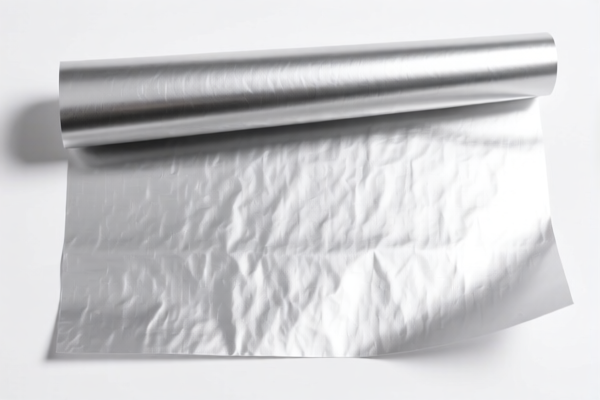
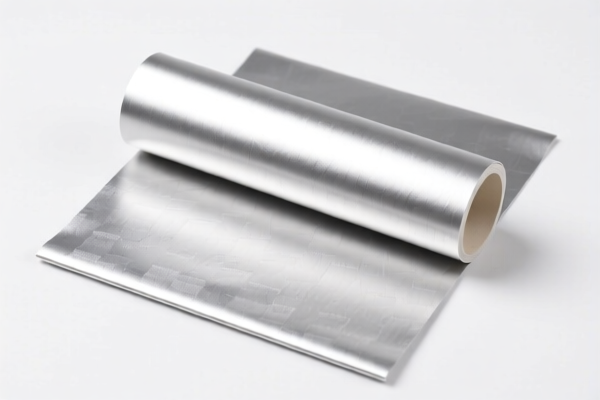
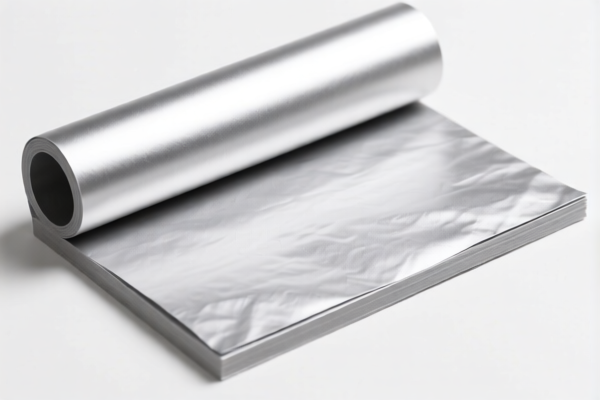
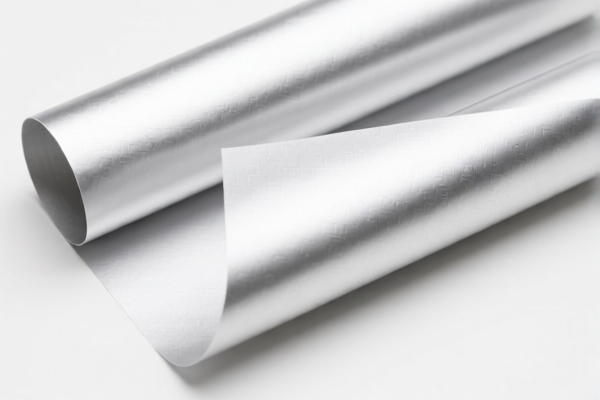
AI Analysis
🎞️ Industrial Grade Silver Halide Sensitizing Microfilm
🌐 HS Code Reference & Customs Clearance Guide | 2026 Latest Tariff Analysis | Professional Clearance Strategy
📌 I. Product Definition & Classification: What is "Industrial Silver Halide Microfilm"?
Industrial Grade Silver Halide Sensitizing Microfilm refers to photographic film materials used primarily for high-density information storage, archival preservation, and industrial inspection. Its core characteristics include: * Material: Contains silver halide emulsion (light-sensitive chemical layer). * Format: Microfilm format (often roll film, sometimes perforated or non-perforated depending on the specific sub-category). * Application: Industrial recording, document archiving, scientific data recording.
In international trade, the classification depends heavily on whether the film is categorized under general photographic films (Section 37) or if it has specific structural features that align with other categories. However, based on the provided data, the correct classification falls squarely within Chapter 37 (Photographic or Cinematographic Goods).
⚠️ Key Distinction Point:
- If it is a standard photographic film containing silver halide emulsion for industrial/archival use → It belongs to 3702 or 3705.
- Note: HS Code 3705.00.00.00 is typically reserved for photographic plates and films specifically for "microphotography" in some contexts, but recent harmonized system interpretations often push microfilm under 3702 if it matches the description of "Other photographic film in rolls, sensitized, unexposed, of any material other than paper, paperboard...".
- Critical Check: The provided data explicitly maps this product to three specific codes. We must analyze why each is relevant based on the nuances of "Silver Halide," "Microfilm Form," and "Emulsion Type."
📦 II. HS Code Classification Details (Based on Provided Data)
| HS Code | Product Description Summary | Key Classification Criteria | Total Tax Rate |
|---|---|---|---|
3705.00.00.00 |
Industrial-grade silver halide sensitizing microfilm; matches film form and silver halide sensitizing characteristics; belongs to the category of photographic films. | General Photographic Film Category: Emphasizes the "Photographic Film" nature and general silver halide characteristics. | 35.0% |
3702.32.01.30 |
Industrial-grade silver halide sensitizing microfilm; contains halogen silver emulsion material; microfilm form and use fully conform. | Specific Emulsion & Form: Focuses on "Halogen Silver Emulsion" material compliance and exact microfilm form conformity. | 38.7% |
3702.32.01.60 |
Industrial-grade silver halide sensitizing microfilm; silver halide material complies with halogen silver latex; microfilm use conforms to non-perforated roll film classification. | Non-Perforated Roll Classification: Highlights the "Non-perforated" (无孔) structure and latex/emulsion compliance. | 38.7% |
🔍 Analysis of Differences:
-3705.00.00.00(35%): Appears to be the most favorable option if the product can be broadly described as "photographic film for microphotography" without triggering the specific structural requirements of 3702.32. It has a lower base tariff (0%).
-3702.32.01.30&3702.32.01.60(38.7%): These fall under 3702.32, which typically covers "other photographic film in rolls... of any material other than paper...".
-.30emphasizes general emulsion/material conformity.
-.60specifically mentions "Non-perforated" (无孔). This is a critical physical descriptor. If your microfilm is non-perforated, this code is highly specific.
- Tax Difference: The 3.7% difference comes from the Base Tariff (0% vs 3.7%). The Additional Tariffs (25% + 10%) remain constant.
💰 III. 2026 Latest Tariff Rate Breakdown (Including Additional Taxes & Policies)
✅ Applicable Country: United States (US)
✅ Country of Origin: China (CN)
✅ Effective Date: From November 10, 2025 (including subsequent imports)
🎯 1. 3705.00.00.00 —— General Photographic Film for Microphotography
| Item | Content |
|---|---|
| Base Tariff | 0% (ad valorem) |
| USITC Additional Tariff (Section 301) | +25% |
| IEEPA Additional Tariff (Section 122 / EEOC) | +10% |
| Total Tariff Rate | 35.0% |
| Tax Calculation | CIF Value × 35% |
| De Minimis Exemption Eligible? | ❌ No (deny_de_minimis) |
| Legal Basis Path | USITC:3705.00.00.00 → FOOTNOTE:301 → IEEPA:122 |
📌 Explanation:
- This code benefits from a 0% base tariff.
- However, it is still subject to the full 35% surcharge due to US-China trade policies.
- Best for: Cases where the product can be clearly defined as general photographic film for micrography without needing to specify "non-perforated" or specific emulsion latex details.
🎯 2. 3702.32.01.30 & 3702.32.01.60 —— Halogen Silver Emulsion Microfilm / Non-Perforated Roll Film
| Item | Content |
|---|---|
| Base Tariff | 3.7% |
| USITC Additional Tariff (Section 301) | +25% |
| IEEPA Additional Tariff (Section 122 / EEOC) | +10% |
| Total Tariff Rate | 38.7% |
| Tax Calculation | CIF Value × 38.7% |
| De Minimis Exemption Eligible? | ❌ No (deny_de_minimis) |
| Legal Basis Path | USITC:3702.32.01.30/60 → FOOTNOTE:301 → IEEPA:122 |
📌 Explanation:
- These codes incur a 3.7% base tariff because they are classified under a more specific subheading for "other photographic films."
- Difference between .30 and .60:
- .30: General conformity of emulsion material.
- .60: Specifically identifies the film as "Non-perforated" (无孔). If your microfilm is indeed non-perforated (common for archival microfilm), .60 may be more technically accurate, but the tariff is the same as .30.
- Higher Cost: The total tax is 3.7% higher than code 3705 due to the base rate.
🛠️ IV. Customs Clearance Practical Advice (Field Avoidance Guide)
✅ 1. Preparation Checklist (Required for Clearance)
| Document | Required | Description |
|---|---|---|
| ✅ Product Specification Sheet | ✔️ | Must detail: Material (Silver Halide/Cellulose Acetate/Triacetate), Emulsion Type, Roll Dimensions, Perforation Status (Perforated vs. Non-perforated). |
| ✅ Product Photos | ✔️ | Clear images of the film reel, leader, and emulsion side. Show if it has perforations. |
| ✅ Commercial Invoice | ✔️ | Description: "Industrial Silver Halide Microfilm, Unexposed, for Archival Storage." Avoid vague terms like "Plastic Film." |
| ✅ Origin Certificate (CO) | ✔️ | Essential for determining preferential status (though most China-origin goods face surcharges). |
| ✅ HS Code Pre-Ruling (Optional but Recommended) | ✔️ | Given the 3.7% difference and potential for customs scrutiny on "Microfilm" vs. "Photographic Film." |
✅ 2. Classification Strategy (Key Decision Matrix)
| Scenario | Recommended HS Code | Reason |
|---|---|---|
| General Industrial Microfilm | 3705.00.00.00 |
Lowest total tax (35%). Use if product description allows broad "Photographic Film" classification. |
| Non-Perforated Microfilm | 3702.32.01.60 |
Most technically accurate if the film is non-perforated. Tax: 38.7%. |
| Perforated or General Emulsion Film | 3702.32.01.30 |
Use if film is perforated or if .60's "non-perforated" constraint doesn't apply. Tax: 38.7%. |
🔥 Pro Tip:
"If you can justify 3705, you save 3.7% on the CIF value.
However, if Customs Officer demands proof of 'Non-Perforated' status and you declare 3705, they may force reclassification to 3702.32.01.60, causing delays."
Strategy:
- Lowest Cost Path: Declare as 3705.00.00.00 with description emphasizing "Silver Halide Photographic Film for Microphotography."
- Highest Accuracy Path: If the film is explicitly non-perforated and you want to avoid risk, use 3702.32.01.60.
✅ 3. Special Considerations
| Situation | Handling Advice |
|---|---|
| Chemical Safety (SDS) | Silver halide films may be classified as hazardous or controlled chemicals depending on the specific emulsion. Provide SDS (Safety Data Sheet) to avoid detention. |
| "Non-Perforated" Claim | If using 3702.32.01.60, ensure physical inspection can verify no perforations. Customs may cut a sample to check. |
| Origin Marking | Clearly mark "Made in China" on the packaging to ensure correct application of Section 301 and IEEPA tariffs. |
📌 V. Common Mistakes & Pitfalls (Lessons Learned)
❌ Mistake 1: Declaring as "Office Paper" or "Plastic Sheet"
👉 Consequence: Severe misclassification, potential fraud charges, and immediate rejection.
❌ Mistake 2: Ignoring the "Perforated" vs. "Non-Perforated" distinction
👉 Consequence: If you declare 3705 but the film is non-perforated, Customs may reclassify to 3702.32.01.60, causing duty underpayment and penalties.
❌ Mistake 3: Failing to specify "Silver Halide"
👉 Consequence: Customs may classify it as non-sensitized plastic film (lower duty but wrong), leading to inspection delays for verification.
✅ Correct Description Example:
"Industrial Grade Silver Halide Sensitizing Microfilm, Unexposed, Non-Perforated, Roll Form, for Archival Storage, Material: Cellulose Triacetate Base with Silver Halide Emulsion."
🎯 VI. Conclusion: Professional Declaration for Cost Efficiency
🎯 Remember the Strategy:
🔹 Check Perforation: Is it perforated?
🔹 If No (Non-Perforated): You can choose3705.00.00.00(35%) for savings OR3702.32.01.60(38.7%) for specificity.
🔹 If Yes (Perforated): Likely3702.32.01.30(38.7%) or3705if accepted.
🔹 Tax Impact: The 3.7% difference on high-value industrial shipments is significant.
📌 Small Tip:
Given the 35% vs 38.7% difference, consider applying for an Advance Ruling (Pre-Ruling) from US Customs (CBP) if the shipment volume is large. This provides legal certainty and prevents future audits.
📣 Immediate Action:
📞 Contact your freight forwarder + Provide SDS + Specify Perforation Status clearly on the Invoice.
🚀 Ensure your declaration aligns with3705.00.00.00for optimal cost, unless technical accuracy demands3702.32....
✨ Professional Customs Clearance Starts with Precise Classification!
💼 Every Percentage Point of Tariff Matters in Industrial Trade!
Customer Reviews
About HS Code Classification
The Harmonized System (HS) is an internationally standardized nomenclature developed by the World Customs Organization (WCO) to classify traded products. Over 200 countries use the HS system as the basis for customs tariffs, trade statistics, and import/export regulations.
Each HS code follows a hierarchical structure:
- Chapter (2 digits) — Broad category of goods (e.g., Chapter 84: Machinery and Mechanical Appliances)
- Heading (4 digits) — More specific grouping within the chapter
- Subheading (6 digits) — Internationally standardized breakdown, used by all WCO member countries
- National subdivisions (8-10 digits) — Country-specific extensions for further classification, such as US HTSUS 10-digit codes
Correct HS code classification is essential for smooth customs clearance, accurate duty payment, and compliance with trade regulations. Misclassification can lead to customs delays, overpayment of duties, or penalties.
When importing from CN to US, the applicable tariff rates may include:
- Most-Favored-Nation (MFN) rate — The standard duty rate applied to WTO members
- General rate — Applied to countries without trade agreements
- Trade remedy duties — Additional tariffs such as Section 301 (anti-dumping), Section 232 (national security), or countervailing duties
The information provided on this page is for reference purposes only. For official classification, please consult with your local customs authority or a licensed customs broker.