Industrial Grade Sodium Fatty Acid Salt
CN → US| HS Code | Tariff Rate | Origin | Destination | Doc |
|---|---|---|---|---|
| 3402399050 | 38.7% | CN | US | Official Doc |
| 2915700150 | 40.0% | CN | US | Official Doc |
| 3401190000 | 17.5% | CN | US | Official Doc |
| 3401200000 | 35.0% | CN | US | Official Doc |
| 3401190000 | 17.5% | CN | US | Official Doc |
Product Images
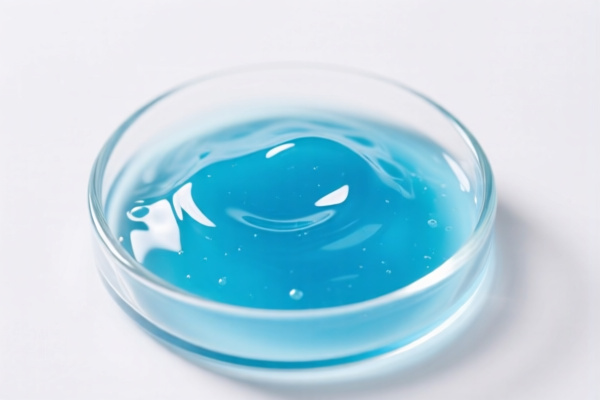

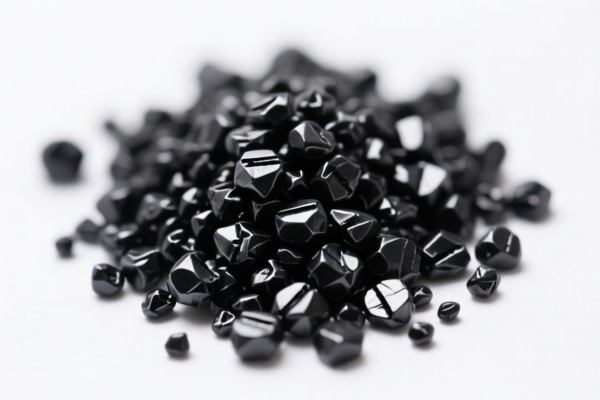
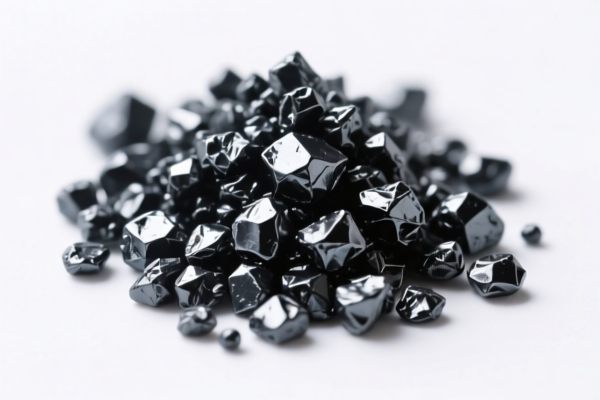
AI Analysis
🧪 Industrial Grade Sodium Fatty Acid Salt (Soaps & Surface Active Agents)
🌐 HS Code Reference & Customs Clearance Guide | 2026 Latest Tariff Analysis | Professional Clearance Strategy
📌 I. Product Definition & Classification: Do You Really Understand "Sodium Fatty Acid Salts"?
Sodium Fatty Acid Salts (commonly known as Soap Bases or Metallic Soaps) are the fundamental chemical composition of traditional soaps. In international trade, they are primarily classified under Chapter 34 (Soap, Organic Surface-Active Agents) or Chapter 29 (Organic Chemicals), depending on their specific chemical nature and physical form.
Key Chemical Nature:
- Anionic Surfactant: They act as anionic organic surfactants (soap class).
- Fatty Acid Salts: Derived from fatty acids (such as palmitic, stearic, or mixed fatty acids) neutralized with sodium hydroxide.
⚠️ Critical Distinction:
- If classified by chemical composition (specifically palmitic/stearic salts) without indicating specific physical form for cleaning → 2915.70.01.50
- If classified by function/material as an organic surfactant/soap preparation → 3402.39.90.50 or 3401 series
- Note: The data provided indicates ambiguity in physical form ("unspecified"), leading to multiple potential classifications.
📦 II. HS Code Classification Details (2026 Latest Tariff Authority Comparison)
Based on the provided data, here are the four potential HS Codes, their matching logic, and tax implications for US Imports from China (CN).
| HS Code | Product Description | Matching Logic (Source Data) | Total Tax Rate |
|---|---|---|---|
3402.39.90.50 |
Organic Surface-Active Agents (Anionic) | Material Inference: Sodium fatty acid salts are anionic organic surfactants (soap class). Fits Chapter 34 characteristics with no material conflict. | 38.7% |
2915.70.01.50 |
Salts of Palmitic, Stearic, or Oleic Acids | Chemical Identification: Identified as fatty acid salts. Since it is not specifically Palmitate or Stearate, it falls under "Other". Fits Chapter 29. | 40.0% |
3401.19.00.00 |
Other Soaps & Organic Surface Active Products | Form Inference: Classified as organic surfactant/soap preparation. Assumed to be in a formulated state (bars/pastes) based on common sense, fitting "Other". | 17.5% |
3401.20.00.00 |
Soap for Textile Industry / Surface Active Agents | Core Composition: Sodium fatty acid salts are the core chemical component of soap. Fits the material scope of soap and related organic surface active agents. | 35.0% |
3401.19.00.00 |
Other Soaps & Organic Surface Active Products | Chemical Essence: Recognized as the chemical essence of organic surfactants. Fits "Other" category definitions for ingredients without material conflict. | 17.5% |
🔍 Key Observation:
- There is a significant tax disparity between 17.5% (3401.19) and 40.0% (2915.70).
- Customs authorities often scrutinize "Soap Bases" to determine if they are finished cleaning products (3401) or raw chemical intermediates (2915or3402).
-3401.19.00.00appears twice in the data with different summaries but the same tax rate, suggesting it is a common classification for generic soap/surfactant preparations.
💰 III. 2026 Latest Tariff Rate Breakdown (Including Surcharges & Policy Add-ons)
✅ Applicable Country: United States (US)
✅ Country of Origin: China (CN)
✅ Effective Date: Post-November 10, 2025 (Imports subject to current policies)
🎯 1. 3402.39.90.50 – Organic Surface-Active Agents (Anionic)
| Item | Detail |
|---|---|
| Basic Tariff | 3.7% |
| USITC Section 301 Surcharge | +25.0% |
| IEEPA Section 122 Surcharge | +10.0% |
| Total Effective Rate | 38.7% |
| Calculation Basis | CIF Value × 38.7% |
| De Minimis Exemption | ❌ Denied (High risk of audit) |
| Legal Path | USITC:3402.39.90.50 → FOOTNOTE:301_3402 → IEEPA:9903.01.25 |
📌 Explanation:
- This classification treats the product as a pure chemical surfactant.
- The 25% Section 301 tax is standard for many chemical imports from China.
- The 10% IEEPA 122 tax is a specific additional levy on certain chemical/raw material imports from China.
- Total 38.7% is a high-cost entry point.
🎯 2. 2915.70.01.50 – Salts of Fatty Acids (Other)
| Item | Detail |
|---|---|
| Basic Tariff | 5.0% |
| USITC Section 301 Surcharge | +25.0% |
| IEEPA Section 122 Surcharge | +10.0% |
| Total Effective Rate | 40.0% |
| Calculation Basis | CIF Value × 40.0% |
| De Minimis Exemption | ❌ Denied |
| Legal Path | USITC:2915.70.01.50 → FOOTNOTE:301_2915 → IEEPA:9903.01.25 |
📌 Explanation:
- This is the highest tax rate (40%) in the dataset.
- It classifies the product as a raw organic chemical rather than a soap product.
- Risk: If customs determines it is a "soap" (Chapter 34), misclassifying here may lead to penalties for under-declaration of duty (if 3401 is used erroneously) or over-payment (if 2915 is used unnecessarily).
🎯 3. 3401.19.00.00 – Other Soaps & Organic Surface Active Products
| Item | Detail |
|---|---|
| Basic Tariff | 0.0% |
| USITC Section 301 Surcharge | +7.5% |
| IEEPA Section 122 Surcharge | +10.0% |
| Total Effective Rate | 17.5% |
| Calculation Basis | CIF Value × 17.5% |
| De Minimis Exemption | ❌ Denied (Typically for chemicals, check specific ruling) |
| Legal Path | USITC:3401.19.00.00 → FOOTNOTE:301_3401 → IEEPA:9903.01.25 |
📌 Explanation:
- Best Case Scenario: This offers the lowest tax rate (17.5%).
- Condition: The product must be viewed as a "Soap Preparation" or "Formulated Surface Active Agent" rather than a pure raw chemical salt.
- Strategy: If your product is used as a cleaning agent, emulsifier, or textile softener (common industrial uses), arguing for Chapter 34 is strategically beneficial.
🎯 4. 3401.20.00.00 – Soap for Textile Industry / Surface Active Agents
| Item | Detail |
|---|---|
| Basic Tariff | 0.0% |
| USITC Section 301 Surcharge | +25.0% |
| IEEPA Section 122 Surcharge | +10.0% |
| Total Effective Rate | 35.0% |
| Calculation Basis | CIF Value × 35.0% |
| De Minimis Exemption | ❌ Denied |
| Legal Path | USITC:3401.20.00.00 → FOOTNOTE:301_3401 → IEEPA:9903.01.25 |
📌 Explanation:
- This is a middle-ground option.
- It applies if the sodium fatty acid salt is specifically designated or marketed for textile industry use (e.g., scouring, washing wool).
- The 25% Section 301 tax applies heavily here, unlike3401.19.
🛠️ IV. Customs Clearance Practical Advice (Battle-Tested Pitfall Avoidance)
✅ 1. Documentation Checklist (Non-Negotiable)
| Document | Required | Purpose |
|---|---|---|
| ✅ Certificate of Analysis (COA) | ✔️ | Proves purity, sodium content, and fatty acid composition. Critical for distinguishing between 2915 (pure salt) and 3401 (preparation). |
| ✅ Product Specification Sheet | ✔️ | Details: Physical state (powder, paste, granule), usage (cleaning, textile, leather), and ingredients. |
| ✅ Business Card / Label Photos | ✔️ | Must show the product name. "Sodium Tallowate" or "Sodium Stearate" is clearer than generic "Salt". |
| ✅ Statement of Use | ✔️ | Crucial for 3401 vs 2915: State clearly if it is used as a surfactant/cleaning agent (supports 3401) or as a raw chemical intermediate (supports 2915). |
| ✅ Commercial Invoice | ✔️ | Must not use ambiguous terms like "Chemical Powder". Use "Industrial Soap Base" or "Fatty Acid Sodium Salt Surfactant". |
| ✅ Packing List | ✔️ | Net/Gross weight must match invoice exactly. |
✅ 2. Declaration Tips (Key Mantras)
🔥 "State Determines Duty, Usage Defines Code!"
| Scenario | Correct Declaration | Risk if Misdeclared |
|---|---|---|
| Pure Raw Chemical Salt (No additives, for further processing) | 2915.70.01.50 or 3402.39.90.50 |
High tax (40% or 38.7%). But legally safer if it's unadulterated. |
| Industrial Soap Base (Used for cleaning, emulsifying) | 3401.19.00.00 |
Low tax (17.5%). Must prove it has surfactant properties. |
| Textile Industry Specific | 3401.20.00.00 |
Medium tax (35%). Requires proof of textile application. |
| Generic "Soap" (Bar/Paste form) | 3401.19.00.00 |
Low tax (17.5%). Avoid if it's a bulk powder. |
⚠️ Critical Warning:
- Do not declare "Sodium Fatty Acid Salt" as3401.19.00.00if it is a pure chemical intermediate with no cleaning formulation. Customs may reclassify it to2915and assess 40% tax + penalties.
- Conversely, declaring2915for a ready-to-use surfactant is harmless but costly.
✅ 3. Special Situation Handling
| Situation | Advice |
|---|---|
| Mixture with Other Surfactants | If mixed with non-soap surfactants, it may still fall under 3402. Provide full ingredient list. |
| Powder vs. Paste | Powder is more likely to be scrutinized as 2915. Paste is easier to argue as 3401 (soap preparation). |
| OEM/Private Label | Ensure the supplier's invoice matches your declaration. Discrepancies trigger audits. |
| First-Time Importer | Apply for an Advance Ruling (Pre-Classification) with US CBP. Cost: ~$1,000-$2,000. Saves potentially thousands in duty differences. |
🌍 V. Global Market Clearance Comparison (2026 Latest)
| Country/Region | Recommended HS Code | Tariff (China Origin) | Key Requirement | Notes |
|---|---|---|---|---|
| 🇺🇸 USA | 3401.19.00.00 (Best Case) |
17.5% | Strong Evidence of Surfactant Use | Avoid 2915 unless strictly raw chemical. |
| 🇺🇸 USA | 2915.70.01.50 (Raw) |
40.0% | Purity >90%, No Additives | Highest risk if used as soap. |
| 🇨🇳 China | 3402.39.90 |
~3-5% | Standard Import | Low tariffs, no Section 301. |
| 🇪🇺 EU | 3402.39.00 |
0-4.7% | REACH Compliance | No high surcharges like US. |
| 🇬🇧 UK | 3402.39.00 |
0-5% | UK REACH | Post-Brexit rules apply. |
📌 Conclusion:
- USA is the most challenging market due to Section 301 and IEEPA tariffs.
- Strategic Choice: If your product is an industrial surfactant/soap base, argue for3401.19.00.00to save 20-22.5% in taxes.
- Documentation is Key: Provide a Statement of Use highlighting cleaning, emulsifying, or softening properties.
📌 VI. Common Errors & Pitfalls (Lessons Learned)
❌ Error 1: Using generic name "Chemical Salt" on Invoice
👉 Consequence: Customs cannot classify correctly → Delays + 40% Rate Risk
✅ Fix: Use "Industrial Sodium Fatty Acid Salt (Surfactant)"
❌ Error 2: Assuming all "Soaps" are 3401.19.00.00
👉 Consequence: If it's a pure chemical salt, customs may impose Section 301 + IEEPA on top, or reclassify to 2915
✅ Fix: Provide COA proving it is a finished surfactant product.
❌ Error 3: Ignoring IEEPA 10% Surcharge
👉 Consequence: Underpayment of duty by 10% → Penalties & Interest
✅ Fix: Always include 10% IEEPA in cost calculations for China-origin goods.
❌ Error 4: Confusing "Sodium Lauryl Sulfate" with "Sodium Fatty Acid Salt"
👉 Consequence: SLS is 3402.39.90.50 (38.7%). Fatty acid salts might be 3401.19 (17.5%).
✅ Fix: Exact chemical naming is vital. Don't mix them up.
🎯 VII. Conclusion: Precision in Classification, Profit in Clearance!
🎯 Remember the Golden Rules:
🔹 "Raw Chemical = 2915 (40%); Soap/Surfactant = 3401 (17.5%)"
🔹 "Statement of Use is your best shield against 40% duty"
🔹 "IEEPA 10% + Section 301 25% = 35%+ Tax on Many Chemicals"
📌 Pro Tip:
If your Sodium Fatty Acid Salt is used in textile scouring or leather processing, ensure your Statement of Use explicitly mentions this. This supports 3401.20.00.00 (35%) or 3401.19.00.00 (17.5%) over 2915.70.01.50 (40%).
Consult a Customs Broker before first shipment to apply for a Pre-Classification Ruling.
📣 Immediate Action:
📞 Contact Your Customs Broker today.
📝 Prepare a Detailed Product Spec Sheet highlighting surfactant properties.
🚀 Optimize Your Supply Chain to save 22.5% in taxes by correct classification!
✨ Professional Clearance Starts with Accurate Classification!
💼 Every Dollar Saved in Duty is Pure Profit!
Customer Reviews
About HS Code Classification
The Harmonized System (HS) is an internationally standardized nomenclature developed by the World Customs Organization (WCO) to classify traded products. Over 200 countries use the HS system as the basis for customs tariffs, trade statistics, and import/export regulations.
Each HS code follows a hierarchical structure:
- Chapter (2 digits) — Broad category of goods (e.g., Chapter 84: Machinery and Mechanical Appliances)
- Heading (4 digits) — More specific grouping within the chapter
- Subheading (6 digits) — Internationally standardized breakdown, used by all WCO member countries
- National subdivisions (8-10 digits) — Country-specific extensions for further classification, such as US HTSUS 10-digit codes
Correct HS code classification is essential for smooth customs clearance, accurate duty payment, and compliance with trade regulations. Misclassification can lead to customs delays, overpayment of duties, or penalties.
When importing from CN to US, the applicable tariff rates may include:
- Most-Favored-Nation (MFN) rate — The standard duty rate applied to WTO members
- General rate — Applied to countries without trade agreements
- Trade remedy duties — Additional tariffs such as Section 301 (anti-dumping), Section 232 (national security), or countervailing duties
The information provided on this page is for reference purposes only. For official classification, please consult with your local customs authority or a licensed customs broker.