Industrial Grade Textile Reinforced Conveyor Belt
CN → US| HS Code | Tariff Rate | Origin | Destination | Doc |
|---|---|---|---|---|
| 5910009000 | 37.6% | CN | US | Official Doc |
| 5910001070 | 39.0% | CN | US | Official Doc |
| 8431390010 | 35.0% | CN | US | Official Doc |
| 5910001020 | 39.0% | CN | US | Official Doc |
| 4010354500 | 41.4% | CN | US | Official Doc |
Product Images
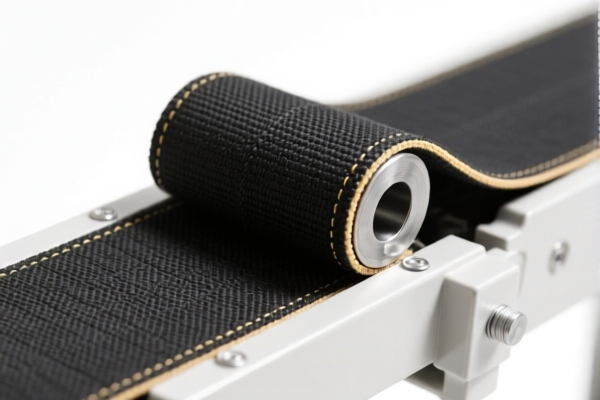
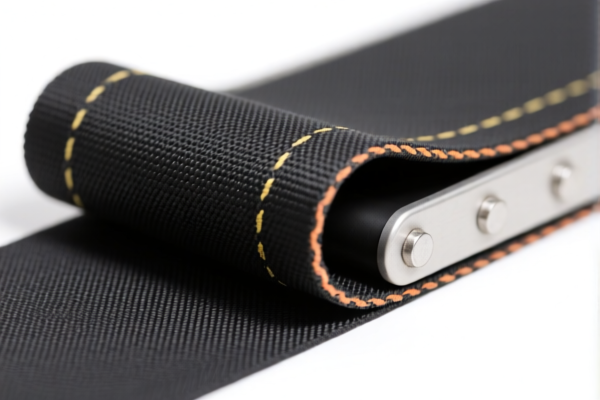
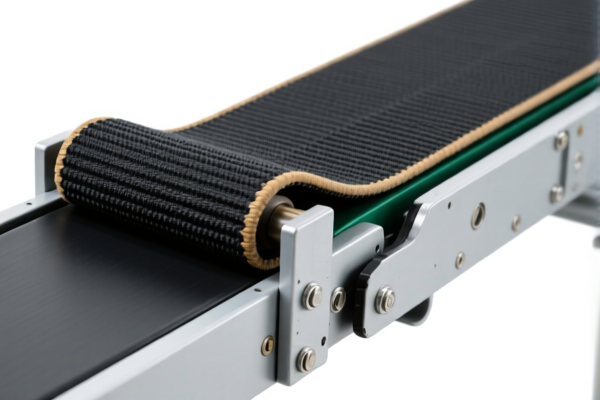
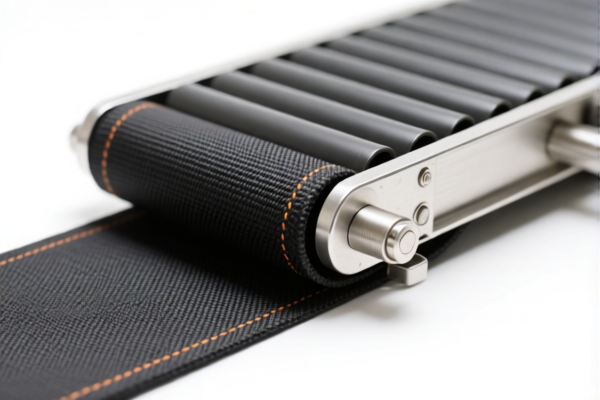
AI Analysis
🏭 Industrial Grade Textile Reinforced Conveyor Belt
🌐 HS Code Reference & Customs Clearance Guide | 2026 Latest Tariff Analysis | Professional Strategy for Heavy-Duty Logistics
📌 I. Product Definition & Classification: What Exactly is a "Textile Reinforced Conveyor Belt"?
Industrial textile reinforced conveyor belts are the backbone of material handling in mining, aggregates, agriculture, and manufacturing. They are not mere "straps"; they are complex composite structures designed for high tension and abrasion resistance.
In international trade, classification hinges on three critical factors: 1. Reinforcement Material: Is it steel cord or textile (polyester, nylon, cotton)? 2. Function: Is it for conveying materials (transporting bulk goods) or driving/moving machinery (power transmission)? 3. Construction Form: Is it endless (looped) or belting (cut to length)?
⚠️ Key Distinction:
- If the belt is designed to move materials (sand, coal, grain) → It falls under Chapter 59 (Textile products) or Chapter 40 (Rubber) depending on composition.
- If the belt is designed to transmit power (synchronous timing belts, V-belts for motors) → It falls under Chapter 84 (Machinery parts) or Chapter 40.
- Crucial Note: Many "industrial belts" are misclassified. A belt used for conveying cannot be declared as a machine part (8431) if it retains its primary identity as a conveyor belt (5910).
📦 II. HS Code Classification Details (2026 Latest Tariff Authority Mapping)
Based on the provided data, here are the precise HS Code mappings for Industrial Grade Textile Reinforced Conveyor Belts. Note that the Tax Rate varies significantly based on the specific functional description declared during customs clearance.
| HS Code | Product Description | Applicable Scenario | Total Tax Rate | Key Classification Logic |
|---|---|---|---|---|
5910.00.90.00 |
Textile Reinforced Conveyor Belt, matched for textile material manufacturing & general conveyance purposes. | General industrial conveying, textile production lines. | 37.6% | Primary function is conveying; textile reinforcement is the key identifier. |
5910.00.10.70 |
Textile Reinforced Conveyor Belt, matched for driving/conveying purposes & textile material composition. | Belts used in conjunction with driving mechanisms for textile processing. | 39.0% | Specific sub-heading for textile-driven belts. Higher tax due to specific use case. |
8431.39.00.10 |
Textile Reinforced Conveyor Belt, matched for conveyor machine parts & industrial component attributes. | ⚠️ High Risk: Used only if declared strictly as a spare part for machinery, not the belt itself as a finished good. | 35.0% | Classified as a "Part of Machinery." Requires proof that it is not a standalone conveyor belt. |
5910.00.10.20 |
Textile Reinforced Synchronous Belt, matched for synchronous belt purpose & synthetic fiber material. | Timing belts, cogged belts for precise motion control (NOT bulk material conveying). | 39.0% | Misclassification Risk: If it transports materials, it is NOT a synchronous belt. |
4010.35.45.00 |
Textile Reinforced Synchronous Belt, matched for endless form & combination with textile material characteristics. | Endless loop belts for power transmission, containing textile reinforcement. | 41.4% | Rubber chapter (40) applies if the rubber content is dominant or it's a specific "endless" type for transmission. |
🔍 Critical Clarification:
-5910vs8431: Do NOT classify a finished conveyor belt as8431.39.00.10unless you are importing it purely as a replacement part for a specific machine model, and even then, customs may challenge it if it looks like a standard conveyor belt. The standard classification for the belt itself is5910. -5910vs4010: If the belt is rubber-based with textile reinforcement but used for power transmission (not conveying bulk goods), it may fall under4010. However,4010.35.45.00carries the highest tax (41.4%). Ensure you are not misdeclaring a conveyor belt as a transmission belt to save cost (this is fraud) or vice versa.
💰 III. 2026 Latest Tariff Rate Breakdown (Including Surcharges & Policy Add-ons)
✅ Applicable Country: United States (US)
✅ Origin: China (CN)
✅ Effective Date: November 10, 2025 (and onwards)
The tax structure consists of three layers: Base Duty, Section 301 Surcharge, and Section 122 (IEEPA) Surcharge.
🎯 1. 5910.00.90.00 —— Standard Textile Conveyor Belt
| Item | Details |
|---|---|
| Base Duty | 2.6% (Ad Valorem) |
| Section 301 Surcharge | +25.0% |
| Section 122 (IEEPA) Surcharge | +10.0% |
| Total Tax Rate | 37.6% |
| Calculation Basis | CIF Value × 37.6% |
| De Minimis Exemption | ❌ DENIED (deny_de_minimis) |
| Legal Authority Path | Section 301 → Section 122 (IEEPA) → HS 5910.00.90.00 |
📌 Explanation:
- The base duty is low (2.6%), but the add-on tariffs account for 35% of the cost. - This is the standard classification for most textile-reinforced conveyor belts used in general industry.
🎯 2. 5910.00.10.70 & 5910.00.10.20 —— Specific Textile/Synchronous Belts
| Item | Details |
|---|---|
| Base Duty | 4.0% |
| Section 301 Surcharge | +25.0% |
| Section 122 (IEEPA) Surcharge | +10.0% |
| Total Tax Rate | 39.0% |
| Calculation Basis | CIF Value × 39.0% |
| De Minimis Exemption | ❌ DENIED |
📌 Note:
- Slightly higher base duty (4.0%) than general conveyors. - Apply to belts with specific textile-drive or synthetic fiber synchronous functions.
🎯 3. 8431.39.00.10 —— Machinery Parts (Conveyor Components)
| Item | Details |
|---|---|
| Base Duty | 0.0% |
| Section 301 Surcharge | +25.0% |
| Section 122 (IEEPA) Surcharge | +10.0% |
| Total Tax Rate | 35.0% |
| Calculation Basis | CIF Value × 35.0% |
| De Minimis Exemption | ❌ DENIED |
📌 Warning:
- This has the lowest total tax (35%), but the base duty is 0%. - Customs Scrutiny: High. You must prove this is a "part" and not a "conveyor belt." If customs determines it is a conveyor belt, they will reclassify it to5910, leading to back-taxes, penalties, and delays. - Use this code only if the item is clearly identifiable as a component (e.g., a specialized pulley belt, a tensioner belt for a specific machine model) and not a standard roll of conveyor belting.
🎯 4. 4010.35.45.00 —— Rubber Endless Synchronous Belt
| Item | Details |
|---|---|
| Base Duty | 6.4% |
| Section 301 Surcharge | +25.0% |
| Section 122 (IEEPA) Surcharge | +10.0% |
| Total Tax Rate | 41.4% |
| Calculation Basis | CIF Value × 41.4% |
| De Minimis Exemption | ❌ DENIED |
📌 Note:
- Highest tax rate (41.4%). - Only use if the belt is primarily rubber (Chapter 40) and is an endless synchronous belt for power transmission. Do not use for bulk material conveyance.
🛠️ IV. Customs Clearance Practical Advice (Avoiding Pitfalls)
✅ 1. Documentation Checklist (Non-Negotiable)
| Document | Required? | Details |
|---|---|---|
| ✅ Commercial Invoice | ✔️ | Must specify: "Textile Reinforced Conveyor Belt," not just "Rubber Belt." |
| ✅ Packing List | ✔️ | Include roll dimensions, weight, and number of plies. |
| ✅ Product Specification Sheet | ✔️ | CRITICAL: Must state reinforcement material (e.g., "Polyester-Nylon"), cover material, and intended use (Conveying vs. Power Transmission). |
| ✅ Technical Drawing/Cutaway | ✔️ | To prove textile reinforcement layers (not just steel or fabric). |
| ✅ Certificate of Origin | ✔️ | Required for origin determination and tariff verification. |
| ✅ Import License/Agency | ✔️ | If applicable for industrial machinery parts. |
✅ 2. Declaration Tips (The Golden Rules)
🔥 "Describe the Function, Not Just the Material."
| Scenario | Correct Declaration | Incorrect Declaration | Consequence |
|---|---|---|---|
| Standard Conveyor Belt | "Textile Reinforced Conveyor Belt for Bulk Material Handling" | "Rubber Belt" or "Machinery Part" | Rejection, reclassification to 5910, penalties. |
| Spares for a Specific Machine | "Conveyor Belt Assembly, Part No. XYZ, for Machine ABC" | "Conveyor Belt" (Generic) | Might qualify for 8431 (35%) if justified, but risky. |
| Synchronous Timing Belt | "Endless Synchronous Belt for Power Transmission" | "Conveyor Belt" | Misclassification. If it transmits power, it may be 4010 or 5910.10.20. |
| Steel Cord Belt | "Steel Cord Conveyor Belt" | "Textile Reinforced Belt" | Wrong HS Code entirely (usually 4010.31 or 4010.39). |
✅ 3. Special Handling for "Section 122" Tariffs
⚠️ IEEPA Section 122 (10% Surcharge) applies to all Chinese-origin goods unless specifically exempted. - There is no de minimis exemption (no $800 threshold waiver). - Ensure your broker knows to apply the 10% surcharge on top of the 301/301 tariffs.
🌍 V. Global Market Comparison (2026)
| Market | Recommended HS Code | Total Tax (China Origin) | Key Requirement |
|---|---|---|---|
| 🇺🇸 USA | 5910.00.90.00 |
37.6% | Strict proof of textile reinforcement. No de minimis. |
| 🇪🇺 EU | 4010.39 or 5910.29 |
Varies (0-6%) | CE Marking, REACH Compliance. Lower base duties, but VAT applies. |
| 🇨🇳 China | 5910.19 |
Low/Zero | No import tariffs on many industrial belts. CCC certification if applicable. |
| 🇲🇽 Mexico | 4010.39 |
0-5% | USMCA benefits may apply if originating in NAFTA region. |
📌 Strategy for US Imports:
Since the tax is high (35-41%), consider: 1. Supply Chain Diversification: Source from Vietnam or Thailand if possible to avoid Section 301/122 tariffs. 2. Classification Review: Work with a customs broker to see if8431.39.00.10(35%) is defensible if the belt is a specialized part. 3. Duty Drawback: If the belt is installed on machinery that is later exported, you may claim duty drawbacks.
📌 VI. Common Mistakes & Pitfalls (Learn from Others' Losses)
❌ Mistake 1: Declaring a conveyor belt as a machine part (8431) to save 2.6% base duty.
👉 Result: Customs audits your shipment. If they find it’s a standard belt, they back-charge the 37.6% + penalties. Risk outweighs the small saving.
❌ Mistake 2: Confusing Conveyor Belts with Timing Belts.
👉 Result: A timing belt used for power transmission is NOT a conveyor belt. Misdeclaring a timing belt as a conveyor belt can lead to rejection if the application doesn't match.
❌ Mistake 3: Ignoring the Section 122 (10%) surcharge.
👉 Result: Underpayment of duties, leading to customs holds, storage fees, and forced payment of the missing 10% + interest.
✅ Correct Approach:
"Industrial Conveyor Belt, Textile Reinforced (Polyester/Nylon), Rubber Cover, for Bulk Material Handling in Mining, Model XYZ, China Origin"
🎯 VII. Conclusion: Precision Saves Money
🎯 Remember:
🔹 "Textile + Conveyance = 5910.90.00 (37.6%)"
🔹 "Textile + Timing = 5910.10.20 (39.0%)"
🔹 "Rubber + Endless Timing = 4010.35.45 (41.4%)"
🔹 "Machine Part (Proven) = 8431.39.00 (35.0%)"
📌 Pro Tip:
If you are importing large volumes, consider applying for an Administrative Protective Order (APO) if available, or explore free trade agreements for alternate sourcing countries. Always seek a Binding Tariff Information (BTI) ruling from CBP before the first shipment to lock in the HS code.
✨ Professional Clearance Starts with Accurate Classification!
💼 Every percentage point matters in the age of trade wars!
Customer Reviews
About HS Code Classification
The Harmonized System (HS) is an internationally standardized nomenclature developed by the World Customs Organization (WCO) to classify traded products. Over 200 countries use the HS system as the basis for customs tariffs, trade statistics, and import/export regulations.
Each HS code follows a hierarchical structure:
- Chapter (2 digits) — Broad category of goods (e.g., Chapter 84: Machinery and Mechanical Appliances)
- Heading (4 digits) — More specific grouping within the chapter
- Subheading (6 digits) — Internationally standardized breakdown, used by all WCO member countries
- National subdivisions (8-10 digits) — Country-specific extensions for further classification, such as US HTSUS 10-digit codes
Correct HS code classification is essential for smooth customs clearance, accurate duty payment, and compliance with trade regulations. Misclassification can lead to customs delays, overpayment of duties, or penalties.
When importing from CN to US, the applicable tariff rates may include:
- Most-Favored-Nation (MFN) rate — The standard duty rate applied to WTO members
- General rate — Applied to countries without trade agreements
- Trade remedy duties — Additional tariffs such as Section 301 (anti-dumping), Section 232 (national security), or countervailing duties
The information provided on this page is for reference purposes only. For official classification, please consult with your local customs authority or a licensed customs broker.