Industrial Grade Textile Reinforced Plastic Board
CN → US| HS Code | Tariff Rate | Origin | Destination | Doc |
|---|---|---|---|---|
| 3921902510 | 41.5% | CN | US | Official Doc |
| 3926905600 | 40.1% | CN | US | Official Doc |
| 3926905700 | 41.5% | CN | US | Official Doc |
| 3921904010 | 39.2% | CN | US | Official Doc |
| 6815190000 | 35.0% | CN | US | Official Doc |
Product Images

AI Analysis
🛡️ Industrial Grade Textile Reinforced Plastic Board (IRPB)
🌐 HS Code Reference & Customs Clearance Guide | 2026 Latest Tariff Analysis | Professional Clearance Strategy
📌 I. Product Definition & Classification: What is a "Textile Reinforced Plastic Board"?
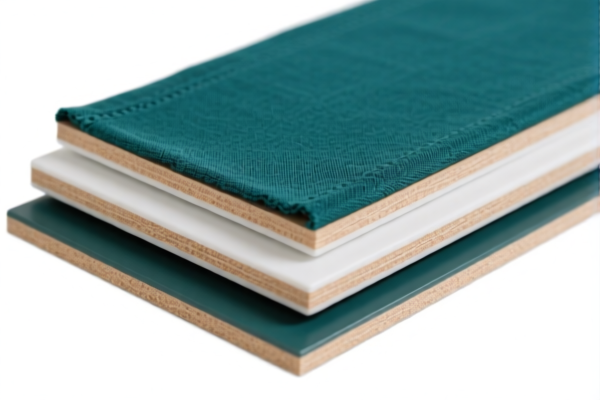
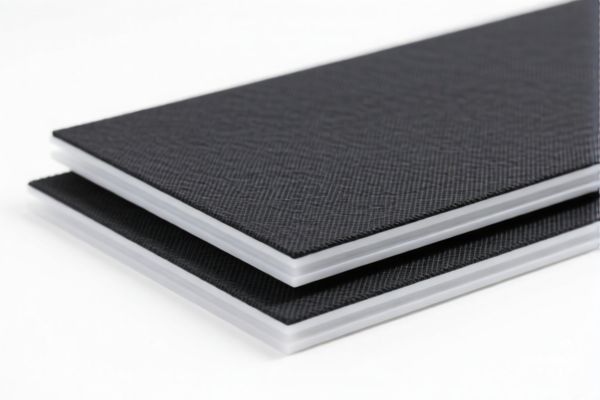
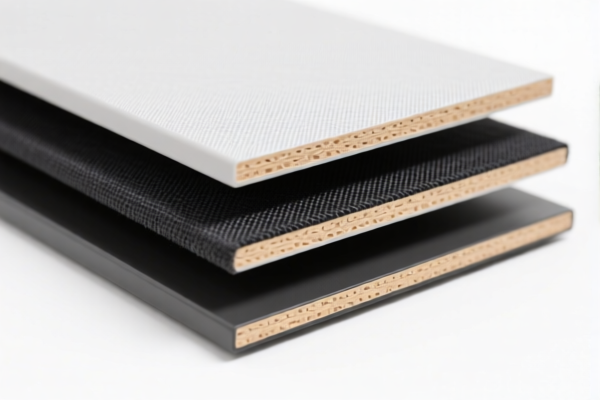
Industrial Grade Textile Reinforced Plastic Boards are advanced composite materials where plastic polymers serve as the matrix and textile fibers (glass, carbon, aramid, etc.) act as the reinforcement. They are rigid, plate-like structures used in construction, automotive, marine, and industrial applications for their high strength-to-weight ratio and corrosion resistance.
In international trade, the classification hinges on two critical factors: 1. Dominant Material: Is the plastic the essential character, or is it considered a non-plastic composite? 2. Form Factor: Is it a "board," "plate," or "sheet"?
⚠️ Key Distinction Points: - Plastic-Dominant: If the plastic binds the textile and constitutes the majority by weight or essential character → Classified under Chapter 39 (Plastics). - Non-Plastic Composite: If the textile matrix dominates and plastic is merely a coating → Classified under Chapter 68 (Mineral Products/Composites) or Chapter 59 (Impregnated Textiles). - For this guide, we focus on the Plastic-Dominant variants based on the provided data.
📦 II. HS Code Classification Details (2026 Latest Tariff Authoritative Comparison)
Based on the provided dataset, here are the five most relevant HS Codes for Textile Reinforced Plastic Boards, ranging from specific composite plates to general plastic articles.
| HS Code | Product Description | Key Characteristics | Logic for Classification |
|---|---|---|---|
3921.90.25.10 |
High-Strength Textile Reinforced Plastic Board | Plastic content is dominant; fits the definition of textile components + plastic composite. | High-strength structural boards where plastic is the primary binder. |
3926.90.56.00 |
Plastic Articles Containing Textile Fibers | Board shape; no material conflict; textile fibers included. | General plastic articles (miscellaneous) that happen to contain textile reinforcement. |
3926.90.57.00 |
Plastic Board Articles with Textile Reinforcement | Board morphology; plastic material category; textile enhancement attributes. | Similar to 3926.90.56 but specifically categorized under plastic board articles. |
3921.90.40.10 |
Plastic Board with Textile Reinforcement | Logical similarity to paper-reinforced plastic; no material conflict. | Treated similarly to other reinforced plastic sheets (like paper-reinforced), implying a focus on the sheet/board nature. |
6815.19.00.00 |
Non-Electrical Fibrous Reinforced Composite Boards | Decorative boards; non-electrical use; fibrous (textile) reinforced composite. | Exception Category: If the product is considered a "mineral composite" or "decorative panel" where the textile reinforcement is viewed through a non-plastic lens (e.g., fiber-cement-like but plastic-bound for decoration). |
🔍 Critical Reminder: - If the board is used for structural insulation or high-strength engineering,
3921.xxis usually preferred. - If the board is for general decorative or non-structural use,6815.19.00.00might apply, but carries a lower base tariff. - Warning: Misclassification between3921(Plastic Sheets/Plates) and6815(Stone/Mortar Products) is a common customs audit trigger.
💰 III. 2026 Latest Tariff Rate Breakdown (US Imports from China)
✅ Applicable Country: United States (US)
✅ Origin: China (CN)
✅ Effective Time: Post-2025 (Current 122 Clauses & Section 301 tariffs active)
🎯 1. 3921.90.25.10 & 3926.90.57.00 —— High-Strength / Reinforced Plastic Boards
These codes carry the highest base tariff due to the "Plastic Sheet/Plate" classification.
| Item | Content |
|---|---|
| Base Tariff (MFN) | 6.5% |
| Section 301 Tariff (25%) | +25% (USITC Footnote 9903.39.00 series) |
| 122 Clause Tariff (10%) | +10% (Specific to certain plastic/textile composites) |
| Total Effective Rate | 41.5% |
| Calculation Basis | CIF Value × 41.5% |
| De Minimis Exemption | ❌ Denied (Section 301 and 122 clauses explicitly deny de minimis relief for these categories) |
| Legal Authority | Section 301: 9903.39.00 → 122 Clause: Specific HTS → USITC: 3921/3926 |
📌 Explanation:
- The 6.5% is the standard US MFN rate for plastic plates/sheets.
- The 25% is the standard Section 301 surcharge on Chinese plastics.
- The 10% is the additional 122 Clause tariff targeting specific industrial materials.
- Total: 41.5%. This is a HIGH TARIFF category. Cost planning must account for this significant duty burden.
🎯 2. 3926.90.56.00 —— Plastic Articles with Textile Fibers
A slightly more specific sub-category for general plastic articles.
| Item | Content |
|---|---|
| Base Tariff (MFN) | 5.1% |
| Section 301 Tariff (25%) | +25% |
| 122 Clause Tariff (10%) | +10% |
| Total Effective Rate | 40.1% |
| Calculation Basis | CIF Value × 40.1% |
| De Minimis Exemption | ❌ Denied |
| Legal Authority | Section 301: 9903.99.00 → 122 Clause → USITC: 3926 |
📌 Note:
- Slightly lower base rate (5.1% vs 6.5%) saves 1.4% on the CIF value compared to 3921.
- Still subject to the same aggressive 35% in additional duties.
🎯 3. 3921.90.40.10 —— Plastic Board (Paper-Reinforcement Logic)
Classified under logic similar to paper-reinforced plastic, implying a focus on the board structure.
| Item | Content |
|---|---|
| Base Tariff (MFN) | 4.2% |
| Section 301 Tariff (25%) | +25% |
| 122 Clause Tariff (10%) | +10% |
| Total Effective Rate | 39.2% |
| Calculation Basis | CIF Value × 39.2% |
| De Minimis Exemption | ❌ Denied |
| Legal Authority | Section 301 → 122 Clause → USITC: 3921.90.40 |
📌 Advantage:
- Lowest base rate in the plastic group (4.2%).
- Total tariff 39.2% is the lowest among the plastic-dominant options.
- Strategy: If your product fits the legal definition of this code (often requiring specific proof that it mimics paper-reinforced plastic structures), it saves ~2.3% vs the high-strength option.
🎯 4. 6815.19.00.00 —— Non-Electrical Fibrous Reinforced Composites
CRITICAL EXCEPTION: If classified as a "mineral/composite" board rather than a "plastic" board.
| Item | Content |
|---|---|
| Base Tariff (MFN) | 0.0% |
| Section 301 Tariff (25%) | +25% |
| 122 Clause Tariff (10%) | +10% |
| Total Effective Rate | 35.0% |
| Calculation Basis | CIF Value × 35.0% |
| De Minimis Exemption | ❌ Denied (Check specific footnote, but generally denied for Chinese origin under 301) |
| Legal Authority | Section 301 → 122 Clause → USITC: 6815.19 |
📌 Opportunity:
- This code has the lowest total tariff at 35.0%.
- Risk: Customs may challenge this classification if the plastic content is high. You must prove the article is primarily a "composite" (like fiberglass cement) rather than a "plastic plate."
- Use Case: Decorative panels, cladding, or non-structural boards where the textile reinforcement is heavily embedded in a mineral-like matrix or where the plastic is minor.
🛠️ IV. Customs Clearance Practical Advice (Field Pitfall Guide)
✅ 1. Required Documentation Checklist (Non-Negotiable)
| Document | Mandatory? | Purpose |
|---|---|---|
| ✅ Technical Data Sheet | ✔️ | Must specify % of plastic vs. textile, type of resin, and tensile strength. |
| ✅ Product Photos | ✔️ | Show cross-section to prove laminate structure (plastic + textile layers). |
| ✅ Commercial Invoice | ✔️ | Description must match HS Code logic (e.g., "Reinforced Plastic Plate" vs. "Glass Composite Board"). |
| ✅ Certificate of Origin | ✔️ | Essential for proving CN origin to apply/add 301/122 tariffs. |
| ✅ Letter of Explanation | ✔️ | If using 6815.19, explain why it's not Chapter 39 (e.g., "Non-plastic dominant composite"). |
| ✅ Bill of Lading | ✔️ | Ensure packaging details match the invoice. |
✅ 2. Declaration Tactics (Key Mantras)
🔥 "Structure Defines Status, Plastic Defines Chapter!"
| Scenario | Recommended HS Code | Reasoning |
|---|---|---|
| High-Strength Structural Board | 3921.90.25.10 |
Dominant plastic, high strength. Expect 41.5% duty. |
| General Purpose Plastic Board | 3926.90.56.00 or 57 |
Standard plastic article. Expect 40.1% duty. |
| Board Analogous to Paper-Reinforced | 3921.90.40.10 |
Lower base rate. Expect 39.2% duty. |
| Decorative/Non-Structural Composite | 6815.19.00.00 |
Argue composite nature. Expect 35.0% duty. Highest Audit Risk. |
⚠️ Critical Warning:
- Do NOT declare as "Textile Fabric" (Chapter 50-60). It is a board.
- Do NOT declare as "Insulation Material" (Chapter 3905/3919) unless it is specifically foam or film.
- 3921 vs 6815: This is the biggest dispute area. If the plastic is >50% by weight, 3921 is safer. If it's a thin plastic layer on a thick textile/mineral core, 6815 might be argued.
✅ 3. Special Handling
| Situation | Recommendation |
|---|---|
| OEM Custom Boards | Provide customer specs. If it's a standard product, use general descriptions. If custom, ensure the description highlights unique features to support HS choice. |
| Mixed Containers | If importing alongside other plastic goods, ensure proper segregation in documentation to avoid "baggage" classification errors. |
| De Minimis (Section 321) | NOT AVAILABLE. All these codes are subject to Section 301 and 122 clauses, which waive the $800 de minimis exemption for Chinese goods. Full duty applies even for samples. |
🌍 V. Global Market Comparison (2026)
| Country/Region | Recommended HS Code | Est. Total Duty (CN Origin) | Key Certifications |
|---|---|---|---|
| 🇺🇸 USA | 3921.90.25.10 |
41.5% | FCC (if electrical), ASTM Standards |
| 🇺🇸 USA | 6815.19.00.00 |
35.0% | ASTM, UL (for fire rating) |
| 🇨🇳 China | 3921.90.25.10 |
6.5% | CCC (if applicable), RoHS |
| 🇪🇺 EU | 3921.90 |
6.5% | REACH, RoHS, CE |
| 🇬🇧 UK | 3921.90 |
6.5% | UKCA, REACH |
📌 Conclusion:
- The US market is the most punitive due to Section 301 + 122 Clauses.
- Optimization Strategy: Can the product be engineered to fit6815.19.00.00? If it’s decorative, saving 6.5% (39.2% → 35.0%) is significant. However, this requires robust technical justification to avoid customs reclassification penalties.
📌 VI. Common Errors & Pitfalls (Lessons Learned)
❌ Error 1: Declaring "Textile Reinforced Plastic" as "Textile Product"
👉 Consequence: Incorrect Chapter (50-60). Customs will reclassify to Chapter 39 or 68 + impose penalties for incorrect declaration.
❌ Error 2: Ignoring the 122 Clause
👉 Consequence: Underpayment by 10%. The 122 clause applies to many plastic/textile composites. Failure to pay leads to audit, fines, and potential seizure.
❌ Error 3: Using De Minimis for Low-Value Samples
👉 Consequence: Package held at border. Section 301 and 122 tariffs override Section 321. All samples from China are subject to full duty.
❌ Error 4: Vague Description ("Plastic Board")
👉 Consequence: Customs examiner chooses the highest duty code. Always specify "Textile Reinforced," "Glass Fiber," or "Composite."
✅ Correct Practice:
"Industrial Grade Glass Fiber Reinforced Polypropylene Board, Non-Electrical, Decorative Finish, Model XYZ, HS 3921.90.25.10"
🎯 VII. Conclusion: Precision in Classification Saves Money
🎯 Remember the Mantra:
🔹 "Plastic Dominant = Ch39 (39-41% Duty)"
🔹 "Composite/Decorative = Ch68 (35% Duty)"
🔹 "No De Minimis for China!"
🔹 "122 Clause is Real – Budget for 10% Extra!"
📌 Pro Tip:
If your board is for non-structural decorative use, try to qualify for 6815.19.00.00 to save 6.5%. If it’s structural, stick to 3921 and absorb the 41.5%.
Always apply for an Advance Ruling if the product is new or borderline to avoid post-clearance audits.
📣 Immediate Action:
📞 Consult a licensed customs broker.
📄 Prepare technical specs proving plastic vs. textile ratio.
💸 Factor 35-41.5% duty into your landed cost calculation.
✨ Professional clearance starts with precise classification!
💼 Every percentage point matters in the US-China trade corridor!
Customer Reviews
About HS Code Classification
The Harmonized System (HS) is an internationally standardized nomenclature developed by the World Customs Organization (WCO) to classify traded products. Over 200 countries use the HS system as the basis for customs tariffs, trade statistics, and import/export regulations.
Each HS code follows a hierarchical structure:
- Chapter (2 digits) — Broad category of goods (e.g., Chapter 84: Machinery and Mechanical Appliances)
- Heading (4 digits) — More specific grouping within the chapter
- Subheading (6 digits) — Internationally standardized breakdown, used by all WCO member countries
- National subdivisions (8-10 digits) — Country-specific extensions for further classification, such as US HTSUS 10-digit codes
Correct HS code classification is essential for smooth customs clearance, accurate duty payment, and compliance with trade regulations. Misclassification can lead to customs delays, overpayment of duties, or penalties.
When importing from CN to US, the applicable tariff rates may include:
- Most-Favored-Nation (MFN) rate — The standard duty rate applied to WTO members
- General rate — Applied to countries without trade agreements
- Trade remedy duties — Additional tariffs such as Section 301 (anti-dumping), Section 232 (national security), or countervailing duties
The information provided on this page is for reference purposes only. For official classification, please consult with your local customs authority or a licensed customs broker.