Industrial Grade Wide Format Film
CN → US| HS Code | Tariff Rate | Origin | Destination | Doc |
|---|---|---|---|---|
| 3919905060 | 40.8% | CN | US | Official Doc |
| 3920992000 | 39.2% | CN | US | Official Doc |
| 3921190090 | 41.5% | CN | US | Official Doc |
| 3921905050 | 39.8% | CN | US | Official Doc |
| 3919102055 | 40.8% | CN | US | Official Doc |
| 3920991000 | 41.0% | CN | US | Official Doc |
Product Images

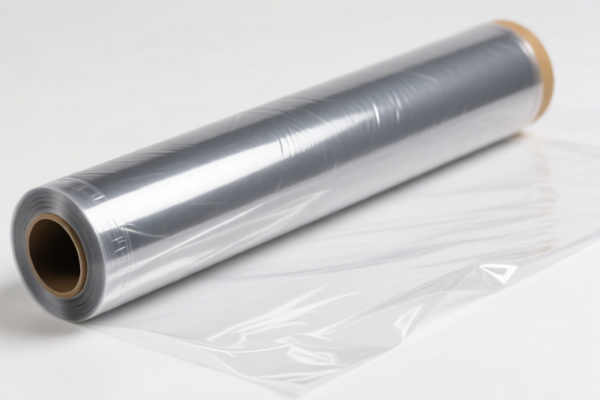
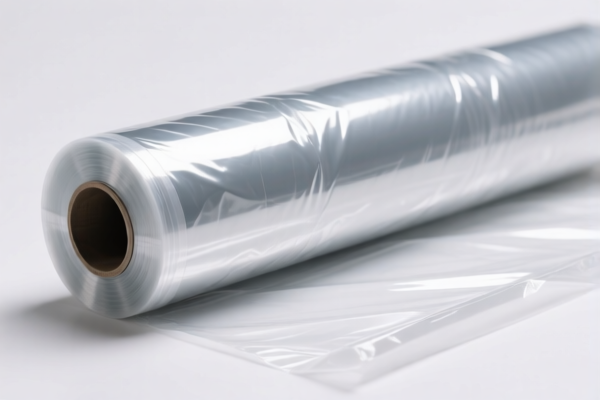
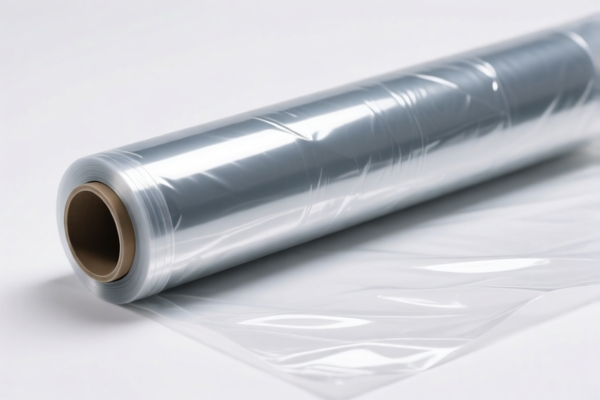
AI Analysis
🎬 Industrial Grade Wide Format Film
🌐 HS Code Reference & Customs Clearance Guide | 2026 Latest Tariff Analysis | Professional Clearance Strategy
📌 1. Product Definition: What is "Industrial Wide Format Film"?
In international trade, "Industrial Grade Wide Format Film" generally refers to flexible plastic sheets or rolls used in industrial applications such as printing, packaging, signage, or protective coating. Unlike consumer goods, these films are defined by their material composition (typically plastic), form factor (rolls/sheets), and lack of specific functional electronics or rigid structures.
⚠️ Key Distinction:
- If the film is coated with adhesive → Consider Chapter 39 or 35 depending on adhesive type.
- If the film is backed with paper/board → It may be reclassified as paper-based products (Chapter 48).
- If it is a rigid sheet → It does not qualify as "film" and must be reclassified under rigid plastic articles.
📦 2. HS Code Classification Matrix (2026 Latest Tariff Alignment)
Based on the provided data, the product is classified into five potential HS Codes under Chapter 39 (Plastics and Articles Thereof). All codes indicate a plastic material inferred from "Industrial Grade" and "Film" morphology.
| HS Code | Summary Reasoning | Total Tax Rate | Tax Details (US Imports from China) |
|---|---|---|---|
3919.90.50.60 |
Matches form factor "film"; material inferred as plastic; considered a catch-all category with no material conflict. | 40.8% | Base: 5.8% + Section 301: 25.0% + Section 122: 10.0% |
3920.99.20.00 |
Form matches "film"; material inferred as plastic; fits the catch-all for "other flexible plastic films." | 39.2% | Base: 4.2% + Section 301: 25.0% + Section 122: 10.0% |
3921.19.00.90 |
Form matches "film/plate/foil"; material is other plastic; no material conflict identified. | 41.5% | Base: 6.5% + Section 301: 25.0% + Section 122: 10.0% |
3921.90.50.50 |
"Film" in name matches form; "Industrial grade" inferred as plastic; no obvious material conflict. | 39.8% | Base: 4.8% + Section 301: 25.0% + Section 122: 10.0% |
3919.10.20.55 |
Matches form "film"; "Industrial grade" inferred as plastic; no material or form conflict. | 40.8% | Base: 5.8% + Section 301: 25.0% + Section 122: 10.0% |
🔍 Critical Insight:
All five codes result in a high total tariff burden (~39–42%) due to the叠加 (stacking) of Base Duties, Section 301 Tariffs (25%), and Section 122 Tariffs (10%). The primary difference lies in the Base Duty (4.2%–6.5%), which significantly impacts the final landed cost.
💰 3. Detailed Breakdown of Tariff Components
✅ Applicable Country: United States (US)
✅ Origin: China (CN)
✅ Effective Date: Ongoing (Subject to current trade policy)
🎯 Why Are Taxes So High?
| Component | Rate | Legal Basis | Description |
|---|---|---|---|
| Base Duty | 4.2% – 6.5% | HTSUS General Rate | Standard tariff for plastic films/plates under Chapter 39. Varies by specific subheading. |
| Section 301 Tariff | +25% | USITC Footnote 9903.88.01 | Retaliatory tariff on Chinese imports. Applies broadly to plastic articles. |
| Section 122 Tariff | +10% | IEEPA / Section 122 | Additional tariff on certain Chinese goods. Applies to plastic films in this context. |
| Total Effective Rate | 39.2% – 41.5% | Sum of above | NO DE MINIMIS EXEMPTION applies for Section 301 goods. |
📌 Note on "No Material Conflict":
The summaries explicitly state "no material conflict," meaning the customs authority accepts the assumption that the film is pure plastic. If the film contains metalized layers, paper backing, or textile reinforcement, the classification could change, potentially altering the tax rate.
🛠️ 4. Customs Clearance Operational Advice (Practical Pitfall Avoidance)
✅ 1. Documentation Checklist (Mandatory)
| Document | Required? | Purpose |
|---|---|---|
| Commercial Invoice | ✅ Yes | Must clearly state "Plastic Film," "Industrial Use," and "No Adhesive" (if applicable). |
| Product Specification Sheet | ✅ Yes | Detail thickness, width, length, and material composition (e.g., PE, PP, PVC). |
| Material Safety Data Sheet (MSDS) | ✅ Yes | Confirm chemical composition to avoid misclassification as hazardous or coated goods. |
| Certificate of Origin (CO) | ✅ Yes | Essential for verifying Chinese origin to apply (or challenge) Section 301/122 tariffs. |
| Packing List | ✅ Yes | Clarify dimensions and weight to match HS Code requirements. |
✅ 2. Declaration Best Practices
🔥 Golden Rule:
"Be Specific. 'Industrial Grade' is vague. Use precise material names."
| Scenario | Recommended Declaration | Avoid |
|---|---|---|
| Plain Plastic Film | "Polyethylene (PE) Plastic Film, Industrial Grade, Uncoated" | "Generic Plastic Film" |
| Adhesive Backed Film | "Pressure Sensitive Plastic Film, PE Base" | "Industrial Film" (ambiguous) |
| Paper-Backed Film | "Plastic-Coated Paper, Industrial Grade" | Misdeclare as pure plastic film (3919/3920/3921) |
✅ 3. Strategic Recommendations for Cost Reduction
- Verify Material Composition:
- If the film is Polypropylene (PP) or Polyethylene (PE), it falls under
3920or3919. - If it is PVC, it may fall under
3921. -
Action: Provide exact polymer type to Customs Broker to select the lowest Base Duty option (e.g.,
3920.99.20.00at 4.2% base vs.3921.19.00.90at 6.5% base). -
Check for Exclusions:
-
Verify if the specific use case qualifies for any Exclusions from Section 301. While rare for general plastic films, some industrial-specific applications may have been excluded in previous rounds. Check the latest USTR exclusion list.
-
Consider Third-Country Origin:
-
If possible, source or assemble the film in a non-China origin country (e.g., Vietnam, Thailand) to avoid Section 301 and 122 tariffs. This can reduce the total tax from ~40% to ~5–10% (Base + Local Duty).
-
Pre-Ruling Application:
- Apply for an Advance Ruling with US Customs and Border Protection (CBP) to lock in the HS Code and ensure consistency across shipments. This prevents post-entry audits and retroactive duties.
🌍 5. Global Market Comparison (2026)
| Region | Recommended HS Code | Est. Total Tax | Notes |
|---|---|---|---|
| 🇺🇸 USA | 3920.99.20.00 (Lowest Base) |
~39.2% | High due to Section 301 + 122. No de minimis. |
| 🇨🇳 China | 3920.99.20.00 |
~5–10% | Lower base duty; no Section 301/122. |
| 🇪🇺 EU | 3920.99.20.00 |
~6.5% | No Section 301/122 equivalents. Standard duty applies. |
| 🇦🇺 Australia | 3920.99.20.00 |
~5% | Low base duty; no significant surcharges. |
📌 Conclusion:
The USA is the most expensive market for Chinese-origin industrial plastic films due to the叠加 of Section 301 and 122 tariffs. Importers must factor in ~40% landed cost solely on duties.
📌 6. Common Errors & Pitfalls
❌ Error 1: Misdeclaring "Industrial Film" as a generic "Plastic Sheet" without specifying morphology.
👉 Consequence: Customs may reject the classification, leading to delays and reclassification at a higher rate.
❌ Error 2: Ignoring the "122 Tariff" component.
👉 Consequence: Underpayment of duties, resulting in penalties and interest charges during audits.
❌ Error 3: Assuming "Industrial Grade" implies a different HS Code.
👉 Consequence: "Industrial Grade" is a usage descriptor, not a material one. It does not change the Chapter 39 classification but may affect the specific subheading if it involves special coatings.
🎯 7. Final Recommendation
🚀 Pro Tip:
For shipments to the US, prioritize3920.99.20.00if the film is a flexible plastic sheet not further worked than simple extrusion/coating. It offers the lowest Base Duty (4.2%), minimizing the total tax burden when Section 301/122 are applied.📞 Immediate Action:
1. Confirm the exact polymer type (PE, PP, PVC, etc.).
2. Engage a licensed customs broker to file an Advance Ruling.
3. Evaluate supply chain options for non-China origins to mitigate tariff risks.
✨ Precision Classification Saves Money.
💼 Every percentage point matters in high-tariff environments.
Customer Reviews
About HS Code Classification
The Harmonized System (HS) is an internationally standardized nomenclature developed by the World Customs Organization (WCO) to classify traded products. Over 200 countries use the HS system as the basis for customs tariffs, trade statistics, and import/export regulations.
Each HS code follows a hierarchical structure:
- Chapter (2 digits) — Broad category of goods (e.g., Chapter 84: Machinery and Mechanical Appliances)
- Heading (4 digits) — More specific grouping within the chapter
- Subheading (6 digits) — Internationally standardized breakdown, used by all WCO member countries
- National subdivisions (8-10 digits) — Country-specific extensions for further classification, such as US HTSUS 10-digit codes
Correct HS code classification is essential for smooth customs clearance, accurate duty payment, and compliance with trade regulations. Misclassification can lead to customs delays, overpayment of duties, or penalties.
When importing from CN to US, the applicable tariff rates may include:
- Most-Favored-Nation (MFN) rate — The standard duty rate applied to WTO members
- General rate — Applied to countries without trade agreements
- Trade remedy duties — Additional tariffs such as Section 301 (anti-dumping), Section 232 (national security), or countervailing duties
The information provided on this page is for reference purposes only. For official classification, please consult with your local customs authority or a licensed customs broker.