Industrial Leather Belt Material
CN → US| HS Code | Tariff Rate | Origin | Destination | Doc |
|---|---|---|---|---|
| 4107117030 | 15.0% | CN | US | Official Doc |
| 4107127030 | 15.0% | CN | US | Official Doc |
Product Images
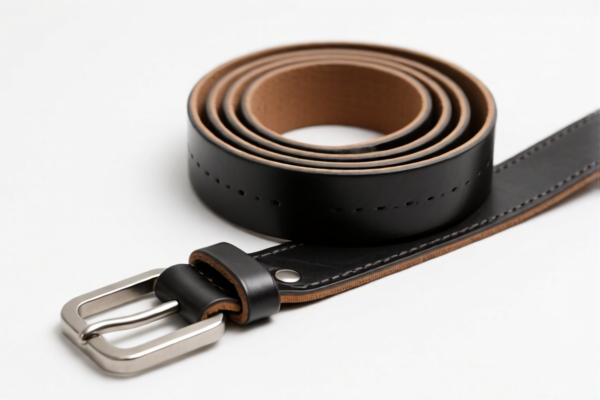
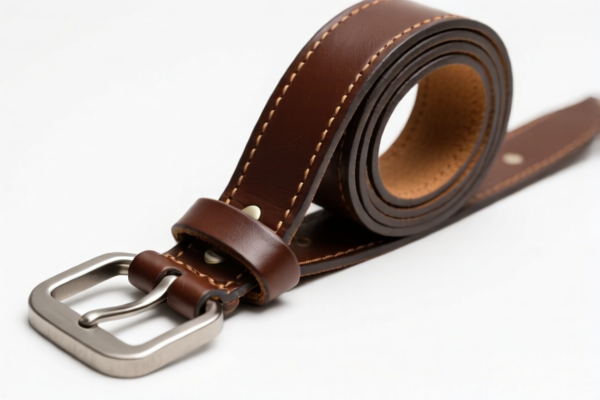
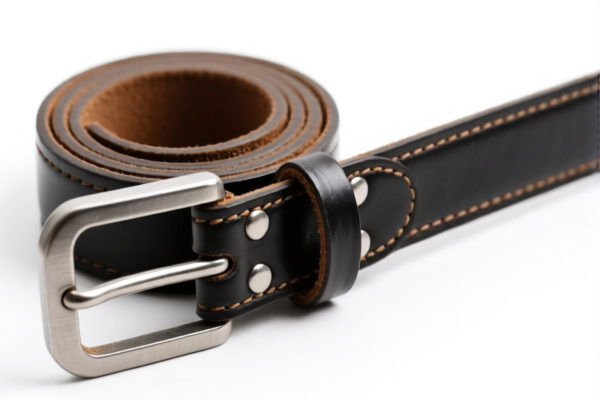
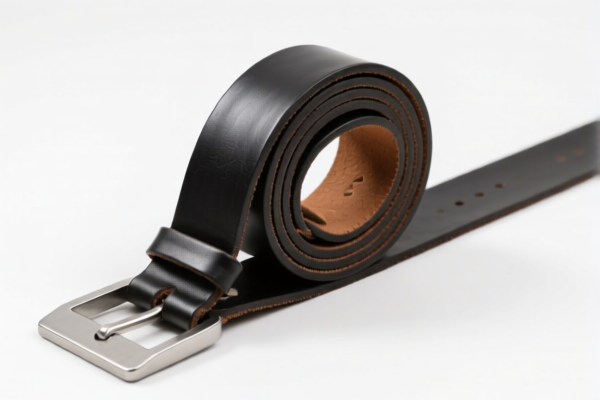
AI Analysis
🧵 Industrial Leather Belt Material
🌐 HS Code Reference & Customs Clearance Guide | 2026 Latest Tariff Analysis | Professional Clearance Strategy
📌 I. Product Definition & Classification: What Exactly Is "Industrial Leather Belt Material"?
Industrial leather belt material refers to leather specifically prepared for use in transmitting power or motion in machinery (e.g., conveyor belts, drive belts, pulley systems). It is not fashion leather or general-purpose leather.
In international trade, this category falls under Chapter 41: Raw Hides and Skins, Leather and Furskins, specifically under Heading 4107: Leather further prepared after tanning or crusting, including parchment-dressed leather, of bovine (including buffalo) or equine animals, without hair on, whether or not split, other than leather of heading 4114.
⚠️ Key Distinction:
- If the leather is split (layered), it falls under subheading 4107.12.
- If the leather is whole hide/skin (full grain, unsplit), it falls under subheading 4107.11.
- Both types exclude "fancy belting" (luxury fashion belts) and leather of heading 4114 (chemically treated parchment-like leather).
📦 II. HS Code Classification Details (2026 Latest Tariff Authority Cross-Reference)
Based on the provided data, here are the precise HS Codes for industrial leather belt material:
| HS Code | Product Description | Application Scenario | Grain Status |
|---|---|---|---|
4107.11.70.30 |
Whole hides and skins: Full grains, unsplit: Other: Not fancy Belting | Industrial drive belts, heavy machinery transmission belts, non-fashion utility leather | ✅ Full Grain / Unsplit |
4107.12.70.30 |
Whole hides and skins: Grain splits: Other: Not fancy Belting | Split leather used for lighter industrial applications, flexible conveyor belts, non-fashion utility leather | ✅ Split (Layered) |
🔍 Critical Note:
- Both codes explicitly exclude "Fancy Belting" (heading 4114). If your product is marketed as a fashion accessory, it will be misclassified and subject to different (often higher) tariffs.
- The material must be bovine (cow/buffalo) or equine. Leather from sheep, goats, or exotic animals falls under different subheadings.
💰 III. 2026 Latest Tariff Rate Details (Including Additional Taxes)
✅ Applicable Country: United States (US)
✅ Origin: China (CN)
✅ Effective Date: 2026 Tariff Schedule
🎯 1. 4107.11.70.30 — Whole Hides, Full Grain, Unsplit, Not Fancy Belting
| Item | Content |
|---|---|
| Base Tariff Rate | 0.0% (Ad Valorem) |
| Section 301 Additional Tariff | 0.0% |
| Total Tariff Rate | 0.0% |
| Tax Calculation | CIF Value × 0.0% = $0 |
| De Minimis Eligibility | ❌ No (Leather goods are generally excluded from de minimis exemptions if subject to trade remedies, but here the rate is already 0%) |
| Legal Basis Path | USITC:4107.11.70.30 |
📌 Explanation:
- This specific subheading for industrial, non-fashion bovine leather has a 0% base tariff.
- Currently, there is no additional Section 301 tariff applied to this specific HS Code in the provided dataset.
- Total Duty: 0%. This is a highly favorable tariff line for industrial buyers.
🎯 2. 4107.12.70.30 — Grain Splits, Other, Not Fancy Belting
| Item | Content |
|---|---|
| Base Tariff Rate | 0.0% (Ad Valorem) |
| Section 301 Additional Tariff | 0.0% |
| Total Tariff Rate | 0.0% |
| Tax Calculation | CIF Value × 0.0% = $0 |
| De Minimis Eligibility | ❌ No |
| Legal Basis Path | USITC:4107.12.70.30 |
📌 Note:
- Similar to the full grain version, split leather for industrial use (not fancy fashion) is also taxed at 0%.
- Whether you import full hides or split leather, as long as it is not "fancy belting" and is for industrial use, the duty remains 0%.
🛠️ IV. Customs Clearance Practical Advice (Battle-Tested Pitfall Guide)
✅ 1. Required Documentation Checklist (Non-Negotiable)
| Document | Required | Description |
|---|---|---|
| ✅ Commercial Invoice | ✔️ | Must clearly state "Industrial Leather Belt Material" and NOT "Fashion Belt" or "Luxury Leather". |
| ✅ Product Specification Sheet | ✔️ | Details thickness, width, tanning method, and intended industrial application (e.g., "Drive Belt," "Conveyor Belt"). |
| ✅ Split/Full Grain Declaration | ✔️ | Explicitly state whether the leather is Full Grain (Unsplit) or Split. This determines 4107.11 vs 4107.12. |
| ✅ Certificate of Origin | ✔️ | To prove origin (e.g., China) and verify tariff eligibility. |
| ✅ Packaging List | ✔️ | Show quantity, weight, and dimensions. |
| ✅ Photos of Product | ✔️ | Clear images showing the leather surface, edge, and any markings indicating industrial use. |
✅ 2. Declaration Tips (Key Mantra)
🔥 "Industrial Use, Not Fancy; Grain or Split, Zero Duty!"
| Scenario | Correct Declaration | Incorrect Practice |
|---|---|---|
| Leather for machinery belts | 4107.11.70.30 or 4107.12.70.30 |
Misdeclaring as "Fashion Leather" (HS 4114) → Higher risk of audit |
| Split leather for light industry | 4107.12.70.30 |
Declaring as full grain → Minor discrepancy, but potential delay |
| Fancy fashion belts (luxury) | NOT 4107 (Likely 4114 or 4203) | Declaring as industrial leather → Fraud/Seizure Risk |
| Sheep/Goat leather | NOT 4107 (Likely 4106/4105) | Declaring as bovine leather → Classification Error |
✅ 3. Special Circumstances Handling
| Situation | Handling Advice |
|---|---|
| Mixed Shipment (Industrial + Fashion) | Do not mix. Split the invoice. Fashion items may have different tariffs and restrictions. Mixing causes customs delays. |
| Parchment-Dressed Leather | If the leather is treated to be parchment-like, it may fall under Heading 4114. Do not use 4107 codes. |
| Import for Testing Samples | Still subject to tariffs. However, if value is very low, check de minimis rules (though leather often excluded). |
| Re-export from Free Trade Zone | If processing in a FTZ, duties may be suspended until final entry. Consult with a customs broker. |
🌍 V. Global Market Customs Comparison (2026 Latest)
| Country/Region | Recommended HS Code | Tariff Rate | Certification Requirements | Notes |
|---|---|---|---|---|
| 🇺🇸 USA | 4107.11.70.30 / 4107.12.70.30 |
0% | None specific for leather, but ensure industrial use declaration | Best Market for Zero Duty |
| 🇨🇳 China (Export) | 4107.11 / 4107.12 |
VAT 13% | Export License (if applicable) | Check if "Fancy" exclusion is clear in Chinese export docs |
| 🇪🇺 EU | 4107 21 / 4107 22 |
6.5% | REACH Compliance (Chemicals) | EU does not have the same 0% industrial rate; higher duty applies |
| 🇬🇧 UK | 4107 21 / 4107 22 |
6.5% | Post-Brexit Rules of Origin | Similar to EU |
| 🇦🇺 Australia | 4107.21 / 4107.22 |
5% | None | Competitive but not zero |
📌 Conclusion:
- The USA offers a 0% tariff for this specific industrial leather classification.
- EU and other markets typically charge 5-7%.
- Crucial: Ensure the description explicitly excludes "fancy" or "fashion" use to qualify for the 0% rate in the US.
📌 VI. Common Mistakes & Pitfall Guide (Lessons Learned)
❌ Mistake 1: Declaring "Industrial Leather" but the product is visibly a fashion belt strap
👉 Consequence: Customs reclassifies to 4114 (Parchment/Dressed Leather) → Higher Duty + Penalty
❌ Mistake 2: Mixing Full Grain and Split Leather in one line item
👉 Consequence: Customs may assess the higher or more complex rate, or request detailed breakdown → Delays
❌ Mistake 3: Failing to specify "Not Fancy Belting" in the commercial invoice
👉 Consequence: Ambiguity leads to audit → Potential Retroactive Tax
❌ Mistake 4: Assuming all leather from China gets 25% Section 301 Tariff
👉 Consequence: This specific HS Code (4107.11.70.30 / 4107.12.70.30) is NOT subject to the 301 tariff in the provided data → Overpaying or Underpaying Risk
✅ Correct Approach:
"Industrial Drive Belt Leather, Bovine, Full Grain, Unsplit, Tanned, Non-Fashion, Model XYZ, HS 4107.11.70.30"
🎯 VII. Conclusion: Precision Classification for Cost Savings
🎯 Remember the Mantra:
🔹 "Industrial Not Fancy, Zero Duty in US!"
🔹 "Split or Full, Both 0%, But Don't Mix with Fashion!"
📌 Pro Tip:
- Always provide photos showing the industrial application context (e.g., leather rolls for conveyor belts).
- If the leather is intended for fashion belts, it does NOT qualify for these HS Codes. It will likely fall under 4114 or 4203, with different tariffs.
- Pre-clearance: Submit a Binding Tariff Information (BTI) request to US Customs if your shipment volume is high, to lock in the 0% rate.
📣 Immediate Action:
📞 Contact your customs broker with the exact HS Codes:
-4107.11.70.30(Full Grain)
-4107.12.70.30(Split)
🚀 Ensure your invoice says "NOT FANCY BELTING" to secure 0% duty!
✨ Professional clearance starts with accurate classification!
💼 Your cost savings are calculated in every digit of the HS Code!
Customer Reviews
About HS Code Classification
The Harmonized System (HS) is an internationally standardized nomenclature developed by the World Customs Organization (WCO) to classify traded products. Over 200 countries use the HS system as the basis for customs tariffs, trade statistics, and import/export regulations.
Each HS code follows a hierarchical structure:
- Chapter (2 digits) — Broad category of goods (e.g., Chapter 84: Machinery and Mechanical Appliances)
- Heading (4 digits) — More specific grouping within the chapter
- Subheading (6 digits) — Internationally standardized breakdown, used by all WCO member countries
- National subdivisions (8-10 digits) — Country-specific extensions for further classification, such as US HTSUS 10-digit codes
Correct HS code classification is essential for smooth customs clearance, accurate duty payment, and compliance with trade regulations. Misclassification can lead to customs delays, overpayment of duties, or penalties.
When importing from CN to US, the applicable tariff rates may include:
- Most-Favored-Nation (MFN) rate — The standard duty rate applied to WTO members
- General rate — Applied to countries without trade agreements
- Trade remedy duties — Additional tariffs such as Section 301 (anti-dumping), Section 232 (national security), or countervailing duties
The information provided on this page is for reference purposes only. For official classification, please consult with your local customs authority or a licensed customs broker.