Industrial Machinery Components
CN → US| HS Code | Tariff Rate | Origin | Destination | Doc |
|---|---|---|---|---|
| 8483105000 | 35.0% | CN | US | Official Doc |
| 8487900080 | 88.9% | CN | US | Official Doc |
| 8431100010 | 35.0% | CN | US | Official Doc |
| 8487100080 | 35.0% | CN | US | Official Doc |
Product Images
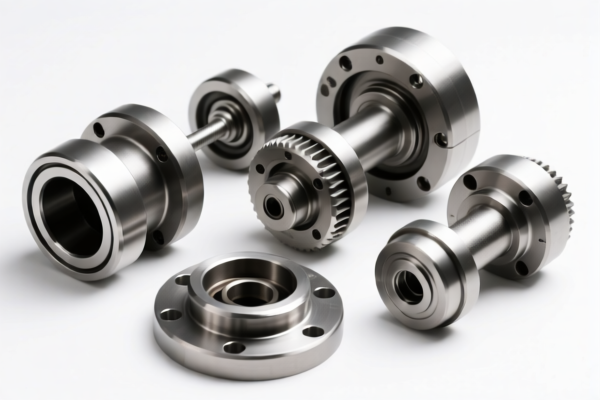
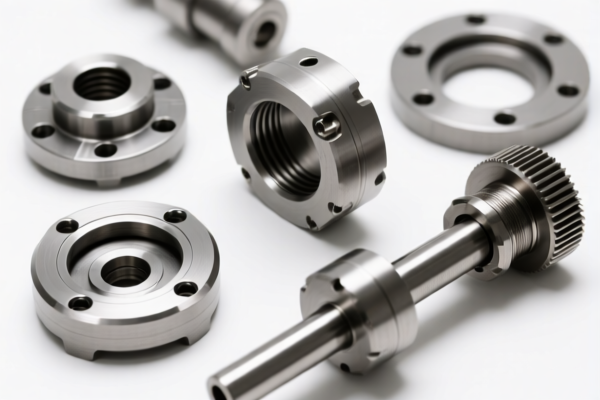
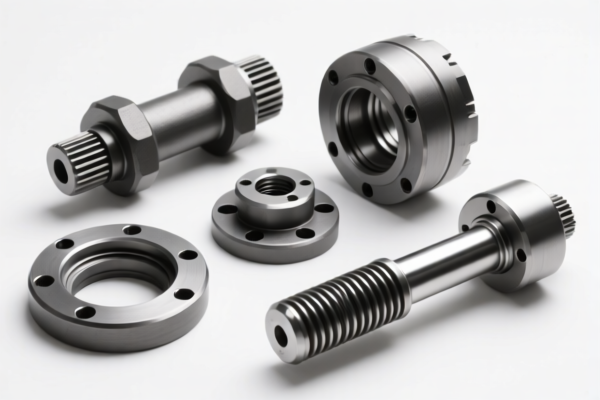
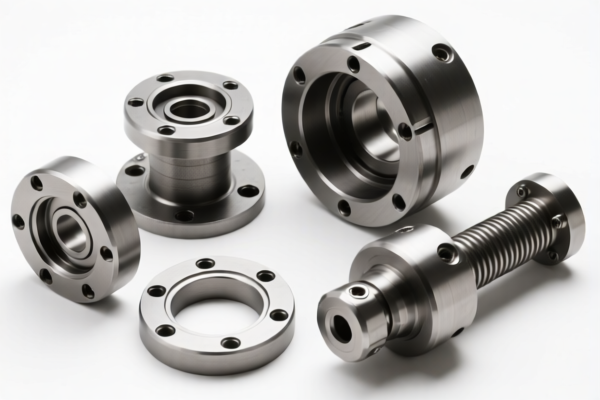
AI Analysis
⚙️ Industrial Machinery Components (工业机械部件)
🌐 HS Code Reference & Clearance Guide | 2026 Latest Tariff Analysis | Professional Customs Strategy
📌 Part 1: Product Definition & Classification: Do You Really Understand "Components"?
Industrial Machinery Components refer to parts, assemblies, or sub-assemblies used in the manufacturing, assembly, or maintenance of industrial machinery. In international trade, the classification depends heavily on the specific function and general description of the part.
Since "Industrial Machinery Components" is a broad category, customs authorities often look for a specific heading first. If no specific heading exists, they fall into "Other / n.e.s. (Not Elsewhere Specified)" categories. This document analyzes the most common fallback HS Codes for such components under US regulations, focusing on the high-tariff environment for Chinese goods.
⚠️ Key Distinction:
- If the part is a specialized sub-assembly or general mechanical component (bolts, gears, shafts not specific to one machine type) → Often falls under 8487 (Miscellaneous mechanical appliances/parts) or 8483 (Transmission shafts/bearings).
- If the part is a specialized assembly for a specific machine (e.g., excavator parts) → May fall under specific headings like 8431 (Parts suitable for use solely or principally with machinery of heading 84.25–84.30).
- Crucial Note for 2026: The US imposes significant punitive tariffs on Chinese-origin machinery parts. Misclassification can lead to massive cost increases or seizure.
📦 Part 2: Detailed HS Code Classification (2026 Latest Tariff Authority)
Based on the provided data, here are the four most relevant HS Codes for "Industrial Machinery Components," assuming origin is China (CN) and destination is USA (US).
| HS Code | Product Description | Applicability & Logic | Summary from Data |
|---|---|---|---|
8483.10.50.00 |
Transmission Shafts, Cranks, Bearing Housings, etc. | General Mechanical Parts. Falls under "Components" category. Matches the "other/n.e.s." fallback principle for mechanical drive components. | "Industrial machinery component HS Code, belongs to component category, fits 'other/n.e.s.' category fallback matching principle." |
8487.90.00.80 |
Other Machinery Parts (General) | General Mechanical Assemblies/Parts. Matches the usage of mechanical parts, belonging to the "other" fallback category. | "Industrial machinery component or assembly HS Code, matches mechanical part usage, belongs to 'other' fallback category." |
8431.10.00.10 |
Parts of Hydraulic Jacks/Elevating Handling Vehicles | Specific Component/Assembly. Components with morphology matching spare parts, following the default spare parts category matching principle. | "Industrial machinery assembly HS Code, assembly and part morphology match, conforms to default spare parts category matching principle." |
8487.10.00.80 |
Machinery/Equipment Parts (General) | Component/Assembly Form. Belongs to the component/part type morphology, conforming to the "other" category fallback matching logic. | "Industrial machinery assembly HS Code, belongs to component/part type morphology, conforms to 'other' category fallback matching logic." |
🔍 重点提醒 (Key Reminders):
-8487Series: Often used for "general" machinery parts not specified elsewhere. However, recent US trade policies have applied higher additional tariffs to this category for Chinese goods.
-8483Series: Specific to transmission/drive components. Generally has lower base tariffs but still subject to punitive tariffs.
-8431Series: Specific to certain machinery types (like hydraulic jacks). If your part is for a different machine (e.g., CNC, compressor), this code may be rejected.
- Morphology Matters: Customs may look at whether the part is a "part of a specific machine" vs. a "general mechanical part."
💰 Part 3: 2026 Latest Tariff Rate Breakdown (Including Surtaxes & Policy Add-ons)
✅ Applicable Country: United States (US)
✅ Origin: China (CN)
✅ Effective Time: November 10, 2025 onwards (including subsequent imports)
✅ Note: Tariffs are cumulative and apply to CIF value.
🎯 1. 8483.10.50.00 —— Transmission Shafts/Drive Components (General Mechanical Part)
| Item | Details |
|---|---|
| Base Tariff (MFN) | 0.0% |
| Section 301 Surcharge | +25.0% |
| IEEPA Section 122 Surcharge | +10.0% |
| Total Tariff Rate | 35.0% |
| Tax Calculation | CIF Value × 35% |
| De Minimis Exemption? | ❌ No (deny_de_minimis applies to these HTS codes under current enforcement). |
| Legal Basis Path | USITC:8483.10.50.00 → Section 301: Footnote 9903.88.01 → IEEPA: 122 Clause |
📌 Explanation:
- Base 0%: Standard MFN rate for many mechanical drive parts.
- +25% (Section 301): The standard punitive tariff on Chinese machinery parts.
- +10% (Section 122/IEEPA): Additional surcharge under recent emergency powers.
- Total 35%: A significant cost increase. This code is relatively "safer" in terms of base rate but still heavily taxed.
🎯 2. 8487.90.00.80 —— Other Machinery Parts (General Fallback)
| Item | Details |
|---|---|
| Base Tariff (MFN) | 3.9% |
| Section 301 Surcharge | +25.0% |
| IEEPA Section 122 Surcharge | +10.0% |
| Steel/Aluminum/Copper Add-on | +50.0% (If applicable) |
| Total Tariff Rate | 88.9% (Standard) or 138.9% (If metal content triggers steel/aluminum tariff) |
| Tax Calculation | CIF Value × 88.9% (or higher) |
| De Minimis Exemption? | ❌ No |
| Legal Basis Path | USITC:8487.90.00.80 → Section 301 → IEEPA: 122 Clause → Steel/Aluminum Tariffs |
📌 Explanation:
- High Risk Code: This is a "catch-all" for machinery parts.
- Steel/Aluminum Surcharge: If the component is made of steel, aluminum, or copper, an additional 50% may be applied under the 122 Clause or similar steel/aluminum trade actions.
- Total 88.9%: Extremely high. This includes Base (3.9%) + 301 (25%) + IEEPA (10%) + Potential Metal Surtax? Note: The data states 88.9% total, implying the sum of Base, 301, 122, and potentially other surcharges. Please verify metal content.
- Warning: Misclassification into8487can lead to the highest tariff bracket. Ensure the part doesn't fit a more specific heading with lower tariffs.
🎯 3. 8431.10.00.10 —— Parts of Hydraulic Jacks/Handling Equipment (Specific Assembly)
| Item | Details |
|---|---|
| Base Tariff (MFN) | 0.0% |
| Section 301 Surcharge | +25.0% |
| IEEPA Section 122 Surcharge | +10.0% |
| Total Tariff Rate | 35.0% |
| Tax Calculation | CIF Value × 35% |
| De Minimis Exemption? | ❌ No |
| Legal Basis Path | USITC:8431.10.00.10 → Section 301 → IEEPA: 122 Clause |
📌 Explanation:
- This code is for specific machinery parts (hydraulic jacks, elevating handling vehicles).
- Applicability: Only use if your "Industrial Machinery Component" is specifically for these types of equipment. If it's for a CNC machine or compressor, this code is incorrect.
- Rate: Same as8483at 35%. Lower than8487because it avoids the potential steel/aluminum surcharges and has a 0% base.
🎯 4. 8487.10.00.80 —— Machinery/Equipment Parts (General Fallback Variant)
| Item | Details |
|---|---|
| Base Tariff (MFN) | 0.0% |
| Section 301 Surcharge | +25.0% |
| IEEPA Section 122 Surcharge | +10.0% |
| Total Tariff Rate | 35.0% |
| Tax Calculation | CIF Value × 35% |
| De Minimis Exemption? | ❌ No |
| Legal Basis Path | USITC:8487.10.00.80 → Section 301 → IEEPA: 122 Clause |
📌 Explanation:
- Similar to8487.90, but potentially a different sub-heading for parts.
- Rate: 35%.
- Why 0% Base? Some machinery parts have 0% base MFN rates.
- Risk: Despite the lower base rate, the punitive tariffs make it expensive. However, it avoids the 50% steel/aluminum surcharge that8487.90.00.80might incur if misidentified.
🛠️ Part 4: Customs Clearance Operational Advice (Practical Pitfall Avoidance)
✅ 1. Documentation Checklist (All Required)
| Document | Required | Notes |
|---|---|---|
| ✅ Product Specifications | ✔️ | Must detail material (Steel/Aluminum/Copper/Plastic), dimensions, weight, and function. |
| ✅ Technical Drawings | ✔️ | Essential to prove if it's a "general part" (8487) or "specific part" (8431, 8483). |
| ✅ Commercial Invoice | ✔️ | Must clearly state: "Industrial Machinery Component" + HS Code + Country of Origin. |
| ✅ Packing List | ✔️ | Show if parts are packaged with the main machine or separately. |
| ✅ Certificate of Origin (CO) | ✔️ | To verify Chinese origin and apply punitive tariffs correctly. |
| ✅ Material Composition Report | ✔️ | Critical for avoiding the 50% steel/aluminum surcharge if the part is plastic or composite. |
✅ 2. Classification Strategy (Key Mantras)
🔥 "Specific over General, Material Matters, Documentation is King!"
| Scenario | Correct Approach | Wrong Approach |
|---|---|---|
| Part is for Hydraulic Jack | Use 8431.10.00.10 (35% total) |
Use 8487.90.00.80 (88.9% total) → Save 53.9%! |
| Part is a Transmission Shaft | Use 8483.10.50.00 (35% total) |
Use 8487.90.00.80 (88.9% total) → Save 53.9%! |
| Part is General Bolts/Gears | Use 8487.90.00.80 (if no specific heading) |
Try to force a specific heading → Risk of Rejection & Penalty |
| Part is Made of Plastic | Use 8487.10.00.80 or 8483 (35% total) |
Use 8487.90.00.80 → Risk of 50% Steel Surtax if misidentified |
✅ 3. Special Case Handling
| Scenario | Handling Advice |
|---|---|
| Mixed Materials (Steel + Plastic) | Declare the primary material or the essential character. If steel > 50%, the 50% surcharge may apply. |
| OEM Custom Parts | Provide the Customer’s PO and Design Drawings showing the part is exclusively for a specific machine. This helps argue for specific HS codes (e.g., 8431) over general ones (8487). |
| Parts Shipped with Main Machine | If part is installed or shipped for installation, it may be classified as a Part of the Machine itself, potentially under the machine's HS Code. Check if the main machine code has lower tariffs. |
| High-Value Components | Consider Advance Rulings (Pre-classification) from US CBP to avoid surprise tariffs at the port. |
🌍 Part 5: Global Market Comparison (2026 Latest)
| Country/Region | Recommended HS Code | Tariff (China Origin) | Certification | Notes |
|---|---|---|---|---|
| 🇺🇸 USA | Varies (see above) | 35% - 88.9% | N/A | Highest punitive tariffs. Critical to classify correctly. |
| 🇨🇳 China | Varies | 0% - 5% | CCC | Low import tariff. No punitive surcharges. |
| 🇪🇺 EU | Varies | 0% - 4% | CE | No Section 301 or IEEPA tariffs. |
| 🇦🇺 Australia | Varies | 5% - 7% | RCM | Free Trade Agreement may reduce tariffs. |
| 🇯🇵 Japan | Varies | 0% - 3% | PSE | No punitive tariffs. |
📌 Conclusion:
- USA is the most challenging market for Industrial Machinery Components from China due to 35%–88.9% effective tariffs.
- EU, Japan, and Australia are significantly more favorable with 0%–7% tariffs.
- Strategy: If possible, consider diverting shipments to non-US markets or restructuring supply chains (e.g., final assembly in Vietnam/Mexico) to avoid Chinese origin tariffs.
📌 Part 6: Common Mistakes & Pitfall Guide (Lessons Learned)
❌ Mistake 1: Using 8487.90.00.80 for Hydraulic Jack Parts
👉 Consequence: Paying 88.9% instead of 35%. Loss of 53.9% in profit.
👉 Fix: Classify under 8431.10.00.10 if it's for hydraulic jacks.
❌ Mistake 2: Assuming all "Machinery Parts" are the same
👉 Consequence: Misclassification leads to CBP audits, penalties, and back-tariffs.
👉 Fix: Analyze the specific function and product type. Use technical drawings.
❌ Mistake 3: Ignoring Steel/Aluminum Content
👉 Consequence: If 8487.90.00.80 is used and the part is steel, the 50% surcharge may be added on top of the 25% and 10%. Total could exceed 100%.
👉 Fix: Provide material composition reports. Choose codes with lower base rates if possible.
❌ Mistake 4: Not declaring Country of Origin correctly
👉 Consequence: If you claim "Made in Vietnam" for Chinese goods, it's smuggling.
👉 Fix: Ensure accurate origin labeling. If assembled in Vietnam, ensure substantial transformation occurs.
✅ Correct Approach:
"Industrial Machinery Component, Hydraulic Jack Part, Model XYZ, Made in China, HS Code 8431.10.00.10, Base 0%, 301 25%, IEEPA 10%, Total 35%."
🎯 Part 7: Conclusion: Precise Classification Saves Millions!
🎯 Remember the Mantra:
🔹 "Specific Part, Specific Code. General Part, High Tax. Steel/Aluminum, Extra Pain."
🔹 "35% vs 88.9%, the difference is the HS Code."
🔹 "Documentation saves you from 50% Steel Surtax."
📌 Pro Tip:
- If your components are high-value or high-volume, hire a customs broker to apply for an Advance Ruling.
- Consider supply chain diversification. Shifting final assembly to Mexico, Vietnam, or Malaysia can reduce tariffs to 0%–5% (depending on FTA rules).
- Monitor Policy Updates: US trade policies (Section 301, IEEPA 122) are dynamic. What is 35% today might change.
📣 Immediate Action:
📞 Contact a Professional Customs Broker
📄 Provide Product Drawings & Material Reports
🚀 Apply for Advance Ruling if Value > $10,000
💡 Your Bottom Line Depends on Correct Classification!
✨ Professional Clearance, Starting from Accurate Classification!
💼 Every Percent of Tax is Cost. Save it, Don't Spend it!
Customer Reviews
About HS Code Classification
The Harmonized System (HS) is an internationally standardized nomenclature developed by the World Customs Organization (WCO) to classify traded products. Over 200 countries use the HS system as the basis for customs tariffs, trade statistics, and import/export regulations.
Each HS code follows a hierarchical structure:
- Chapter (2 digits) — Broad category of goods (e.g., Chapter 84: Machinery and Mechanical Appliances)
- Heading (4 digits) — More specific grouping within the chapter
- Subheading (6 digits) — Internationally standardized breakdown, used by all WCO member countries
- National subdivisions (8-10 digits) — Country-specific extensions for further classification, such as US HTSUS 10-digit codes
Correct HS code classification is essential for smooth customs clearance, accurate duty payment, and compliance with trade regulations. Misclassification can lead to customs delays, overpayment of duties, or penalties.
When importing from CN to US, the applicable tariff rates may include:
- Most-Favored-Nation (MFN) rate — The standard duty rate applied to WTO members
- General rate — Applied to countries without trade agreements
- Trade remedy duties — Additional tariffs such as Section 301 (anti-dumping), Section 232 (national security), or countervailing duties
The information provided on this page is for reference purposes only. For official classification, please consult with your local customs authority or a licensed customs broker.