Industrial Machinery Rubber Parts
CN → US| HS Code | Tariff Rate | Origin | Destination | Doc |
|---|---|---|---|---|
| 4016996050 | 37.5% | CN | US | Official Doc |
| 4016996010 | 37.5% | CN | US | Official Doc |
| 3926905900 | 37.4% | CN | US | Official Doc |
| 8431499038 | 85.0% | CN | US | Official Doc |
| 8431499090 | 85.0% | CN | US | Official Doc |
Product Images
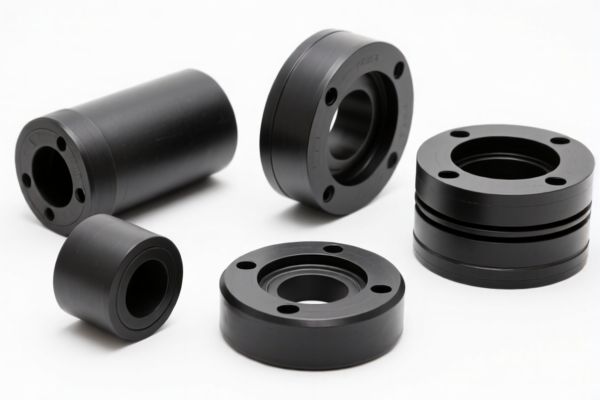
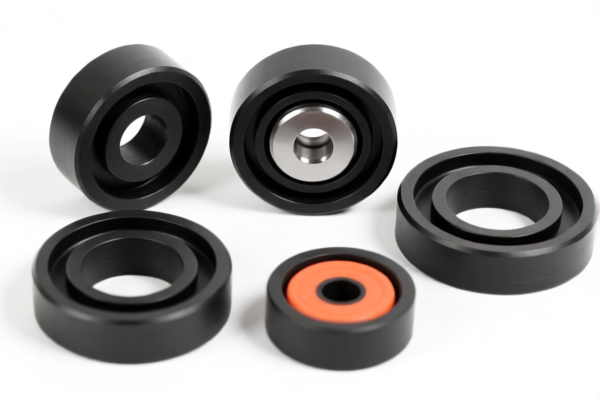
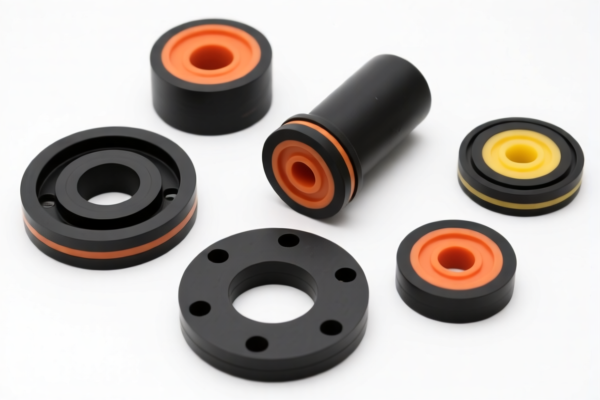
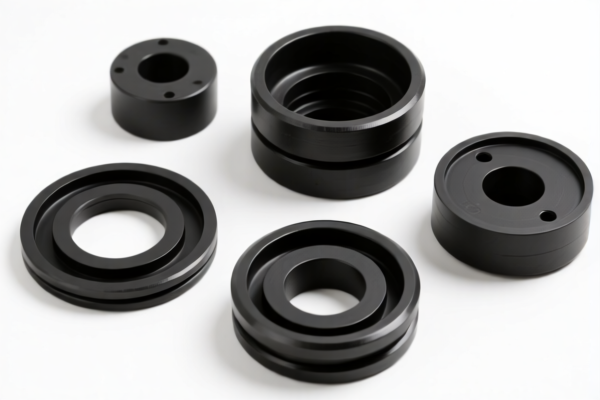
AI Analysis
⚙️ Industrial Machinery Rubber Parts (Rubber Accessories for Mechanical Equipment)
🌐 HS Code Reference & Customs Clearance Guide | 2026 Latest Tariff Analysis | Professional Clearance Strategy 📌 I. Product Definition & Classification: Are You Sure About "Rubber Parts"?
"Industrial Machinery Rubber Parts" refer to components made of vulcanized rubber used in the operation, maintenance, or assembly of industrial machinery. In international trade, classification is critical because rubber (Chapter 40) and machinery parts (Chapter 84) have distinct, often conflicting, classification rules. The correct HS Code depends on the primary material and the specific function.
⚠️ Key Classification Logic: - If the item is a general-purpose rubber component (e.g., seals, gaskets, hoses) without a specific machine-defined role → Often falls under Chapter 40 (Rubber Articles). - If the item is a specific spare part for a machine (e.g., a specific gear, piston seal, or vibration damper identified for a particular machinery type) → May fall under Chapter 84 (Machinery Parts). - Crucial Note: There is a high risk of misclassification due to the "material vs. function" conflict. If the material is clearly rubber, Chapter 40 is preferred unless a specific machinery part note overrides it.
📦 II. HS Code Classification Details (2026 Latest Tariff Authority Comparison)
Based on the provided data, here are the potential HS Codes and the logic for each:
| HS Code | Product Description | Matching Logic (Summary from Data) | Total Tax Rate |
|---|---|---|---|
4016.99.60.50 |
Other vulcanized rubber articles (Other) | Material Match: Contains "Rubber". Form Match: "Mechanical Accessories" fits the "Other vulcanized rubber articles" residual category. No material conflict. | 37.5% |
4016.99.60.10 |
Other vulcanized rubber articles (Other) | Material & Form: Matches "Rubber" material and "Accessories/Parts" form. Due to unspecified specific use, it defaults to the "Parts" preference rule and "Residual Category Material Priority". | 37.5% |
3926.90.59.00 |
Other articles of plastics (Other) | Potential Match: Classified as "Accessories/Parts". Although material is Rubber (not Plastic), it falls under a "Residual Category". Rubber and Plastics are both polymers, so there is a logical correlation in the absence of a clear material conflict. | 37.4% |
8431.49.90.38 |
Parts of machinery (Other) | Form Match: "Accessories" fits the definition of "Parts". Material: Rubber is acceptable under the "Other" category with no specific material conflict. Follows the default preference for mechanical parts. | 85.0% |
8431.49.90.90 |
Parts of machinery (Other) | Form Match: "Accessories" fits "Parts/Components". Material: Rubber is compatible with the "Other" residual category for machinery parts. Based on common sense, it is presumed to be a mechanical spare part. | 85.0% |
🔍 Critical Analysis: - Chapter 40 (HS 4016) is the most accurate for rubber items, as it specifically addresses the material. Tax rate: 37.5%. - Chapter 84 (HS 8431) is the highest risk due to punitive tariffs. Tax rate: 85.0%. This is significantly higher. - Chapter 39 (HS 3926) is a weak match (Plastics vs. Rubber) but carries a slightly lower rate (37.4%) if the "residual" argument holds. However, it is technically incorrect for rubber.
💰 III. 2026 Latest Tariff Rate Breakdown (Including Surcharges & Policy Add-ons)
✅ Applicable Country: United States (US)
✅ Country of Origin: China (CN)
✅ Effective Date: November 10, 2025 onwards (for subsequent imports)
🎯 1. 4016.99.60.50 & 4016.99.60.10 — Rubber Articles (Recommended)
| Item | Content |
|---|---|
| Base Rate | 2.5% (ad valorem) |
| USITC Surtax (Section 301) | +25.0% |
| IEEPA Surtax (Section 122/Other) | +10.0% (Specific to Chinese products) |
| Total Tax Rate | 37.5% |
| Tax Calculation | CIF Value × 37.5% |
| De Minimis Exemption | ❌ Not Eligible (deny_de_minimis) |
| Legal Basis Path | IEEPA:9903.01.24 → USITC:4016.99.60.50 → FOOTNOTE:9903.88.01 |
📌 Explanation: - The 2.5% base rate is standard for rubber articles. - The 25% surtax is from USITC Footnote 9903.88.01 (Section 301 tariffs). - The 10% additional tariff is applied to Chinese-origin rubber products. - Total: 37.5%. This is the correct and lowest-risk classification for rubber parts.
🎯 2. 3926.90.59.00 — Plastic Articles (Alternative/Incorrect)
| Item | Content |
|---|---|
| Base Rate | 2.4% (ad valorem) |
| USITC Surtax (Section 301) | +25.0% |
| IEEPA Surtax (Section 122/Other) | +10.0% |
| Total Tax Rate | 37.4% |
| Tax Calculation | CIF Value × 37.4% |
| De Minimis Exemption | ❌ Not Eligible |
| Legal Basis Path | IEEPA:9903.01.24 → USITC:3926.90.59.00 → FOOTNOTE:9903.88.01 |
📌 Note: - Although the rate is 0.1% lower (37.4% vs 37.5%), this classification is technically incorrect because the item is Rubber, not Plastic. Using this code risks customs audits, penalties, and reclassification to the higher Chapter 40 or 84 rates.
🎯 3. 8431.49.90.38 & 8431.49.90.90 — Machinery Parts (High Risk)
| Item | Content |
|---|---|
| Base Rate | 0.0% (ad valorem) |
| USITC Surtax (Section 301) | +25.0% |
| IEEPA Surtax (Section 122/Other) | +10.0% |
| Steel/Aluminum/Copper Surtax | +50.0% (If applicable, though rubber is not metal) |
| Total Tax Rate | 85.0% |
| Tax Calculation | CIF Value × 85.0% |
| De Minimis Exemption | ❌ Not Eligible |
| Legal Basis Path | IEEPA:9903.01.24 → USITC:8431.49.90.XX → FOOTNOTE:9903.88.01 |
📌 Critical Warning: - The base rate is 0%, but the surcharges are brutal. - The 25% + 10% = 35% surtax on top of machinery parts results in a 85% total tax rate (likely due to additional specific tariffs or cumulative penalties on Chinese machinery parts). - DO NOT USE unless the item is strictly defined as a machinery part under Chapter 84 notes, and even then, the tax burden is more than double that of Chapter 40.
🛠️ IV. Customs Clearance Practical Advice (Real-World Pitfall Avoidance)
✅ 1. Required Documentation Checklist (Essential)
| Document | Mandatory? | Description |
|---|---|---|
| ✅ Product Specification Sheet | ✔️ | Must clearly state Material: Vulcanized Rubber, Dimensions, Hardness (Shore A), and Temperature Resistance. |
| ✅ Product Photos (Clear) | ✔️ | Show the item clearly as a rubber component. Include a ruler for scale. Label as "Rubber Seal for Machine" or "Rubber Gasket". |
| ✅ Commercial Invoice | ✔️ | Description must be precise: "Vulcanized Rubber Parts for Industrial Machinery", NOT just "Accessories". |
| ✅ Packing List | ✔️ | Detail the quantity and weight. Ensure HS Code matches the physical goods. |
| ✅ Third-Party Test Report | ✔️ | ISO/Rubber industry standards proving material composition (confirming it is rubber, not plastic). |
✅ 2. Declaration Tips (Key Mantra)
🔥 "Rubber First, Parts Second. Avoid Chapter 84. Save Money."
| Scenario | Correct Declaration | Wrong Declaration |
|---|---|---|
| Rubber Gasket/Seal | 4016.99.60.50 (Rubber Article) |
8431.49.90.90 (Machinery Part) → Tax 85% vs 37.5% |
| Rubber Hose | 4016.99.60.50 |
3926.90.59.00 (Plastic) → Risk of Audit |
| Mixed Kit (Rubber + Metal) | Declare separately if possible; Rubber part to Ch40, Metal to Ch73/84. | Declare as one "Machinery Part" → Tax 85% on the whole kit |
✅ 3. Special Case Handling
| Situation | Handling Advice |
|---|---|
| OEM Custom Rubber Parts | Provide the customer's technical drawing showing it is a rubber component. Clearly state "Rubber" in the description. |
| Rubber Parts with Metal Inserts | If the rubber is the primary material and function, 4016.99.60.50 is still preferred. If metal is the main structure, it may fall under Ch73/84. |
| Vibration Dampers | Often classified as 4016.99.60.50 if primarily rubber. Avoid 8431 unless specifically listed as a machine part in the HTSUS. |
| Industrial Hoses | Always 4016.99.60.50. Never 8431. |
🌍 V. Global Market Comparison (2026 Latest)
| Country/Region | Recommended HS Code | Tariff Rate | Certification Required | Notes |
|---|---|---|---|---|
| 🇺🇸 USA | 4016.99.60.50 |
37.5% | No specific cert | Avoid 8431 (85%) |
| 🇨🇳 China | 4016.99.60.50 |
~5-10% | CCC (if applicable) | Low tax, no surtax |
| 🇪🇺 EU | 4016.99.90 |
~0-6% | REACH | No surtax |
| 🇦🇺 Australia | 4016.99.90 |
~5% | None | Moderate tax |
| 🇯🇵 Japan | 4016.99.00 |
~5-10% | PSE (if electrical) | Moderate tax |
📌 Conclusion: - USA is the most challenging market due to high tariffs. - Correct HS Code (
4016.99.60.50) saves 47.5% in taxes compared to incorrect8431classification. - Do not use3926.90.59.00(Plastic) as it is factually incorrect for rubber and risks penalties.
📌 VI. Common Mistakes & Pitfall Guide (Lessons Learned)
❌ Mistake 1: Declaring "Rubber Parts" as "Machinery Parts" (8431)
👉 Consequence: Tax rate jumps from 37.5% to 85%. Loss of profit!
❌ Mistake 2: Declaring "Rubber Parts" as "Plastic Articles" (3926)
👉 Consequence: Customs audit for misdeclaration. Fines and potential blacklisting. Tax savings (0.1%) are not worth the risk.
❌ Mistake 3: Vague description "Accessories for Machine" 👉 Consequence: Customs officer will use their discretion, often defaulting to the highest applicable rate or requiring additional documentation. Delays and Demurrage Fees!
❌ Mistake 4: Not specifying "Vulcanized Rubber" 👉 Consequence: Ambiguity leads to incorrect classification. Must specify material.
✅ Correct Practice:
"Vulcanized Rubber Gasket for Industrial Pump, Model XYZ, Shore A 70, ASTM D2000 Standard"
🎯 VII. Conclusion: Professional Declaration, Save Cost, Avoid Risk!
🎯 Remember the Mantra:
🔹 "Rubber is Rubber, Ch40 is the Way. Avoid Ch84, Save 47.5% Day!" 🔹 "HS Code Defines Life, 47% Difference is Huge. Declare Right, Avoid Penalty Due!"
📌 Pro Tip:
If your rubber parts are originating from Vietnam, Mexico, Thailand, or Malaysia, you MAY be eligible for IEEPA Exemptions, reducing the tax rate to 0%~5%.
Recommendation: Apply for an Advance Ruling before shipping to ensure the correct HS Code (
4016.99.60.50) is accepted by US Customs and Border Protection (CBP).
📣 Immediate Action:
📞 Contact a Professional Customs Broker + Provide Product Photos + Apply for HS Code Advance Ruling 🚀 Let your rubber parts Clear Customs Smoothly, Export Efficiently, and Double Your Profits!
✨ Professional Clearance Starts with Accurate Classification! 💼 Every Cent of Your Cost Deserves Precise Calculation!
Customer Reviews
About HS Code Classification
The Harmonized System (HS) is an internationally standardized nomenclature developed by the World Customs Organization (WCO) to classify traded products. Over 200 countries use the HS system as the basis for customs tariffs, trade statistics, and import/export regulations.
Each HS code follows a hierarchical structure:
- Chapter (2 digits) — Broad category of goods (e.g., Chapter 84: Machinery and Mechanical Appliances)
- Heading (4 digits) — More specific grouping within the chapter
- Subheading (6 digits) — Internationally standardized breakdown, used by all WCO member countries
- National subdivisions (8-10 digits) — Country-specific extensions for further classification, such as US HTSUS 10-digit codes
Correct HS code classification is essential for smooth customs clearance, accurate duty payment, and compliance with trade regulations. Misclassification can lead to customs delays, overpayment of duties, or penalties.
When importing from CN to US, the applicable tariff rates may include:
- Most-Favored-Nation (MFN) rate — The standard duty rate applied to WTO members
- General rate — Applied to countries without trade agreements
- Trade remedy duties — Additional tariffs such as Section 301 (anti-dumping), Section 232 (national security), or countervailing duties
The information provided on this page is for reference purposes only. For official classification, please consult with your local customs authority or a licensed customs broker.