Industrial Metal Reinforced Plastic Pipe
CN → US| HS Code | Tariff Rate | Origin | Destination | Doc |
|---|---|---|---|---|
| 3917390010 | 38.1% | CN | US | Official Doc |
| 3926909940 | 22.8% | CN | US | Official Doc |
| 3917400050 | 40.3% | CN | US | Official Doc |
| 3917390010 | 38.1% | CN | US | Official Doc |
| 3917390010 | 38.1% | CN | US | Official Doc |
Product Images
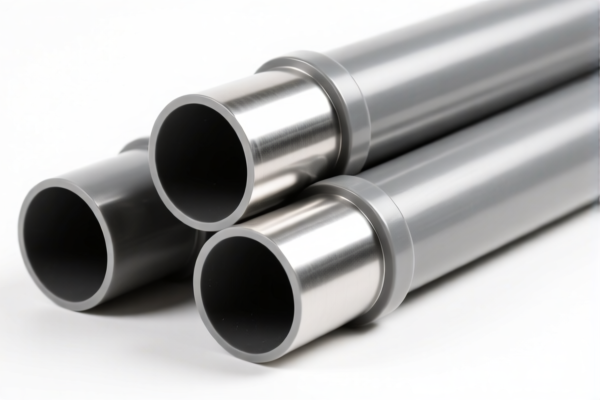
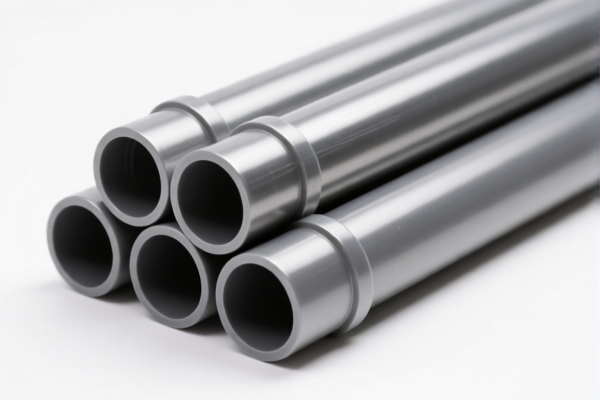
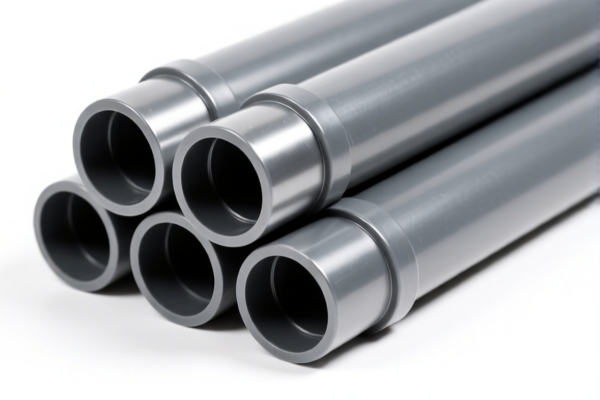
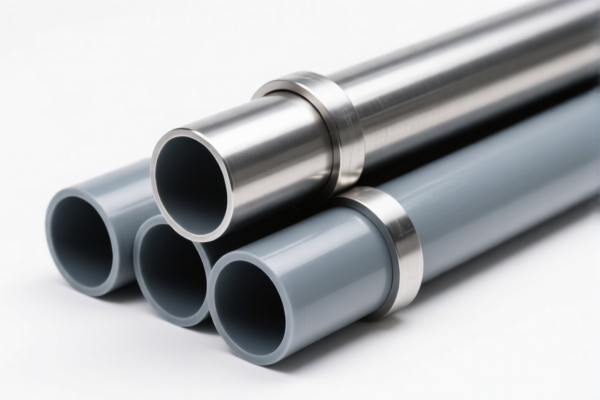
AI Analysis
🏭 Industrial Metal Reinforced Plastic Pipe (IMRPP)
🌐 HS Code Reference & Customs Clearance Guide | 2026 Latest Tariff Analysis | Professional Clearance Strategy
📌 I. Product Definition & Classification: What Exactly is "Metal Reinforced Plastic Pipe"?
Industrial Metal Reinforced Plastic Pipe (often referred to as Composite Pipe) is a high-performance piping solution that combines the corrosion resistance and light weight of plastics (such as PVC, PE, PP) with the high pressure resistance and structural strength of metals (such as stainless steel, galvanized steel).
In international trade, classification is critical because the presence of metal can shift the classification from "Plastic" to "Metal," significantly impacting duties. However, according to the General Rules of Interpretation (GRI), if the plastic component provides the essential character, it is often classified under Chapter 39 (Plastics).
⚠️ Key Distinction Point:
- If the pipe is primarily plastic with a metal liner/layer for reinforcement → Classified under Chapter 39 (Plastics).
- If the pipe is primarily metal with a plastic lining for corrosion protection → Classified under Chapter 73 (Iron/Steel) or Chapter 74/75/76/78/80/81 (Other Metals).Note: The data provided below focuses on cases where the plastic core/essential character dictates the classification, specifically targeting HS Codes 3917 and 3926.
📦 II. HS Code Classification Details (2026 Latest Tariff Authority Cross-Reference)
Based on the specific characteristics of "Metal Reinforced Plastic Pipes" (core material plastic, form: tube/pipe), here are the matched HS Codes and their rationales:
| HS Code | Product Description | Rationale for Classification | Tax Rate (US) |
|---|---|---|---|
3917.39.00.10 |
Plastic Pipes/Tubes with Metal Reinforcement | Matches Stainless Steel Reinforced Plastic Pipes or Metal-Reinforced PVC/PE Pipes. The core is plastic, but it has an embedded metal layer for strength. | 38.1% |
3917.40.00.50 |
Other Plastic Pipes/Tubes (Drainage/Industrial) | Matches Plastic Pipes for Drainage/Industrial Use. Even if it contains metal reinforcement, the core function and material (plastic) for drainage/industrial flow place it here. | 40.3% |
3926.90.99.40 |
Other Articles of Plastic (Drainage Related) | Matches Plastic Material with Drainage-Related Use. Core material is plastic; metal reinforcement is secondary. Used for specific drainage applications not covered by 3917. | 22.8% |
🔍 Critical Note:
-3917.39.00.10is the most common match for reinforced plastic pipes (e.g., hose-like structures or rigid pipes with metal coils/wire inside).
-3917.40.00.50applies when the pipe is primarily for drainage or general industrial fluid transport, even if reinforced.
-3926.90.99.40is a "catch-all" for plastic articles where the specific pipe heading (3917) might not fully capture the specific industrial/drainage nuance, often used for complex plastic assemblies.
💰 III. 2026 Latest Tariff Rate Breakdown (Including Surtaxes & Policy Add-ons)
✅ Applicable Country: United States (US)
✅ Country of Origin: China (CN)
✅ Effective Date: November 10, 2025 (and onwards)Warning: All these HS Codes attract high combined tariffs due to Section 301 and IEEPA provisions.
🎯 1. 3917.39.00.10 —— Plastic Pipes/Tubes with Metal Reinforcement
| Item | Detail |
|---|---|
| Base Duty Rate | 3.1% (Standard MFN rate for plastic pipes) |
| Section 301 Surcharge | +25.0% (USITC Footnote 9903.88.01 - Chinese Origin) |
| IEEPA Surcharge | +10.0% (Executive Order 14257 - 122 Clauses) |
| Total Duty Rate | 38.1% |
| Tax Calculation | CIF Value × 38.1% |
| De Minimis Exemption | ❌ Not Eligible (Deny De Minimis for these codes under current rules) |
| Legal Basis Path | IEEPA:9903.01.25 → USITC:3917.39.00.10 → FOOTNOTE:301_39 |
📌 Explanation:
- The 3.1% base rate is low, but the 25% Section 301 tariff dominates the cost.
- The 10% IEEPA tariff is a newer addition targeting specific Chinese industrial goods.
- Total Impact: You pay nearly 38.1 cents on every dollar of CIF value. This is a high-cost item for US importers.
🎯 2. 3917.40.00.50 —— Other Plastic Pipes (Drainage/Industrial)
| Item | Detail |
|---|---|
| Base Duty Rate | 5.3% (Standard MFN rate for other plastic tubes) |
| Section 301 Surcharge | +25.0% (USITC Footnote 9903.88.01 - Chinese Origin) |
| IEEPA Surcharge | +10.0% (Executive Order 14257 - 122 Clauses) |
| Total Duty Rate | 40.3% |
| Tax Calculation | CIF Value × 40.3% |
| De Minimis Exemption | ❌ Not Eligible |
| Legal Basis Path | IEEPA:9903.01.25 → USITC:3917.40.00.50 → FOOTNOTE:301_39 |
📌 Explanation:
- This code has a slightly higher base rate (5.3% vs 3.1%), making it the most expensive option at 40.3%.
- Use this code only if the pipe is clearly for drainage or general industrial use without specific "reinforced hose" characteristics.
🎯 3. 3926.90.99.40 —— Other Plastic Articles (Drainage Related)
| Item | Detail |
|---|---|
| Base Duty Rate | 5.3% (Standard MFN rate for other plastic articles) |
| Section 301 Surcharge | +7.5% (Note: Some 3926 items have lower 301 rates depending on specific ruling, but data shows 7.5%) |
| IEEPA Surcharge | +10.0% (Executive Order 14257 - 122 Clauses) |
| Total Duty Rate | 22.8% |
| Tax Calculation | CIF Value × 22.8% |
| De Minimis Exemption | ❌ Not Eligible |
| Legal Basis Path | IEEPA:9901.25 → USITC:3926.90.99.40 → FOOTNOTE:301_39 |
📌 Explanation:
- This is the most cost-effective option if eligible, at 22.8%.
- It applies when the product is considered an "Article of Plastic" rather than a "Pipe/Tube" in the strict sense of 3917.
- Caution: You must prove the product is not primarily a "pipe" under 3917. This often requires strong engineering documentation showing the metal reinforcement is minimal or the product is a complex assembly.
🛠️ IV. Customs Clearance Practical Advice (Real-World Pitfall Guide)
✅ 1. Required Documentation Checklist (Non-Negotiable)
| Document | Mandatory? | Purpose |
|---|---|---|
| ✅ Technical Data Sheet | ✔️ | Must specify: Core Material (Plastic type: PVC/PE/PP), Reinforcement Material (Steel/Stainless), Wall Thickness, Pressure Rating. |
| ✅ Cross-Section Photo | ✔️ | Critical! Must clearly show the plastic core and metal layer. Proves "Plastic Essential Character." |
| ✅ Bill of Lading / Invoice | ✔️ | Clearly state: "Plastic Pipe with Metal Reinforcement" – do NOT just say "Steel Pipe." |
| ✅ Origin Certificate (CO) | ✔️ | Required to confirm Chinese origin for 301/IEEPA calculation. |
| ✅ Manufacturer’s Declaration | ✔️ | Confirm the manufacturing process (e.g., extrusion of plastic with embedded metal). |
| ✅ HS Code Pre-Ruling | ✔️ | Highly Recommended due to the complexity of metal/plastic composites. |
✅ 2. Declaration Strategy (Key Mnemonic)
🔥 “Plastic Core, Metal Skin, Declare 39, Not 73!”
| Scenario | Correct Declaration | Wrong Practice |
|---|---|---|
| Plastic Pipe with internal metal coil (for strength) | 3917.39.00.10 |
Declare as 7304 (Steel Pipe) → Misclassification Risk |
| Plastic Pipe with external metal braid (for abrasion) | 3917.39.00.10 |
Declare as 7308 (Metal Structure) → High Duty + Penalty |
| Pipe used for drainage with minimal metal | 3926.90.99.40 |
Declare as 3917 → Missed Savings (22.8% vs 40.3%) |
| Stainless Steel Pipe with internal plastic lining | 7304.59.00.00 (Example) |
Declare as 3917 → Rejection/Seizure |
📌 Crucial Warning:
- If the metal provides the essential character (e.g., a steel pipe with a thin plastic anti-corrosion liner), it belongs in Chapter 73, not 39.
- If the plastic provides the essential character (e.g., a plastic pipe with a metal wire helix for pressure resistance), it belongs in Chapter 39.
- Misclassification can lead to 100% duty retroactively + penalties.
✅ 3. Special Situations
| Situation | Handling Advice |
|---|---|
| OEM Custom Pipes | Provide client’s engineering specs showing plastic is the primary structural component. |
| Mixed Materials | If >50% by value is plastic, argue for Chapter 39. If metal is >50%, argue for Chapter 73/76. |
| Importing from Vietnam/Mexico | Check for IEEPA Exemptions. Products from these countries may avoid the 10% IEEPA tariff, reducing the total burden significantly. |
| De Minimis (Section 321) | ❌ Not Allowed for these HS Codes. All shipments require full formal entry. |
🌍 V. Global Market Comparison (2026 Latest)
| Country/Region | Recommended HS Code | Duty Rate (China Origin) | Certification | Notes |
|---|---|---|---|---|
| 🇺🇸 USA | 3917.39.00.10 |
38.1% | None specific | High duty due to 301 + IEEPA. |
| 🇨🇳 China | 3917.39.00.10 |
5.3% | None | Domestic consumption is cheaper. |
| 🇪🇺 EU | 3917.39.00 |
0% (Most Cases) | REACH, RoHS | EU is more favorable for plastic pipes. |
| 🇦🇺 Australia | 3917.39.00 |
5% | SAA | Moderate duty. |
| 🇯🇵 Japan | 3917.39.00 |
4% | JIS | Low duty. |
📌 Conclusion:
- The US is the most expensive market for Chinese-made Metal Reinforced Plastic Pipes due to the 38.1%-40.3% tariff wall.
- EU/Australia/Japan are significantly more cost-effective.
- Consider supply chain diversification to Vietnam or Mexico if targeting the US market to mitigate IEEPA risks.
📌 VI. Common Errors & Pitfalls (Lessons from the Field)
❌ Error 1: Declaring as "Steel Pipe" (7304) when it is Plastic with Metal.
👉 Consequence: Underpayment of duty (if 301 applies to steel) + Misclassification Penalties. If it’s actually steel, you might face 25% additional 301 duties on top of base rate.
❌ Error 2: Declaring as "Plastic Hose" (3917.39.00.10) when it is a Rigid Drainage Pipe.
👉 Consequence: Wrong HS Code (3917.40.00.50 may be more accurate), leading to duty discrepancy (40.3% vs 38.1%). Small difference, but compliance matters.
❌ Error 3: Ignoring the IEEPA 10% Surcharge.
👉 Consequence: Underpayment by 10% of CIF value. CBSA/USCBP will demand back payment + interest.
❌ Error 4: Assuming "De Minimis" applies.
👉 Consequence: Shipment held at border. These codes are not eligible for $800 de minimis entry. Must file formal entry.
✅ Correct Approach:
"Plastic Pipe, PVC Core with Stainless Steel Helix Reinforcement, 4-inch Diameter, Industrial Pressure Rating, Model XYZ, Made in China"
🎯 VII. Conclusion: Precision in Classification Saves Money!
🎯 Remember the Golden Rules:
🔹 "Plastic Core, Metal Skin → Chapter 39"
🔹 "Metal Core, Plastic Skin → Chapter 73"
🔹 "US Import = 38%+ Tax → Plan Accordingly!"
🔹 "No De Minimis → Formal Entry Required"
📌 Pro Tip:
If your pipes are shipped from Vietnam or Mexico, check if they qualify for IEEPA Exemptions. This could reduce your effective tax burden from 38.1% to ~28.1% (if 301 still applies) or even lower if other FTAs apply.
Always apply for an Advance Ruling with US CBP for complex composite products to avoid post-entry audits.
📣 Immediate Action:
📞 Contact your Customs Broker with product specs + photos.
🚀 Request HS Code Pre-Ruling to lock in the correct classification.
💡 Evaluate Supplier Origin: If US-bound, consider non-China sources to reduce tariff exposure.
✨ Professional Clearance Starts with Accurate Classification!
💼 Every Percentage Point of Duty is a Percentage Point of Profit!
Customer Reviews
About HS Code Classification
The Harmonized System (HS) is an internationally standardized nomenclature developed by the World Customs Organization (WCO) to classify traded products. Over 200 countries use the HS system as the basis for customs tariffs, trade statistics, and import/export regulations.
Each HS code follows a hierarchical structure:
- Chapter (2 digits) — Broad category of goods (e.g., Chapter 84: Machinery and Mechanical Appliances)
- Heading (4 digits) — More specific grouping within the chapter
- Subheading (6 digits) — Internationally standardized breakdown, used by all WCO member countries
- National subdivisions (8-10 digits) — Country-specific extensions for further classification, such as US HTSUS 10-digit codes
Correct HS code classification is essential for smooth customs clearance, accurate duty payment, and compliance with trade regulations. Misclassification can lead to customs delays, overpayment of duties, or penalties.
When importing from CN to US, the applicable tariff rates may include:
- Most-Favored-Nation (MFN) rate — The standard duty rate applied to WTO members
- General rate — Applied to countries without trade agreements
- Trade remedy duties — Additional tariffs such as Section 301 (anti-dumping), Section 232 (national security), or countervailing duties
The information provided on this page is for reference purposes only. For official classification, please consult with your local customs authority or a licensed customs broker.