Industrial Mixing Grinding Machine
CN → US| HS Code | Tariff Rate | Origin | Destination | Doc |
|---|---|---|---|---|
| 8479820080 | 35.0% | CN | US | Official Doc |
| 8479820040 | 35.0% | CN | US | Official Doc |
Product Images
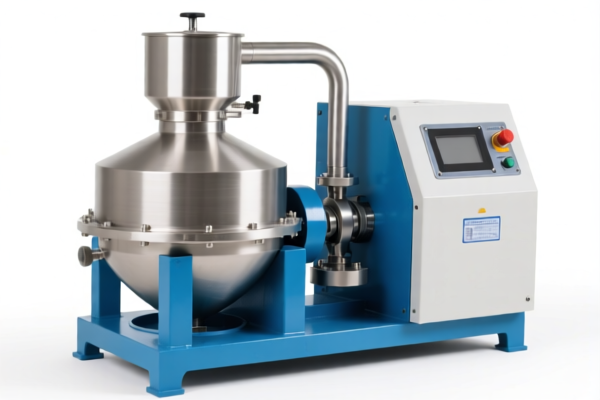
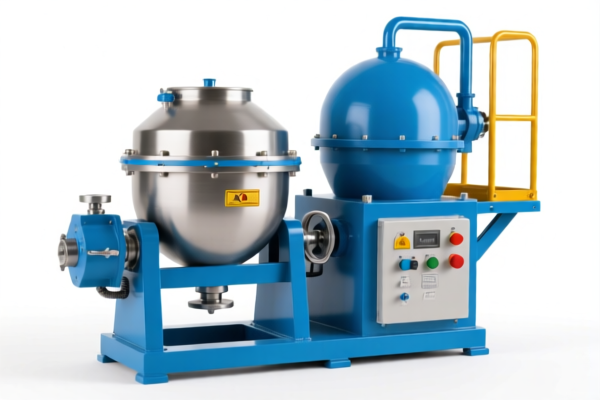
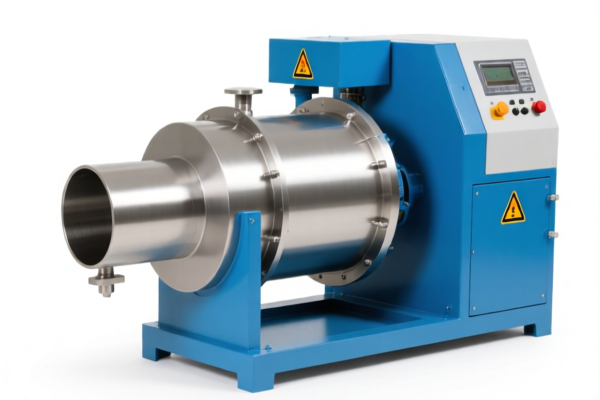
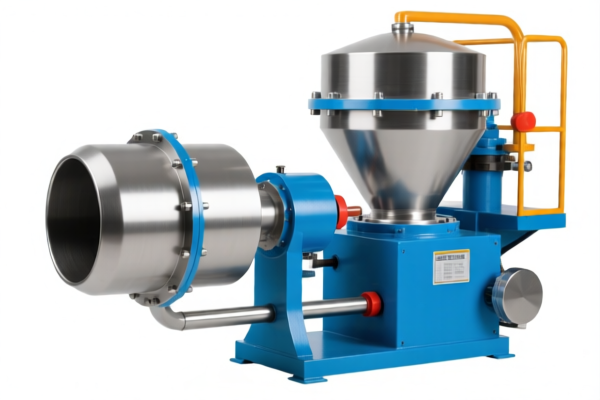
AI Analysis
🏭 Industrial Mixing & Grinding Machines (Machinery for Mixing, Kneading, Crushing, etc.)
🌐 HS Code Reference & Customs Clearance Guide | 2026 Latest Tariff Analysis | Professional-Level Strategy
📌 Part 1: Product Definition & Classification: Do You Truly Understand "Industrial Mixing/Grinding Machines"?
Industrial mixing and grinding machines are heavy-duty mechanical appliances designed for homogenizing, emulsifying, stirring, kneading, crushing, grinding, screening, or sifting materials. In international trade, these machines fall under Chapter 84 (Nuclear reactors, boilers, machinery and mechanical appliances; parts thereof).
Crucially, they are classified based on their specific function rather than just being "general machinery." If a machine performs multiple functions (e.g., mixing AND grinding in one unit), it is generally classified under the principal function. However, specific sub-headings exist for mixing/kneading/stirring vs. crushing/grinding/screening.
⚠️ Key Distinction Point:
- Mixing/Kneading/Stirring Machines (e.g., industrial blenders, dough mixers, paint dispersers) → Fall under 8479.82.00.40
- Other Mixing/Crushing/Grinding/Sifting Machines (e.g., homogenizers, emulsifiers, general-purpose grinders not specifically listed elsewhere) → Fall under 8479.82.00.80
📦 Part 2: HS Code Classification Details (2026 Latest Tariff Authority Comparison)
Based strictly on the provided data, here are the two applicable HS Codes for Industrial Mixing/Grinding Machines:
| HS Code | Product Description | Application Scenario | Tax Rate (Total) |
|---|---|---|---|
8479.82.00.40 |
Mixing, kneading or stirring machines (Subset of: Mixing, kneading, crushing, grinding, screening, sifting, homogenizing, emulsifying or stirring machines) |
Industrial dough mixers, concrete mixers (non-crushing), paint stirrers, chemical blending vats, homogenizers focused on mixing/emulsifying. | 25.0% |
8479.82.00.80 |
Other machines and mechanical appliances (Subset of: Mixing, kneading, crushing, grinding, screening, sifting, homogenizing, emulsifying or stirring machines) |
Machines that do not fit the specific "mixing/kneading/stirring" description but still perform mixing/crushing/grinding functions (e.g., certain industrial grinders, sifting machines, or hybrid units where the primary function isn't pure mixing). | 25.0% |
🔍 Critical Note:
- Both codes fall under the broader category: "Mixing, kneading, crushing, grinding, screening, sifting, homogenizing, emulsifying or stirring machines." - The distinction between.40and.80is subtle and depends on whether the machine’s principal function is explicitly "mixing, kneading, or stirring" (.40) or falls into the "other" category (.80). - Do not classify these as general parts of other machinery (e.g., Chapter 8499) if they have an individual function.
💰 Part 3: 2026 Latest Tariff Rate Breakdown (Including Additional Duties)
✅ Applicable Country: United States (US)
✅ Origin: China (CN)
✅ Effective Time: 2025/2026 (Based on provided data)
🎯 1. 8479.82.00.40 – Mixing, Kneading, or Stirring Machines
| Item | Content |
|---|---|
| Base Tariff | 0.0% |
| Additional Tariff | 25.0% |
| Total Tax Rate | 25.0% |
| Tax Calculation | CIF Value × 25.0% |
| De Minimis Exemption | ❌ Not Applicable (Section 321 de minimis does not apply to machinery subject to Section 301 tariffs) |
| Legal Basis | Section 301 Tariff List (China Origin) |
📌 Explanation:
- The "Base Tariff" is 0%, meaning it would normally be duty-free if not for trade restrictions. - The 25% Additional Tariff is applied due to US-China trade tensions (Section 301). - Total Cost Impact: For every $10,000 CIF value, you pay $2,500 in duties.
🎯 2. 8479.82.00.80 – Other Mixing/Grinding/Sifting Machines
| Item | Content |
|---|---|
| Base Tariff | 0.0% |
| Additional Tariff | 25.0% |
| Total Tax Rate | 25.0% |
| Tax Calculation | CIF Value × 25.0% |
| De Minimis Exemption | ❌ Not Applicable |
| Legal Basis | Section 301 Tariff List (China Origin) |
📌 Note:
- Same tariff treatment as.40. - Even if the machine is complex (e.g., includes heating elements or advanced controls), as long as it doesn’t fall under a more specific heading (like 8438 for food/drink processing machines), it remains in 8479.82.
🛠️ Part 4: Customs Clearance Practical Advice (Real-World Pitfall Avoidance)
✅ 1. Documentation Checklist (Mandatory)
| Document | Required | Notes |
|---|---|---|
| ✅ Product Specification Sheet | ✔️ | Must clearly state: Function (Mixing? Grinding? Stirring?), Power (kW), Capacity (L/kg/hr), Material of Contact Parts. |
| ✅ Technical Drawing | ✔️ | Highlights to show if it’s a standalone machine vs. part of a line. |
| ✅ Commercial Invoice | ✔️ | Description must match HS Code exactly. Avoid vague terms like "Factory Machine." Use: "Industrial Electric Mixer for Chemical Blending" or "Industrial Ball Mill for Grinding Minerals." |
| ✅ Packing List | ✔️ | Include weight and dimensions. Ensure no loose parts that could be classified separately. |
| ✅ Certificate of Origin | ✔️ | To prove Chinese origin (triggers 25% tariff). |
| ✅ FCC Certificate | ✔️ | If the machine has electronic controls/emitters, FCC compliance is required for entry. |
✅ 2. Classification Strategy (Key Mnemonics)
🔥 “Function First, Precision in Description”
| Scenario | Correct HS Code | Risk of Error |
|---|---|---|
| Dough Mixer / Paint Stirrer | 8479.82.00.40 |
Misclassifying as .80 is technically possible but .40 is more precise. Tariff is the same (25%), so financial impact is neutral, but compliance accuracy matters. |
| Industrial Crusher / Grinder / Sieve | 8479.82.00.80 |
Do NOT classify as .40 if it doesn’t mix/knead. |
| Food Processing Mixer (e.g., Dough Kneader for Bread) | Check Chapter 8438 | ⚠️ WARNING: If the mixer is specifically for food/beverage processing, it may fall under 8438 (e.g., 8438.30 for bakery machinery). 8479 is for non-specific or industrial mechanical functions. If it’s for food, check Chapter 8438 first! This guide assumes non-food/industrial use as per 8479. |
| Machine Part (e.g., Impeller) | Check Chapter 8479 or 8483 | Parts of machines are often classified elsewhere. Ensure you are declaring the whole machine, not just a part. |
✅ 3. Special Situation Handling
| Situation | Recommendation |
|---|---|
| Hybrid Machine (Mix + Grind) | Classify based on principal function. If mixing is the main use, use .40. If grinding is primary, use .80. |
| Used Machinery | Ensure it is not restricted by EPA or other agencies. Cleanliness and safety standards may trigger additional inspections. |
| Origin Shift | If the machine is assembled in Vietnam or Mexico, obtain a valid Certificate of Origin to potentially avoid the 25% additional tariff. |
| Low-Value Shipments | No De Minimis Exemption: Unlike consumer goods, machinery under Section 301 does not benefit from the $800 de minimis rule. Duties apply to the entire value. |
🌍 Part 5: Global Market Comparison (2026 Latest)
| Country/Region | Recommended HS Code | Base Tariff | Additional Tariff (China Origin) | Total Effective Rate | Notes |
|---|---|---|---|---|---|
| 🇺🇸 USA | 8479.82.00.40 / .80 |
0% | 25% | 25% | High compliance risk. Ensure accurate function description. |
| 🇨🇳 China | 8479.82.00.40 / .80 |
Variable | N/A | Varies | Import duties into China depend on local tariff schedules. |
| 🇪🇺 EU | 8479.82.00 |
~2.7% | N/A | ~2.7% | No Section 301 equivalent. Standard WCO code applies. |
| 🇨🇦 Canada | 8479.82.00 |
~0-5% | N/A | Low | Check CUSMA eligibility if originating from US/Mexico. |
📌 Conclusion:
- USA is the most challenging market due to the 25% additional tariff. - EU and other regions have significantly lower barriers for this product category.
📌 Part 6: Common Mistakes & Pitfalls (Lessons Learned)
❌ Mistake 1: Classifying food-processing mixers as 8479 instead of 8438.
👉 Consequence: Misclassification penalties. Food-grade equipment has different subheadings. Always check Chapter 8438 first for food/beverage applications.
❌ Mistake 2: Using vague descriptions like "Industrial Machine" on the commercial invoice.
👉 Consequence: CBP (Customs and Border Protection) will detain the shipment for detailed description, causing delays and storage fees.
✅ Correct: "Electric Industrial Stirrer, 500L Capacity, Stainless Steel, Model XYZ"
❌ Mistake 3: Assuming parts can be shipped separately to avoid duties.
👉 Consequence: CBP often treats parts shipped separately but intended for the same machine as "composite goods," taxing the whole value at the higher rate.
🎯 Part 7: Conclusion: Precision in Classification Saves Costs!
🎯 Remember the Mnemonics:
🔹 "Mix/Knead/Stir = 8479.82.00.40"
🔹 "Other Crush/Sift/Grind = 8479.82.00.80"
🔹 "Food Machine? Check 8438 First!"
🔹 "25% Tariff is Fixed for China Origin – Plan Your Supply Chain!"
📌 Pro Tip:
If your machinery is destined for the US, consider pre-classification rulings from CBP to avoid post-entry adjustments. For non-food industrial applications, 8479 is your safest bet, but always verify the principal function.
📣 Immediate Action:
📞 Consult a Licensed Customs Broker
📄 Prepare Detailed Technical Specs
🚀 Ensure Accurate Invoice Descriptions
✨ Professional Customs Clearance Starts with Accurate Classification!
💼 Every Dollar Saved on Misclassification is Pure Profit!
Customer Reviews
About HS Code Classification
The Harmonized System (HS) is an internationally standardized nomenclature developed by the World Customs Organization (WCO) to classify traded products. Over 200 countries use the HS system as the basis for customs tariffs, trade statistics, and import/export regulations.
Each HS code follows a hierarchical structure:
- Chapter (2 digits) — Broad category of goods (e.g., Chapter 84: Machinery and Mechanical Appliances)
- Heading (4 digits) — More specific grouping within the chapter
- Subheading (6 digits) — Internationally standardized breakdown, used by all WCO member countries
- National subdivisions (8-10 digits) — Country-specific extensions for further classification, such as US HTSUS 10-digit codes
Correct HS code classification is essential for smooth customs clearance, accurate duty payment, and compliance with trade regulations. Misclassification can lead to customs delays, overpayment of duties, or penalties.
When importing from CN to US, the applicable tariff rates may include:
- Most-Favored-Nation (MFN) rate — The standard duty rate applied to WTO members
- General rate — Applied to countries without trade agreements
- Trade remedy duties — Additional tariffs such as Section 301 (anti-dumping), Section 232 (national security), or countervailing duties
The information provided on this page is for reference purposes only. For official classification, please consult with your local customs authority or a licensed customs broker.