Industrial Mixing and Grinding Machine
CN → US| HS Code | Tariff Rate | Origin | Destination | Doc |
|---|---|---|---|---|
| 8438800000 | 35.0% | CN | US | Official Doc |
| 8438909090 | 37.8% | CN | US | Official Doc |
| 8479820040 | 35.0% | CN | US | Official Doc |
| 8479820080 | 35.0% | CN | US | Official Doc |
| 8509400015 | 14.2% | CN | US | Official Doc |
Product Images
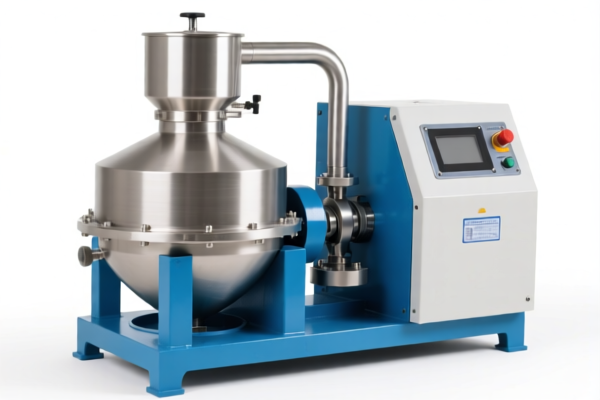
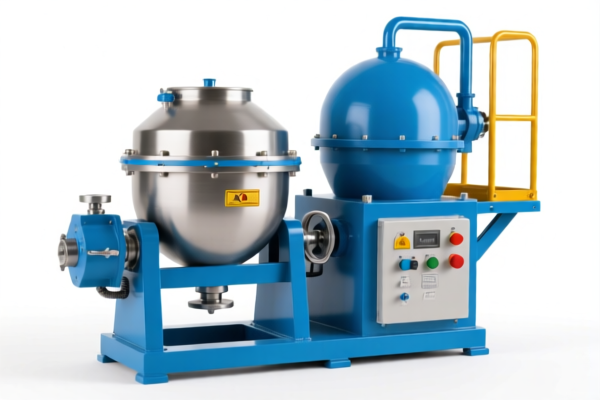
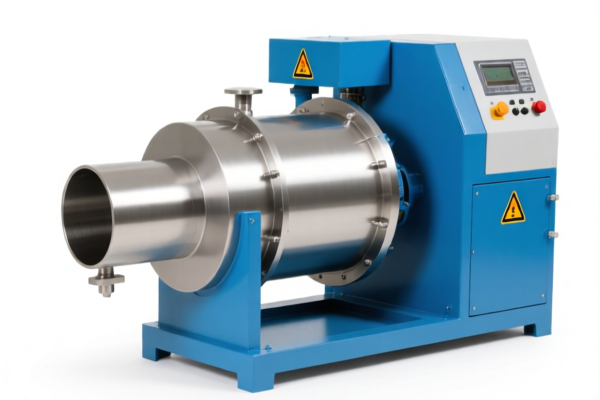
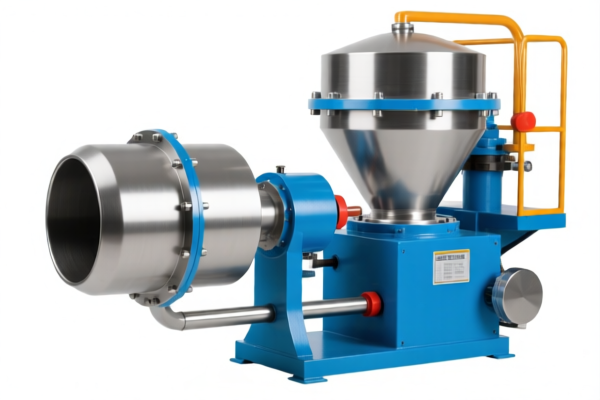
AI Analysis
🏭 Industrial Mixing and Grinding Machine (and Blenders)
🌐 HS Code Reference & Customs Clearance Guide | 2026 Latest Tariff Analysis | Professional Compliance Strategy
📌 I. Product Definition & Classification: What Exactly Is an "Industrial Mixing/Grinding Machine"?
In international trade, machinery described as "Industrial Mixing and Grinding Machine" or "Blender" is primarily classified based on its end-use and operating principle. The classification splits sharply between:
1. Food/Beverage Processing Machinery (Chapters 84):
Used for mixing, blending, or grinding ingredients in food production lines. Includes industrial blenders, dough mixers, and powder blending machines.
Key Indicator:* Designed for food contact, often involving agitation, kneading, or emulsification of consumables.
2. General Industrial Machinery for Mixing/Grinding (Chapter 84, Heading 8479):
Used for non-food applications such as chemicals, paints, pharmaceuticals, or construction materials. Includes homogenizers, emulsifiers, and mechanical mixers that do not fit specific food machinery headings.
Key Indicator:* Heavy-duty industrial use, non-food specific, often involving high-pressure mixing or chemical processes.
⚠️ Critical Distinction Point:
- If the machine is specifically for food/beverage production (e.g., commercial blenders, food processors) → Heading 8438.
- If it is a general-purpose mixer/grinder for chemicals, paints, or non-food solids → Heading 8479.82.
- Note: Household blenders (electric, small scale) are typically 8509, but "Industrial" implies professional/large-scale use, pushing them to 8438 or 8479.
📦 II. HS Code Classification Details (2026 Latest Tariff Alignment)
| HS Code | Product Description | Application Scenario | Tax Rate (US, CN Origin) |
|---|---|---|---|
8438.80.00.00 |
Machines for the preparation of meat, fish, or other food materials; other food/drink preparation machines | Commercial kitchen blenders, industrial food mixers, dough kneaders | 35.0% |
8438.90.90.90 |
Parts and accessories of food/drink preparation machines | Components, blades, or parts for the above food machines | 37.8% |
8479.82.00.40 |
Machines for mixing, kneading, crushing, grinding, screening, sifting, homogenizing, emulsifying, or stirring (Other) | Chemical mixers, paint shakers, non-food industrial homogenizers | 35.0% |
8479.82.00.80 |
Machines for mixing, kneading, crushing, grinding, screening, sifting, homogenizing, emulsifying, or stirring (Other) | General industrial mixing equipment, non-specific purpose grinders | 35.0% |
8509.40.00.15 |
Electric appliances with self-contained electric motor (Home Use Only) | Household blenders (Excluded if strictly "Industrial") | 14.2% |
🔍 Key Warning:
- The term "Industrial" usually excludes8509.40.00.15(Household). Misclassifying an industrial unit as household can lead to severe penalties and back-tariffs.
- Both Food Machinery (8438) and General Industrial Mixers (8479) attract the same base + additional tariffs in this dataset (35%), but the technical justification differs.
💰 III. 2026 Latest Tariff Rate Breakdown (Including Surcharges)
✅ Applicable Country: United States (US)
✅ Country of Origin: China (CN)
✅ Effective Date: November 10, 2025 (and subsequent imports)
🎯 1. 8438.80.00.00 & 8479.82.00.40/80 —— Industrial Mixers/Grinders (Food & Non-Food)
| Item | Content |
|---|---|
| Base Tariff (MFN) | 0.0% (Ad Valorem) |
| Section 301 Surcharge | +25.0% (USITC Footnote: Section 301 Tariffs on Chinese Goods) |
| IEEPA Surcharge | +10.0% (China-specific surcharge under International Emergency Economic Powers Act) |
| Total Tariff Rate | 35.0% |
| Tax Calculation | CIF Value × 35% |
| De Minimis Exemption | ❌ Not Eligible (deny_de_minimis applies to these codes under current enforcement) |
| Legal Authority Path | IEEPA:9903.01.25 → USITC:8438.80.00.00 / 8479.82.00.40 → FOOTNOTE:301 |
📌 Explanation:
- 0% Base: These machinery categories have no standard MFN duty.
- 25% Section 301: Standard US retaliatory tariff on Chinese industrial machinery.
- 10% IEEPA: Additional surcharge specifically targeting Chinese-origin goods under emergency powers.
- Total 35%: A high but fixed rate. No loopholes for small shipments.
🎯 2. 8438.90.90.90 —— Parts & Accessories for Food Machinery
| Item | Content |
|---|---|
| Base Tariff (MFN) | 2.8% (Ad Valorem) |
| Section 301 Surcharge | +25.0% |
| IEEPA Surcharge | +10.0% |
| Total Tariff Rate | 37.8% |
| Tax Calculation | CIF Value × 37.8% |
| De Minimis Exemption | ❌ Not Eligible |
📌 Note:
- Parts carry a higher base rate (2.8%) compared to the main machines (0%).
- Ensure "Parts" are clearly listed separately or included in the main shipment correctly to avoid misclassification penalties.
🎯 3. 8509.40.00.15 —— Household Blenders (Reference Only)
| Item | Content |
|---|---|
| Base Tariff (MFN) | 4.2% |
| Section 301 Surcharge | 0.0% (Exempt from Section 301 under certain conditions) |
| IEEPA Surcharge | +10.0% |
| Total Tariff Rate | 14.2% |
| Tax Calculation | CIF Value × 14.2% |
📌 Warning:
- This code is ONLY for household appliances.
- If an "Industrial" machine is misdeclared here, customs will reclassify it to8438or8479, charging 35% + penalties.
🛠️ IV. Customs Clearance Practical Advice (Real-World Pitfall Guide)
✅ 1. Required Documentation Checklist
| Document | Mandatory? | Description |
|---|---|---|
| ✅ Product Specification Sheet | ✔️ | Must detail: Motor power, capacity (Liters/Gallons), RPM, material (Stainless Steel 304/316?), application (Food/Chemical). |
| ✅ Technical Drawings | ✔️ | Show internal structure. Proves it's not a simple appliance but industrial machinery. |
| ✅ Product Photos (Label & View) | ✔️ | Clear label showing "Industrial Use," model number, voltage, and warnings. |
| ✅ Commercial Invoice | ✔️ | Describe as: "Industrial Food Mixer, Model XYZ, 500L Capacity, SS304" — Do NOT write "Blender" alone if it's industrial. |
| ✅ Certificate of Origin (CO) | ✔️ | Required for origin verification and potential exemption claims (if applicable). |
| ✅ Third-Party Test Reports | ✔️ | NSF, CE, UL, or ISO certifications. Critical for food machinery to prove hygiene standards. |
✅ 2. Declaration Strategy (Key Mantras)
🔥 "Industrial vs. Household: One Word Matters! 'Commercial' or 'Industrial' in Description Saves 20.8%!"
| Scenario | Correct Declaration | Incorrect Declaration |
|---|---|---|
| Large Commercial Blender | 8438.80.00.00 (Food Prep Machine) |
8509.40.00.15 (Household Appliance) → Risk: Rejection & 35% Tax |
| Chemical Paint Mixer | 8479.82.00.80 (General Industrial Mixer) |
8438.80.00.00 (Food Machine) → Risk: Regulatory Misclassification |
| Spare Blades for Mixer | 8438.90.90.90 (Parts) |
8438.80.00.00 (Main Machine) → Risk: Overpayment of Duty |
✅ 3. Special Situation Handling
| Situation | Handling Advice |
|---|---|
| Multi-Use Machines (Food + Chemical) | If primarily for food, use 8438. If primarily for chemicals, use 8479. Provide a Statement of Primary Use. |
| OEM Custom Machines | Provide client order + design specs. Ensure the description highlights industrial capacity (e.g., "500kg/hr output"). |
| Packaging as "Kit" | If shipped as Machine + Parts, declare as one main HS Code (8438.80.00.00). Do not split unless parts are valued separately and clearly identified. |
| Household vs. Industrial Ambiguity | If in doubt, use 8438 or 8479 (35%). Declaring as 8509 (14.2%) without proof of household use is fraudulent. |
🌍 V. Global Market Comparison (2026 Latest)
| Country/Region | Recommended HS Code | Tariff (CN Origin) | Certification | Notes |
|---|---|---|---|---|
| 🇺🇸 USA | 8438.80.00.00 / 8479.82.00.40 |
35% | NSF, UL, CE | High tariff due to 301 + IEEPA. |
| 🇨🇳 China | 8438.80.00.00 / 8479.82.00.40 |
~10-14% | CCC, CE | Import duties apply, but no 301/IEEPA. |
| 🇪🇺 EU | 8438.80.00 / 8479.82.00 |
0-4.5% | CE, RoHS | No major surcharges. |
| 🇬🇧 UK | 8438.80.00 / 8479.82.00 |
0-4.5% | UKCA, CE | Post-Brexit rules apply. |
📌 Conclusion:
- USA remains the most expensive market due to 35% combined tariffs.
- EU/UK/China are significantly more favorable for industrial machinery exports.
📌 VI. Common Errors & Pitfall Guide (Lessons Learned)
❌ Error 1: Declaring "Industrial Blender" as "Household Appliance" (8509)
👉 Consequence: Customs audits reveal industrial specs → Reclassification to 8438/8479 + 35% Tariff + Penalties.
❌ Error 2: Using "Blender" as the only description
👉 Consequence: Ambiguity leads to random examination delays.
✅ Fix: Use "Industrial High-Shear Mixer for Food Processing" or "Industrial Homogenizer for Chemicals."
❌ Error 3: Ignoring IEEPA Surcharge
👉 Consequence: Underestimating landed cost by 10%.
🎯 VII. Conclusion: Precision in Classification Saves Money
🎯 Remember the Mantra:
🔹 "Industrial = Chapter 84, Household = Chapter 85. Don't mix them up!"
🔹 "35% is the price for Industrial from China. Plan your margin accordingly!"
📌 Pro Tip:
If your machine is exported to Vietnam/Mexico first for substantial transformation, you might avoid US tariffs. However, simple assembly does not qualify. Consult a trade lawyer for supply chain restructuring.
📣 Immediate Action:
📞 Engage a licensed customs broker.
📄 Prepare detailed technical datasheets.
🚀 Ensure your commercial invoice reads: "Industrial Food Mixing Machine" — NOT just "Blender."
✨ Professional Clearance Starts with Accurate Classification!
💼 Every Percentage Point of Tariff Matters to Your Bottom Line!
Customer Reviews
About HS Code Classification
The Harmonized System (HS) is an internationally standardized nomenclature developed by the World Customs Organization (WCO) to classify traded products. Over 200 countries use the HS system as the basis for customs tariffs, trade statistics, and import/export regulations.
Each HS code follows a hierarchical structure:
- Chapter (2 digits) — Broad category of goods (e.g., Chapter 84: Machinery and Mechanical Appliances)
- Heading (4 digits) — More specific grouping within the chapter
- Subheading (6 digits) — Internationally standardized breakdown, used by all WCO member countries
- National subdivisions (8-10 digits) — Country-specific extensions for further classification, such as US HTSUS 10-digit codes
Correct HS code classification is essential for smooth customs clearance, accurate duty payment, and compliance with trade regulations. Misclassification can lead to customs delays, overpayment of duties, or penalties.
When importing from CN to US, the applicable tariff rates may include:
- Most-Favored-Nation (MFN) rate — The standard duty rate applied to WTO members
- General rate — Applied to countries without trade agreements
- Trade remedy duties — Additional tariffs such as Section 301 (anti-dumping), Section 232 (national security), or countervailing duties
The information provided on this page is for reference purposes only. For official classification, please consult with your local customs authority or a licensed customs broker.