Industrial Negative Dry Film
CN → US| HS Code | Tariff Rate | Origin | Destination | Doc |
|---|---|---|---|---|
| 9010501000 | 35.0% | CN | US | Official Doc |
| 9010504000 | 35.0% | CN | US | Official Doc |
| 370610 | 0.0% | CN | US | Official Doc |
| 370690 | 0.0% | CN | US | Official Doc |
| 320610 | 0.0% | CN | US | Official Doc |
| 370710 | 0.0% | CN | US | Official Doc |
| 3824994900 | 41.5% | CN | US | Official Doc |
| 3824997000 | 35.0% | CN | US | Official Doc |
Product Images
AI Analysis
📜 Industrial Negative Dry Film: HS Code Classification & 2026 Tariff Guide
🌐 HS Code Reference & Customs Clearance Guide | 2026 Latest Tariff Analysis | Professional Compliance Strategy
📌 1. Product Definition: What is "Industrial Negative Dry Film"?
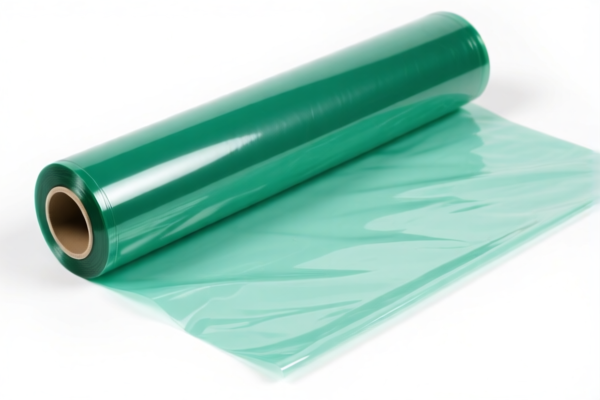
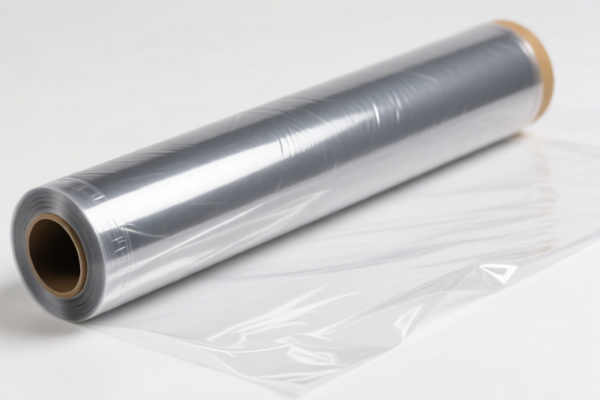
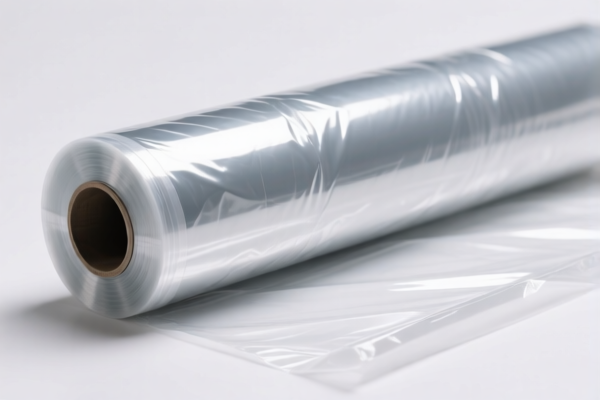
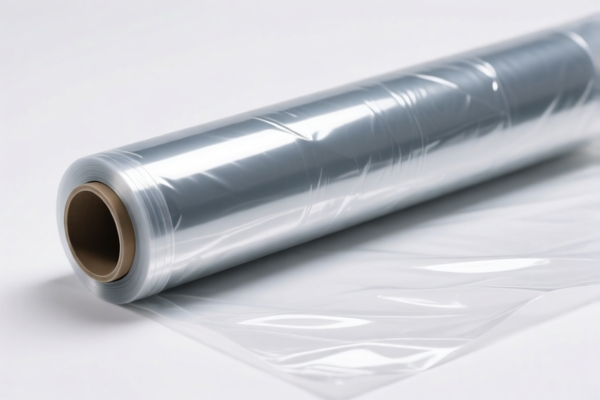
Industrial Negative Dry Film is a specialized photosensitive material used primarily in the manufacturing of Printed Circuit Boards (PCBs) and other electronics production processes. It consists of a photosensitive resin layer coated onto a flexible support (usually polyester or polyethylene).
In negative photoresist systems: - Exposed areas become insoluble (hardened) during development. - Unexposed areas remain soluble and are washed away. This creates a protective pattern on the metal surface for etching, ensuring that only the exposed metal is removed, leaving the desired circuit traces.
⚠️ Key Distinction:
- The term "Dry Film" refers to the physical form (solid film, not liquid).
- "Negative" refers to the chemical response to light.
- Classification depends heavily on the specific composition and intended industrial application as defined by the Harmonized System (HS).
📦 2. HS Code Classification Matrix (2026 Latest Tariff Authority)
Based on the provided data, Industrial Negative Dry Film can fall under multiple HS codes depending on its precise composition and usage. Below is the detailed breakdown:
| HS Code | Product Description | Primary Application | Key Characteristics |
|---|---|---|---|
3206.10 |
Industrial negative dry film for PCBs | PCB Manufacturing | Composed of photosensitive resin on support; used in etching |
3707.10 |
Dry film photoresist for industrial apps | PCB Patterning | Photosensitive coating on flexible backing; for exposure/development |
3706.10 |
Industrial negative dry film for photolithography | Electronics Production | Photosensitive resin on flexible support; for photolithography |
3706.90 |
Other industrial negative dry films (NISI) | Specialized Imaging/Etching | Photosensitive materials on flexible backing; not elsewhere specified |
3824.99.49.00 |
Other chemical mixtures (hydrocarbon-derived) | General Chemical Use | Mixtures of hydrocarbons from petroleum/shale oil/natural gas |
3824.99.70.00 |
Other chemical mixtures (flame retardants/plating) | PCB/Plating Solutions | Mixtures of dibromo neopentyl glycol, Tetrabromobisphenol-A, etc. |
9010.50.10.00 |
Contact printers | Photographic Labs | Apparatus for laboratory use, not chemical film |
9010.50.40.00 |
Photographic film viewers/editors | Photographic Labs | Apparatus containing optical lenses, not chemical film |
🔍 Critical Note:
- Codes3206.10,3707.10,3706.10,3706.90are the primary classifications for Dry Film Photoresist.
- Codes3824...apply if the product is a chemical mixture not primarily classified as a photoresist (e.g., binders or flame retardant additives).
- Codes9010...are equipment, not the film itself. Do not classify Dry Film under these codes.
💰 3. 2026 Tariff Rate详解 (Detailed Tax Analysis)
✅ Applicable Country: United States (US)
✅ Origin: China (CN)
✅ Effective Date: Current rates apply (based on provided data)
🎯 1. 3206.10 – Industrial Negative Dry Film (PCB Etching)
| Item | Details |
|---|---|
| Base Duty Rate | Error / Failed to Retrieve |
| Additional Duties | Error / Failed to Retrieve |
| Total Tax | Error |
| Legal Basis | HS: 3206.10 |
| Note | ⚠️ Tax information failed to retrieve. Please verify with a customs broker or USITC database for the latest rate. |
🎯 2. 3707.10 – Dry Film Photoresist for Industrial Applications
| Item | Details |
|---|---|
| Base Duty Rate | Error / Failed to Retrieve |
| Additional Duties | Error / Failed to Retrieve |
| Total Tax | Error |
| Legal Basis | HS: 3707.10 |
| Note | ⚠️ Tax information failed to retrieve. This is a common classification for photoresists. Rates vary; check USITC. |
🎯 3. 3706.10 – Industrial Negative Dry Film (Photolithography)
| Item | Details |
|---|---|
| Base Duty Rate | Error / Failed to Retrieve |
| Additional Duties | Error / Failed to Retrieve |
| Total Tax | Error |
| Legal Basis | HS: 3706.10 |
| Note | ⚠️ Tax information failed to retrieve. Similar to 3707.10, often used for PCB manufacturing. |
🎯 4. 3706.90 – Other Industrial Negative Dry Films (NISI)
| Item | Details |
|---|---|
| Base Duty Rate | Error / Failed to Retrieve |
| Additional Duties | Error / Failed to Retrieve |
| Total Tax | Error |
| Legal Basis | HS: 3706.90 |
| Note | ⚠️ Tax information failed to retrieve. Use if the film doesn't fit 3706.10 or 3707.10. |
🎯 5. 3824.99.49.00 – Other Prepared Binders/Chemical Mixtures (Hydrocarbon)
| Item | Details |
|---|---|
| Base Duty Rate | 6.5% |
| Additional Duties | +25.0% (Section 301 Tariff) |
| Total Tax | 31.5% |
| Legal Basis | HS: 3824.99.49.00 + USITC Footnote 301 |
| Applicability | Only if the product is classified as a hydrocarbon mixture and not as a photoresist. |
🎯 6. 3824.99.70.00 – Other Chemical Mixtures (Flame Retardants/Plating)
| Item | Details |
|---|---|
| Base Duty Rate | 0.0% |
| Additional Duties | +25.0% (Section 301 Tariff) |
| Total Tax | 25.0% |
| Legal Basis | HS: 3824.99.70.00 + USITC Footnote 301 |
| Applicability | Contains dibromo neopentyl glycol, Tetrabromobisphenol-A, etc. |
⛔ 7. 9010.50.10.00 & 9010.50.40.00 – Equipment (NOT Film)
| Item | Details |
|---|---|
| Base Duty Rate | 0.0% |
| Additional Duties | +25.0% (Section 301 Tariff) |
| Total Tax | 25.0% |
| Legal Basis | HS: 9010.50.10.00 / 9010.50.40.00 |
| Applicability | DO NOT USE FOR DRY FILM. These codes are for contact printers and film viewers/editors. Misclassification here leads to penalties. |
🛠️ 4. Customs Clearance Practical Advice (Avoiding Pitfalls)
✅ 1. Document Preparation Checklist
| Document | Required? | Purpose |
|---|---|---|
| Product Specification Sheet | ✔️ | Defines composition, photosensitivity, and support material. |
| SDS (Safety Data Sheet) | ✔️ | Confirms chemical nature (resin, hydrocarbons, etc.). |
| Commercial Invoice | ✔️ | Must clearly state "Industrial Negative Dry Film" or "Photoresist." |
| Packing List | ✔️ | Details quantity, weight, and dimensions. |
| Certificate of Origin | ✔️ | Proves origin (China) for tariff application. |
| Usage Declaration | ✔️ | Explain if it's for PCB etching, photolithography, or other industrial use. |
✅ 2. Classification Strategy
🔥 "Know Your Chemistry, Choose the Right Code!"
| Scenario | Recommended HS Code | Reason |
|---|---|---|
| Standard PCB Dry Film Photoresist | 3707.10 or 3706.10 |
Specifically designed for patterning metal layers. |
| Generic Industrial Negative Film | 3706.90 |
If it doesn't fit 3706.10/3707.10. |
| Photosensitive Resin on Support (Etching) | 3206.10 |
If classified under pigments/varnishes rather than photographic goods. |
| Chemical Mixture (Flame Retardant) | 3824.99.70.00 |
If primarily composed of brominated compounds for plating/finish. |
| Equipment (Printer/Viewer) | 9010.50.10.00 / 9010.50.40.00 |
ONLY for machinery, NOT the film. |
✅ 3. Common Mistakes & Penalties
❌ Mistake 1: Classifying Dry Film under 9010 (Photographic Equipment)
👉 Consequence: Misclassification. Dry film is a material, not an apparatus. This can lead to seizure or heavy fines.
❌ Mistake 2: Ignoring the "Negative" vs. "Positive" distinction
👉 Consequence: While HS codes for photoresist often group them, specific customer requirements or technical declarations may require precise description to avoid audits.
❌ Mistake 3: Assuming Tax Rates are 0% for all 37xx codes
👉 Consequence: Tax info failed to retrieve in our data. Some photoresists may have base rates + Section 301 tariffs. Always verify with a customs broker.
❌ Mistake 4: Using 3824 codes for Photoresist
👉 Consequence: If the product is primarily a photoresist, it should be under Chapter 37, not 38. Misclassification can lead to duty evasion accusations.
✅ 4. Pro Tips for Smooth Clearance
- Pre-Ruling Application: Apply for a Binding Ruling from US Customs and Border Protection (CBP) to get an official HS code determination. This is crucial for high-value shipments.
- Detailed Description: In the invoice, describe as:
"Industrial Negative Dry Film Photoresist, for PCB Manufacturing, Composition: Photosensitive Resin on Polyester Support, Model XYZ."
- Check for Section 301 Exclusions: Verify if your specific product code is excluded from the 25% additional tariff. Some photoresists may have exclusions.
- Separate Equipment from Film: If shipping both film and contact printers, separate them on the invoice and use different HS codes.
🌍 5. Global Market Comparison (2026)
| Country/Region | Recommended HS Code | Est. Duty Rate (China Origin) | Notes |
|---|---|---|---|
| 🇺🇸 USA | 3707.10 / 3706.10 |
Error (Check USITC) | Subject to Section 301 tariffs (likely 25%). |
| 🇺🇸 USA | 3824.99.49.00 |
31.5% | 6.5% Base + 25% Section 301. |
| 🇺🇸 USA | 3824.99.70.00 |
25.0% | 0% Base + 25% Section 301. |
| 🇪🇺 EU | 3707.10 |
~6.5% | No Section 301 equivalent. |
| 🇨🇳 China | 3707.10 |
Varies | Domestic trade uses different classification. |
📌 Conclusion:
- The USA has the most complex tariff structure for these goods, with potential 301 tariffs applying.
- Tax retrieval failure for Chapter 37 codes (3707.10, etc.) means you MUST consult a local customs broker or the USITC database for the exact current rate.
- Do not assume 0% duty without verification.
📌 6. Final Recommendations
🎯 Remember the Key Points:
🔹 "Film vs. Equipment": Dry Film is 37xx or 3206, NOT
9010.
🔹 "Tax Uncertainty": For37xxcodes, tax info is missing. Verify manually.
🔹 "Chemical Mixtures": If not a pure photoresist, consider3824codes with 25-31.5% duties.
🔹 "Pre-Ruling": Get a CBP ruling to avoid surprises at the border.
📣 Immediate Action:
📞 Contact a US Customs Broker today to verify the current duty rate for
3707.10or3706.10.
📄 Prepare a Detailed Technical Description of your Dry Film to support your classification.
🚀 Ensure Smooth Clearance by avoiding misclassification of film as equipment.
✨ Professional Customs Compliance Starts with Accurate Classification!
💼 Your Cost Savings Depend on Your HS Code Accuracy!
Customer Reviews
About HS Code Classification
The Harmonized System (HS) is an internationally standardized nomenclature developed by the World Customs Organization (WCO) to classify traded products. Over 200 countries use the HS system as the basis for customs tariffs, trade statistics, and import/export regulations.
Each HS code follows a hierarchical structure:
- Chapter (2 digits) — Broad category of goods (e.g., Chapter 84: Machinery and Mechanical Appliances)
- Heading (4 digits) — More specific grouping within the chapter
- Subheading (6 digits) — Internationally standardized breakdown, used by all WCO member countries
- National subdivisions (8-10 digits) — Country-specific extensions for further classification, such as US HTSUS 10-digit codes
Correct HS code classification is essential for smooth customs clearance, accurate duty payment, and compliance with trade regulations. Misclassification can lead to customs delays, overpayment of duties, or penalties.
When importing from CN to US, the applicable tariff rates may include:
- Most-Favored-Nation (MFN) rate — The standard duty rate applied to WTO members
- General rate — Applied to countries without trade agreements
- Trade remedy duties — Additional tariffs such as Section 301 (anti-dumping), Section 232 (national security), or countervailing duties
The information provided on this page is for reference purposes only. For official classification, please consult with your local customs authority or a licensed customs broker.