Industrial Nut Shell Charcoal
CN → US| HS Code | Tariff Rate | Origin | Destination | Doc |
|---|---|---|---|---|
| 4402200000 | 35.0% | CN | US | Official Doc |
| 4402900100 | 35.0% | CN | US | Official Doc |
Product Images
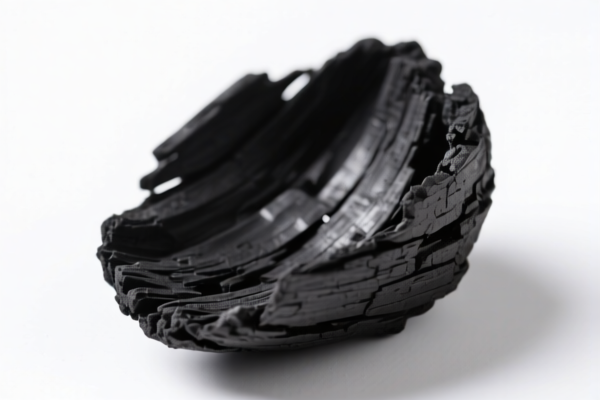
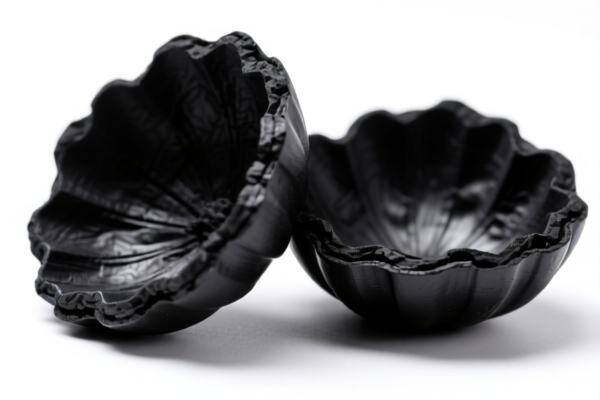
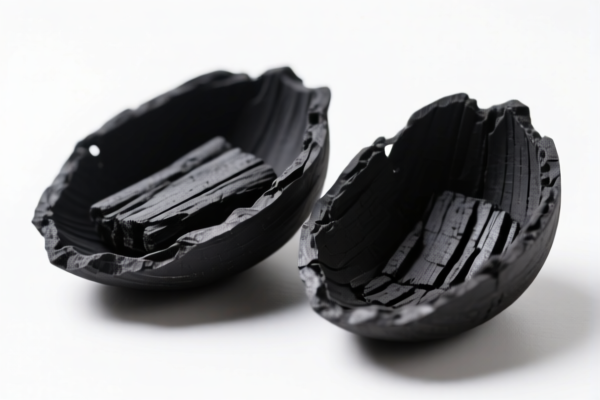
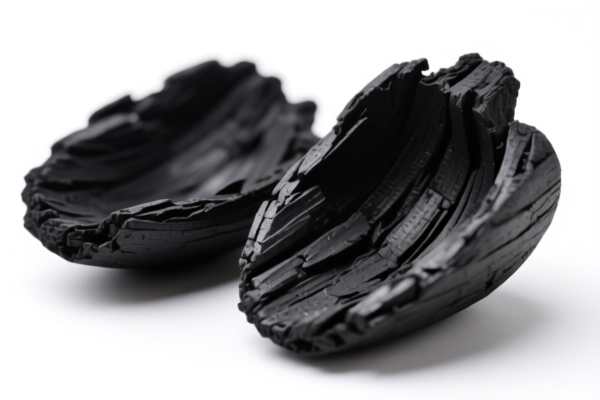
AI Analysis
🪵 Industrial Nut Shell Charcoal (Wood Charcoal Classification)
🌐 HS Code Reference & Customs Clearance Guide | 2026 Latest Tariff Analysis | Professional Clearance Strategy
📌 1. Product Definition and Classification: Do You Truly Understand "Nut Shell Charcoal"?
Wood Charcoal, including shell or nut charcoal (whether or not agglomerated), is a solid biofuel primarily derived from carbonized biomass. In international trade, the classification hinges strictly on the raw material source and the physical form (whether agglomerated or not).
For "Industrial Nut Shell Charcoal", the key distinction lies in identifying whether it is made specifically from shells or nuts (e.g., coconut, olive, walnut, peach pits) versus other wood residues.
⚠️ Key Distinction Point:
- If the charcoal is explicitly made from shells or nuts (e.g., coconut shell charcoal, olive stone charcoal), regardless of whether it is in lump form or agglomerated (briquettes/pills), it falls under 4402.20.00.00.
- If the charcoal is made from other wood sources (e.g., sawdust, timber residues, bamboo) and not specifically classified as shell/nut, it falls under 4402.90.01.00.
- Note: The description "Wood Charcoal (including shell or nut charcoal)" in HS Chapter 44 covers all these forms. The subheading 4402.20 is exclusive to shell/nut origins.
📦 2. HS Code Classification Details (2026 Latest Tariff Authority Comparison)
| HS Code | Product Description | Applicable Scenario | Origin Material |
|---|---|---|---|
4402.20.00.00 |
Wood charcoal (including shell or nut charcoal), whether or not agglomerated: Of shell or nut | Coconut shell charcoal, olive pit charcoal, nut shell briquettes, agglomerated nut charcoal | ✅ Shell/Nut |
4402.90.01.00 |
Wood charcoal (including shell or nut charcoal), whether or not agglomerated: Other | Charcoal from wood residues, bamboo charcoal, charcoal not specified as shell/nut, lump wood charcoal | ✅ Wood/Bamboo (Non-shell) |
🔍 Critical Reminder:
- Agglomeration status does NOT change the HS Code for nut/shell charcoal. Both lump and agglomerated nut shell charcoal go to4402.20.00.00.
- "Other" in4402.90.01.00catches anything that is not shell or nut. If you export bamboo charcoal, it usually falls here (or under "Other wood charcoal" depending on national sub-definitions), but nut shell charcoal must be declared specifically under 4402.20.
- Misclassifying nut shell charcoal as "Other" (4402.90) can lead to customs audits, as the 25% additional tariff applies to both, but the accuracy of declaration is critical for compliance.
💰 3. 2026 Latest Tariff Rate Breakdown (Including Additional Taxes)
✅ Applicable Country: United States (US)
✅ Origin: China (CN)
✅ Effective Date: November 10, 2025 onwards (and subsequent imports)
🎯 1. 4402.20.00.00 —— Wood Charcoal: Of shell or nut
| Item | Detail |
|---|---|
| Base Tariff | 0.0% (ad valorem) |
| Additional Tariff (Section 301) | +25.0% |
| Total Tax Rate | 25.0% |
| Tax Calculation | CIF Value × 25% |
| De Minimis Exemption | ❌ Not Applicable |
| Legal Basis Path | HTSUS:4402.20.00.00 → USITC Footnote 9903.88.01 (Section 301 List 4A) |
📌 Explanation:
- The Base Tariff for wood charcoal is 0%.
- The 25% Additional Tariff is imposed under Section 301 of the Trade Act of 1974 targeting specific Chinese imports. This applies to both shell/nut charcoal and other wood charcoal.
- No IEEPA 10% surcharge is listed in the provided data for this specific category, so the total remains 25%.
- Crucial: Even if the product is "agglomerated" (briquettes), as long as it is nut shell-based, it is 4402.20.00.00 and taxed at 25%.
🎯 2. 4402.90.01.00 —— Wood Charcoal: Other
| Item | Detail |
|---|---|
| Base Tariff | 0.0% (ad valorem) |
| Additional Tariff (Section 301) | +25.0% |
| Total Tax Rate | 25.0% |
| Tax Calculation | CIF Value × 25% |
| De Minimis Exemption | ❌ Not Applicable |
| Legal Basis Path | HTSUS:4402.90.01.00 → USITC Footnote 9903.88.01 (Section 301 List 4A) |
📌 Note:
- Same tax burden as shell/nut charcoal.
- If your "Industrial Nut Shell Charcoal" is mistakenly declared as "Other" (e.g., generic "Wood Charcoal"), the tax rate is still 25%, but the HS Code mismatch can cause customs detention or penalties for false declaration.
- Always specify "Nut Shell" or "Coconut Shell" in the commercial invoice to support the4402.20.00.00classification.
🛠️ 4. Customs Clearance Practical Advice (Real-World Pitfall Avoidance)
✅ 1. Preparation Checklist (Mandatory)
| Document | Required | Explanation |
|---|---|---|
| ✅ Product Specification Sheet | ✔️ | Must clearly state: "Nut Shell Charcoal" (e.g., Coconut Shell), not generic "Wood Charcoal". |
| ✅ Material Origin Declaration | ✔️ | Explicitly confirm raw material is shell/nut, not wood timber. |
| ✅ Commercial Invoice | ✔️ | Description: "Nut Shell Charcoal, Agglomerated, for Industrial Use". Include HS Code 4402.20.00.00. |
| ✅ Packing List | ✔️ | Specify gross/net weight. Charcoal is heavy; ensure accurate weight declaration for duty calculation. |
| ✅ Certificate of Origin (CO) | ✔️ | Confirm China origin to apply (or verify) the 25% Section 301 tariff. |
✅ 2. Declaration Tips (Key Mantra)
🔥 "Shell or Nut is Key, Don't Call it Just 'Wood Charcoal'!"
| Scenario | Correct Declaration | Wrong Practice |
|---|---|---|
| Coconut Shell Charcoal (Lumps) | 4402.20.00.00 + "Nut Shell Charcoal" |
"Wood Charcoal" → Risk of classification error |
| Agglomerated Nut Shell Briquettes | 4402.20.00.00 + "Agglomerated Nut Shell Charcoal" |
"Biofuel Briquettes" → May lead to wrong HS Code |
| Bamboo Charcoal | 4402.90.01.00 (Usually) |
"Nut Shell Charcoal" → False Declaration |
| Mixed Charcoal (Wood + Nut) | Split shipment or clarify main component | Mixed declaration → Customs rejection |
✅ 3. Special Situation Handling
| Situation | Handling Advice |
|---|---|
| Agglomerated vs. Lump | No difference in HS Code for nut shell (4402.20.00.00). Ensure description says "whether or not agglomerated". |
| Industrial Grade | If used for metal smelting, still 4402.20.00.00. No special industrial exemption for charcoal under these HS codes. |
| Small Samples | No De Minimis. Even small shipments are subject to the 25% tariff. Do not rely on $800 exemption. |
| Transshipment via Vietnam | If shipped from Vietnam but Chinese origin, still subject to 25% tariff. Customs will check Certificate of Origin. |
🌍 5. Global Market Comparison (2026 Latest)
| Country/Region | Recommended HS Code | Tariff Rate | Certification/Remarks |
|---|---|---|---|
| 🇺🇸 USA | 4402.20.00.00 |
25% (Total) | Section 301 applies. High duty cost. |
| 🇨🇳 China | 4402.20.00.00 |
0% (Export) | Standard export clearance. |
| 🇪🇺 EU | 4402.20.00 |
0% - 2.5% | Check FSC/PEFC for sustainability. |
| 🇬🇧 UK | 4402.20.00 |
0% - 2.5% | Post-Brexit tariff schedule applies. |
| 🇯🇵 Japan | 4402.20.00 |
0% - 1.5% | Low duty, high quality standards. |
📌 Conclusion:
- The US market is significantly impacted by the 25% additional tariff.
- EU and Japan offer much more favorable duty rates (often 0-2.5%).
- For US imports, the 25% tariff is non-negotiable for Chinese-origin nut shell charcoal. Consider sourcing from non-China countries (e.g., Indonesia, Philippines) for US-bound shipments to avoid Section 301 duties.
📌 6. Common Mistakes & Pitfalls (Lessons Learned)
❌ Mistake 1: Declaring "Nut Shell Charcoal" as "Wood Charcoal" (4402.90)
👉 Consequence: Same 25% tariff, but incorrect HS Code. If caught, leads to penalties, audit, and potential seizure for misdeclaration.
❌ Mistake 2: Assuming "Agglomerated" means a different HS Code
👉 Consequence: Agglomeration doesn't change the base HS for nut shell. Keep it under 4402.20.00.00.
❌ Mistake 3: Relying on De Minimis ($800) for small shipments
👉 Consequence: Charcoal is NOT exempt from Section 301. All shipments from China are taxed, regardless of value.
❌ Mistake 4: Ignoring the "Shell or Nut" specificity
👉 Consequence: If you export bamboo charcoal but declare it as "Nut Shell Charcoal", it's fraud. Bamboo falls under "Other" (4402.90.01.00), and while the rate is the same (25%), the classification must be accurate.
✅ Correct Approach:
"Coconut Shell Charcoal, Agglomerated, Industrial Grade, HS Code 4402.20.00.00, Origin China"
🎯 7. Conclusion: Precision in Classification, Efficiency in Clearance!
🎯 Remember the Mantra:
🔹 "Shell or Nut: 4402.20 | Other Wood: 4402.90 | Both at 25% in US!"
🔹 "HS Code accuracy saves time, even if the rate is the same!"
📌 Tips:
If your nut shell charcoal is sourced from Indonesia, Philippines, or Malaysia, and shipped to the US, you may avoid the 25% Section 301 tariff (check current HTSUS exclusions).
However, if the process of carbonization happens in China, it may still be deemed Chinese origin. Consult a customs broker for substantial transformation rules.
📣 Immediate Action:
📞 Contact a licensed customs broker + Provide Material Source Proof + Verify Section 301 Exclusions
🚀 Ensure your Commercial Invoice explicitly states "Nut Shell Charcoal" to match HS Code4402.20.00.00.
✨ Professional Clearance Starts with Accurate Classification!
💼 Every percentage point of duty impacts your bottom line!
Customer Reviews
About HS Code Classification
The Harmonized System (HS) is an internationally standardized nomenclature developed by the World Customs Organization (WCO) to classify traded products. Over 200 countries use the HS system as the basis for customs tariffs, trade statistics, and import/export regulations.
Each HS code follows a hierarchical structure:
- Chapter (2 digits) — Broad category of goods (e.g., Chapter 84: Machinery and Mechanical Appliances)
- Heading (4 digits) — More specific grouping within the chapter
- Subheading (6 digits) — Internationally standardized breakdown, used by all WCO member countries
- National subdivisions (8-10 digits) — Country-specific extensions for further classification, such as US HTSUS 10-digit codes
Correct HS code classification is essential for smooth customs clearance, accurate duty payment, and compliance with trade regulations. Misclassification can lead to customs delays, overpayment of duties, or penalties.
When importing from CN to US, the applicable tariff rates may include:
- Most-Favored-Nation (MFN) rate — The standard duty rate applied to WTO members
- General rate — Applied to countries without trade agreements
- Trade remedy duties — Additional tariffs such as Section 301 (anti-dumping), Section 232 (national security), or countervailing duties
The information provided on this page is for reference purposes only. For official classification, please consult with your local customs authority or a licensed customs broker.