Industrial Plastic Drum
CN → US| HS Code | Tariff Rate | Origin | Destination | Doc |
|---|---|---|---|---|
| 3917290050 | 38.1% | CN | US | Official Doc |
| 3923900012 | 38.0% | CN | US | Official Doc |
| 3926901000 | 20.9% | CN | US | Official Doc |
| 3917290090 | 38.1% | CN | US | Official Doc |
| 3926909989 | 22.8% | CN | US | Official Doc |
Product Images
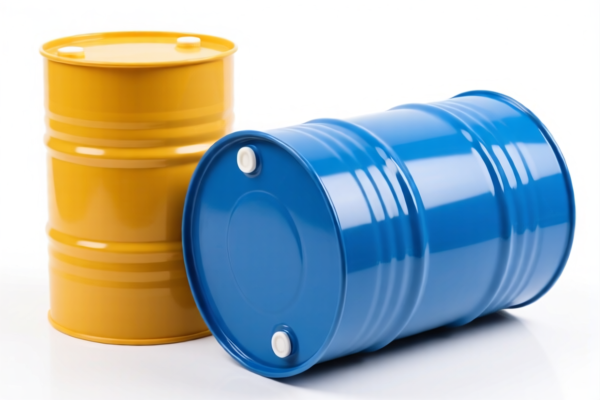
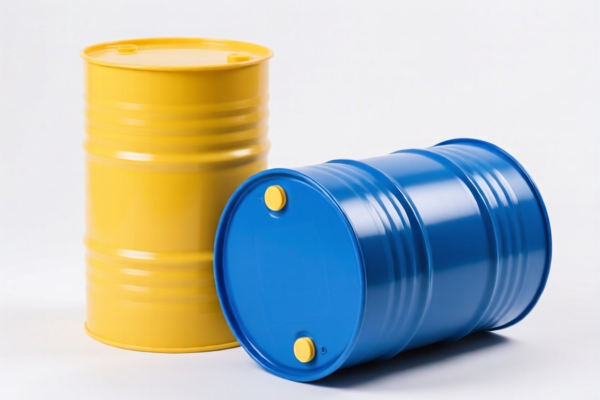
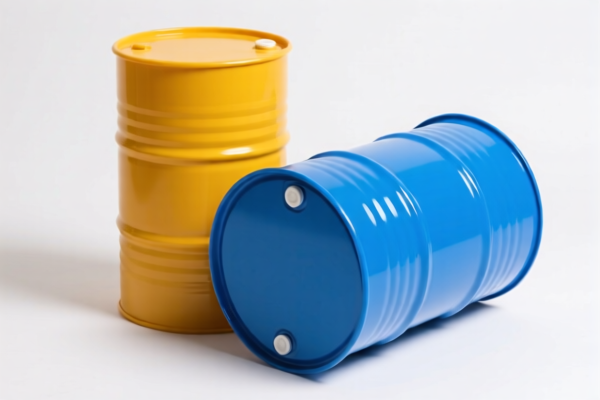
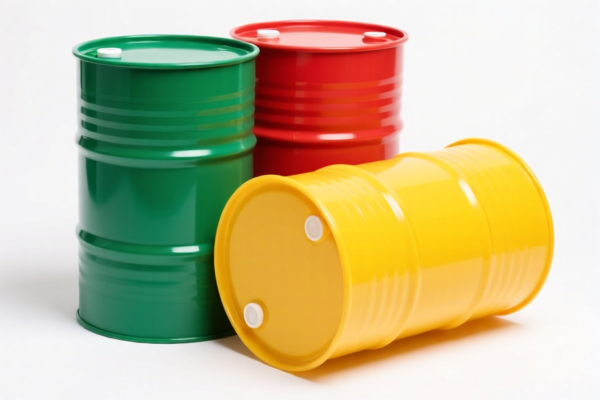
AI Analysis
🛢️ Industrial Plastic Drum (Barrels/Containers)
🌐 HS Code Reference & Customs Clearance Guide | 2026 Latest Tariff Analysis | Professional Level Clearance Strategy
📌 I. Product Definition and Classification: Do You Really Understand "Industrial Plastic Drums"?
An industrial plastic drum is a versatile container primarily used for the storage, transport, and packaging of chemicals, liquids, powders, or solids. In international trade, plastic drums are classified based on their material composition (Polymer) and functional form (Container/Pipe/Accessory).
Key distinctions in customs classification: 1. Pipe/Tube Fittings (HS 3917): If the drum has specific connections for piping systems or is part of a fluid transfer network (hard pipes/connectors), it may fall under Chapter 3917. 2. Packaging/Containers (HS 3923): If the drum is a standalone unit for holding goods during transport or storage (like a barrel), it falls under Chapter 3923. 3. General Plastic Articles (HS 3926): If it doesn't fit neatly into specific packaging or piping categories, it may be classified as "Other articles of plastics."
⚠️ Key Distinction Point:
- If the product is a rigid barrel/container used for holding substances (chemical, water, oil) → Likely HS 3923 or HS 3926.
- If the product is a hard tube/pipe component with fittings for connecting to a system → Likely HS 3917.
- Misclassification Risk: Declaring a simple storage drum as "Piping" can lead to severe under/over-payment of tariffs, especially with current US-China trade measures.
📦 II. HS Code Classification Details (2026 Latest Tariff Authority Comparison)
Based on the provided data, here are the 6 potential HS Codes for Industrial Plastic Drums, ranging from piping accessories to general containers.
| HS Code | Product Description | Application Scenario | Total Tax Rate* |
|---|---|---|---|
3917.29.00.50 |
Plastic Pipe/Tube Fittings (Vessels/Hard Pipes) | Piping system components, hard tube connectors | 38.1% |
3923.90.00.12 |
Plastic Containers (Drum Type) | General packaging, logistics barrels | 38.0% |
3926.90.10.00 |
Other Plastic Articles (Drums/Buckets) | Water buckets, oil drums, general plastic drums | 20.9% |
3917.29.00.90 |
Plastic Pipe/Tube Fittings (Other) | General piping accessories, hard tubes | 38.1% |
3926.90.99.89 |
Other Plastic Articles (Containers) | General plastic containers, non-specific | 22.8% |
3923.90.00.14 |
Plastic Containers (Chemical Packaging) | Chemical packaging, transport barrels | 38.0% |
🔍 Key Observation:
- HS 3926.90.10.00 offers the lowest tax rate (20.9%) for general plastic drums/buckets.
- HS 3917 & HS 3923 codes attract higher taxes (38.0%-38.1%) due to stricter interpretation of "packaging" or "piping" rules under Section 301/IEEPA.
- Crucial: The difference between 20.9% and 38.1% is 17.2%, which significantly impacts landed cost.
💰 III. 2026 Latest Tariff Rate Breakdown (Including Additional Taxes)
✅ Applicable Country: United States (US)
✅ Country of Origin: China (CN)
✅ Effective Date: November 10, 2025 (and subsequent imports)
🎯 1. 3926.90.10.00 —— Plastic Articles (Drums/Buckets) – Lowest Tax Option
| Item | Content |
|---|---|
| Basic Tariff | 3.4% |
| USITC Additional Tariff (Section 301) | +7.5% |
| IEEPA Additional Tariff (China) | +10% |
| Total Tax Rate | 20.9% |
| Tax Calculation | CIF Value × 20.9% |
| De Minimis Exemption | ❌ Not Eligible (Deny De Minimis) |
| Legal Basis Path | USITC:3926.90.10.00 → IEEPA:9903.01.25 → USITC:9903.88.01 |
📌 Explanation:
- This code is often used for non-packaging plastic drums (e.g., industrial buckets, water containers) that are not strictly classified as "packaging for transport."
- The 7.5% USITC rate is lower than the 25% rate applied to other 39XX codes.
- Strategy: If your drum can be argued as a "bucket" or "general container" rather than "packaging," this code saves ~17% in taxes.
🎯 2. 3926.90.99.89 —— Other Plastic Articles (Containers) – Second Lowest
| Item | Content |
|---|---|
| Basic Tariff | 5.3% |
| USITC Additional Tariff (Section 301) | +7.5% |
| IEEPA Additional Tariff (China) | +10% |
| Total Tax Rate | 22.8% |
| Tax Calculation | CIF Value × 22.8% |
| De Minimis Exemption | ❌ Not Eligible (Deny De Minimis) |
| Legal Basis Path | USITC:3926.90.99.89 → IEEPA:9903.01.25 → USITC:9903.88.01 |
📌 Explanation:
- A "catch-all" for plastic containers not specified elsewhere.
- Slightly higher than3926.90.10.00due to a higher basic tariff (5.3% vs 3.4%).
🎯 3. 3923.90.00.12 & 3923.90.00.14 —— Plastic Packaging/Containers – High Tax
| Item | Content |
|---|---|
| Basic Tariff | 3.0% |
| USITC Additional Tariff (Section 301) | +25.0% |
| IEEPA Additional Tariff (China) | +10% |
| Total Tax Rate | 38.0% |
| Tax Calculation | CIF Value × 38.0% |
| De Minimis Exemption | ❌ Not Eligible (Deny De Minimis) |
| Legal Basis Path | USITC:3923.90.00.12/14 → IEEPA:9903.01.25 → USITC:9903.88.01 |
📌 Explanation:
- HS 3923 is specifically for "Articles for the conveyance or packing of goods."
- If the customs officer determines your drum is strictly for shipping/transport packaging, it falls here.
- Critical: The 25% Section 301 tariff is applied. This is the standard high-tax bracket for plastic packaging.
🎯 4. 3917.29.00.50 & 3917.29.00.90 —— Plastic Pipes/Fittings – High Tax
| Item | Content |
|---|---|
| Basic Tariff | 3.1% |
| USITC Additional Tariff (Section 301) | +25.0% |
| IEEPA Additional Tariff (China) | +10% |
| Total Tax Rate | 38.1% |
| Tax Calculation | CIF Value × 38.1% |
| De Minimis Exemption | ❌ Not Eligible (Deny De Minimis) |
| Legal Basis Path | USITC:3917.29.00.50/90 → IEEPA:9903.01.25 → USITC:9903.88.01 |
📌 Explanation:
- HS 3917 is for "Tubes, pipes, and hoses, and fittings therefor."
- Only applicable if the drum is a hard pipe component or has integrated fittings for a plumbing/fluid system.
- Warning: Misclassifying a simple barrel as a "pipe fitting" can lead to customs audits. Only use if the product is structurally a pipe/connective element.
🛠️ IV. Customs Clearance Practical Advice (Pitfall Avoidance Guide)
✅ 1. Preparation Checklist (All Documents Required)
| Document | Required | Explanation |
|---|---|---|
| ✅ Product Specifications | ✔️ | Material (HDPE/LDPE/PP), Capacity, Dimensions, Wall Thickness |
| ✅ Product Photos | ✔️ | Show the entire drum, closures, and any fittings |
| ✅ Intended Use Statement | ✔️ | Clearly state: "For storage of non-hazardous liquids" or "For transport packaging" |
| ✅ Commercial Invoice | ✔️ | Must match HS Code description exactly (e.g., "Plastic Drum" vs "Plastic Pipe Fitting") |
| ✅ Packing List | ✔️ | Include net/gross weight, number of drums |
| ✅ Material Safety Data Sheet (MSDS) | ✔️ | If storing chemicals, required for dangerous goods classification |
✅ 2. Declaration Strategy (Key Tips)
🔥 "Fit for Use Defines the Code!"
| Scenario | Recommended HS Code | Reason | Tax Rate |
|---|---|---|---|
| General Storage Barrel (No specific piping function) | 3926.90.10.00 |
Best for "bucket/drum" classification | 20.9% |
| Chemical Packaging Drum (For shipping goods) | 3923.90.00.12/14 |
Classified as "Packing of goods" | 38.0% |
| Plastic Pipe/Connector (With fittings) | 3917.29.00.50/90 |
Only if it functions as a pipe part | 38.1% |
| Generic Plastic Container (No specific use) | 3926.90.99.89 |
Fallback for unclassified plastic items | 22.8% |
📌 Critical Advice:
- Do NOT declare a standard plastic drum as3917(Pipes) unless it has pipe ends/fittings.
- Do NOT declare a standard drum as3923if it can be argued as a general storage unit (3926), unless it is explicitly marketed as "shipping packaging."
- Documentation Consistency: Your invoice must say "Plastic Drum for Storage" if you want to use3926. If it says "Plastic Container for Packaging," customs will likely force3923.
✅ 3. Special Circumstances Handling
| Situation | Handling Advice |
|---|---|
| Drums with Integrated Piping | If the drum has threaded connectors for immediate plumbing, consider 3917.29.00.50. However, tax is higher (38.1%). Weigh the cost. |
| Drums for Dangerous Goods | Must comply with UN packaging standards. Customs may require additional safety certificates. |
| Second-Hand Drums | Considered "Used Goods." May face stricter inspection. Ensure they are clean and not contaminated. |
| Customs Audit Risk | If the difference between 20.9% and 38.0% is significant, get an Advance Ruling from US Customs (CBP) to secure the lower rate legally. |
🌍 V. Global Market Comparison (2026 Latest)
| Country/Region | Recommended HS Code | Tariff (China Origin) | Certification Required | Notes |
|---|---|---|---|---|
| 🇺🇸 USA | 3926.90.10.00 |
20.9% | FDA (if food contact), Prop 65 | Highest risk of Section 301 + IEEPA |
| 🇪🇺 EU | 3923.90.90 |
~5-7% | REACH, RoHS | No IEEPA tariff. Lower overall cost. |
| 🇨🇳 China | 3926.90.10.00 |
~5% | CCC (if applicable) | No Section 301 tariffs. |
| 🇬🇧 UK | 3923.90.90 |
~5% | UKCA | Post-Brexit regulations apply. |
📌 Conclusion:
- USA is the most expensive market due to the 38.1% rate on packaging/piping or 20.9% on general articles.
- EU/UK offer lower tariffs but require strict REACH/UKCA compliance.
- Strategy for US Imports: Prioritize3926.90.10.00classification for storage drums to save 17%+ in tariffs.
📌 VI. Common Mistakes & Pitfalls (Lessons Learned)
❌ Mistake 1: Declaring a storage drum as 3923 (Packaging) when it’s actually used for on-site storage.
👉 Consequence: Pay 38.0% instead of 20.9%. Loss of 17.1% profit.
❌ Mistake 2: Declaring a simple barrel as 3917 (Piping) to avoid "packaging" scrutiny.
👉 Consequence: Customs rejects it as misclassification. Delay + Penalties + Back Taxes.
❌ Mistake 3: Not declaring the material (e.g., HDPE vs PVC).
👉 Consequence: Customs may apply higher default rates or require re-inspection.
❌ Mistake 4: Ignoring IEEPA 10% surcharge.
👉 Consequence: All goods from China are subject to this 10% on top of the base + 301 tariff. It is mandatory.
✅ Correct Approach:
"Industrial Plastic Drum, HDPE, 55 Gallon, For Storage of Non-Hazardous Chemicals, Unbranded, Model XYZ"
→ Aim for3926.90.10.00(20.9%) with strong documentation.
🎯 VII. Conclusion: Professional Classification Saves Money!
🎯 Remember the Golden Rules:
🔹 "Storage = 3926 (20.9%) | Packaging = 3923 (38.0%) | Piping = 3917 (38.1%)"
🔹 "Don't let customs force you into the 38% bracket if it's just a bucket!"
🔹 "Always check for IEEPA 10% on China-origin plastic goods."
📌 Pro Tip:
If you are importing large volumes, apply for a CBP Advance Ruling. It legally locks in your HS Code and tax rate, preventing unexpected audits or reclassification penalties.
📣 Immediate Action:
📞 Consult your customs broker to draft a Product Description that supports
3926.90.10.00.
🚀 Save 17% on tariffs by choosing the right classification.
✨ Smart Customs Clearance Starts with the Right HS Code!
💼 Every percentage point counts in international trade!
Customer Reviews
About HS Code Classification
The Harmonized System (HS) is an internationally standardized nomenclature developed by the World Customs Organization (WCO) to classify traded products. Over 200 countries use the HS system as the basis for customs tariffs, trade statistics, and import/export regulations.
Each HS code follows a hierarchical structure:
- Chapter (2 digits) — Broad category of goods (e.g., Chapter 84: Machinery and Mechanical Appliances)
- Heading (4 digits) — More specific grouping within the chapter
- Subheading (6 digits) — Internationally standardized breakdown, used by all WCO member countries
- National subdivisions (8-10 digits) — Country-specific extensions for further classification, such as US HTSUS 10-digit codes
Correct HS code classification is essential for smooth customs clearance, accurate duty payment, and compliance with trade regulations. Misclassification can lead to customs delays, overpayment of duties, or penalties.
When importing from CN to US, the applicable tariff rates may include:
- Most-Favored-Nation (MFN) rate — The standard duty rate applied to WTO members
- General rate — Applied to countries without trade agreements
- Trade remedy duties — Additional tariffs such as Section 301 (anti-dumping), Section 232 (national security), or countervailing duties
The information provided on this page is for reference purposes only. For official classification, please consult with your local customs authority or a licensed customs broker.