Industrial Pneumatic Tires for Material Handling
CN → US| HS Code | Tariff Rate | Origin | Destination | Doc |
|---|---|---|---|---|
| 4011802010 | 39.0% | CN | US | Official Doc |
| 4011808010 | 38.4% | CN | US | Official Doc |
Product Images
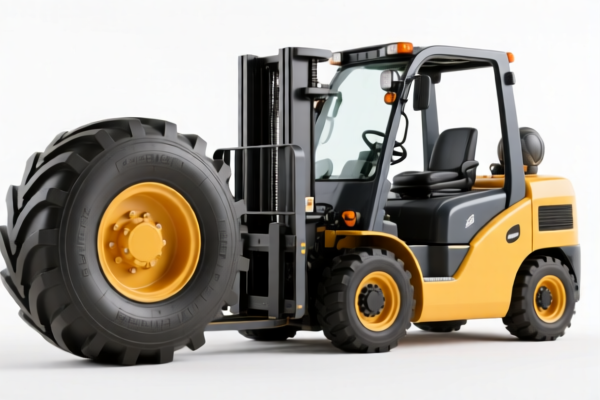
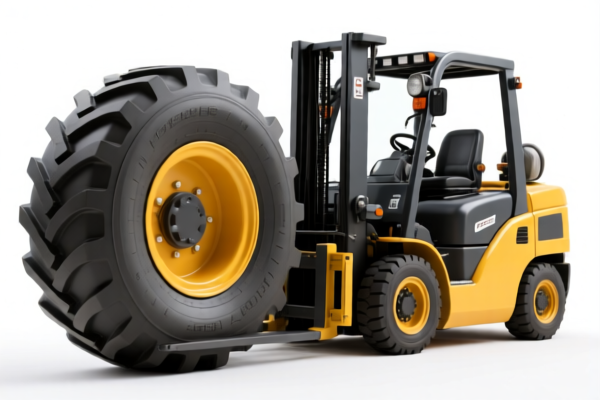
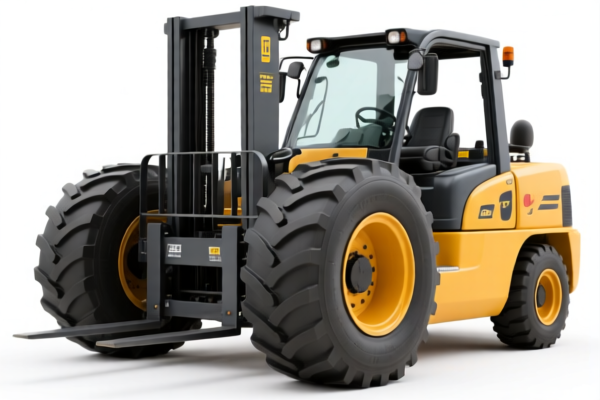
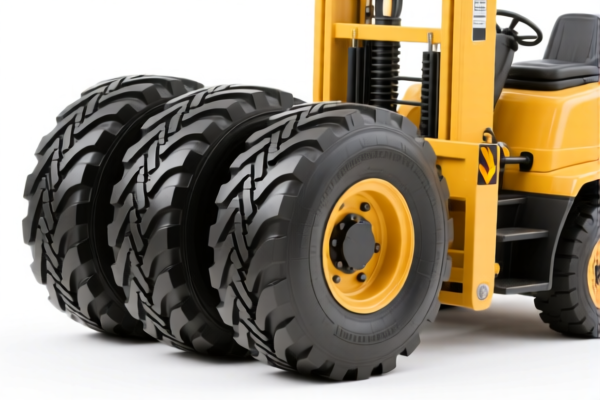
AI Analysis
🚜 Industrial Pneumatic Tires for Material Handling
🌐 HS Code Reference & Clearance Guide | 2026 Tariff Breakdown | Strategic Customs Compliance
📌 I. Product Definition & Classification: Do You Understand "Industrial Tires"?
Industrial pneumatic tires are critical components for construction, mining, and industrial handling vehicles (e.g., forklifts, loaders, tractors). In international trade, their classification depends heavily on two factors:
1. Structure: Radial vs. Non-Radial (Bias).
2. Rim Size: Whether the rim size exceeds 61 cm.
For Material Handling equipment specifically, most standard tires fall under "Other" categories if they are not specifically designated for heavy mining machinery. The key differentiator in the provided data is the structure (Radial vs. Other) and the rim size constraint (≤ 61 cm).
⚠️ Key Distinction Point:
- If the tire is Radial and has a rim size not exceeding 61 cm → Classified under 4011.80.20.10
- If the tire is Non-Radial (Other) or has a rim size exceeding 61 cm (not covered here) → Classified under 4011.80.80.10 (for non-radial ≤ 61 cm)
📦 II. HS Code Classification Details (2026 Latest Tariff Authority)
| HS Code | Product Description | Applicable Scenario | Structure | Rim Size Limit |
|---|---|---|---|---|
4011.80.20.10 |
New pneumatic tires, of rubber: Of a kind used on construction, mining or industrial handling vehicles and machines: Other: Radial Having a rim size not exceeding 61 cm | Forklifts, small loaders, agricultural-industrial mixers | ✅ Radial | ✅ ≤ 61 cm |
4011.80.80.10 |
New pneumatic tires, of rubber: Of a kind used on construction, mining or industrial handling vehicles and machines: Other: Other Having a rim size not exceeding 61 cm | Standard bias-ply tires, older model forklift tires | ❌ Non-Radial | ✅ ≤ 61 cm |
🔍 Key Reminder:
- "Radial" tires (4011.80.20.10) are typically higher performance, with steel belts.
- "Other" tires (4011.80.80.10) usually refer to Bias/Ply construction.
- Both codes require the rim size to be ≤ 61 cm. If the rim size is > 61 cm, these codes do not apply (different sub-headings exist for larger rims).
💰 III. 2026 Latest Tariff Rate Breakdown (US Import from China)
✅ Applicable Country: United States (US)
✅ Origin: China (CN)
✅ Effective Date: Current USITC/USMCA tariffs (Note: Section 301 tariffs apply)
🎯 1. 4011.80.20.10 —— Radial Industrial Tires (Rim ≤ 61 cm)
| Item | Content |
|---|---|
| Base Duty Rate | 4.0% (Ad Valorem) |
| Additional Duty (Section 301) | +25.0% |
| Total Tariff Rate | 29.0% |
| Tax Calculation | CIF Value × 29.0% |
| De Minimis Exemption | ❌ Not Applicable (Section 301 tariffs apply regardless of value) |
| Legal Basis Path | USITC: 4011.80.20.10 → Section 301 Footnote → Total 29% |
📌 Explanation:
- The Base Tariff (4%) is the standard Most Favored Nation (MFN) rate for industrial tires.
- The Additional Duty (25%) is imposed under Section 301 of the Trade Act of 1974, targeting Chinese-origin goods.
- Total Effective Rate: 29%. This is a high-cost item for importers.
🎯 2. 4011.80.80.10 —— Other (Non-Radial) Industrial Tires (Rim ≤ 61 cm)
| Item | Content |
|---|---|
| Base Duty Rate | 0.0% (Ad Valorem) |
| Additional Duty (Section 301) | 0.0% |
| Total Tariff Rate | 0.0% |
| Tax Calculation | CIF Value × 0% |
| De Minimis Exemption | ✅ N/A (Since total is 0, no duty is owed) |
| Legal Basis Path | USITC: 4011.80.80.10 → Total 0% |
📌 Important Note:
- This code enjoys a 0% total duty rate under current US tariff schedules for this specific sub-category.
- Strategic Advantage: If your product can be classified as "Other" (i.e., non-radial/bias-ply), the duty savings are massive compared to radial tires.
- Caveat: You cannot misdeclare radial tires as "Other" to avoid tariffs. Customs will inspect the tire structure (steel belts vs. fabric plies). Misclassification leads to severe penalties.
🛠️ IV. Customs Clearance Practical Advice (Avoid Pitfalls)
✅ 1. Documentation Checklist (Mandatory)
| Document | Required? | Explanation |
|---|---|---|
| ✅ Product Specification Sheet | ✔️ | Must detail: Rim Size (inches/cm), Load Index, Speed Rating, Tread Pattern, Structure (Radial/Bias). |
| ✅ Tire Structure Diagram/Cross-Section | ✔️ | Critical to prove if it is Radial (steel belts) or Bias (fabric plies). Customs may request this. |
| ✅ Commercial Invoice | ✔️ | Must clearly state: "Pneumatic Tire for Material Handling Equipment," Rim Size, and Construction Type. |
| ✅ Packing List | ✔️ | Detail weight and quantity. |
| ✅ Proof of Origin | ✔️ | If claiming any preferential treatment (though none applies here for China-US), provide Certificate of Origin. |
✅ 2. Declaration Strategy (Critical Tips)
🔥 Golden Rule:
"Declare Structure Accurately, Declare Rim Size Correctly, Avoid Misclassification Fines!"
| Scenario | Correct Declaration | Wrong Declaration | Consequence |
|---|---|---|---|
| Radial Tire, Rim 20" | 4011.80.20.10 (29% Duty) |
4011.80.80.10 (0% Duty) |
Fraud Alert! Severe penalties, seizure, back-taxes + interest. |
| Bias Tire, Rim 24" | 4011.80.80.10 (0% Duty) |
4011.80.20.10 (29% Duty) |
Overpayment! You lose profit unnecessarily. |
| Radial Tire, Rim 70" | Not Covered in Data (Different HS Code) | 4011.80.20.10 |
Wrong Code! Rim > 61 cm falls under different sub-heading (e.g., 4011.80.30+). |
📌 Tip:
- Always verify the Rim Size. The provided data only covers ≤ 61 cm.
- For Rim Size > 61 cm, consult the full HS Code table (likely under 4011.80.30.00 or similar, with different tax implications).
✅ 3. Special Case Handling
| Situation | Handling Advice |
|---|---|
| Mixed Shipments | If a container has both radial and bias tires, separate declarations are required. Do not mix codes. |
| Used Tires | ❌ Prohibited. These HS codes are for New pneumatic tires. Used tires fall under different regulations (often banned or heavily restricted). |
| Solid Tires | Not covered here. Solid tires fall under 4011.10.00.00 or 4011.20.00.00. Ensure you are importing Pneumatic (air-filled) tires. |
| Customs Examination | Be prepared for physical inspection. Have a sample tire ready to show the steel belt structure (for radial) or fabric plies (for bias). |
🌍 V. Global Market Comparison (2026)
| Country/Region | Recommended HS Code | Tariff (China Origin) | Notes |
|---|---|---|---|
| 🇺🇸 USA | 4011.80.20.10 / 4011.80.80.10 |
29% (Radial) / 0% (Bias) | Section 301 tariffs apply to Radial. Bias is duty-free. |
| 🇨🇳 China | 4011.80.20 / 4011.80.80 |
Varies (Export Duty?) | China generally does not impose export duties on tires, but check current MOFCOM lists. |
| 🇪🇺 EU | 4011.80 |
~4.5% + Anti-Duty? | EU may impose anti-dumping duties on Chinese tires. Check specific AD rates. |
| 🇦🇺 Australia | 4011.80 |
~5% | No major anti-dumping on industrial tires from China (verify latest updates). |
📌 Conclusion for US Importers:
- Radial Tires (29% Duty): High cost. Consider supply chain diversification (e.g., Vietnam, Thailand) if eligible for tariff exemptions.
- Bias/Other Tires (0% Duty): Highly competitive. If your application allows bias tires, use them to save costs.
📌 VI. Common Errors & Pitfalls (Lessons Learned)
❌ Error 1: Declaring Radial tires as "Other" to pay 0% duty.
👉 Result: Customs audit → Back taxes (29%) + Penalties + Seizure.
❌ Error 2: Ignoring Rim Size. Declaring a 70-inch rim tire under ≤ 61 cm code.
👉 Result: Code Misclassification → Delay in clearance, additional duties.
❌ Error 3: Importing Used tires under New Tire codes.
👉 Result: Rejection/Return. Used tires are strictly regulated.
❌ Error 4: Confusing Pneumatic with Solid tires.
👉 Result: Wrong HS Code → 0% vs 4.5%+ discrepancy. Solid tires are not pneumatic.
✅ Correct Declaration Example:
"New Radial Pneumatic Tire, for Forklift, Rim Size 18 inches (45.7 cm), Load Index 120, Steel Belt Construction, Model XYZ."
→ HS Code:4011.80.20.10
→ Duty: 29%
🎯 VII. Conclusion: Strategic Tariff Planning
🎯 Key Takeaway:
🔹 Radial Tires (≤ 61 cm): 29% Total Duty (4% Base + 25% Section 301).
🔹 Non-Radial Tires (≤ 61 cm): 0% Total Duty.
🔹 Rim Size > 61 cm: Not Covered in this data. Check other HS codes.
📌 Action Plan:
1. Verify Tire Structure: Is it Radial or Bias?
2. Measure Rim Size: Is it ≤ 61 cm?
3. Choose HS Code Wisely: If Bias, use 4011.80.80.10 for 0% duty. If Radial, budget for 29% duty.
4. Consider Origin: If Radial tires are mandatory, explore sourcing from non-China origins to avoid Section 301 tariffs.
📣 Final Advice:
📞 Consult a licensed customs broker for Advance Ruling if your product structure is complex.
🚀 Accurate Classification = Cost Savings + Compliance.
✨ Professional Clearance Starts with Precise Classification!
💼 Every Percent of Duty Matters!
Customer Reviews
About HS Code Classification
The Harmonized System (HS) is an internationally standardized nomenclature developed by the World Customs Organization (WCO) to classify traded products. Over 200 countries use the HS system as the basis for customs tariffs, trade statistics, and import/export regulations.
Each HS code follows a hierarchical structure:
- Chapter (2 digits) — Broad category of goods (e.g., Chapter 84: Machinery and Mechanical Appliances)
- Heading (4 digits) — More specific grouping within the chapter
- Subheading (6 digits) — Internationally standardized breakdown, used by all WCO member countries
- National subdivisions (8-10 digits) — Country-specific extensions for further classification, such as US HTSUS 10-digit codes
Correct HS code classification is essential for smooth customs clearance, accurate duty payment, and compliance with trade regulations. Misclassification can lead to customs delays, overpayment of duties, or penalties.
When importing from CN to US, the applicable tariff rates may include:
- Most-Favored-Nation (MFN) rate — The standard duty rate applied to WTO members
- General rate — Applied to countries without trade agreements
- Trade remedy duties — Additional tariffs such as Section 301 (anti-dumping), Section 232 (national security), or countervailing duties
The information provided on this page is for reference purposes only. For official classification, please consult with your local customs authority or a licensed customs broker.