Industrial Printing Paper
CN → US| HS Code | Tariff Rate | Origin | Destination | Doc |
|---|---|---|---|---|
| 4823400000 | 35.0% | CN | US | Official Doc |
| 4811908030 | 35.0% | CN | US | Official Doc |
| 4823908680 | 35.0% | CN | US | Official Doc |
| 4811909030 | 35.0% | CN | US | Official Doc |
| 4820900000 | 35.0% | CN | US | Official Doc |
Product Images
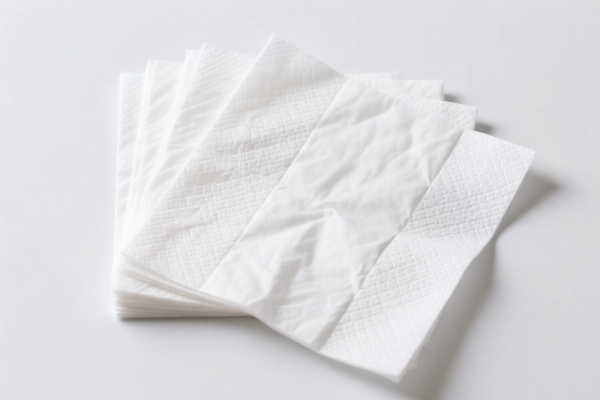
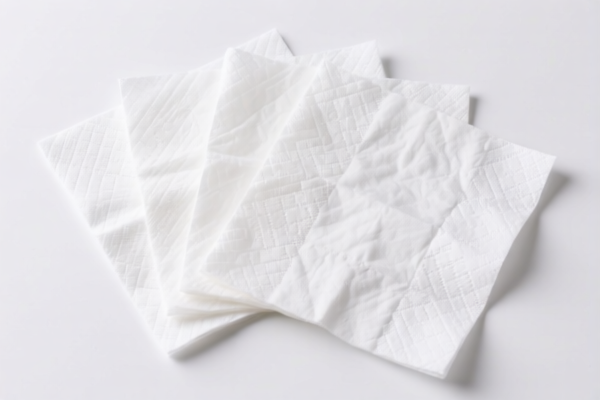
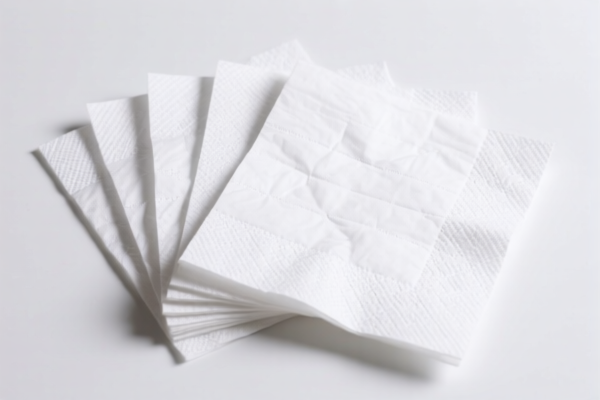
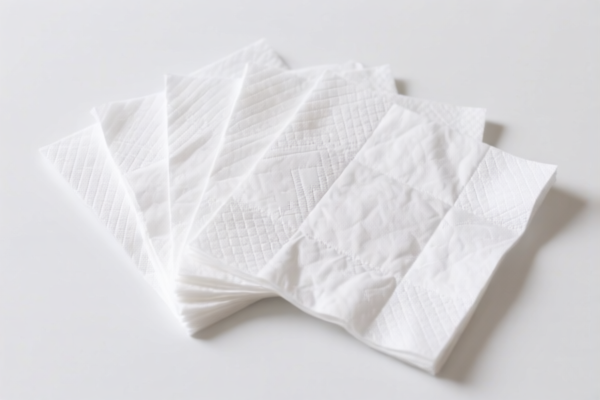
AI Analysis
🖨️ Industrial Printing Paper (Industrial Recording Paper)
🌐 HS Code Reference & Customs Clearance Guide | 2026 Latest Tariff Analysis | Professional Compliance Strategy
📌 I. Product Definition & Classification: What is "Industrial Printing Paper"?
Industrial Printing Paper refers to specialized paper products designed for automatic recording instruments, thermal printers, and industrial data logging systems. Unlike standard office paper, these materials often feature specific coatings (such as thermal sensitization) or formats tailored for mechanical recording devices.
In international trade, classification depends heavily on: 1. Material Composition: Pure paper vs. coated/processed paper. 2. End-Use: Automatic recording instruments vs. general medical or office use. 3. Technology: Thermal sensitivity vs. standard chemical reaction recording.
⚠️ Key Distinction Point:
- If the paper is specifically shaped/formatted for automatic recording instruments → It falls under Chapter 48.23.
- If the paper is thermally coated for data recording → It falls under Chapter 48.11.
- If the paper is for medical printing (e.g., ECG/EKG records) → It may fall under Chapter 48.20 or other specific subheadings depending on precise formatting.
📦 II. HS Code Classification Details (2026 Latest Tariff Authority Mapping)
Based on the provided data, here are the specific HS Codes for "Industrial Printing Paper":
| HS Code | Product Description | Application Scenario | Key Characteristics |
|---|---|---|---|
4823.40.00.00 |
Industrial recording paper, paper material, used for automatic recorders | Automatic chart recorders, industrial data loggers | Standard paper, formatted for mechanical pens/inks |
4811.90.80.30 |
Industrial recording paper, thermal coated, used for data recording | Thermal fax machines, industrial thermal printers | Has thermal coating layer, reacts to heat |
4823.90.86.80 |
Industrial recording paper, other paper products, for industrial recording | General industrial paper products not specifically listed elsewhere | General purpose industrial paper, uncoated or lightly processed |
4811.90.90.30 |
Industrial recording paper, thermal paper, used for data recording | High-speed thermal recording devices | Specific thermal paper variant for data logging |
4820.90.00.00 |
Medical printing paper, paper-based printing consumables, stationery | Medical ECG/EKG recorders, hospital diagnostic logs | Formatted for medical devices, distinct from industrial automation |
🔍 Critical Reminder:
- Thermal Paper (4811.xx) is classified by its processing method (coated with heat-sensitive chemicals).
- Non-Thermal Industrial Paper (4823.xx) is classified by its form/size specifically for automatic recording instruments.
- Medical Paper (4820.xx) is often a separate category if explicitly designed for medical diagnostic equipment, even if it looks like recording paper.
💰 III. 2026 Latest Tariff Rate Breakdown (Including Surcharges & Policy Add-ons)
✅ Applicable Country: United States (US)
✅ Origin: China (CN)
✅ Effective Date: 2025年11月10日起 (Including subsequent imports)
✅ Total Tax Rate: 35.0% for all listed HS Codes
🎯 1. Universal Tariff Structure for Industrial Printing Paper
All the above HS Codes (4823.40.00.00, 4811.90.80.30, 4823.90.86.80, 4811.90.90.30, 4820.90.00.00) share the same tariff structure under current US-China trade regulations.
| Item | Content |
|---|---|
| Base Duty Rate | 0.0% (Ad Valorem) |
| Section 301 Surcharge | +25.0% (Based on USITC Footnote 9903.88.01 list for specific Chinese goods) |
| IEEPA Section 122 Surcharge | +10.0% (Targeting specific Chinese imports under International Emergency Economic Powers Act) |
| Total Effective Rate | 35.0% |
| Tax Calculation | CIF Value × 35% |
| De Minimis Eligibility | ❌ Not Eligible (deny_de_minimis) |
| Legal Authority Path | IEEPA:122 → USITC:301 → Specific HS Code |
📌 Explanation:
- The Base Duty is 0% because paper products generally have low baseline tariffs.
- The 25% Surcharge is part of the ongoing Section 301 trade war tariffs targeting Chinese manufactured goods.
- The 10% Additional Tariff (labeled as "122条款关税" in the data) refers to specific provisions under IEEPA or related executive orders targeting industrial supplies.
- Total 35% is a high tariff burden. Importers must factor this into cost models immediately.⚠️ Note on "Section 122":
While the data labels it as "122条款关税" (Section 122 Tariff), in US customs practice, this often refers to specific executive orders or trade acts (e.g., Section 232 for steel/aluminum, but here applied to paper via specific exclusions or new mandates). The key takeaway is the +10% additive nature.
🛠️ IV. Customs Clearance Practical Advice (Real-World Pitfall Avoidance Guide)
✅ 1. Required Documentation Checklist (None Can Be Missing)
| Document | Mandatory? | Description |
|---|---|---|
| ✅ Product Specification Sheet | ✔️ | Must specify: Paper size, weight (gsm), coating type (thermal/non-thermal), roll/core diameter. |
| ✅ Technical Data Sheet (TDS) | ✔️ | For thermal paper: Confirm coating composition (bisphenol A-free if possible for compliance). |
| ✅ Product Photos | ✔️ | Clear images of roll end, packaging labels, and any printed sample. |
| ✅ Commercial Invoice | ✔️ | Must explicitly state "Industrial Recording Paper" or "Thermal Paper for Automatic Recorder". Avoid vague terms like "Paper". |
| ✅ Packing List | ✔️ | Detail net/gross weight, number of rolls, and carton dimensions. |
| ✅ Certificate of Origin (CO) | ✔️ | Essential for proving Chinese origin to apply (or confirm) the 35% rate. |
| ✅ Declaration of Content | ✔️ | Explicitly state "No Bisphenol A (BPA)" if applicable, to avoid EPA/FTC compliance issues. |
✅ 2. Declaration Strategy (Key Mnemonics)
🔥 "Specify Coating, Declare Use, Avoid Vague Names!"
| Scenario | Correct Declaration | Incorrect Practice | Consequence |
|---|---|---|---|
| Thermal Paper | 4811.90.80.30 - "Thermal Coated Industrial Recording Paper" |
"Copy Paper" or "Office Paper" | Misclassification Risk: Could be flagged for fraud or higher duties if misidentified. |
| Non-Thermal Recording Paper | 4823.40.00.00 - "Paper for Automatic Recording Instruments" |
"Chart Paper" without context | Customs Query: Why is it shaped for a recorder? Need to prove end-use. |
| Medical Recording Paper | 4820.90.00.00 - "Medical Printing Paper" |
"Industrial Paper" | Duty Risk: If classified under industrial code, may attract different scrutiny, though rate is same here. Precision helps speed. |
| Generic Paper Rolls | 4823.90.86.80 - "Other Paper Products" |
No specific description | Delay: Customs will ask for further details to determine if it fits 4811 or 4823. |
📌 Key Tip:
- Use exact product descriptions matching the HS Code summary.
- Do not use generic terms like "Paper" or "Document".
- Clearly state "For Automatic Recording Instruments" if using4823.xxxx.
✅ 3. Special Cases & Handling
| Case | Handling Advice |
|---|---|
| BPA-Free Thermal Paper | Clearly declare "BPA-Free" to ease EPA compliance, though it doesn't change HS Code. |
| Custom Cut Rolls | If rolls are cut to specific widths for US machines, declare "Custom Width Industrial Paper" to justify 4823.40.00.00. |
| Mixed Shipments | If shipment contains both thermal and non-thermal, separate declarations are required. Mixing leads to delays. |
| Medical vs. Industrial | If the paper is for medical ECG but sold as industrial, clarify in invoice. 4820.90.00.00 is specific to medical/office stationery in this dataset. |
🌍 V. Global Market Customs Comparison (2026 Latest)
| Country/Region | Recommended HS Code | Duty Rate (China Origin) | Certification Requirements | Notes |
|---|---|---|---|---|
| 🇺🇸 USA | 4811.90.80.30 / 4823.40.00.00 |
35% (Total) | None specific to paper, but BPA compliance recommended | High duty burden due to Section 301 + IEEPA |
| 🇨🇳 China | 4811.90.80.30 |
0-5% | CCC (if applicable) | No additional surcharges |
| 🇪🇺 EU | 4811.90.90.90 |
6.5% | REACH Compliance (BPA limits) | BPA restrictions are strict in EU |
| 🇬🇧 UK | 4811.90.90.90 |
6.5% | UKCA Marking (if part of device) | Post-Brexit rules apply |
| 🇦🇺 Australia | 4811.90.90.90 |
5% | ACCC Compliance | No special surcharges |
📌 Conclusion:
- USA is the most expensive market for Chinese industrial paper due to the 35% combined tariff.
- EU/UK have lower base duties but stricter chemical regulations (BPA/BPS limits).
- Supply Chain Adjustment: Consider sourcing from Vietnam or Malaysia if aiming to bypass US tariffs, though rules of origin apply.
📌 VI. Common Errors & Pitfall Guide (Lessons Learned)
❌ Error 1: Declaring "Thermal Paper" as "Office Copy Paper"
👉 Consequence: Severe Penalty. Misclassification of chemical-coated goods can lead to fraud allegations.
✅ Fix: Always use "Thermal Recording Paper".
❌ Error 2: Ignoring "Automatic Recorder" End-Use for 4823 codes
👉 Consequence: Customs Query. Without proof of use, customs may reclassify to general paper with different duties.
✅ Fix: Include a letter of end-use from the manufacturer.
❌ Error 3: Assuming "Medical Paper" is the same as "Industrial Paper"
👉 Consequence: Documentation Rejection. 4820.90.00.00 is distinct.
✅ Fix: Verify if the paper is for ECG/EKG (Medical) or Data Loggers (Industrial).
❌ Error 4: Not Accounting for the 35% Total Duty
👉 Consequence: Profit Margin Erosion.
✅ Fix: Calculate landed cost using CIF × 1.35.
🎯 VII. Conclusion: Professional Declaration, Cost Control, Compliance
🎯 Remember the Mantra:
🔹 "Thermal is 4811, Recorder is 4823, Medical is 4820.
🔹 35% Duty in US, Zero Base but High Surcharges.
🔹 Declare Coating, Declare Use, Avoid Ambiguity!"📌 Pro Tip:
- If your thermal paper is BPA-Free, highlight this in the invoice for easier EPA scrutiny, even if it doesn't change the HS Code.
- For US imports, consider Advance Ruling from CBP if you have unique paper formats to avoid detention.
📣 Immediate Action:
📞 Contact Customs Broker: Provide exact product specs + thermal coating details.
📄 Prepare Declaration: Use the exact HS Codes listed above with precise descriptions.
💸 Budget Impact: Factor in 35% duty for US shipments from China.
✨ Professional Clearance Starts with Precise Classification!
💼 Every Percentage Point of Duty Counts in Industrial Supplies!
Customer Reviews
About HS Code Classification
The Harmonized System (HS) is an internationally standardized nomenclature developed by the World Customs Organization (WCO) to classify traded products. Over 200 countries use the HS system as the basis for customs tariffs, trade statistics, and import/export regulations.
Each HS code follows a hierarchical structure:
- Chapter (2 digits) — Broad category of goods (e.g., Chapter 84: Machinery and Mechanical Appliances)
- Heading (4 digits) — More specific grouping within the chapter
- Subheading (6 digits) — Internationally standardized breakdown, used by all WCO member countries
- National subdivisions (8-10 digits) — Country-specific extensions for further classification, such as US HTSUS 10-digit codes
Correct HS code classification is essential for smooth customs clearance, accurate duty payment, and compliance with trade regulations. Misclassification can lead to customs delays, overpayment of duties, or penalties.
When importing from CN to US, the applicable tariff rates may include:
- Most-Favored-Nation (MFN) rate — The standard duty rate applied to WTO members
- General rate — Applied to countries without trade agreements
- Trade remedy duties — Additional tariffs such as Section 301 (anti-dumping), Section 232 (national security), or countervailing duties
The information provided on this page is for reference purposes only. For official classification, please consult with your local customs authority or a licensed customs broker.