Industrial Protective Acrylic Sheet
CN → US| HS Code | Tariff Rate | Origin | Destination | Doc |
|---|---|---|---|---|
| 9022906000 | 35.0% | CN | US | Official Doc |
| 3920515050 | 41.5% | CN | US | Official Doc |
| 3920515090 | 41.5% | CN | US | Official Doc |
| 9022909500 | 36.4% | CN | US | Official Doc |
Product Images
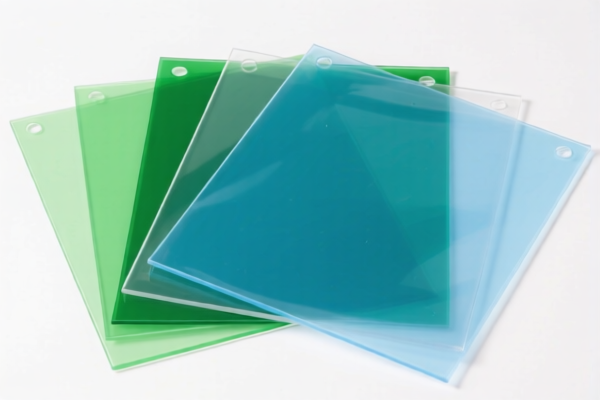
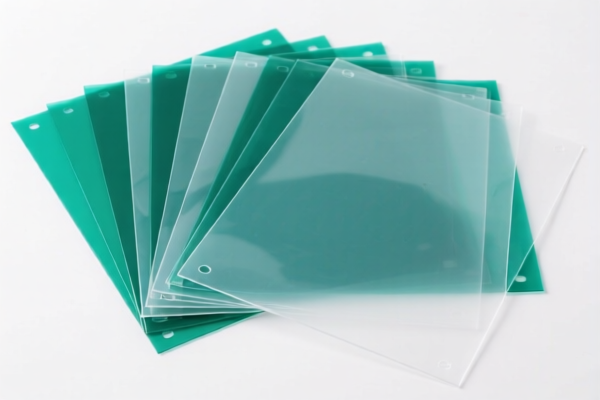
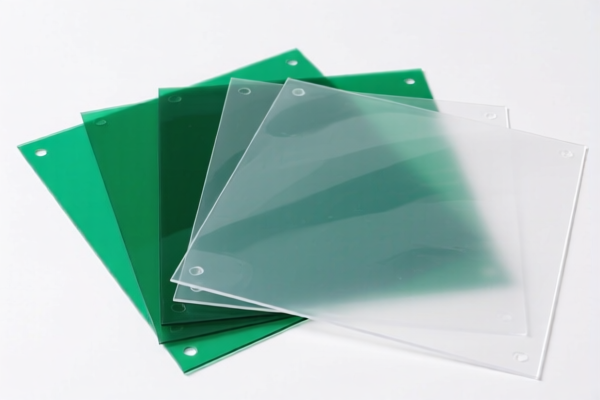

AI Analysis
🛡️ Industrial Protective Acrylic Sheet (Radiation Shielding)
🌐 HS Code Reference & Customs Clearance Guide | 2026 Latest Tariff Analysis | Professional Clearance Strategy
📌 I. Product Definition & Classification: What Exactly Is This "Acrylic Sheet"?
Industrial Protective Acrylic Sheets are specialized polychlorinated vinyl or polymethyl methacrylate (PMMA) materials engineered for ionizing radiation protection (X-rays, Gamma rays). In international trade, their classification hinges on Function vs. Material:
Radiation Shielding Parts (9022 Series): Classified as accessories to medical/industrial X-ray equipment due to their primary function of radiation attenuation.
Acrylic Plates (3920 Series): Classified as raw polymer plates based on material composition and form factor, ignoring the specific protective application.
⚠️ Key Distinction Point:
- If the sheet is marketed, designed, and certified specifically as X-ray protection material (e.g., for lead-free shielding walls in clinics), customs may lean towards 9022.90 (Instrument Parts).
- If the sheet is a general-purpose industrial acrylic plate that happens to be used for shielding, or lacks specific medical certification, it falls under 3920.51 (Acrylic Polymer Plates).
📦 II. HS Code Classification Details (2026 Latest Tariff Authority Match)
Based on the provided data, here are the precise classifications for "Industrial Protective Acrylic Sheet":
| HS Code | Product Description | Primary Basis for Classification | Application Scenario |
|---|---|---|---|
9022.90.60.00 |
X-ray instrument parts & accessories (Radiation protection purpose, Acrylic material) | Function: X-ray protection purpose Material: Acrylic |
Medical X-ray rooms, Industrial radiography shielding |
3920.51.50.50 |
Acrylic polymer plates (Acrylic material, Plate form, Radiation protection function) | Material: Acrylic Polymer Form: Plate |
General industrial shielding, DIY radiation barriers |
3920.51.50.90 |
Acrylic polymer plates/sheets (Acrylic material, Plate form) | Material: Acrylic Polymer Form: Plate |
Raw material supply, Unspecialized industrial sheets |
9022.90.95.00 |
Other parts & accessories of X-ray instruments (Acrylic material, Plate form, Ionizing radiation protection) | Function: Ionizing radiation protection Form: Plate |
Alternative X-ray accessory classification, Non-specific medical devices |
🔍 Critical Warning:
- The Material Code (3920) carries a 6.5% base tariff, while the Instrument Code (9022) carries a 0.0% or 1.4% base tariff.
- However, both face 25% USITC Section 301 tariffs and 10% IEEPA Section 1701 tariffs.
- Choosing the wrong HS Code can lead to massive duty discrepancies (35% vs. 41.5%) and potential customs penalties for misdeclaration.
💰 III. 2026 Latest Tariff Rate Details (Including Surcharges & Policy Add-ons)
✅ Applicable Country: United States (US)
✅ Origin: China (CN)
✅ Effective Date: 2025/2026 (Includes subsequent imports)
🎯 1. 9022.90.60.00 —— X-ray Instrument Parts (Radiation Protection Purpose)
| Item | Content |
|---|---|
| Base Tariff | 0.0% (ad valorem) |
| USITC Surcharge (Sec. 301) | +25.0% |
| IEEPA Surcharge (Sec. 1701) | +10.0% |
| Total Tax Rate | 35.0% |
| Tax Calculation | CIF Value × 35% |
| De Minimis Eligibility | ❌ No (deny_de_minimis) |
| Legal Path | IEEPA:9903.01.25 → IEEPA:9903.01.24 → USITC:9022.90.60.00 |
📌 Explanation:
- This classification benefits from a 0% base tariff, making it 6.5% cheaper than the acrylic plate classification.
- Risk: Requires strong evidence that the product is an "accessory" to X-ray equipment. If customs views it as a raw material, this declaration will be rejected.
🎯 2. 3920.51.50.50 —— Acrylic Polymer Plates (With Radiation Protection Function)
| Item | Content |
|---|---|
| Base Tariff | 6.5% (ad valorem) |
| USITC Surcharge (Sec. 301) | +25.0% |
| IEEPA Surcharge (Sec. 1701) | +10.0% |
| Total Tax Rate | 41.5% |
| Tax Calculation | CIF Value × 41.5% |
| De Minimis Eligibility | ❌ No (deny_de_minimis) |
| Legal Path | IEEPA:9903.01.25 → IEEPA:9903.01.24 → USITC:3920.51.50.50 |
📌 Explanation:
- The 6.5% base tariff increases the total cost significantly.
- Advantage: Easier to declare as a generic polymer plate if functional certification is missing.
🎯 3. 3920.51.50.90 —— Acrylic Polymer Plates/Sheets
| Item | Content |
|---|---|
| Base Tariff | 6.5% (ad valorem) |
| USITC Surcharge (Sec. 301) | +25.0% |
| IEEPA Surcharge (Sec. 1701) | +10.0% |
| Total Tax Rate | 41.5% |
| Tax Calculation | CIF Value × 41.5% |
| De Minimis Eligibility | ❌ No (deny_de_minimis) |
| Legal Path | IEEPA:9903.01.25 → IEEPA:9903.01.24 → USITC:3920.51.50.90 |
📌 Explanation:
- Identical tax rate to3920.51.50.50.
- Use this code if the sheet is a general-purpose acrylic plate without specific "radiation protection" marketing claims.
🎯 4. 9022.90.95.00 —— Other X-ray Instrument Parts (Radiation Protection)
| Item | Content |
|---|---|
| Base Tariff | 1.4% (ad valorem) |
| USITC Surcharge (Sec. 301) | +25.0% |
| IEEPA Surcharge (Sec. 1701) | +10.0% |
| Total Tax Rate | 36.4% |
| Tax Calculation | CIF Value × 36.4% |
| De Minimis Eligibility | ❌ No (deny_de_minimis) |
| Legal Path | IEEPA:9903.01.25 → IEEPA:9903.01.24 → USITC:9022.90.95.00 |
📌 Explanation:
- A middle-ground option. Base tariff is 1.4%, totaling 36.4%.
- Useful if the product is an "accessory" but doesn't fit the specific "X-ray protection purpose" sub-heading of9022.90.60.00.
🛠️ IV. Customs Clearance Practical Advice (Battle-Tested Pitfall Avoidance)
✅ 1. Documentation Checklist (Non-negotiable)
| Document | Mandatory? | Purpose |
|---|---|---|
| ✅ Product Specification Sheet | ✔️ | Must detail: Material (PMMA/Acrylic), Density, Thickness, Radiation Attenuation Coefficient. |
| ✅ Certificate of Origin | ✔️ | Essential for applying IEEPA/301 tariffs correctly. |
| ✅ Commercial Invoice | ✔️ | Must clearly state: "Acrylic Sheet for Radiation Protection" OR "Polymer Plate". Do not leave ambiguous. |
| ✅ Packing List | ✔️ | Separate line items if multiple products are in one shipment. |
| ✅ Third-Party Test Report | ✔️ | CRITICAL: If claiming 9022 classification, provide a test report proving radiation shielding properties. |
| ✅ Pre-Ruling Application | ✔️ | Highly recommended to get an official HS Code determination from CBP before shipping. |
✅ 2. Declaration Strategy (Key Mantras)
🔥 "Function Drives 9022, Material Drives 3920. Choose One, Don't Split!"
| Scenario | Correct Declaration | Wrong Practice | Consequence |
|---|---|---|---|
| Certified Shielding Sheet | 9022.90.60.00 (35.0%) |
Declare as 3920.51.50.50 (41.5%) |
Overpay 6.5% duty unnecessarily. |
| Raw Acrylic Plate (No Certification) | 3920.51.50.90 (41.5%) |
Declare as 9022.90.60.00 (35.0%) |
Customs Rejection + Penalty + Back Payment. |
| Mixed Shipment | Split HS Codes accurately | Combine into one generic code | Seizure or Delay. |
✅ 3. Special Handling Cases
| Case | Handling Advice |
|---|---|
| Lead-Free Shielding | Emphasize "Lead-Free Acrylic" in description. Avoid "Lead Glass" confusion. |
| Custom Sizes | Ensure invoice states "Cut to Size" only if it’s a service. Raw sheets should be "Standard Dimensions". |
| Medical vs. Industrial | If used in a medical clinic, 9022 is stronger. If in an industrial X-ray facility, 9022 still applies but documentation must be robust. |
| Small Samples | Even small samples are subject to deny_de_minimis. Do not use small package loopholes. |
🌍 V. Global Market Comparison (2026 Update)
| Region | Recommended HS Code | Base Tariff | Total Tax (China Origin) | Notes |
|---|---|---|---|---|
| 🇺🇸 USA | 9022.90.60.00 |
0.0% | 35.0% | Best rate if functionally classified. |
| 🇺🇸 USA | 3920.51.50.50 |
6.5% | 41.5% | Safer if function is unclear. |
| 🇨🇳 China | 3920.51.50.90 |
6.5% | 6.5% | No anti-dumping/Section 301. |
| 🇪🇺 EU | 3920.51.00 |
6.5% | 6.5% | No Section 301/IEEPA. |
| 🇯🇵 Japan | 3920.51.00 |
6.0% | 6.0% | No Section 301/IEEPA. |
📌 Conclusion:
- USA is the most complex market due to the 35% vs. 41.5% split.
- EU, Japan, China do not apply the 25%+10% surcharges, making them cheaper for this product.
- Strategic Tip: If shipping to the US, invest in a CBP Advance Ruling to lock in the9022.90.60.00classification and save 6.5%.
📌 VI. Common Errors & Pitfalls (Lessons Learned)
❌ Error 1: Declaring "Acrylic Sheet" without mentioning "Radiation Protection" when it is specifically designed for it.
👉 Consequence: Customs may downgrade from 9022 (0% base) to 3920 (6.5% base) if they suspect intent to evade higher tariffs on raw materials, or vice versa if they lack proof. Misclassification Risk.
❌ Error 2: Assuming "Acrylic" automatically means 3920.
👉 Consequence: Missing the opportunity to use 9022.90.60.00 (35% vs 41.5%). Lost Savings.
❌ Error 3: Ignoring the 10% IEEPA Surcharge.
👉 Consequence: Budgeting errors. Many traders only account for the 25% Section 301 tariff. Profit Erosion.
❌ Error 4: Using "Lead Equivalent" claims without certified reports.
👉 Consequence: Customs requests additional testing, delaying clearance by weeks. Logistics Bottleneck.
✅ Best Practice:
"PMMA Acrylic Sheet, 10mm, Lead-Equivalent 1mm, for X-Ray Room Shielding, Model XR-100, Certified."
🎯 VII. Conclusion: Precision Classification, Cost Optimization!
🎯 Remember the Golden Rule:
🔹 "Function first for X-ray: 35% Total."
🔹 "Material first for Polymer: 41.5% Total."
🔹 "Proof is key: Get that test report!"
📌 Pro Tip:
If your acrylic sheet is originally produced in Vietnam, Mexico, or Thailand, you may be eligible for IEEPA Exemptions (0%~5% total).
Recommendation:
🚀 Apply for a CBP Advance Ruling NOW.
📞 Consult a licensed customs broker.
💰 Save 6.5% on every shipment through correct classification.
✨ Professional Clearance Starts with Accurate Classification!
💼 Every Dollar Saved is Pure Profit!
Customer Reviews
About HS Code Classification
The Harmonized System (HS) is an internationally standardized nomenclature developed by the World Customs Organization (WCO) to classify traded products. Over 200 countries use the HS system as the basis for customs tariffs, trade statistics, and import/export regulations.
Each HS code follows a hierarchical structure:
- Chapter (2 digits) — Broad category of goods (e.g., Chapter 84: Machinery and Mechanical Appliances)
- Heading (4 digits) — More specific grouping within the chapter
- Subheading (6 digits) — Internationally standardized breakdown, used by all WCO member countries
- National subdivisions (8-10 digits) — Country-specific extensions for further classification, such as US HTSUS 10-digit codes
Correct HS code classification is essential for smooth customs clearance, accurate duty payment, and compliance with trade regulations. Misclassification can lead to customs delays, overpayment of duties, or penalties.
When importing from CN to US, the applicable tariff rates may include:
- Most-Favored-Nation (MFN) rate — The standard duty rate applied to WTO members
- General rate — Applied to countries without trade agreements
- Trade remedy duties — Additional tariffs such as Section 301 (anti-dumping), Section 232 (national security), or countervailing duties
The information provided on this page is for reference purposes only. For official classification, please consult with your local customs authority or a licensed customs broker.