Industrial Recording Paper Roll
CN → US| HS Code | Tariff Rate | Origin | Destination | Doc |
|---|---|---|---|---|
| 4823400000 | 35.0% | CN | US | Official Doc |
| 4823906700 | 35.0% | CN | US | Official Doc |
| 4819503000 | 35.0% | CN | US | Official Doc |
| 4819504060 | 35.0% | CN | US | Official Doc |
| 4811908050 | 35.0% | CN | US | Official Doc |
| 4811592000 | 10.0% | CN | US | Official Doc |
Product Images
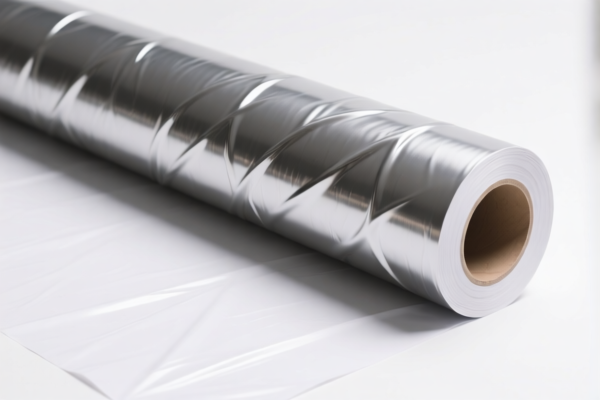
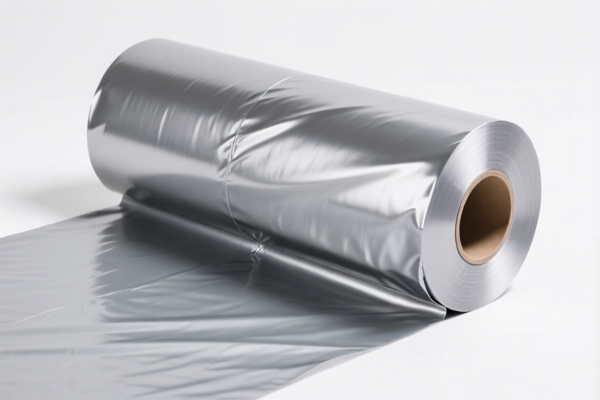
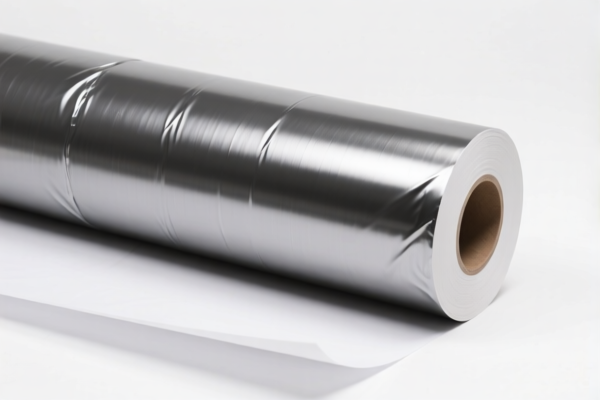
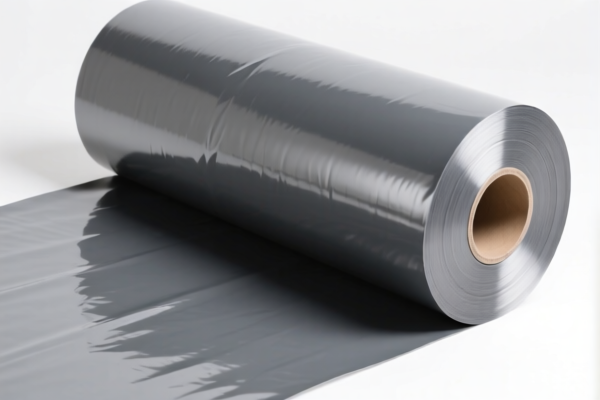
AI Analysis
📄 Industrial Recording Paper Roll: The Ultimate 2026 Clearance & Tax Guide
🌐 HS Code Reference & Customs Strategy | 2026 Tax Regime Breakdown | Expert Customs Compliance
📌 Section 1: Product Definition & Classification — Do You Know What "Industrial Recording Paper" Really Is?
Industrial Recording Paper Rolls are specialized consumables designed for self-recording instruments, such as chart recorders, data loggers, and industrial monitoring systems. They are distinct from standard office paper due to their specific function, coating, and format.
In international trade, these rolls are strictly categorized based on their end-use and physical properties:
1. Self-Recording Rolls (Dials/Charts):
Paper cut to specific shapes, sizes, or dials specifically printed or designed to fit recording apparatus (e.g., circular dials, strip charts).
→ Primary Classification: 4823.40.00.00
2. General Industrial Paper Rolls (Coated/Printed):
Paper in strips or rolls (width > 15cm) that are coated, printed, or prepared for industrial use but not cut to the specific shape of a recording dial.
→ Primary Classification: 4811.59.20.00 or 4811.90.80.50
3. Packaging Paper (Record Sleeves):
If the product is specifically a container (like a sleeve) to hold record paper, it falls under packaging.
→ Primary Classification: 4819.50.30.00
⚠️ Critical Distinction Point:
- Is the paper cut to a specific dial/shape for a recorder? →4823.40.00.00
- Is it a continuous roll of coated or printed industrial paper (width > 15cm)? →4811.59.20.00or4811.90.80.50
- Is it a container/sleeve for the paper? →4819.50.30.00
📦 Section 2: HS Code Breakdown (2026 Official Tax Regime)
| HS Code | Product Description | Application Scenarios | Physical Characteristics |
|---|---|---|---|
4823.40.00.00 |
Rolls, sheets, and dials, printed for self-recording apparatus | Chart recorders, temperature/humidity loggers, specific dial charts | Cut to size/shape; printed for specific machines |
4823.90.67.00 |
Other: Of coated paper or paperboard: Other | Industrial coated paper not cut for dials; generic high-strength paper | Coated surface; not for self-recording dials |
4819.50.30.00 |
Record sleeves (Paper/Cardboard containers) | Sleeves/cases used to protect/store record paper | Packaging only, not the recording medium itself |
4819.50.40.60 |
Other packing containers | Generic industrial paper packaging | Non-specific containers |
4811.90.80.50 |
Other paper... weighing over 30 g/m² | Broad industrial paper, printed/colored, >30gsm | >30g/m²; >15cm width; not coated with plastics |
4811.59.20.00 |
Printing paper (Coated with plastics) | Plastic-coated industrial printing paper | Coated with plastics; >15cm width |
🔍 Key Warning:
- Do not mix "self-recording dials" (4823.40) with "general industrial rolls" (4811.59). Misclassification leads to duty disputes. - Do not declare "Record Paper" as "Office Paper" if it is coated or plastic-covered; it must be declared under4811.59or4811.90.
💰 Section 3: 2026 Tariff Rate Deep Dive (US Import from China)
✅ Applicable Market: United States (US)
✅ Origin: China (CN)
✅ Effective Date: 2026 (Current 2025/2026 Trade Policies)
🎯 1. 4823.40.00.00 — Self-Recording Rolls/Dials
| Item | Details |
|---|---|
| Base Tariff | 0.0% (Most Favored Nation) |
| Section 301 Tariff | +25.0% (Additional Duty for Chinese Origin) |
| Total Tax Rate | 25.0% |
| De Minimis Exemption | ❌ No (Denied for Section 301 goods) |
| Legal Basis | Section 301 / USITC Footnote |
| Calculation | CIF Value × 25% |
📌 Explanation:
While the base duty is 0%, the 25% Section 301 "Add-on" Tax applies to almost all Chinese-origin paper goods. This is a mandatory, non-negotiable surcharge.
🎯 2. 4811.59.20.00 — Plastic-Coated Printing Paper
| Item | Details |
|---|---|
| Base Tariff | 0.0% |
| Section 301 Tariff | +25.0% |
| Total Tax Rate | 25.0% |
| De Minimis Exemption | ❌ No |
| Legal Basis | Section 301 |
| Calculation | CIF Value × 25% |
📌 Explanation:
Even if the paper is "coated with plastics," it remains subject to the 25% penalty tax. No special exemptions for "industrial" use in this category.
🎯 3. 4819.50.30.00 — Record Sleeves (Packaging)
| Item | Details |
|---|---|
| Base Tariff | 0.0% |
| Section 301 Tariff | +25.0% |
| Total Tax Rate | 25.0% |
| De Minimis Exemption | ❌ No |
| Legal Basis | Section 301 |
| Calculation | CIF Value × 25% |
📌 Explanation:
Packaging items (sleeves) are not exempt. If shipped separately, they still incur the 25% tax.
🛠️ Section 4: Practical Customs Clearance Advice (Avoiding Pitfalls)
✅ 1. Documentation Checklist (Must-Have)
| Document | Required? | Why? |
|---|---|---|
| Product Specification Sheet | ✔️ | Must explicitly state: "Printed for Self-Recording Apparatus" or "Coated with Plastic". |
| Technical Drawings | ✔️ | Shows if paper is cut to "dial shape" (4823.40) or just a roll (4811). |
| Commercial Invoice | ✔️ | Must match HS Code exactly. Avoid vague terms like "Paper" only. |
| Certificate of Origin | ✔️ | To prove Chinese origin (for 25% tax application) or non-Chinese origin (for potential lower rates). |
| Declaration of Use | ✔️ | Confirm end-use is "Industrial Recording" to support 4823.40. |
✅ 2. Declaration Strategy (The "Golden Rules")
🔥 "Shape Dictates Code, Coating Dictates Sub-Code, Origin Dictates Tax!"
| Scenario | Correct HS Code | Incorrect (High Risk) |
|---|---|---|
| Circular Dial Chart | 4823.40.00.00 |
4811.90 (Under-declared tax risk) |
| Long Roll, Coated, >30gsm | 4811.59.20.00 |
4823.90 (Wrong category) |
| Paper Sleeve for Record | 4819.50.30.00 |
4823.40 (Packaging cannot be "recording paper") |
| General Office Paper | 4802 or 4810 |
4811.59 (Over-declared tax risk) |
✅ 3. Special Handling Tips
- Weight Check: For
4811.90.80.50, ensure the weight is over 30 g/m². If under, the classification changes. - Coating Verification: If the paper is coated with plastics, it must go to
4811.59. If it's only ink-printed, it might be4811.90. - Bundling: If shipping "Record Paper" + "Sleeves" together, declare them separately on the invoice to avoid customs confusion.
- Origin Tracing: If you are importing from Vietnam or Mexico (non-China origin), check for exemptions from the 25% Section 301 tax. (Note: Pure "Made in China" goods are strictly 25%).
🌍 Section 5: Global Market Comparison (2026)
| Region | Recommended HS Code | Base Tariff | Section 301 / Penalty | Total Effective Tax | Notes |
|---|---|---|---|---|---|
| 🇺🇸 USA | 4823.40.00.00 |
0% | +25% | 25% | High Risk Zone |
| 🇨🇳 China | 4823.40.00.00 |
0% | 0% | 0% | Domestic trade only |
| 🇪🇺 EU | 4823.40.00.00 |
0% | 0% | 0% | Generally duty-free |
| 🇯🇵 Japan | 4823.40.00.00 |
0% | 0% | 0% | No penalty tax |
| 🇦🇺 Australia | 4823.40.00.00 |
0% | 0% | 0% | Free trade agreement |
📌 Conclusion:
The USA is the only major market applying the 25% punitive tariff on these specific paper goods if they originate from China. All other markets (EU, Japan, AU) generally have 0% total tax for these items.
📌 Section 6: Common Mistakes & Solutions
❌ Mistake 1: Declaring "Industrial Paper" as "Office Paper" (4802) to avoid taxes.
👉 Consequence: Customs audit, 25% tax + Penalties.
❌ Mistake 2: Not specifying "Printed for Self-Recording" on the invoice.
👉 Consequence: Customs may force classification into a generic (higher tax) or reject the entry.
❌ Mistake 3: Assuming "Coated" means "Plastic Coated".
👉 Consequence: 4811.59 (Plastic) vs 4811.90 (Non-Plastic) have different sub-classes, though tax is the same here, the duty rate and documentation differ.
❌ Mistake 4: Ignoring the "25% Add-on Tax".
👉 Consequence: Profit margin eaten up by unexpected 25% duty.
✅ Correct Approach:
"Industrial Recording Paper Roll, 50mm width, 15μm thickness, Printed for Chart Recorder Model X, Weight 35 g/m², Origin: China.
HS Code:4823.40.00.00
Total Duty: 25%"
🎯 Section 7: Conclusion & Call to Action
🎯 Remember the Rule:
🔹 "Shape = 4823, Coating = 4811, Origin = 25% Tax!"
🔹 "One wrong digit, 25% cost jump!"📌 Pro Tip:
If your supply chain allows, ship from a non-Section 301 country (e.g., Vietnam, Thailand, Mexico) to eliminate the 25% tax.
Always request an Advance Ruling from CBP if your product is borderline (e.g., is it a "sleeve" or "paper"?).
📣 Immediate Action Plan:
📞 Contact Customs Broker: Provide specs + "Record for Self-Recording" statement.
🚀 Verify Origin: Ensure your Certificate of Origin is accurate.
💰 Budget for 25%: Do not underestimate the Section 301 surcharge.
✨ Precision Classification = Cost Savings & Smooth Clearance!
💼 Every gram of paper counts — declare it right, save your profit!
Customer Reviews
About HS Code Classification
The Harmonized System (HS) is an internationally standardized nomenclature developed by the World Customs Organization (WCO) to classify traded products. Over 200 countries use the HS system as the basis for customs tariffs, trade statistics, and import/export regulations.
Each HS code follows a hierarchical structure:
- Chapter (2 digits) — Broad category of goods (e.g., Chapter 84: Machinery and Mechanical Appliances)
- Heading (4 digits) — More specific grouping within the chapter
- Subheading (6 digits) — Internationally standardized breakdown, used by all WCO member countries
- National subdivisions (8-10 digits) — Country-specific extensions for further classification, such as US HTSUS 10-digit codes
Correct HS code classification is essential for smooth customs clearance, accurate duty payment, and compliance with trade regulations. Misclassification can lead to customs delays, overpayment of duties, or penalties.
When importing from CN to US, the applicable tariff rates may include:
- Most-Favored-Nation (MFN) rate — The standard duty rate applied to WTO members
- General rate — Applied to countries without trade agreements
- Trade remedy duties — Additional tariffs such as Section 301 (anti-dumping), Section 232 (national security), or countervailing duties
The information provided on this page is for reference purposes only. For official classification, please consult with your local customs authority or a licensed customs broker.