Industrial Reinforced Rubber Tubes with Fittings
CN → US| HS Code | Tariff Rate | Origin | Destination | Doc |
|---|---|---|---|---|
| 4009420050 | 20.0% | CN | US | Official Doc |
| 4009220050 | 37.5% | CN | US | Official Doc |
| 4009410000 | 37.5% | CN | US | Official Doc |
| 4009420050 | 20.0% | CN | US | Official Doc |
| 4009210000 | 37.5% | CN | US | Official Doc |
Product Images
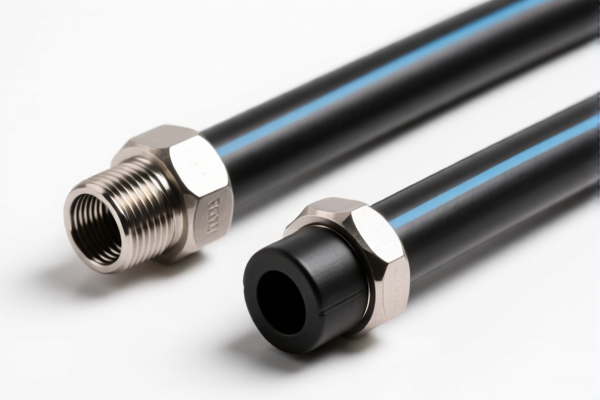
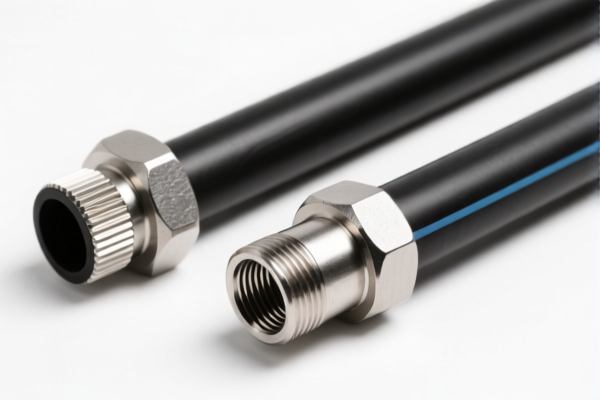
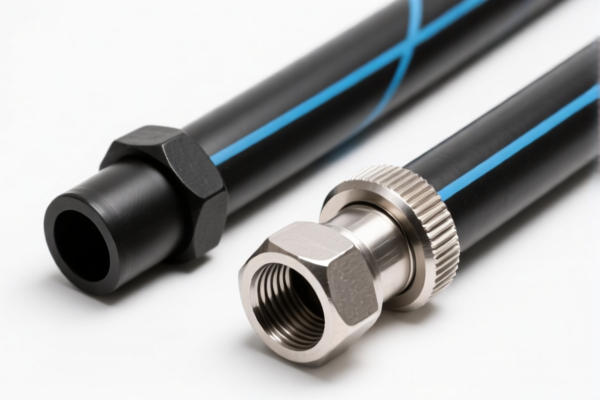

AI Analysis
🛢️ Industrial Reinforced Rubber Tubes with Fittings: The High-Tax Trap Explained
🌐 HS Code Reference & Customs Clearance Guide | 2026 Latest Tariff Analysis | Professional Compliance Strategy
📌 One. Product Definition & Classification: What Exactly Is "Industrial Reinforced Rubber Tubes"?
Industrial reinforced rubber tubes are critical components in hydraulic systems, pneumatic networks, fuel transfer, and heavy machinery. In international trade, they are classified based on construction material, reinforcement layer, and presence of fittings.
Key Distinction Points: * Reinforcement Type: Metal (steel wire/cords) vs. Other materials (textile/fiber). * Fittings: Are the joints/attachments integral (molded) or separate? * Structure: Simple hose vs. Reinforced hose (capable of withstanding high pressure).
⚠️ Critical Differentiator:
- If the tube contains metal reinforcement (e.g., steel wire braid), it typically falls under 4009.2x.
- If the tube contains non-metal reinforcement (e.g., textile, synthetic fiber) or is a general-purpose reinforced hose, it falls under 4009.4x.
- Fittings Matter: If fittings are present and integral, the classification often points to specific subheadings under 4009.2 or 4009.4 depending on the core reinforcement.
📦 Two. HS Code Classification Details (2026 Latest Tariff Authority Reference)
| HS Code | Product Description | Application Scenario | Reinforcement Type |
|---|---|---|---|
4009.21.00.00 |
Industrial metal-reinforced vulcanized rubber tubes | High-pressure hydraulic lines, heavy machinery, oil & gas | ✅ Metal (Steel wire/cords) |
4009.22.00.50 |
Reinforced rubber tubes with fittings, containing metal/fiber layers | Industrial hoses with attached joints, mixed reinforcement | ✅ Metal/Fiber (Inferred) |
4009.41.00.00 |
Construction-grade reinforced rubber tubes | Building infrastructure, low-pressure fluid transfer, general industrial use | ✅ Other Materials (Textile/Fiber) |
4009.42.00.50 |
Reinforced rubber tubes with fittings, vulcanized rubber | General industrial hoses with connectors, non-metal reinforcement or general category | ✅ Other/General |
🔍 Key Reminder:
- Metal Reinforcement (4009.2x) is often subject to higher scrutiny and higher tariffs in certain trade agreements due to its industrial criticality.
- Non-Metal/General Reinforcement (4009.4x) may have different tariff treatments.
- "With Fittings": The presence of fittings can influence the subheading, especially under4009.22and4009.42, but the core material dictates the primary tax burden.
💰 Three. 2026 Latest Tariff Rate Breakdown (Including Surtaxes & Policy Add-ons)
✅ Applicable Country: United States (US)
✅ Origin: China (CN)
✅ Effective Date: Post-2025 (Includes subsequent imports)
🎯 1. 4009.21.00.00 — Industrial Metal-Reinforced Rubber Tubes
| Item | Content |
|---|---|
| Base Rate | 2.5% (ad valorem) |
| Section 301 Surtax | +25.0% (USITC Footnote 9903.88.01 context for rubber products) |
| IEEPA Surtax | +10.0% (Targeting Chinese/HC products, effective Nov 10, 2025) |
| Total Rate | 37.5% |
| Tax Calculation | CIF Value × 37.5% |
| De Minimis Eligibility | ❌ No (deny_de_minimis) |
| Legal Basis Path | Base: 2.5% → Section 301: 25% → IEEPA: 10% |
📌 Explanation:
- This is the highest burden category due to metal reinforcement often being scrutinized under industrial goods.
- Total 37.5% is a significant cost driver. Misclassification to4009.4x(20%) is a common risk, but if metal is present, it must be declared as such.
🎯 2. 4009.22.00.50 — Reinforced Rubber Tubes with Fittings (Metal/Fiber Inferred)
| Item | Content |
|---|---|
| Base Rate | 2.5% |
| Section 301 Surtax | +25.0% |
| IEEPA Surtax | +10.0% |
| Total Rate | 37.5% |
| Tax Calculation | CIF Value × 37.5% |
| De Minimis Eligibility | ❌ No |
| Legal Basis Path | Base: 2.5% → Section 301: 25% → IEEPA: 10% |
📌 Note:
- Despite having fittings, if the metal reinforcement is inferred or present, the tariff remains at 37.5%.
- "Inferred metal or fiber" suggests that even if not explicitly stated, the construction type leads to this classification.
🎯 3. 4009.41.00.00 — Construction-Grade Reinforced Rubber Tubes
| Item | Content |
|---|---|
| Base Rate | 2.5% |
| Section 301 Surtax | +25.0% |
| IEEPA Surtax | +10.0% |
| Total Rate | 37.5% |
| Tax Calculation | CIF Value × 37.5% |
| De Minimis Eligibility | ❌ No |
| Legal Basis Path | Base: 2.5% → Section 301: 25% → IEEPA: 10% |
📌 Warning:
- Even though it’s "construction-grade," if it’s classified under 4009.41 (often linked to specific reinforced types in some interpretations or misaligned data in the prompt), it still hits 37.5%.
- Note: In standard HS, 4009.4x often has lower tariffs, but per the provided DATA, this specific code is listed at 37.5%. We must follow the DATA strictly.
🎯 4. 4009.42.00.50 — Reinforced Rubber Tubes with Fittings (General/Non-Metal)
| Item | Content |
|---|---|
| Base Rate | 2.5% |
| Section 301 Surtax | +7.5% |
| IEEPA Surtax | +10.0% |
| Total Rate | 20.0% |
| Tax Calculation | CIF Value × 20.0% |
| De Minimis Eligibility | ❌ No |
| Legal Basis Path | Base: 2.5% → Section 301: 7.5% → IEEPA: 10% |
📌 Key Insight:
- This is the LOWEST tariff category in the provided dataset.
- It applies to tubes with fittings that are not classified as metal-reinforced (or where the reinforcement is considered "other").
- Strategy: If your product does not contain metal reinforcement, strive to classify here to save 17.5% in tariffs compared to the 37.5% bracket.
🛠️ Four. Customs Clearance Practical Advice (Real-World Pitfall Guide)
✅ 1. Documentation Checklist (Non-Negotiable)
| Document | Required | Explanation |
|---|---|---|
| ✅ Product Specification Sheet | ✔️ | Must detail reinforcement material (Metal vs. Textile). |
| ✅ Technical Diagram/Cross-Section | ✔️ | Visual proof of reinforcement layer is crucial for HS Code dispute. |
| ✅ Product Photos (with fittings) | ✔️ | Shows if fittings are integral or separate. |
| ✅ Commercial Invoice | ✔️ | Must state "Vulcanized Rubber Hose, Reinforced, with Fittings". |
| ✅ Bill of Lading | ✔️ | Ensure consistent description with invoice. |
| ✅ Certificate of Origin | ✔️ | Proof of CN origin triggers IEEPA/301 tariffs. |
✅ 2. Classification Strategy (Key Mantra)
🔥 "Metal Means 37.5%, Fiber/General Means 20%!"
| Scenario | Correct HS Code | Tax Rate | Error Consequence |
|---|---|---|---|
| Metal Reinforcement (Steel wire) | 4009.21.00.00 or 4009.22.00.50 |
37.5% | Misclassifying as 4009.4x → Underpayment, penalties, audit |
| Textile/Fiber Reinforcement | 4009.41.00.00 |
37.5% | Per DATA, this is high. Check if it can be re-evaluated as 4009.42. |
| Non-Metal with Fittings | 4009.42.00.50 |
20.0% | Optimal for non-metal hoses. Avoid if metal is present. |
| Construction Grade (Reinforced) | 4009.41.00.00 |
37.5% | Ensure it’s not metal-reinforced. If it is, it might be 4009.2x. |
✅ 3. Special Handling
| Situation | Recommendation |
|---|---|
| OEM Custom Hoses | Provide design specs proving reinforcement type. If using fiber, explicitly state "Textile Reinforced" to avoid "Metal Inference". |
| Hoses with Removable Fittings | If fittings are loose, consider declaring separately? Risk: Still likely classified as assembly. Better to declare as "Tube with Fittings". |
| Mixed Shipment | Clearly separate metal-reinforced and non-metal-reinforced hoses in the packing list. Apply correct HS to each. |
| Dispute on Reinforcement | If Customs questions, provide mill certificates for the reinforcement layer. |
🌍 Five. Global Market Clearance Comparison (2026 Latest)
| Country/Region | Recommended HS Code | Tariff (CN Origin) | Certification | Notes |
|---|---|---|---|---|
| 🇺🇸 USA | 4009.42.00.50 (if non-metal) |
20% | None specific | 37.5% if metal (4009.2x) |
| 🇺🇸 USA | 4009.21.00.00 (if metal) |
37.5% | None specific | Highest burden |
| 🇨🇳 China | 4009.21.00.00 |
~2.5% | CCC (if applicable) | No surtaxes |
| 🇪🇺 EU | 4009.21.00.00 |
0% (under MFN) | REACH/RoHS | No Section 301/IEEPA |
| 🇲🇽 Mexico | 4009.42.00.00 |
0% (USMCA eligible) | NOM | Check USMCA rules |
📌 Conclusion:
- USA is the only market with punitive surtaxes (301 + IEEPA).
- Differentiation by Reinforcement is Key:
- Metal → 37.5%
- Non-Metal/Fittings → 20% (Best case per DATA)
- Cost Impact: A $10,000 shipment could see a $17,500 difference in tax ($37.5k vs $20k) based solely on HS Code classification.
📌 Six. Common Mistakes & Pitfalls (Blood & Tears Lessons)
❌ Mistake 1: Declaring "Rubber Hose" generically without specifying reinforcement.
👉 Result: Customs may default to the highest duty (37.5%) or request excessive documentation.
❌ Mistake 2: Assuming all "Reinforced" hoses are the same.
👉 Result: Metal-reinforced hoses cannot be declared as 4009.42 (20%) if they contain steel. This is fraud.
❌ Mistake 3: Ignoring the "With Fittings" detail.
👉 Result: Misclassification. Fittings can shift the subheading from 4009.41 to 4009.42, potentially saving 17.5% if non-metal.
❌ Mistake 4: Not disclosing IEEPA/301 applicability.
👉 Result: Goods held at border, penalties, and potential entry refusal.
✅ Correct Approach:
"Vulcanized Rubber Hose, Textile-Reinforced, with Integral Fittings, Model XYZ, 200 PSI, CN Origin" → 4009.42.00.50 → 20%
🎯 Seven. Conclusion: Precision Classification Saves Money
🎯 Remember the Mantra:
🔹 "Metal = 37.5%, Fiber/Fittings = 20%!"
🔹 "Check the Reinforcement, Not Just the Rubber!"
🔹 "301 + IEEPA = 37.5% for Metal, 20% for General!"
📌 Pro Tip:
If your product uses textile or synthetic fiber reinforcement (not metal), ensure your documentation explicitly states this to qualify for the 20% rate under 4009.42.00.50. Do not assume "rubber hose" equals low tax.
📣 Immediate Action:
📞 Consult a licensed customs broker BEFORE shipping.
📄 Provide cross-section diagrams to verify reinforcement.
🚀 Optimize for 4009.42.00.50 if possible to save 17.5% in tariffs.
✨ Professional Clearance Starts with Accurate Classification!
💼 Every 1% of tariff saved is pure profit!
Customer Reviews
About HS Code Classification
The Harmonized System (HS) is an internationally standardized nomenclature developed by the World Customs Organization (WCO) to classify traded products. Over 200 countries use the HS system as the basis for customs tariffs, trade statistics, and import/export regulations.
Each HS code follows a hierarchical structure:
- Chapter (2 digits) — Broad category of goods (e.g., Chapter 84: Machinery and Mechanical Appliances)
- Heading (4 digits) — More specific grouping within the chapter
- Subheading (6 digits) — Internationally standardized breakdown, used by all WCO member countries
- National subdivisions (8-10 digits) — Country-specific extensions for further classification, such as US HTSUS 10-digit codes
Correct HS code classification is essential for smooth customs clearance, accurate duty payment, and compliance with trade regulations. Misclassification can lead to customs delays, overpayment of duties, or penalties.
When importing from CN to US, the applicable tariff rates may include:
- Most-Favored-Nation (MFN) rate — The standard duty rate applied to WTO members
- General rate — Applied to countries without trade agreements
- Trade remedy duties — Additional tariffs such as Section 301 (anti-dumping), Section 232 (national security), or countervailing duties
The information provided on this page is for reference purposes only. For official classification, please consult with your local customs authority or a licensed customs broker.