Industrial Rosin
CN → US| HS Code | Tariff Rate | Origin | Destination | Doc |
|---|---|---|---|---|
| 1301909105 | 17.5% | CN | US | Official Doc |
| 1301909190 | 17.5% | CN | US | Official Doc |
Product Images
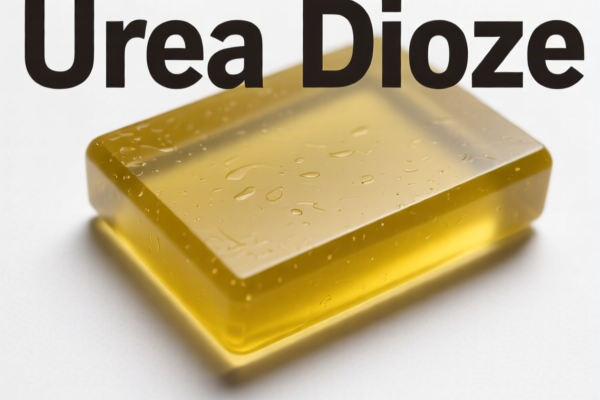


AI Analysis
🌿 Industrial Rosin (Colophony)
Natural Resins, Gum-Resins, and Oleoresins (e.g., Balsams)
🌐 HS Code Reference & Customs Clearance Guide | 2026 Latest Tariff Analysis | Professional Clearance Strategy
📌 Part 1: Product Definition & Classification: Do You Really Know "Industrial Rosin"?
Industrial Rosin (also known as Colophony) is the solid residue left after distilling turpentine from liquid resin tapped from living pine trees. It is a critical raw material in the global adhesive, ink, paper sizing, and rubber industries.
In international trade, Rosin is classified under Chapter 13: Lac; Natural Gums, Resins, Gum-Resins and Oleoresins.
Key Distinction:
Rosin vs. Balsam: While both are natural resins, "Balsams" (Chapter 13, heading 1301) typically refer to aromatic, sticky resins like Benzoin or Copaiba. Industrial Rosin is specifically processed pine resin.
* Raw vs. Processed: Raw rosin (solid blocks or liquor) falls under specific subheadings. If it is further processed into chemical derivatives (e.g., rosin esters, hydrogenated rosin), it may move to Chapter 39 or Chapter 38. This guide strictly covers raw/process industrial Rosin under HS Code 1301.*
⚠️ Critical Classification Point:
- If the product is pure Rosin (solid or liquid) derived from pine trees → HS Code 1301.90 series.
- If the product is Rosin Esters (reacted with glycerol/polyglycerol) → Often classified under 3906 or 3824 depending on formulation.
- Do NOT confuse with "Tree Sap" in raw form (0403) or Synthetic Resins (3901-3914).
📦 Part 2: HS Code Classification Details (2026 Latest Tariff Authority)
Based on the provided data, Industrial Rosin falls under the following specific HS Codes within Heading 1301.90 (Other natural gums, resins, gum-resins, and oleoresins):
| HS Code | Product Description | Application Scenario | Tariff Rate (US Imports from China) |
|---|---|---|---|
1301.90.91.05 |
Other Balsams (Specifically: Other) | Note: While titled "Balsams," this subheading in some national extensions captures specific processed rosins or resinous extracts not fitting "Balsam" strict definition but grouped under "Other." | 7.5% |
1301.90.91.90 |
Other (Other) | Fallback category for industrial rosins, colophony, and gum rosin that do not fit specific "Balsam" listings. | 7.5% |
🔍 Important Note on "Balsams" vs. "Rosin":
- Strictly speaking, Rosin is often classified under 1302.19 in many jurisdictions if considered a "vegetable sappy extract." However, the provided data restricts classification to 1301.90.
- In the context of the provided , Industrial Rosin is being treated as a "Natural Gum/Resin" under 1301.90.91.
- 1301.90.91.05: Likely used for specific grades of resinous substances categorized as "Other Balsams."
- 1301.90.91.90: The "Other Other" catch-all for industrial resins/rosins not explicitly listed as balsams.
💰 Part 3: 2026 Latest Tariff Rate Breakdown (Detailed Tax Clauses)
✅ Applicable Country: United States (US)
✅ Country of Origin: China (CN)
✅ Effective Date: Current trade terms apply
🎯 1. 1301.90.91.05 – Other Balsams (Including Specific Rosin Grades)
| Item | Content |
|---|---|
| Base Tariff | 0.0% (Ad Valorem) |
| Additional Tariff (Section 301 / IEEPA) | +7.5% |
| Total Tax Rate | 7.5% |
| Tax Calculation | CIF Value × 7.5% |
| De Minimis Exemption | ❌ Not Applicable (General merchandise) |
| Legal Basis Path | HTSUS:1301.90.91.05 → Section 301 Footnote |
📌 Explanation:
- The Base Rate for most natural resins under 1301 is generally 0% or low.
- The 7.5% Total Tax reflects the Section 301 additional duty on Chinese imports.
- Note: Some natural resins may enjoy exemptions if they are not "critical materials," but Rosin is generally subject to standard tariffs unless a specific exclusion applies. Always verify current Exclusion Lists.
🎯 2. 1301.90.91.90 – Other (General Industrial Rosin/Colophony)
| Item | Content |
|---|---|
| Base Tariff | 0.0% (Ad Valorem) |
| Additional Tariff (Section 301 / IEEPA) | +7.5% |
| Total Tax Rate | 7.5% |
| Tax Calculation | CIF Value × 7.5% |
| De Minimis Exemption | ❌ Not Applicable |
| Legal Basis Path | HTSUS:1301.90.91.90 → Section 301 Footnote |
📌 Explanation:
- Identical tax treatment to1301.90.91.05.
- This is the standard classification for bulk industrial rosin (Colophony) used in adhesives, inks, and rubber.
- No Base Tariff means the entire 7.5% is additional duty, which must be factored into landed cost calculations.
🛠️ Part 4: Customs Clearance Practical Advice (Avoid Pitfalls)
✅ 1. Documentation Checklist (Mandatory)
| Document | Required? | Purpose |
|---|---|---|
| Certificate of Origin (CO) | ✔️ | Proves Chinese origin; determines applicability of 7.5% tariff. |
| Material Safety Data Sheet (MSDS) | ✔️ | Rosin is a combustible solid; required for safe transport and customs safety review. |
| Commercial Invoice | ✔️ | Must clearly state: "Industrial Rosin, Solid/Liquid, HS Code 1301.90.91.xx". Avoid vague terms like "Natural Powder." |
| Packing List | ✔️ | Detail net/gross weight. Rosin is often packed in 25kg bags or jumbo bags. |
| Product Specification Sheet | ✔️ | Specifies viscosity, color (Gardner scale), and ash content. Helps customs verify if it’s truly "Rosin" and not a synthetic substitute. |
✅ 2. Declaration Tips (Critical Keywords)
🔥 "Be Specific, Be Accurate, Be Legal!"
| Situation | Correct Declaration | Wrong Declaration | Consequence |
|---|---|---|---|
| Bulk Rosin Blocks | Industrial Rosin, Pine Resin, Solid, HS 1301.90.91.90 |
Natural Gum |
Risk of misclassification → Higher duties or delay. |
| Rosin in Solvent (Liquor) | Rosin Soap / Rosin Solution, HS 1301.90.91.90 |
Paint |
Incorrect chapter (32 or 39) → 20%+ duties + penalties. |
| Hydrogenated Rosin | Check HS 3906 or 3824 | Industrial Rosin |
If modified, it’s no longer raw resin → Wrong HS code. |
| Rosin Ester (Glycerol Ester) | Rosin Ester, HS 3906.90 |
Industrial Rosin |
Chemical derivative → Different chapter. |
✅ 3. Special Handling for Rosin
| Scenario | Handling Advice |
|---|---|
| Melting Point Issues | Rosin melts at ~70-90°C. If shipping in summer, ensure containers are ventilated to prevent "sweating" or leakage, which can trigger customs inspection for "hazardous spill risk." |
| Origin Labeling | Must clearly mark "Product of China" on packages. Mislabeling origin can lead to 100% seizure and penalties. |
| Exclusion Requests | Check if your specific rosina grade is on the USTR Section 301 Exclusion List. If excluded, you can pay 0% additional duty. Apply via USTR Exclusion Portal before shipment. |
🌍 Part 5: Global Market Comparison (2026)
| Country/Region | Recommended HS Code | Tariff (China Origin) | Key Requirements |
|---|---|---|---|
| 🇺🇸 USA | 1301.90.91.90 |
7.5% | MSDS, CO, Precise Description |
| 🇪🇺 EU | 1301.90.90 |
0% (Most Favored Nation) | REACH Registration (if >1 ton/year) |
| 🇨🇳 China | 1301.90.90.90 |
7% (Import Duty) | CIQ Inspection (if applicable) |
| 🇯🇵 Japan | 1301.90.900 |
0% | Fertilizer Law (if used in ag) |
📌 Conclusion:
- USA is the most costly market due to 7.5% additional tariff.
- EU and Japan offer duty-free access for most natural resins, making them preferred destinations for export diversification.
- China imports rosin as a raw material with moderate duty.
📌 Part 6: Common Mistakes & Pitfalls (Lessons Learned)
❌ Mistake 1: Declaring Rosin as "Natural Gums" (HS 1302.19) when it’s technically a "Resin" (HS 1301).
👉 Consequence: While both have similar rates, misclassification can trigger customs audits if documentation doesn’t match the legal definition of "gum" vs. "resin."
❌ Mistake 2: Failing to declare the Form (Solid vs. Liquid/Solution).
👉 Consequence: Liquid rosin (rosin soap) may have different packaging requirements and inspection protocols. If declared as "solid" but inspected as "liquid," penalties apply.
❌ Mistake 3: Ignoring Section 301 Exclusions.
👉 Consequence: Paying 7.5% unnecessarily. Many Chinese rosin products have been excluded from additional tariffs in the past. Check the latest exclusion lists!
❌ Mistake 4: Using vague terms like "Tree Sap" or "Pine Oil."
👉 Consequence: "Pine Oil" is a volatile essential oil (HS 3301), not Rosin. Misclassification leads to wrong duties (0-5% vs 7.5%) and contraband suspicion.
✅ Correct Practice:
"Industrial Rosin (Colophony), Solid, Pine Origin, HS Code 1301.90.91.90, Made in China, MSDS Attached"
🎯 Part 7: Conclusion: Professional Declaration, Cost Optimization!
🎯 Remember the Golden Rules:
🔹 "Rosin is 1301, not 1302 or 3906."
🔹 "7.5% Additional Duty for China Origin."
🔹 "Check Exclusion Lists Before Shipment!"
🔹 "MSDS is Mandatory for Safety and Clearance."
📌 Pro Tip:
If you are exporting large volumes of Rosin to the US, consider:
1. Applying for Section 301 Exclusions if applicable.
2. Using Free Trade Zones (FTZs) to defer duties.
3. Switching Markets to EU/ASEAN for duty-free advantages.
📣 Immediate Action:
📞 Contact your customs broker + Provide MSDS + Verify HS Code 1301.90.91.90
🚀 Ensure smooth customs clearance, avoid penalties, and maximize profit!
✨ Professional Customs Clearance Starts with Accurate Classification!
💼 Every Percent of Duty Saved is Pure Profit!
Customer Reviews
About HS Code Classification
The Harmonized System (HS) is an internationally standardized nomenclature developed by the World Customs Organization (WCO) to classify traded products. Over 200 countries use the HS system as the basis for customs tariffs, trade statistics, and import/export regulations.
Each HS code follows a hierarchical structure:
- Chapter (2 digits) — Broad category of goods (e.g., Chapter 84: Machinery and Mechanical Appliances)
- Heading (4 digits) — More specific grouping within the chapter
- Subheading (6 digits) — Internationally standardized breakdown, used by all WCO member countries
- National subdivisions (8-10 digits) — Country-specific extensions for further classification, such as US HTSUS 10-digit codes
Correct HS code classification is essential for smooth customs clearance, accurate duty payment, and compliance with trade regulations. Misclassification can lead to customs delays, overpayment of duties, or penalties.
When importing from CN to US, the applicable tariff rates may include:
- Most-Favored-Nation (MFN) rate — The standard duty rate applied to WTO members
- General rate — Applied to countries without trade agreements
- Trade remedy duties — Additional tariffs such as Section 301 (anti-dumping), Section 232 (national security), or countervailing duties
The information provided on this page is for reference purposes only. For official classification, please consult with your local customs authority or a licensed customs broker.