Industrial Rubber Conveyor Belt Textile Reinforced
CN → US| HS Code | Tariff Rate | Origin | Destination | Doc |
|---|---|---|---|---|
| 4010125000 | 43.0% | CN | US | Official Doc |
| 4010125500 | 41.4% | CN | US | Official Doc |
Product Images
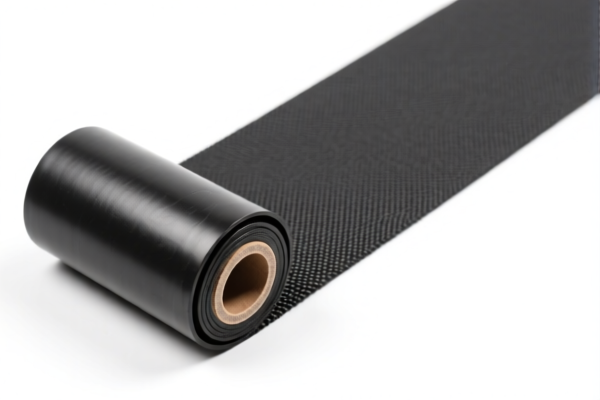
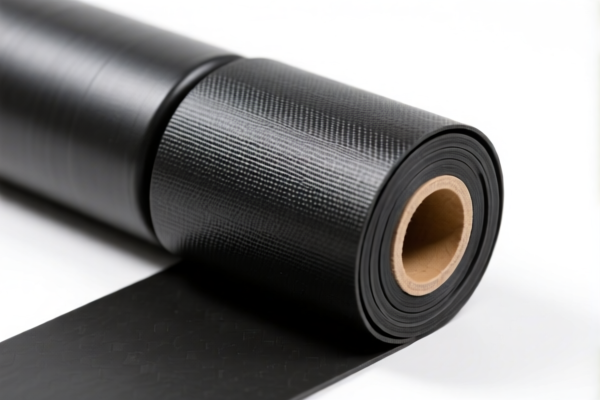
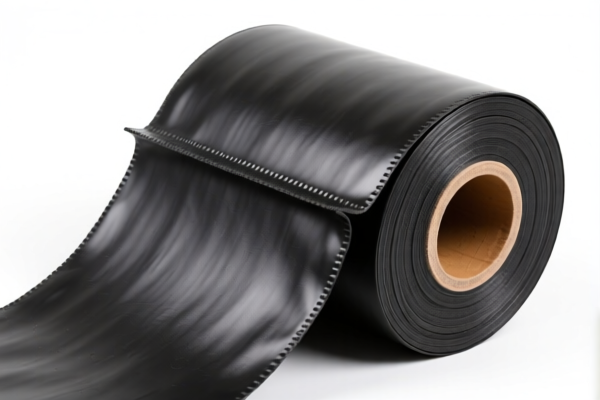
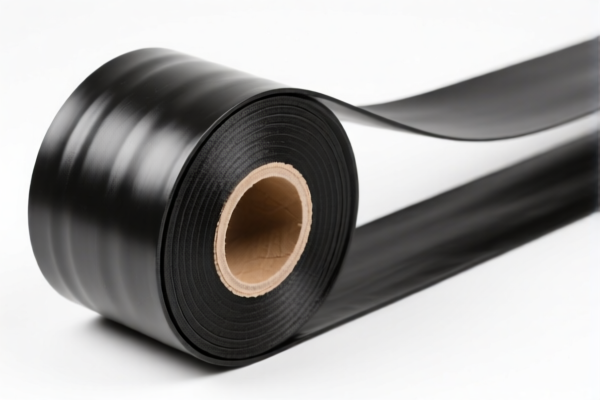
AI Analysis
🏭 Industrial Rubber Conveyor Belt: Textile Reinforced
🌐 HS Code Reference & Customs Clearance Guide | 2026 Latest Tariff Analysis | Professional Clearance Strategy
📌 I. Product Definition & Classification: Do You Really Understand "Textile-Reinforced Rubber Belts"?
Industrial rubber conveyor belts are the backbone of logistics, mining, and manufacturing. In international trade, vulcanized rubber belts are not all created equal. The critical differentiator lies in the reinforcement material.
Textile-Reinforced Belts: Where the tensile strength is provided primarily by layers of fabric (polyester, nylon, cotton, etc.) rather than steel cords.
⚠️ Key Distinction Point:
- If the belt is reinforced with steel cords, it falls under a completely different HS code (usually 4010.13).
- If the belt is reinforced with textile materials, it falls under 4010.12.
- Within textile reinforcement, the specific fiber composition (Man-made vs. Natural) determines the final 8-digit tariff line.
📦 II. HS Code Classification Details (2026 Latest Tariff Authority)
Based on the provided data, the product falls under Heading 4010. Below are the specific subheadings for Textile-Reinforced Belts.
| HS Code | Product Description | Key Classification Criteria | Typical Application |
|---|---|---|---|
4010.12.50.00 |
Conveyor belts, textile reinforced, man-made fibers predominate by weight over any other single fiber, width > 20 cm | High tensile strength belts (e.g., Nylon/Polyester) used in wide conveyor systems (mining, ports, airports). | Heavy-duty logistics, bulk material handling. |
4010.12.55.00 |
Conveyor belts, textile reinforced, man-made fibers predominate by weight, Other (Width ≤ 20 cm or not exceeding 20 cm) | Narrower belts or specific industrial machinery belts where man-made fibers are still the primary component. | Food processing, light manufacturing, small-scale packaging lines. |
🔍 Critical Note:
- Both codes require that man-made fibers (synthetic) must make up more than 50% of the textile component by weight.
- If natural fibers (e.g., Cotton) predominate, these specific codes do not apply.
💰 III. 2026 Latest Tariff Rate Details (Detailed Breakdown)
✅ Applicable Region: United States (US)
✅ Origin: China (CN)
✅ Status: Based on the provided JSON data ("total_tax": "0.0%")
🎯 1. 4010.12.50.00 — Wide Textile-Reinforced Rubber Belts (>20 cm)
| Item | Content |
|---|---|
| Base Tariff | 0.0% (Ad Valorem) |
| Section 301 Surcharge | 0.0% |
| IEEPA Surcharge | 0.0% |
| Total Tax Rate | 0.0% |
| Tax Calculation | CIF Value × 0.0% = $0 |
| De Minimis Eligibility | N/A (Generally, bulk industrial goods are not eligible for de minimis, but the tax is zero anyway) |
| Legal Basis | US HTS 4010.12.50.00 |
📌 Explanation:
- Unlike many steel or electronic goods, rubber conveyor belts currently face no punitive tariffs from the US government in the provided dataset.
- This makes them a highly competitive product in terms of landed cost compared to other industrial supplies.
🎯 2. 4010.12.55.00 — Narrower/Other Textile-Reinforced Rubber Belts
| Item | Content |
|---|---|
| Base Tariff | 0.0% (Ad Valorem) |
| Section 301 Surcharge | 0.0% |
| IEEPA Surcharge | 0.0% |
| Total Tax Rate | 0.0% |
| Tax Calculation | CIF Value × 0.0% = $0 |
| De Minimis Eligibility | N/A |
| Legal Basis | US HTS 4010.12.55.00 |
📌 Note:
- Same favorable treatment as the wider belts.
- No hidden taxes or additional duties are listed in the provided data.
🛠️ IV. Customs Clearance Practical Advice (Avoid Pitfalls)
✅ 1. Preparation Checklist (Non-negotiable)
| Document | Must Provide | Description |
|---|---|---|
| ✅ Product Specification Sheet | ✔️ | Must clearly state: Material (Vulcanized Rubber), Reinforcement (Textile Type: Nylon/Polyester), Width, Length, and Layer Count. |
| ✅ Composition Declaration | ✔️ | Explicitly state the weight percentage of textile components. Must confirm Man-made fibers > Natural fibers. |
| ✅ Commercial Invoice | ✔️ | Must match HS Code description exactly. Use terms like "Vulcanized Rubber Conveyor Belt, Textile Reinforced." |
| ✅ Packing List | ✔️ | Detail the gross/net weight. Rubber belts are heavy; accurate weight is crucial for freight calculation. |
| ✅ Photo of Label/Tag | ✔️ | Shows manufacturer, model, and technical specs. Helps customs verify "Industrial Use." |
✅ 2. Declaration Tips (Golden Rules)
🔥 "Material First, Width Second, Description Precise!"
| Scenario | Correct Declaration | Incorrect Practice |
|---|---|---|
| Width > 20 cm | 4010.12.50.00 |
Declaring as general "Rubber Belt" → Risk of re-classification |
| Width ≤ 20 cm | 4010.12.55.00 |
Declaring as 4010.12.50.00 → Over-compliance/Unnecessary scrutiny |
| Textile Composition | "70% Polyester, 30% Cotton" (Man-made predominates) | "Mixed Fabric Belt" → Ambiguous, delays clearance |
| Steel Reinforcement? | ❌ Do NOT use these codes | If steel cords are present, you must use 4010.13.xxxxxx |
✅ 3. Special Case Handling
| Scenario | Handling Advice |
|---|---|
| OEM Private Label | Provide the original manufacturer's catalog to prove the product is a standard industrial belt, not a custom "article of apparel" or other oddity. |
| Width Boundary (Exactly 20 cm) | Be extremely careful. If it is exactly 20 cm, it usually falls into the "Other" category (...55.00) because the code ...50.00 specifies exceeding (>) 20 cm. Check your local customs interpretation. |
| Pre-cut Belts | If the belt is cut to specific lengths for assembly, still declare as "Conveyor Belt" if it retains its essential character. |
| With Metal Fasteners/Rivets | If the belt has attached metal lacing or rings, declare it as a complete conveyor belt, not as "metal accessories." |
🌍 V. Global Market Comparison (2026 Context)
| Region | HS Code | Tariff Status | Remarks |
|---|---|---|---|
| 🇺🇸 USA | 4010.12.50/55 |
0.0% | Zero Duty! Highly advantageous. No Section 301 impact for this specific rubber category. |
| 🇨🇳 China (Import) | 4010.12 |
~6-10% | Standard MFN rate applies. Check for anti-dumping if from specific origins. |
| 🇪🇺 EU | 4010.12 |
~3.7% | Standard CET. No special surcharges for rubber belts currently. |
| 🇲🇽 Mexico | 4010.12 |
~5-8% | Varies by trade agreement (USMCA may apply if originating). |
| 🇻🇳 Vietnam | 4010.12 |
~10-15% | Higher base tariff, but often used as an alternative sourcing hub. |
📌 Conclusion:
- The US market offers a 0% tariff advantage for these specific textile-reinforced rubber belts.
- No anti-dumping duties are indicated in the data for this category.
- Compliance Focus: Ensure the man-made fiber content is correctly declared to avoid being misclassified into higher-tariff natural fiber categories (e.g., if cotton predominated, rates might differ).
📌 VI. Common Errors & Pitfalls (Lessons Learned)
❌ Error 1: Confusing Textile vs. Steel Reinforcement
👉 Consequence: If the belt has steel cords but is declared as 4010.12, Customs may seize or reclassify, leading to higher duties and penalties. Steel belts have different HS codes (4010.13).
❌ Error 2: Misdeclaring Width
👉 Consequence: Declaring a 21 cm belt as ...55.00 (Other) might trigger an audit for under-declaration of duty (though in this case, both are 0%, accuracy is still key for statistical and legal compliance).
❌ Error 3: Vague Description "Rubber Belt"
👉 Consequence: Customs cannot determine if it's transmission, conveyor, hose, or belt. Results in Holding/Query, delaying your shipment.
👉 Fix: Always use "Conveyor Belt, Vulcanized Rubber, Textile Reinforced."
❌ Error 4: Ignoring Fiber Composition
👉 Consequence: If you claim "Man-made predominant" but the lab test shows 51% Cotton, you misclassify the origin of the textile content.
👉 Fix: Have a material composition report ready.
✅ Correct Practice:
"Industrial Conveyor Belt, Vulcanized Rubber, Reinforced with 75% Polyester (Man-made) / 25% Cotton, Width 80cm, ID: XYZ-123"
🎯 VII. Conclusion: Maximize Profits with Zero Duty!
🎯 Remember the Formula:
🔹 "Textile + Rubber = 4010"
🔹 "Man-made Fibers > 50% + Width > 20cm = 4010.12.50.00"
🔹 "Result: 0% Tariff in USA!"
📌 Pro Tip:
Since the tariff is 0%, your main cost drivers are Freight (rubber is dense/heavy) and Insurance.
📦 Optimize Packaging: Vacuum pack or compact coils to reduce volumetric weight.
📝 Documentation: Ensure the "Country of Origin" is clearly marked on the belt itself or tags, as US Customs may verify origin for statistical purposes even if duties are zero.
📣 Immediate Action:
📞 Verify Fiber Content: Get a test report confirming Man-made fiber weight %.
📦 Measure Width: Use a caliper to confirm if it strictly exceeds 20 cm.
🚀 Ship with Confidence: Zero duty risk for this category!
✨ Professional Clearance, Precision Starts with Classification!
💼 Your Zero-Tariff Advantage Awaits!
Customer Reviews
About HS Code Classification
The Harmonized System (HS) is an internationally standardized nomenclature developed by the World Customs Organization (WCO) to classify traded products. Over 200 countries use the HS system as the basis for customs tariffs, trade statistics, and import/export regulations.
Each HS code follows a hierarchical structure:
- Chapter (2 digits) — Broad category of goods (e.g., Chapter 84: Machinery and Mechanical Appliances)
- Heading (4 digits) — More specific grouping within the chapter
- Subheading (6 digits) — Internationally standardized breakdown, used by all WCO member countries
- National subdivisions (8-10 digits) — Country-specific extensions for further classification, such as US HTSUS 10-digit codes
Correct HS code classification is essential for smooth customs clearance, accurate duty payment, and compliance with trade regulations. Misclassification can lead to customs delays, overpayment of duties, or penalties.
When importing from CN to US, the applicable tariff rates may include:
- Most-Favored-Nation (MFN) rate — The standard duty rate applied to WTO members
- General rate — Applied to countries without trade agreements
- Trade remedy duties — Additional tariffs such as Section 301 (anti-dumping), Section 232 (national security), or countervailing duties
The information provided on this page is for reference purposes only. For official classification, please consult with your local customs authority or a licensed customs broker.