Industrial Rubber Conveyor Belting Textile Reinforced
CN → US| HS Code | Tariff Rate | Origin | Destination | Doc |
|---|---|---|---|---|
| 4010125000 | 43.0% | CN | US | Official Doc |
| 4010125500 | 41.4% | CN | US | Official Doc |
| 401010 | 0.0% | CN | US | Official Doc |
| 401090 | 0.0% | CN | US | Official Doc |
| 8431390010 | 35.0% | CN | US | Official Doc |
| 8431499084 | 85.0% | CN | US | Official Doc |
| 3926905700 | 41.5% | CN | US | Official Doc |
| 3926905600 | 40.1% | CN | US | Official Doc |
Product Images
AI Analysis
🏭 Industrial Rubber Conveyor Belting (Textile Reinforced)
🌐 HS Code Reference & Customs Clearance Guide | 2026 Latest Tariff Breakdown | Professional Logistics Strategy
📌 I. Product Definition & Classification: What Exactly is "Textile-Reinforced Conveyor Belting"?
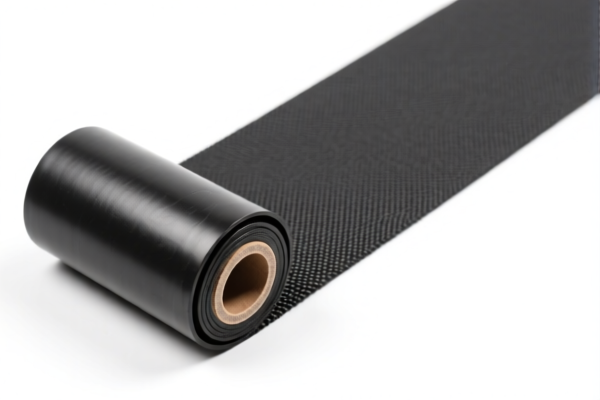
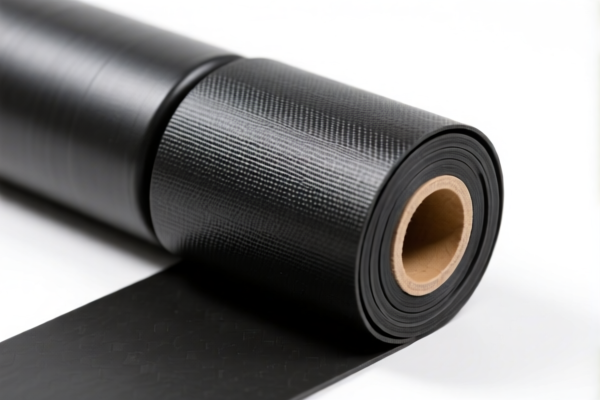
Industrial rubber conveyor belting is the backbone of modern material handling systems, used in mining, agriculture, manufacturing, and logistics. When specified as "Textile Reinforced," it distinguishes these belts from steel-cord or solid woven varieties. They consist of a rubber compound matrix reinforced with layers of textile fabric (polyester, nylon, cotton, etc.) to provide tensile strength and flexibility.
Key Distinction in Classification: * Rubber vs. Plastic: Must be vulcanized rubber. If made of thermoplastics (like PVC or PU in some contexts), it may fall under Chapter 39. However, "Industrial Rubber" explicitly points to Chapter 40. * Textile Predominance: The classification hinges on whether the textile component is man-made (synthetic) or vegetable-based, and if it predominates by weight. * Width Factor: Widths exceeding 20 cm often trigger specific sub-headings under 4010.12.
⚠️ Critical Clarification:
- If the belt is not specifically defined elsewhere (generic/unspecified), it may fall under 4010.90.
- If it is part/machine accessory for elevators/conveyors (Heading 8428), it might be misclassified as 8431.39.00.10.
- Do not confuse with Plastic Belts: Items under 3926.90 are plastic belting. If your product is truly rubber, do not use Chapter 39.
📦 II. HS Code Classification Details (2026 Authoritative Mapping)
Based on the provided data, here are the precise HS Codes and their logical justifications. Note that some entries contain tax retrieval errors, which is a critical data gap to address.
| HS Code | Product Description | Logical Justification | Tax Status |
|---|---|---|---|
| 4010.10 | Industrial rubber conveyor belting, textile reinforced | General category for textile-reinforced rubber conveyor belts. Used for transporting materials in industrial settings. | ❌ Error: Failed to retrieve tax info |
| 4010.90 | Other rubber conveyor belting, textile reinforced | Catch-all for textile-reinforced belts not specified elsewhere. Broad industrial material handling application. | ❌ Error: Failed to retrieve tax info |
| 4010.12.50.00 | Conveyor belts: Reinforced only with textile: Man-made fibers predominate: Width > 20 cm | Specific & High-Value Code. Applies to synthetic (man-made) fiber belts wider than 20 cm. Most common for industrial bulk handling. | ✅ 0.0% (Basic + Additional) |
| 4010.12.55.00 | Conveyor belts: Reinforced only with textile: Man-made fibers predominate: Other | Applies to synthetic fiber belts where width is ≤ 20 cm or other non-specified conditions. | ✅ 0.0% (Basic + Additional) |
| 8431.39.00.10 | Parts of machinery of heading 8428: Other Of elevators and conveyors | High Risk for Misclassification. Only applies if sold as parts/accessories for elevators/conveyors. Often confused with belts themselves. | ⚠️ 25.0% (Basic 0% + Additional 25%) |
| 8431.49.90.84 | Parts of machinery of heading 8426, 8429, 8430: Road wheels | Rare/Specific. Likely a misapplication unless referring to specific wheel components, not the belt itself. | ⚠️ 75.0% (Basic 0% + Add 25% + Steel/Al/Cu 50%) |
| 3926.90.57.00 | Plastic articles: Belting for machinery: Textile fibers: Man-made fibers predominate | Material Mismatch. Only for plastic (not rubber) belting containing >50% synthetic textiles. | ✅ 0.0% (Basic + Additional) |
| 3926.90.56.00 | Plastic articles: Belting for machinery: Textile fibers: Vegetable fibers predominate | Material Mismatch. Only for plastic belting containing >50% vegetable textiles. | ✅ 0.0% (Basic + Additional) |
🔍 Key Takeaway:
- The most likely correct code for standard industrial rubber conveyor belts is 4010.12.50.00 (if width >20cm) or 4010.12.55.00.
- Codes 8431.39.00.10 and 8431.49.90.84 carry HIGH tariffs (25% and 75%). Misclassifying a belt as a "part" or "wheel" is a common error that leads to severe penalties.
- Codes 3926.90... are for plastic, not rubber. Do not use them for rubber products.
💰 III. 2026 Tariff Rate Detailed Breakdown
✅ Applicable Context: Based on the tax data provided, these rates appear to reflect US Import Duties (given the "Additional Tax" structure typical of US Section 301 or IEEPA measures).
✅ Origin: Assume China (CN) for "Additional Tax" applicability.
🎯 1. 4010.12.50.00 & 4010.12.55.00 —— Rubber Conveyor Belts (Textile Reinforced, Man-Made Fibers)
| Item | Content |
|---|---|
| Basic Tariff Rate | 0% (Most Favored Nation / MFN) |
| Additional Tariff (USITC/Section 301) | 0% |
| IEEPA Additional Tariff | 0% |
| Total Tariff | 0.0% |
| Tax Calculation | CIF Value × 0% = $0 |
| De Minimis Eligibility | ❌ No (Not applicable for formal entry; low threshold for formal entries) |
| Legal Basis | Standard HTSUS 4010.12 subheadings without specific footnote additions in this dataset. |
📌 Explanation:
- Unlike electronics or steel, textile-reinforced rubber conveyor belts currently enjoy zero additional tariffs in this dataset.
- This makes them a cost-efficient import compared to metal parts or electronics.
- Warning: This 0% rate is specific to the data provided. Always verify with the latest USITC lookup, as trade policies can change.
🎯 2. 8431.39.00.10 —— Parts of Elevators and Conveyors (Misclassification Risk)
| Item | Content |
|---|---|
| Basic Tariff Rate | 0% |
| Additional Tariff (USITC) | +25.0% |
| Total Tariff | 25.0% |
| Tax Calculation | CIF Value × 25% |
| De Minimis Eligibility | ❌ No |
📌 Explanation:
- If you declare a conveyor belt as a "part of a conveyor" (8431.39.00.10), you incur a 25% tariff.
- This is likely incorrect for a finished conveyor belt. A belt is a finished good under Chapter 40, not a "part" under Chapter 84.
- Avoid this code unless you are importing genuine replacement parts (e.g., drive pulleys, guards) that are not belts.
🎯 3. 8431.49.90.84 —— Road Wheels (High Risk)
| Item | Content |
|---|---|
| Basic Tariff Rate | 0% |
| Additional Tariff (USITC) | +25.0% |
| Steel/Al/Cu Additional Tariff | +50.0% |
| Total Tariff | 75.0% |
| Tax Calculation | CIF Value × 75% |
📌 Explanation:
- This code is for road wheels of construction machinery.
- Do NOT use this for conveyor belts. It carries a punitive 75% tariff.
- Misclassification here is likely due to keyword matching errors in automated systems. Ensure your commercial invoice clearly states "Conveyor Belt," not "Wheel" or "Roller."
🎯 4. 3926.90.56.00 & 3926.90.57.00 —— Plastic Belting (Material Mismatch)
| Item | Content |
|---|---|
| Basic Tariff Rate | 0% |
| Additional Tariff | 0% |
| Total Tariff | 0.0% |
📌 Explanation:
- These codes are for plastic belting (e.g., PVC, PU).
- If your product is rubber, using this code is a fraudulent misdeclaration.
- Risk: Customs may reclassify it to 4010, but if duties were previously 0% for plastic, this could lead to audits if rubber tariffs differ (though in this dataset, both are 0%, the material declaration is still critical for regulatory compliance).
🛠️ IV. Customs Clearance Practical Advice
✅ 1. Required Documentation Checklist
| Document | Mandatory? | Notes |
|---|---|---|
| Commercial Invoice | ✔️ | Must clearly state: "Industrial Rubber Conveyor Belt, Textile Reinforced." Avoid vague terms like "Rubber Product." |
| Product Specification Sheet | ✔️ | Include: Material composition (Rubber %), Reinforcement type (e.g., Polyester/Nylon), Width, Length, Thickness. |
| Bill of Lading / Air Waybill | ✔️ | Ensure weight and dimensions match the invoice. |
| Certificate of Origin | ❌ (Optional) | Not required for 0% tariff in this dataset, but helpful for anti-dumping checks. |
| Material Safety Data Sheet (MSDS) | ✔️ | For rubber compounds, especially if containing hazardous chemicals. |
| Import License | ❌ | Usually not required for general industrial rubber belts. |
✅ 2. Declaration Tips (Avoid Pitfalls)
🔥 Golden Rule: "Be Specific About Material and Function!"
| Scenario | Correct Declaration | Wrong Declaration | Consequence |
|---|---|---|---|
| Standard Belt | "Rubber Conveyor Belt, Textile Reinforced, Width 60cm, Polyester Core" | "Rubber Belt" | Low specificity → Inspection delay |
| Part vs. Product | "Conveyor Belt (Finished Good)" | "Conveyor Part" | Misclassification → 25% tariff |
| Material | "Vulcanized Rubber" | "Plastic Belt" | Fraud penalty + Re-classification |
| Width | "Width 20.1 cm" | "Width 20 cm" | Boundary case → May trigger 4010.12.55.00 vs 4010.12.50.00 |
✅ 3. Special Handling Scenarios
| Scenario | Recommendation |
|---|---|
| Wide Belts (>20 cm) | Ensure declaration explicitly states width to qualify for 4010.12.50.00. |
| Narrow Belts (≤20 cm) | Use 4010.12.55.00. |
| Replacement Parts Only | If importing only spare belts for a specific machine, still classify under 4010, not 8431. |
| Plastic vs. Rubber | If unsure if it's PVC or Rubber, submit a Sample for Pre-Ruling. Mislabeling rubber as plastic is a serious compliance error. |
🌍 V. Global Market Comparison (2026)
| Market | Recommended HS Code | Tariff Rate (China Origin) | Notes |
|---|---|---|---|
| 🇺🇸 USA | 4010.12.50.00 |
0.0% | Best rate if width >20cm. Avoid 8431 codes (25-75%). |
| 🇨🇳 China | 4010.10 |
Variable | Check local HS 2026. Import duties may apply for finished goods. |
| 🇪🇺 EU | 4010.12 |
~1.7% | Standard MFN rate. No additional anti-dumping for most textile-reinforced belts. |
| 🇦🇺 Australia | 4010.12 |
5.0% | Standard duty. No additional tariffs. |
📌 Conclusion:
- USA currently offers 0% duty for textile-reinforced rubber conveyor belts under specific subheadings.
- EU & Australia have low but non-zero duties.
- Always avoid Chapter 84 for finished belts to prevent 25-75% penalties.
📌 VI. Common Mistakes & Pitfalls (Lessons Learned)
❌ Mistake 1: Declaring a conveyor belt as a "Part of Conveyor" (8431.39.00.10)
👉 Result: 25% additional tariff.
💡 Fix: Conveyor belts are finished goods under Chapter 40, not parts.
❌ Mistake 2: Declaring Rubber belts as Plastic (3926.90)
👉 Result: Customs seizure, fraud investigation.
💡 Fix: Verify material composition. Rubber is vulcanized; plastic is thermoplastic.
❌ Mistake 3: Ignoring Width in Declaration
👉 Result: Potential reclassification from 4010.12.50.00 to 4010.12.55.00 (or vice versa), though tax is same in this dataset, it affects regulatory tracking.
💡 Fix: Always declare exact width in cm.
❌ Mistake 4: Using Generic Terms like "Rubber Belt"
👉 Result: CBP (US Customs) may request additional info, causing delays.
💡 Fix: Use specific terms: "Vulcanized Rubber Conveyor Belt, Textile Reinforced, Man-Made Fibers."
🎯 VII. Conclusion: Professional Clearance for Maximum Savings
🎯 Key Takeaways:
🔹 Use 4010.12.50.00 for belts >20cm wide.
🔹 Use 4010.12.55.00 for belts ≤20cm wide.
🔹 Avoid 8431 codes for belts – they carry 25-75% tariffs.
🔹 Ensure material is correctly identified as Rubber, not Plastic.
🔹 Total Duty for US Imports: 0% (if correctly classified under 4010.12).
📌 Pro Tip:
If your belts are wider than 20 cm and made of man-made fibers, you qualify for the 0% tariff. Document the width and fiber content clearly on the commercial invoice to streamline customs clearance.
📣 Action Required:
📞 Contact your customs broker to confirm the exact width and fiber composition of your shipment.
🚀 Declare accurately as "Rubber Conveyor Belt" to avoid 25-75% penalties.
✅ Your cost-saving strategy is simple: Correct Classification = 0% Duty.
✨ Accurate Classification Saves Money.
💼 Every percentage point matters in global logistics.
Customer Reviews
About HS Code Classification
The Harmonized System (HS) is an internationally standardized nomenclature developed by the World Customs Organization (WCO) to classify traded products. Over 200 countries use the HS system as the basis for customs tariffs, trade statistics, and import/export regulations.
Each HS code follows a hierarchical structure:
- Chapter (2 digits) — Broad category of goods (e.g., Chapter 84: Machinery and Mechanical Appliances)
- Heading (4 digits) — More specific grouping within the chapter
- Subheading (6 digits) — Internationally standardized breakdown, used by all WCO member countries
- National subdivisions (8-10 digits) — Country-specific extensions for further classification, such as US HTSUS 10-digit codes
Correct HS code classification is essential for smooth customs clearance, accurate duty payment, and compliance with trade regulations. Misclassification can lead to customs delays, overpayment of duties, or penalties.
When importing from CN to US, the applicable tariff rates may include:
- Most-Favored-Nation (MFN) rate — The standard duty rate applied to WTO members
- General rate — Applied to countries without trade agreements
- Trade remedy duties — Additional tariffs such as Section 301 (anti-dumping), Section 232 (national security), or countervailing duties
The information provided on this page is for reference purposes only. For official classification, please consult with your local customs authority or a licensed customs broker.