Industrial Rubber Gloves
CN → US| HS Code | Tariff Rate | Origin | Destination | Doc |
|---|---|---|---|---|
| 6116106500 | 24.5% | CN | US | Official Doc |
| 4015195100 | 49.0% | CN | US | Official Doc |
| 4015191150 | 38.0% | CN | US | Official Doc |
| 6116109500 | 24.5% | CN | US | Official Doc |
| 3926204050 | 16.5% | CN | US | Official Doc |
Product Images

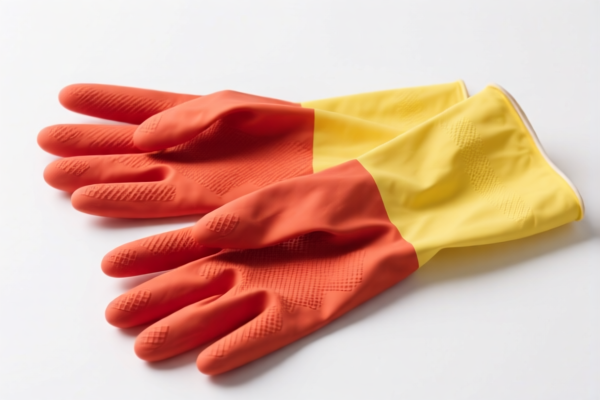


AI Analysis
🧤 Industrial Rubber Gloves (橡胶工业手套)
🌐 HS Code Reference & Customs Clearance Guide | 2026 Latest Tariff Analysis | Professional Compliance Strategy
📌 I. Product Definition & Classification: Do You Really Understand "Industrial Rubber Gloves"?
Industrial rubber gloves are protective handwear designed to shield hands from chemicals, oils, mechanical hazards, and environmental risks. In international trade, the classification hinges on two critical factors: 1. Manufacturing Process: Are they coated/impregnated (fabric dipped in rubber/plastic) or vulcanized solid rubber (pure rubber molded)? 2. Knitted vs. Non-Knitted: Is the base material knitted fabric with a rubber coating, or is it a solid rubber item?
⚠️ Key Distinction Point:
- Knitted/Fabric Base + Rubber Coating: If the glove is essentially a knitted textile glove dipped in or coated with rubber/plastic → Classified under Chapter 61 (Knitted/Hooked) or Chapter 39/40 depending on specific composition.
- Solid Vulcanized Rubber: If the glove is made entirely of vulcanized rubber without a knitted fabric base → Classified under Chapter 40 (Rubber and Articles Thereof).
📦 II. HS Code Classification Details (2026 Latest Tariff Authority Match)
Based on the provided data, here is the exact breakdown for "Industrial Rubber Gloves":
| HS Code | Product Description | Key Characteristics | Total Tax Rate |
|---|---|---|---|
| 6116.10.65.00 | Rubber Agricultural Gloves | Material: Rubber; Matches "Rubber Impregnated/Coated" features; Often includes fabric base | 24.5% |
| 6116.10.95.00 | Knitted/Hooked Gloves | Material: Rubber; Fits "Plastic or Rubber" classification for knitted items | 24.5% |
| 3926.20.40.50 | Glove-like Articles | Material: Rubber (Note: Data links to Plastic category logic, but explicitly mentions "High consistency with glove use in plastic category") | 16.5% |
| 4015.19.11.50 | Vulcanized Rubber Clothing/Accessories | Material: Rubber; Specific use: Gloves; Form: Vulcanized | 38.0% |
| 4015.19.51.00 | Vulcanized Rubber Gloves | Material: Rubber; Form: Gloves (General Vulcanized) | 49.0% |
🔍 Important Note:
- The data provided links specific descriptions to these codes. For general "Industrial Rubber Gloves," the distinction lies between Coated/Knitted (Ch 61/39) and Vulcanized Solid Rubber (Ch 40). - 6116.10.65.00 and 6116.10.95.00 typically apply to gloves where a knitted fabric is coated/impregnated with rubber/plastic. - 4015.19.xxxx applies to gloves made of vulcanized rubber (solid rubber, not coated fabric).
💰 III. 2026 Latest Tariff Rate Details (Including Surcharges & Policy Add-ons)
✅ Applicable Country: United States (US)
✅ Origin: China (CN)
✅ Effective Date: 2025 November 10 onwards (including subsequent imports)
🎯 1. 6116.10.65.00 — Rubber Agricultural/Industrial Gloves (Coated/Impregnated)
| Item | Detail |
|---|---|
| Base Tariff | 7.0% |
| Section 301 Surcharge | 7.5% |
| Section 122 Tariff | 10.0% |
| Total Effective Rate | 24.5% |
| Calculation Base | CIF Value × 24.5% |
| De Minimis Exemption | ❌ Not Eligible (deny_de_minimis) |
| Legal Basis Path | Base Tariff → Section 301 → Section 122 |
📌 Explanation:
- This code applies to gloves that are knitted or hook-knitted and coated/impregnated with rubber. It is a common classification for many industrial safety gloves that have a fabric liner with a rubber/plastic outer layer. - The total rate of 24.5% is significantly lower than solid rubber gloves.
🎯 2. 6116.10.95.00 — Knitted/Hooked Gloves (Other)
| Item | Detail |
|---|---|
| Base Tariff | 7.0% |
| Section 301 Surcharge | 7.5% |
| Section 122 Tariff | 10.0% |
| Total Effective Rate | 24.5% |
| Calculation Base | CIF Value × 24.5% |
| De Minimis Exemption | ❌ Not Eligible |
| Legal Basis Path | Base Tariff → Section 301 → Section 122 |
📌 Note:
- Similar to 6116.10.65.00, this applies to knitted gloves with rubber/plastic coating. - Tax Rate is identical at 24.5%.
🎯 3. 3926.20.40.50 — Glove-like Articles (Plastic/Rubber Consistency)
| Item | Detail |
|---|---|
| Base Tariff | 6.5% |
| Section 301 Surcharge | 0.0% |
| Section 122 Tariff | 10.0% |
| Total Effective Rate | 16.5% |
| Calculation Base | CIF Value × 16.5% |
| De Minimis Exemption | ❌ Not Eligible |
| Legal Basis Path | Base Tariff → Section 122 |
📌 Critical Insight:
- This is the lowest tax rate (16.5%) in the provided dataset. - The description notes "High consistency with glove use in plastic category." If your industrial gloves can be classified under Chapter 39 (Articles of Plastics) due to material composition (e.g., PVC or other plastic-coated fabric), this is the most cost-effective classification. - Caution: Must strictly meet the definition of "Plastic Articles" as per USITC rulings.
🎯 4. 4015.19.11.50 — Vulcanized Rubber Clothing/Accessories (Gloves)
| Item | Detail |
|---|---|
| Base Tariff | 3.0% |
| Section 301 Surcharge | 25.0% |
| Section 122 Tariff | 10.0% |
| Total Effective Rate | 38.0% |
| Calculation Base | CIF Value × 38.0% |
| De Minimis Exemption | ❌ Not Eligible |
| Legal Basis Path | Base Tariff → Section 301 → Section 122 |
📌 Explanation:
- Applies to vulcanized rubber gloves that are considered "clothing or accessories." - The high Section 301 surcharge (25%) drives the total to 38.0%.
🎯 5. 4015.19.51.00 — Vulcanized Rubber Gloves (General)
| Item | Detail |
|---|---|
| Base Tariff | 14.0% |
| Section 301 Surcharge | 25.0% |
| Section 122 Tariff | 10.0% |
| Total Effective Rate | 49.0% |
| Calculation Base | CIF Value × 49.0% |
| De Minimis Exemption | ❌ Not Eligible |
| Legal Basis Path | Base Tariff → Section 301 → Section 122 |
📌 Warning:
- This is the highest tax rate (49.0%). - Applies to standard vulcanized rubber gloves (solid rubber, no fabric base). - Avoid this classification unless the product is undeniably solid vulcanized rubber and cannot be classified as coated fabric.
🛠️ IV. Customs Clearance Practical Advice (Battle-Tested Pitfall Avoidance)
✅ 1. Required Documentation Checklist (Non-Negotiable)
| Document | Must Provide | Description |
|---|---|---|
| ✅ Product Specification Sheet | ✔️ | Detailed composition: % Fabric vs. % Rubber/Plastic. Coating weight, thickness, type of rubber (Nitrile, Latex, PVC, etc.). |
| ✅ Material Composition Statement | ✔️ | Explicitly state if the base is Knitted Fabric or Solid Rubber. This determines Chapter 61/39 vs. Chapter 40. |
| ✅ Product Photos (Clear) | ✔️ | Show cross-section if possible, to demonstrate coating vs. solid structure. |
| ✅ Commercial Invoice | ✔️ | Must match the HS Code description precisely. Avoid generic terms like "Rubber Gloves." Use "Knitted Fabric Gloves, Rubber-Coated." |
| ✅ Packing List | ✔️ | Include quantity, weight, and dimensions. |
| ✅ Third-Party Test Report | ✔️ | Material safety data, chemical resistance tests (if applicable for industrial use). |
✅ 2. Declaration Tips (Key Mantra)
🔥 “Coating Defines Chapter, Fabric is King, Solid Rubber is High Tax!”
| Scenario | Correct Declaration | Wrong Declaration | Consequence |
|---|---|---|---|
| Fabric Base + Rubber Coating | 6116.10.65.00 or 3926.20.40.50 |
4015.19.51.00 |
Overpaying 24.5% vs 49.0% |
| Solid Vulcanized Rubber | 4015.19.51.00 |
6116.10.95.00 |
Misclassification, Penalty, Back Taxes |
| PVC/Plastic Coated Fabric | 3926.20.40.50 (if eligible) |
4015.19.51.00 |
Overpaying 16.5% vs 49.0% |
| Generic "Rubber Gloves" | Specific Description Required | Generic Term | Customs Delay, Audit, Re-classification |
📌 Critical Advice:
- If your glove has a knitted fabric liner and is coated with rubber/plastic, DO NOT classify it under Chapter 40 (4015.19.51.00). It belongs in Chapter 61 or 39. - The difference between 16.5% and 49.0% is massive. Proper material characterization is essential.
✅ 3. Special Cases Handling
| Case | Handling Advice |
|---|---|
| Nitrile Coated Gloves | Often classified under 6116.10 if knitted. Ensure nitrile is treated as a "rubber/plastic coating." |
| Latex dipped Gloves | If knitted base, likely 6116.10. If solid latex, 4015.19. |
| Reinforced with Kevlar | If Kevlar is the base and rubber is the coating, it may still fall under 6116.10 if the rubber is the essential character. Consult ruling. |
| Disposable Exam Gloves | Usually 4015.13 or 4015.19. Check if they are knitted or molded. |
🌍 V. Global Market Comparison (2026 Latest)
| Country/Region | Recommended HS Code | Tariff Rate (China Origin) | Key Requirement | Note |
|---|---|---|---|---|
| 🇺🇸 USA | 6116.10.65.00 / 3926.20.40.50 |
16.5% - 24.5% | Detailed Material Spec | High Section 122 + 301 tariffs apply |
| 🇨🇳 China | 4015.11.00 / 6116.10.00 |
~7% - 10% | CCC/Quality Cert | Lower base tariffs, no Section 122/301 |
| 🇪🇺 EU | 4015.11.00 / 6116.10.00 |
0% - 4% | CE/REACH | No significant anti-dumping tariffs |
| 🇬🇧 UK | 4015.11.00 / 6116.10.00 |
0% - 4% | UKCA | Post-Brexit rules apply |
| 🇦🇺 Australia | 4015.11.00 / 6116.10.00 |
5% | RCM | No major surcharges |
📌 Conclusion:
- USA is the most expensive market due to Section 122 and 301 tariffs. - Cost Optimization: Prioritize classification under 3926.20.40.50 (16.5%) or 6116.10 (24.5%) over 4015.19.51.00 (49.0%). - Supply Chain: Consider sourcing from non-China countries (Vietnam, Thailand) to avoid China-specific surcharges if margins are tight.
📌 VI. Common Mistakes & Pitfall Guide (Lessons Learned)
❌ Mistake 1: Classifying Knitted Fabric + Rubber Coated gloves as Solid Rubber (4015.19.51.00).
👉 Result: Tax jumps from 24.5% to 49.0%. Overpayment: 24.5%!
❌ Mistake 2: Using vague terms like "Protective Gloves" without specifying material structure.
👉 Result: Customs may downgrade to highest applicable rate or delay shipment for inspection.
❌ Mistake 3: Ignoring Section 122 (10%).
👉 Result: Even if base + 301 is low, the 10% is added to ALL rubber/plastic goods from China. Always include it in calculations.
✅ Correct Approach:
“Industrial Safety Gloves, Knitted Fabric Base, Nitrile Rubber Coated, Left/Right Hand Specific, Model XYZ, Compliant with ASTM D6319”
🎯 VII. Conclusion: Precision Classification Saves Money!
🎯 Remember the Mantra:
🔹 “Fabric Base = Coated (Ch 61/39) = Lower Tax”
🔹 “Solid Rubber = Vulcanized (Ch 40) = Higher Tax”
🔹 “Section 122 is Always 10% for Rubber/Plastic from China”
🔹 “16.5% is the Goal, 24.5% is Common, 49.0% is the Trap!”
📌 Pro Tip:
If your gloves are PVC or Plastic-coated rather than pure rubber, aggressively pursue 3926.20.40.50 for the 16.5% rate. Provide material test reports to prove plastic content.
📣 Immediate Action:
📞 Contact your customs broker with Material Composition Sheets.
📦 Request Advance Rulings if the boundary between Knitted/Rubber vs. Solid Rubber is unclear.
🚀 Optimize your HS Code, Reduce Tariffs, Protect Your Margins!
✨ Professional Clearance Starts with Precise Classification!
💼 Your Bottom Line Depends on the Details!
Customer Reviews
About HS Code Classification
The Harmonized System (HS) is an internationally standardized nomenclature developed by the World Customs Organization (WCO) to classify traded products. Over 200 countries use the HS system as the basis for customs tariffs, trade statistics, and import/export regulations.
Each HS code follows a hierarchical structure:
- Chapter (2 digits) — Broad category of goods (e.g., Chapter 84: Machinery and Mechanical Appliances)
- Heading (4 digits) — More specific grouping within the chapter
- Subheading (6 digits) — Internationally standardized breakdown, used by all WCO member countries
- National subdivisions (8-10 digits) — Country-specific extensions for further classification, such as US HTSUS 10-digit codes
Correct HS code classification is essential for smooth customs clearance, accurate duty payment, and compliance with trade regulations. Misclassification can lead to customs delays, overpayment of duties, or penalties.
When importing from CN to US, the applicable tariff rates may include:
- Most-Favored-Nation (MFN) rate — The standard duty rate applied to WTO members
- General rate — Applied to countries without trade agreements
- Trade remedy duties — Additional tariffs such as Section 301 (anti-dumping), Section 232 (national security), or countervailing duties
The information provided on this page is for reference purposes only. For official classification, please consult with your local customs authority or a licensed customs broker.