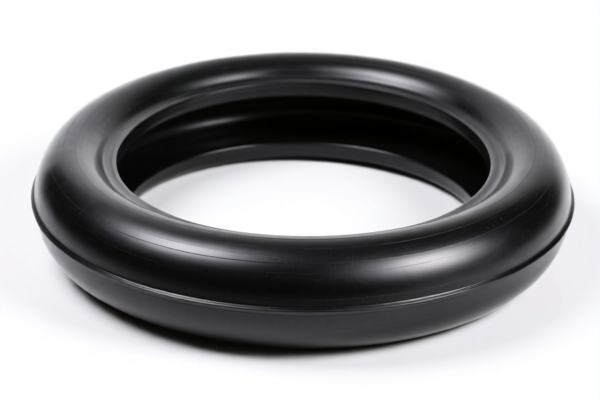
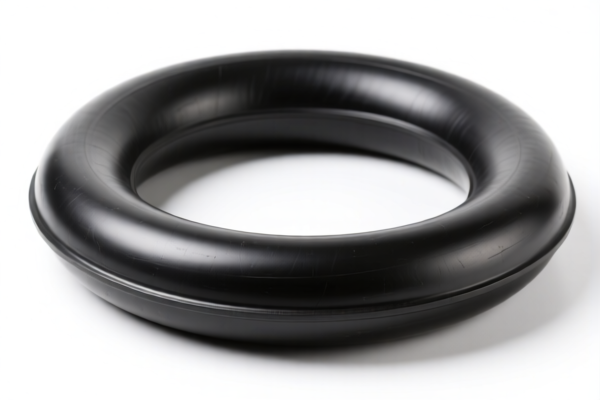
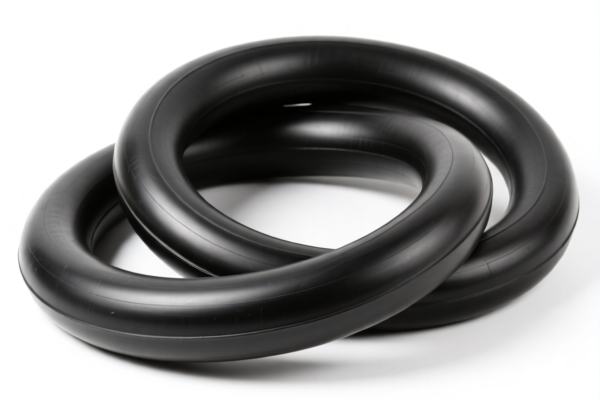
Industrial Rubber Inner Tube
CN → US| HS Code | Tariff Rate | Origin | Destination | Doc |
|---|---|---|---|---|
| 4002390000 | 35.0% | CN | US | Official Doc |
| 4013905050 | 38.7% | CN | US | Official Doc |
| 4013905010 | 38.7% | CN | US | Official Doc |
| 8714100050 | 17.5% | CN | US | Official Doc |
| 8714998000 | 27.5% | CN | US | Official Doc |
Product Images
AI Analysis
🛞 Industrial Rubber Inner Tube (Inner Tubes for Vehicles)
🌐 HS Code Reference & Customs Clearance Guide | 2026 Latest Tariff Analysis | Professional Compliance Strategy
📌 I. Product Definition & Classification: What Exactly is an "Inner Tube"?
Industrial rubber inner tubes are essential pneumatic components used to maintain air pressure within tire casings, primarily for bicycles, motorcycles, and other vehicles. In international trade, the classification depends heavily on the material composition, end-use application, and structural integration.
The data provided indicates four distinct classification paths, ranging from raw material-based classifications (Chapter 40) to specific vehicle parts classifications (Chapter 87). This divergence highlights the complexity of customs valuation and the importance of precise product descriptions.
⚠️ Key Classification Logic:
- Material-Based (Chapter 40): If classified strictly by its rubber composition (Butyl Rubber/Isobutylene-isoprene rubber), it falls under heading 4002 or 4013.
- Vehicle Part-Based (Chapter 87): If classified as a specific part for motorcycles or general vehicles, it falls under heading 8714.
- Crucial Distinction: Misclassifying a standard inner tube as a "raw material" vs. a "finished part" can lead to significant tariff discrepancies (from 17.5% to 38.7%) and potential customs audits.
📦 II. HS Code Classification Matrix (2026 Latest Tariff Alignment)
Based on the provided data, here are the four potential HS Codes for Industrial Rubber Inner Tubes, along with their specific tax implications.
| HS Code | Product Description Summary | Key Classification Basis | Applicable Tax Rate |
|---|---|---|---|
4002.39.00.00 |
Butyl Rubber Inner Tube – Material: Isobutylene-isoprene rubber (Butyl). Classified as "Other manufactured articles." | Focus on Raw Material Type (Butyl Rubber compound). | 35.0% |
4013.90.50.50 |
Rubber Inner Tube – Classified under "Rubber inner tubes." | Focus on End Use Category (Rubber pneumatic tires/tubes). | 38.7% |
4013.90.50.10 |
Rubber Inner Tube – Based on material and form, conforms to rubber inner tube attributes. | Similar to above, specific sub-category for rubber tubes. | 38.7% |
8714.10.00.50 |
Motorcycle Part (Inner Tube) – Material: Butyl rubber. Classified as "Other parts/accessories for motorcycles." | Focus on Specific Vehicle Type (Motorcycle component). | 17.5% |
8714.99.80.00 |
Vehicle Accessory (Inner Tube) – General vehicle part, material: Butyl rubber. | Focus on General Vehicle Accessories. | 27.5% |
🔍 Critical Insight:
- The lowest tariff (17.5%) applies if declared specifically as a Motorcycle Part (8714.10.00.50).
- The highest tariffs (35.0% - 38.7%) apply when classified under Chapter 40 (Rubber materials/articles).
- Warning: Do not arbitrarily choose the lowest rate. Customs may reject a8714classification if the tube is not explicitly intended for motorcycles or lacks proper part documentation.
💰 III. Detailed Tariff Rate Breakdown (2026 Policy Updates)
✅ Scope: Based on provided tax details (Likely US Market Context due to "Section 122" references).
✅ Origin: China (CN) implied by "122条款" (Section 122 of the Trade Facilitation and Trade Enforcement Act).
✅ Components: Base Duty + Add-on Duty (Section 301/232) + Section 122 Duty.
🎯 1. 4002.39.00.00 – Butyl Rubber Article (Material Focus)
| Component | Rate | Legal/Policy Basis |
|---|---|---|
| Base Duty | 0.0% | Standard MFN rate for certain rubber articles. |
| Add-on Duty | 25.0% | Section 301 Tariffs (Trade War). |
| Section 122 Duty | 10.0% | Section 122 of the Trade Facilitation and Trade Enforcement Act. |
| TOTAL EFFECTIVE RATE | 35.0% | High cost due to full add-on stack. |
📌 Explanation:
- While the base duty is 0%, the 35% total burden makes this classification expensive.
- This classification is risky because customs may argue that "inner tubes" are finished goods (Chapter 4013), not just "other articles."
🎯 2. & 3. 4013.90.50.50 / 4013.90.50.10 – Rubber Inner Tubes (Category Focus)
| Component | Rate | Legal/Policy Basis |
|---|---|---|
| Base Duty | 3.7% | Standard MFN rate for rubber inner tubes. |
| Add-on Duty | 25.0% | Section 301 Tariffs. |
| Section 122 Duty | 10.0% | Section 122 Duty. |
| TOTAL EFFECTIVE RATE | 38.7% | Highest Tax Burden in this dataset. |
📌 Explanation:
- The base duty is higher (3.7%) compared to Chapter 4002.
- Result: This is the most expensive classification path. Avoid this unless explicitly required by the importer's supply chain logic.
🎯 4. 8714.10.00.50 – Motorcycle Parts (Lowest Rate)
| Component | Rate | Legal/Policy Basis |
|---|---|---|
| Base Duty | 0.0% | Standard MFN rate for motorcycle parts. |
| Add-on Duty | 7.5% | Reduced Section 301 rate for specific auto parts (if applicable). |
| Section 122 Duty | 10.0% | Section 122 Duty. |
| TOTAL EFFECTIVE RATE | 17.5% | Best Case Scenario for cost minimization. |
📌 Explanation:
- Savings: This classification saves 17.5% - 21.2% compared to Chapter 40 classifications.
- Condition: The inner tube must be demonstrably used for motorcycles. If used for bicycles or cars, this classification may be challenged.
🎯 5. 8714.99.80.00 – General Vehicle Parts
| Component | Rate | Legal/Policy Basis |
|---|---|---|
| Base Duty | 10.0% | Standard MFN rate for "Other parts and accessories." |
| Add-on Duty | 7.5% | Section 301 Tariffs. |
| Section 122 Duty | 10.0% | Section 122 Duty. |
| TOTAL EFFECTIVE RATE | 27.5% | Moderate risk/cost balance. |
📌 Explanation:
- Use this if the inner tube is for cars or trucks (not motorcycles), as8714.10is specific to motorcycles.
- Still cheaper than Chapter 40 but more expensive than motorcycle parts.
🛠️ IV. Customs Clearance Practical Advice (Real-World Pitfall Avoidance)
✅ 1. Documentation Checklist (Mandatory)
| Document | Requirement | Purpose |
|---|---|---|
| Product Specification Sheet | ✔️ Must state: Material (Butyl Rubber), Size, Valve Type, Intended Use (e.g., "For Motorcycle Tire 90/90-18"). | Proves end-use for HS Code 8714 vs. 4013. |
| Commercial Invoice | ✔️ Clearly describe as "Inner Tube for Motorcycle" or "Rubber Inner Tube." Avoid vague terms like "Rubber Part." | Prevents misclassification by CBP. |
| Origin Certificate | ✔️ If applicable, prove non-China origin to avoid Section 122/301 duties. | Tax optimization. |
| Manufacturer's Declaration | ✔️ Confirm manufacturing process and rubber compound type. | Supports Chapter 40 material claims if needed. |
| Packing List | ✔️ Detail quantity, weight, and packaging. | Ensures accurate valuation. |
✅ 2. Strategic Classification Advice
🔥 "Know Your Vehicle, Know Your Duty!"
| Scenario | Recommended HS Code | Why? | Risk Level |
|---|---|---|---|
| Tube for Motorcycle | 8714.10.00.50 |
Lowest duty (17.5%). Must prove motorcycle compatibility. | 🟢 Low (if documented) |
| Tube for Bicycle | Not in Data (Likely 8714.20/90) | Bicycle parts often have lower duties. Check specific bicycle subheadings. | 🟡 Medium |
| Tube for Car/Truck | 8714.99.80.00 |
General vehicle part classification (27.5%). | 🟢 Low |
| Generic/Unspecified | 4013.90.50.50 |
Avoid. Highest duty (38.7%). Only use if vehicle type is unknown or disputed. | 🔴 High |
⚠️ Critical Warning:
- Do not declare "Inner Tube" generically.
- Always specify the vehicle type (Motorcycle, Car, Bicycle) in the description.
- Customs officers may inspect the tube size/valve to determine compatibility. If a "motorcycle tube" is large enough for a car, it may be reclassified.
✅ 3. Special Considerations for "Section 122" Duties
- Section 122 Duty (10%) applies to most imports from China, regardless of HS Code.
- Mitigation Strategy:
- If possible, source tubes from Vietnam, Thailand, or Malaysia to avoid Section 122 and potentially Section 301 duties.
- Verify De Minimis exemptions:
- For shipments under $800 USD (Section 321), duties may be exempt.
- However, Section 122 and Section 301 often do not apply to de minimis, but check current CBP enforcement trends.
- Note: The data implies Section 122 is non-exempt, so de minimis may still be subject to 10%.
🌍 V. Global Market Comparison (2026 Context)
| Market | Recommended HS Code | Estimated Duty | Key Certification |
|---|---|---|---|
| 🇺🇸 USA | 8714.10.00.50 (Motorcycle) |
17.5% | ISTA, DOT (if applicable) |
| 🇺🇸 USA | 4013.90.50.50 (Generic) |
38.7% | ISTA |
| 🇪🇺 EU | 4013.90 | ~2.5% + VAT | CE, REACH |
| 🇨🇳 China | 4013.90 | ~3.7% | CCC (if applicable) |
📌 Conclusion:
- USA is the most challenging market due to叠加 (stacked) tariffs (Base + 301 + 122).
- EU and China have significantly lower tariff barriers.
- Strategy: For US exports, always classify as vehicle parts (8714) rather than rubber articles (4013) to save 10-20% in duties.
📌 VI. Common Mistakes & Pitfalls (Lessons Learned)
❌ Mistake 1: Declaring "Butyl Rubber" without specifying "Inner Tube."
👉 Consequence: Customs may classify under 4002.39 (35%) or 4013 (38.7%) due to ambiguity.
👉 Fix: Always use "Inner Tube" + "For [Vehicle Type]".
❌ Mistake 2: Using 8714 for Bicycle Tubes without evidence.
👉 Consequence: Bicycles are often under a different HS chapter (87.12). Misclassification leads to penalties.
👉 Fix: Verify bicycle-specific HS codes (e.g., 87.12) instead of forcing 8714.
❌ Mistake 3: Ignoring Section 122 Duty.
👉 Consequence: Unexpected 10% charge at customs, delaying clearance.
👉 Fix: Budget for 10% Section 122 in all cost calculations for China-origin goods.
🎯 VII. Final Recommendation: Optimize Your Clearance
🎯 Golden Rule:
🔹 "Specify the Vehicle, Minimize the Duty!"
🔹 "Motorcycle Tube = 8714.10 (17.5%) – The Smart Choice"
🔹 "Generic Rubber = 4013 (38.7%) – The Expensive Trap"
✅ Action Plan:
1. Update Product Descriptions: Add "For Motorcycle" or "For Car" to every invoice.
2. Verify Compatibility: Ensure tube sizes match the claimed vehicle type.
3. Apply for Pre-Ruling: If exporting large volumes, request a Customs Binding Ruling from CBP for 8714.10.00.50.
4. Consider Origin Shifting: For high-volume US shipments, evaluate sourcing from ASEAN countries to bypass Section 122/301.
📣 Pro Tip:
📞 Partner with a licensed customs broker to validate your HS Code selection before shipment.
📄 Keep technical data sheets ready to prove the tube’s intended use (motorcycle vs. bicycle vs. car).
✨ Accurate Classification = Cost Savings & Smooth Clearance
💼 Don’t let tariff traps eat your margins!
Customer Reviews
About HS Code Classification
The Harmonized System (HS) is an internationally standardized nomenclature developed by the World Customs Organization (WCO) to classify traded products. Over 200 countries use the HS system as the basis for customs tariffs, trade statistics, and import/export regulations.
Each HS code follows a hierarchical structure:
- Chapter (2 digits) — Broad category of goods (e.g., Chapter 84: Machinery and Mechanical Appliances)
- Heading (4 digits) — More specific grouping within the chapter
- Subheading (6 digits) — Internationally standardized breakdown, used by all WCO member countries
- National subdivisions (8-10 digits) — Country-specific extensions for further classification, such as US HTSUS 10-digit codes
Correct HS code classification is essential for smooth customs clearance, accurate duty payment, and compliance with trade regulations. Misclassification can lead to customs delays, overpayment of duties, or penalties.
When importing from CN to US, the applicable tariff rates may include:
- Most-Favored-Nation (MFN) rate — The standard duty rate applied to WTO members
- General rate — Applied to countries without trade agreements
- Trade remedy duties — Additional tariffs such as Section 301 (anti-dumping), Section 232 (national security), or countervailing duties
The information provided on this page is for reference purposes only. For official classification, please consult with your local customs authority or a licensed customs broker.