Industrial Rubber Products
CN → US| HS Code | Tariff Rate | Origin | Destination | Doc |
|---|---|---|---|---|
| 4014901000 | 10.0% | CN | US | Official Doc |
| 4016996050 | 37.5% | CN | US | Official Doc |
| 4016990500 | 20.9% | CN | US | Official Doc |
| 4014905000 | 14.2% | CN | US | Official Doc |
| 4015129000 | 49.0% | CN | US | Official Doc |
Product Images
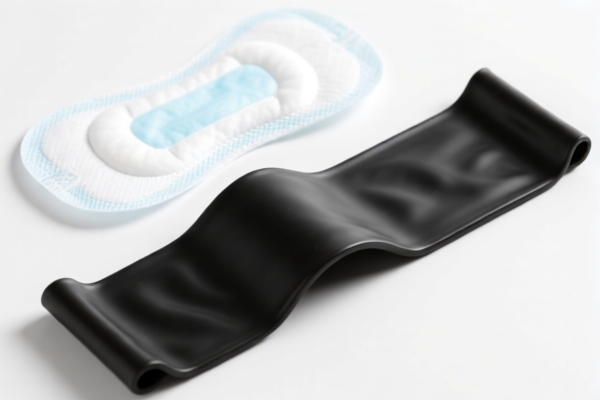
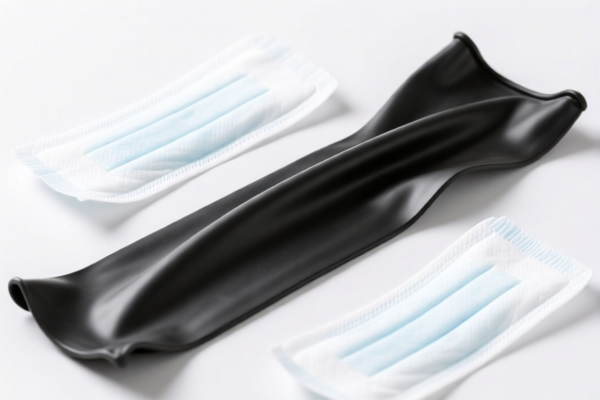
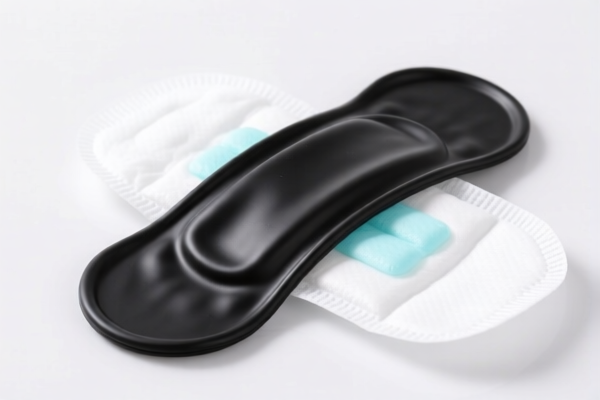
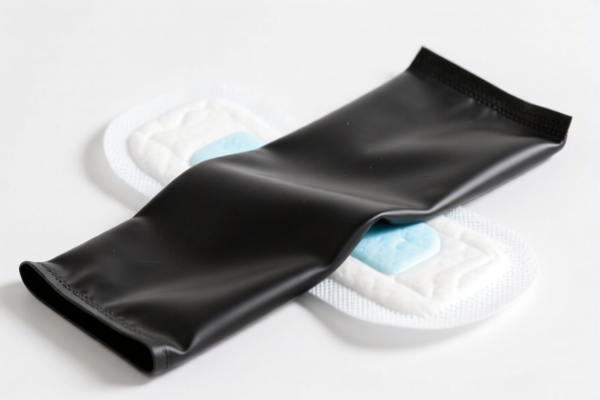
AI Analysis
🛡️ Industrial Rubber Products (Industrial Rubber Products)
🌐 HS Code Reference & Customs Clearance Guide | 2026 Latest Tariff Analysis | Professional Level Clearance Strategy
📌 I. Product Definition & Classification: What Exactly Are "Industrial Rubber Products"?
"Industrial Rubber Products" is a broad term referring to goods manufactured from vulcanized rubber, typically used in manufacturing, machinery, automotive, or construction sectors. In international trade, classification depends heavily on the specific form, function, and material composition. Since the user input is generic ("Industrial Rubber Products"), we rely on material consistency (Vulcanized Rubber) and default matching principles for items without explicit shape or use specifications.
⚠️ Key Classification Logic:
- If the material is Vulcanized Rubber and the specific use is unclear, customs often default to "Other" (n.e.s.) categories within Chapter 40.
- Different Subheadings apply based on whether the item is classified as "Sanitary/Pharmaceutical goods" (4014), "Other articles of vulcanized rubber" (4016), or "Gloves/Protective gear" (4015).
- US Trade Policies (Section 301 & IEEPA) significantly impact duties for Chinese-origin goods, regardless of the specific subheading.
📦 II. HS Code Classification Details (Based on Provided Data)
| HS Code | Product Description | Matching Logic (Why this code?) | Total Duty (China Origin) |
|---|---|---|---|
4014.90.10.00 |
Other sanitary or hygienic articles, and appliances, of rubber | Material Match: Rubber matches vulcanized rubber. Default Rule: No conflict in shape/use allows inference into this "other" category. | 10.0% |
4016.99.60.50 |
Other articles of vulcanized rubber other than hard rubber | Material Match: Explicitly includes "Rubber". Default Rule: Fits the "Other" umbrella when specific use is vague. | 37.5% |
4016.99.05.00 |
Other articles of vulcanized rubber other than hard rubber | Material Match: Rubber matches vulcanized rubber. Default Rule: No material conflict → defaults to "Other/n.e.s." | 20.9% |
4014.90.50.00 |
Other sanitary or hygienic articles, and appliances, of rubber | Material Match: "Industrial Rubber Products" matches "Made of Vulcanized Rubber". Default Rule: Belongs to "Other" category; no obvious conflict. | 14.2% |
4015.12.90.00 |
Gloves, gauntlets and mittens (other than surgical) | Material Match: Rubber matches vulcanized rubber. Default Rule: Since it's an "Other" category and no material conflict exists, it is tentatively matched. | 49.0% |
🔍 Important Note:
- The classification relies on Vulcanized Rubber compatibility.
- "Industrial Rubber Products" is too generic; the actual HS Code depends on the specific physical form (e.g., gloves, seals, mats, gaskets).
- The provided data uses default matching rules due to lack of specific use description.
💰 III. 2026 Tariff Rate Breakdown (Including Surcharges & Policy Add-ons)
✅ Applicable Country: United States (US)
✅ Country of Origin: China (CN)
✅ Effective Date: November 10, 2025 onwards (and subsequent imports)
🎯 1. 4014.90.10.00 —— Rubber Sanitary/Hygienic Articles (Other)
| Item | Details |
|---|---|
| Base Duty Rate | 0.0% |
| Section 301 Surcharge | 0.0% |
| IEEPA Surcharge (Section 122) | +10.0% |
| Total Effective Rate | 10.0% |
| Tax Calculation | CIF Value × 10.0% |
| De Minimis Exemption | ❌ Not Applicable (Subject to strict inspection) |
| Legal Basis Path | IEEPA:9903.01.25 (10% China Surtax) → USITC:4014.90.10.00 |
📌 Explanation:
- This is the lowest duty rate among the options.
- The 10% IEEPA surcharge applies to most Chinese rubber goods under recent emergency powers.
- No additional Section 301 tariffs are listed here, making it the most cost-effective classification if applicable.
🎯 2. 4016.99.60.50 —— Other Articles of Vulcanized Rubber
| Item | Details |
|---|---|
| Base Duty Rate | 2.5% |
| Section 301 Surcharge | +25.0% |
| IEEPA Surcharge (Section 122) | +10.0% |
| Total Effective Rate | 37.5% |
| Tax Calculation | CIF Value × 37.5% |
| De Minimis Exemption | ❌ Not Applicable |
| Legal Basis Path | IEEPA:9903.01.25 → USITC:4016.99.60.50 → FOOTNOTE:301.88 |
📌 Explanation:
- High duty due to Section 301 (25%) + IEEPA (10%) + Base (2.5%).
- This classification is risky for cost-sensitive shipments unless the product strictly fits this "Other" category and no better fit exists.
🎯 3. 4016.99.05.00 —— Other Articles of Vulcanized Rubber (Other)
| Item | Details |
|---|---|
| Base Duty Rate | 3.4% |
| Section 301 Surcharge | +7.5% |
| IEEPA Surcharge (Section 122) | +10.0% |
| Total Effective Rate | 20.9% |
| Tax Calculation | CIF Value × 20.9% |
| De Minimis Exemption | ❌ Not Applicable |
| Legal Basis Path | IEEPA:9903.01.25 → USITC:4016.99.05.00 |
📌 Explanation:
- Moderate duty rate.
- Section 301 surcharge is lower (7.5%) compared to4016.99.60.50, making this a more favorable option if the product falls here.
🎯 4. 4014.90.50.00 —— Rubber Sanitary/Hygienic Articles (Other)
| Item | Details |
|---|---|
| Base Duty Rate | 4.2% |
| Section 301 Surcharge | 0.0% |
| IEEPA Surcharge (Section 122) | +10.0% |
| Total Effective Rate | 14.2% |
| Tax Calculation | CIF Value × 14.2% |
| De Minimis Exemption | ❌ Not Applicable |
| Legal Basis Path | IEEPA:9903.01.25 → USITC:4014.90.50.00 |
📌 Explanation:
- Another low-duty option.
- Like4014.90.10.00, it has 0% Section 301 surcharge, only the 10% IEEPA tax.
- Ideal if the product can be argued as "sanitary/hygienic articles" (e.g., rubber mats, gloves for hygiene).
🎯 5. 4015.12.90.00 —— Gloves/Gauntlets/Mittens (Other)
| Item | Details |
|---|---|
| Base Duty Rate | 14.0% |
| Section 301 Surcharge | +25.0% |
| IEEPA Surcharge (Section 122) | +10.0% |
| Total Effective Rate | 49.0% |
| Tax Calculation | CIF Value × 49.0% |
| De Minimis Exemption | ❌ Not Applicable |
| Legal Basis Path | IEEPA:9903.01.25 → USITC:4015.12.90.00 |
📌 Explanation:
- Highest duty rate in the list.
- Applies only if the product is specifically gloves or protective handwear.
- Avoid this classification unless the product is clearly gloves, as the 49% total tax is very high.
🛠️ IV. Customs Clearance Practical Advice (Avoiding Pitfalls)
✅ 1. Required Documentation Checklist
| Document | Required? | Notes |
|---|---|---|
| ✅ Product Specification Sheet | ✔️ | Must detail material (Vulcanized Rubber), hardness, thickness, and intended use. |
| ✅ Material Safety Data Sheet (MSDS) | ✔️ | Proves rubber composition and chemical safety. |
| ✅ Product Photos (Clear & Labeled) | ✔️ | Show overall shape, markings, and packaging. Critical for distinguishing from "Gloves" (4015) vs. "Other" (4016). |
| ✅ Commercial Invoice | ✔️ | Must state "Industrial Rubber Products" AND specify material: "100% Vulcanized Rubber". |
| ✅ Packing List | ✔️ | List items individually to avoid "mixed" shipment issues. |
| ✅ Certificate of Origin (CO) | ✔️ | Essential for determining applicability of IEEPA tariffs. |
✅ 2. Declaration Strategy (Key Tips)
🔥 “Be Specific, Avoid Generic, Prove the Form!”
| Scenario | Correct Declaration | Wrong Declaration | Consequence |
|---|---|---|---|
| Generic Input | "Industrial Rubber Gaskets, Vulcanized, for Machinery" | "Industrial Rubber Products" | Risk of misclassification → Audit & Penalty |
| Gloves | "Rubber Protective Gloves, Industrial Grade" | "Rubber Products" | High risk of 4015.12.90.00 (49% Duty) |
| Mats/Flooring | "Rubber Flooring Mats, Vulcanized, Industrial Use" | "Rubber Products" | Should be 4016.99.05.00 or similar |
| Seals/Gaskets | "Vulcanized Rubber Seals, O-Rings, Industrial" | "Rubber Parts" | Likely 4016.99.60.50 (37.5%) or 4016.99.05.00 (20.9%) |
📌 Tip:
- If the product is gloves, expect 49% duty.
- If the product is non-glove industrial parts (seals, mats, gaskets), aim for4016.99.05.00(20.9%) or4014.90.50.00(14.2%) if applicable.
-4014.90.10.00(10%) is the best-case scenario if the item can be classified as "sanitary/hygienic" (e.g., rubber mats for healthcare/food processing).
✅ 3. Special Considerations
| Situation | Recommendation |
|---|---|
| Unclear Use | Provide technical drawings or usage examples to justify a lower-duty "Other" category (e.g., 4016 vs. 4015). |
| Mixed Shipments | Do not mix gloves with other rubber parts. Separate declarations avoid automatic classification of the entire shipment as "Gloves". |
| IEEPA Compliance | Ensure the Country of Origin is clearly marked. If assembled in a third country, provide proof to potentially exempt from IEEPA 10% surcharge. |
| Pre-Ruling | Apply for an Advance Ruling from CBP if the product is ambiguous. This prevents post-clearance audits and penalties. |
🌍 V. Global Market Comparison (2026)
| Market | Recommended HS Code | Duty Rate | Notes |
|---|---|---|---|
| 🇺🇸 USA | 4014.90.10.00 |
10.0% | Lowest duty. Avoid 4015.12.90.00 (49%). |
| 🇨🇳 China | 4016.99.00.00 |
Varies | Domestic trade: No IEEPA. Standard tariff applies. |
| 🇪🇺 EU | 4016.99.00 |
0-6.5% | No Section 301. CE marking required. |
| 🇬🇧 UK | 4016.99.00 |
0-6.5% | Post-Brexit rules. No IEEPA surcharge. |
| 🇨🇦 Canada | 4016.99.99.90 |
0-5% | USMCA may apply if originating in North America. |
📌 Conclusion:
- USA is the most challenging market due to IEEPA (10%) + Section 301 (0-25%).
- Strategy: Classify away from "Gloves" (4015) to save 28-39% in duties. Aim for4014.90.10.00(10%) or4016.99.05.00(20.9%).
📌 VI. Common Mistakes & Pitfalls (Lessons Learned)
❌ Mistake 1: Declaring "Industrial Rubber Products" without specifying form.
👉 Result: CBP may default to the highest-risk category (4015.12.90.00 → 49%) or issue a rejection.
👉 Fix: Specify "Rubber Gaskets," "Rubber Mats," etc.
❌ Mistake 2: Ignoring IEEPA 10% surcharge.
👉 Result: Underpayment of duties → Penalties & Interest.
👉 Fix: Always include 10% IEEPA in cost calculations for China-origin goods.
❌ Mistake 3: Mixing Gloves with Other Rubber Parts.
👉 Result: Entire shipment may be taxed at 49%.
👉 Fix: Separate gloves into distinct shipments or clearly separated lots in documentation.
✅ Correct Approach:
"Vulcanized Rubber Seals, Industrial Grade, Model XYZ, 100% Rubber, Not Gloves, Not Surgical"
🎯 VII. Conclusion: Precision Saves Money!
🎯 Remember the Golden Rule:
🔹 "Generic Name = High Risk. Specific Form = Lower Duty."
🔹 "Avoid 'Gloves' (49%). Aim for 'Other' (10-20%). Check IEEPA (10%)."
🔹 "Documentation is Key: Specs, Photos, and Material Proof."
📌 Pro Tip:
If your product is not made in China, IEEPA 10% may not apply. Check origin rules carefully.
For high-value industrial parts, consider CBP Advance Ruling to lock in the 10% or 14.2% rate.
📣 Action Plan:
📞 Consult a Customs Broker + Provide Detailed Specs + Apply for Pre-Ruling
🚀 Optimize Your HS Code, Reduce Duties, and Streamline Clearance!
✨ Professional Clearance Starts with Accurate Classification!
💼 Every Percent of Duty Saved is Profit Gained!
Customer Reviews
About HS Code Classification
The Harmonized System (HS) is an internationally standardized nomenclature developed by the World Customs Organization (WCO) to classify traded products. Over 200 countries use the HS system as the basis for customs tariffs, trade statistics, and import/export regulations.
Each HS code follows a hierarchical structure:
- Chapter (2 digits) — Broad category of goods (e.g., Chapter 84: Machinery and Mechanical Appliances)
- Heading (4 digits) — More specific grouping within the chapter
- Subheading (6 digits) — Internationally standardized breakdown, used by all WCO member countries
- National subdivisions (8-10 digits) — Country-specific extensions for further classification, such as US HTSUS 10-digit codes
Correct HS code classification is essential for smooth customs clearance, accurate duty payment, and compliance with trade regulations. Misclassification can lead to customs delays, overpayment of duties, or penalties.
When importing from CN to US, the applicable tariff rates may include:
- Most-Favored-Nation (MFN) rate — The standard duty rate applied to WTO members
- General rate — Applied to countries without trade agreements
- Trade remedy duties — Additional tariffs such as Section 301 (anti-dumping), Section 232 (national security), or countervailing duties
The information provided on this page is for reference purposes only. For official classification, please consult with your local customs authority or a licensed customs broker.