Industrial Short Plastic Pipe
CN → US| HS Code | Tariff Rate | Origin | Destination | Doc |
|---|---|---|---|---|
| 3917290090 | 38.1% | CN | US | Official Doc |
| 3926909987 | 22.8% | CN | US | Official Doc |
| 3926909989 | 22.8% | CN | US | Official Doc |
| 3917290050 | 38.1% | CN | US | Official Doc |
| 3916903000 | 41.5% | CN | US | Official Doc |
| 3916905000 | 40.8% | CN | US | Official Doc |
Product Images

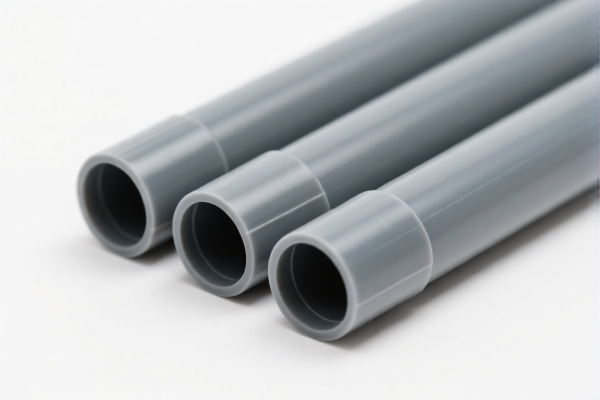
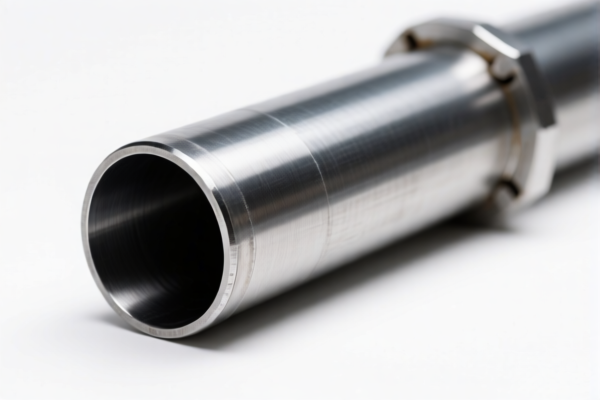
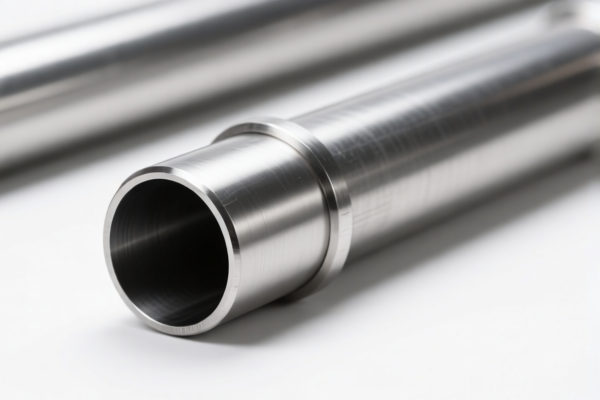
AI Analysis
🖌️ Industrial Short Plastic Pipe
🌐 HS Code Reference & Customs Clearance Guide | 2026 Latest Tariff Analysis | Professional Entry Strategy
📌 I. Product Definition & Classification Logic: Is It a "Tube" or a "General Article"?
In international trade, "Industrial Short Plastic Pipes" are often misclassified due to ambiguity between rigid tubing (Chapter 3917) and general plastic articles (Chapter 3926), or plastic rods (Chapter 3916). The classification depends heavily on material rigidity, length (specifically <200mm), and specific use (e.g., electrical conduit vs. general plumbing).
⚠️ Key Classification Logic:
- Rigid Pipes/Tubes: If the plastic is rigid and used for conveying fluids/gases, it falls under 3917.
- Short Pipes (<200mm): Even if rigid, short lengths may be interpreted as "rods/sticks/profiles" (3916) or "general articles" (3926) depending on the specific shape and lack of standard pipe dimensions.
- Electrical Conduit Conflict: If intended for wiring, it must strictly adhere to conduit definitions; otherwise, it defaults to general plastic goods.
📦 II. HS Code Classification Details (Based on Provided Data)
We have identified 6 potential HS Codes from the data, ranging from high-tariff rigid tubes to lower-tariff general articles.
| HS Code | Product Description & Logic | Tax Rate | Key Classification Notes |
|---|---|---|---|
| 3917.29.00.90 | Plastic Rigid Pipe (Long/Unspecified Length) | 38.1% | Fits rigid pipe logic. Length not specified, defaults to "other" category. High tariff due to 301/122 duties. |
| 3926.90.99.87 | Plastic Short Pipe (General Article) | 22.8% | "Short pipe"形态 with no electrical conduit conflict. Fits the "catch-all" rule for general plastic articles. Lower Tax Option. |
| 3926.90.99.89 | Plastic General Article | 22.8% | Direct material match. Belongs to the sub-category of plastic articles without material conflict. Lower Tax Option. |
| 3917.29.00.50 | Plastic Rigid Pipe (Short, <200mm) | 38.1% | Explicitly defines "short pipe" as <200mm. Still classified as "Rigid Pipe" despite length. High Tax Option. |
| 3916.90.30.00 | Plastic Rods/Sticks/Profiles (Variant) | 41.5% | Short pipe viewed as a variant of rods/sticks/profiles. Fits "other" category inference. Highest Tax Option. |
| 3916.90.50.00 | Plastic Rods/Sticks/Profiles (Other) | 40.8% | Tube form fits rods/sticks/profiles category. Fits the "other plastic articles" catch-all. Highest Tax Option. |
🔍 Critical Observation:
- The Tariff Difference is stark: 22.8% (Chapter 3926/3916 general articles) vs. 38.1%-41.5% (Chapter 3917/3916 rigid pipes/rods).
- The 122 Clause Tariff (10%) and Section 301 Tariff (25% or 7.5%) are applied on top of base rates, making accurate classification crucial for cost control.
💰 III. 2026 Latest Tariff Rate Breakdown (Detailed Tax Clauses)
✅ Applicable Country: United States (US)
✅ Origin: China (CN)
✅ Effective Date: Current policies include Section 301 and Section 122 duties.
🎯 1. Low-Tariff Path: 3926.90.99.87 & 3926.90.99.89 (General Plastic Articles)
| Item | Content |
|---|---|
| Base Tariff | 5.3% |
| Section 301 Additional Tariff | +7.5% (Note: Data specifies 7.5%, likely reflecting specific exclusion or tiered rate for this sub-category) |
| Section 122 Clause Tariff | +10.0% |
| Total Effective Rate | 22.8% |
| Tax Calculation | CIF Value × 22.8% |
| De Minimis Exemption | ❌ Not Applicable (Standard for most industrial goods from China under current trade policies) |
| Legal Basis | Base Rate + USITC Section 301 Footnotes + IEEPA Section 122 |
📌 Explanation:
- This classification treats the "short pipe" as a general plastic article rather than a specialized conduit or long rigid pipe.
- The 7.5% Section 301 rate is significantly lower than the 25% seen in other categories, suggesting this specific sub-category may have different tariff lists or exclusions.
- Cost Saving: Choosing this over3917.29.00.50saves 15.3% (38.1% - 22.8%).
🎯 2. High-Tariff Path A: 3917.29.00.90 & 3917.29.00.50 (Rigid Plastic Pipes)
| Item | Content |
|---|---|
| Base Tariff | 3.1% |
| Section 301 Additional Tariff | +25.0% (Standard high tier for rigid pipes/conduits) |
| Section 122 Clause Tariff | +10.0% |
| Total Effective Rate | 38.1% |
| Tax Calculation | CIF Value × 38.1% |
| De Minimis Exemption | ❌ Not Applicable |
| Legal Basis | IEEPA:9903.01.25 → USITC:3917.29.00.50/90 → FOOTNOTE:9903.88.01 |
📌 Explanation:
- If the pipe is deemed rigid and intended for fluid/gas transport or standard piping systems, it falls here.
- Even for "short pipes" (<200mm), if the material property is rigid, customs may enforce this higher rate (3917.29.00.50).
- Warning: Do not under-declare "short pipes" as general articles if they meet the physical definition of rigid pipes to avoid penalties.
🎯 3. High-Tariff Path B: 3916.90.30.00 & 3916.90.50.00 (Plastic Rods/Profiles)
| Item | Content |
|---|---|
| Base Tariff | 5.8% - 6.5% |
| Section 301 Additional Tariff | +25.0% |
| Section 122 Clause Tariff | +10.0% |
| Total Effective Rate | 40.8% - 41.5% |
| Tax Calculation | CIF Value × ~41% |
| De Minimis Exemption | ❌ Not Applicable |
📌 Explanation:
- This classification is risky. If the "short pipe" is interpreted as a solid rod, stick, or profile (rather than a hollow tube), it falls here.
- This is the most expensive category. Avoid this by ensuring the "hollow" nature of the pipe is clearly documented.
🛠️ IV. Customs Clearance Practical Advice (Avoiding Pitfalls)
✅ 1. Documentation Checklist (Critical)
| Document | Requirement | Purpose |
|---|---|---|
| Product Specifications | Must clearly state: Hollow vs. Solid, Inner/Outer Diameter, Material Type (PVC, PE, etc.), Length | To prove it is a "Tube/Pipe" and not a "Rod" (3916) or "General Article" (3926). |
| Usage Description | Specify: "Industrial Short Plastic Pipe for [Fluid Conveyance/Structural Support/etc.]" | To justify 3917 (Rigid Pipe) or 3926 (General Article). Avoid "Electrical Conduit" unless certified, as it triggers stricter rules. |
| Photos/Drawings | Clear cross-section showing hollow center | Crucial to distinguish from 3916 (Rods/Sticks) which are solid or profile-based. |
| Commercial Invoice | Describe as "Plastic Short Pipe" or "Plastic Tube Section" | Avoid vague terms like "Plastic Part" which may trigger generic high tariffs. |
✅ 2. Classification Strategy: How to Choose?
🔥 "Shape Defines Category, Length Defines Sub-category, Use Defines Tax!"
| Scenario | Recommended HS Code | Why? |
|---|---|---|
| Hollow, Rigid, Used for Fluids | 3917.29.00.50 (38.1%) |
Meets definition of "Rigid Pipe" regardless of length. |
| Hollow, Short (<200mm), General Use | 3926.90.99.87 (22.8%) |
Best Cost Option. Classified as general plastic article to avoid rigid pipe strictures. Requires clear non-conduit intent. |
| Solid or Profile-like Short Plastic | 3916.90.50.00 (40.8%) |
Avoid. Only use if the product is not truly a "pipe" (e.g., solid rod). |
| Uncertain/Borderline | 3926.90.99.89 (22.8%) |
Safe "Catch-all" for plastic articles if specific pipe classification is disputed. |
✅ 3. Special Cases & Warnings
| Situation | Handling Advice |
|---|---|
| Intended for Electrical Wiring | Danger Zone. If it looks like electrical conduit, customs may force 3917 or specific conduit codes. Ensure it is NOT certified/standardized for electrical use to avoid stricter scrutiny. |
| Length Exactly <200mm | This is a key threshold. Short pipes are more likely to be classified as "General Articles" (3926) or "Rods" (3916). Use 3926 for lower tax if legally defensible. |
| Material Change | If PVC vs. PE, ensure the material matches the HS Code description. 3926 covers "other plastic articles" broadly. |
| Pre-Ruling Application | For large volumes, apply for a US CBP Binding Ruling to lock in the 3926.90.99.87 classification. This protects against future audits. |
🌍 V. Global Market Clearance Comparison (2026)
| Country/Region | Recommended HS Code | Tariff (China Origin) | Certification | Notes |
|---|---|---|---|---|
| 🇺🇸 USA | 3926.90.99.87 |
22.8% | No specific | Target Classification. Avoid 3917 (38.1%) if possible. |
| 🇺🇸 USA | 3917.29.00.50 |
38.1% | N/A | High risk. Use only if product is clearly a long rigid pipe. |
| 🇨🇳 China | 3917 or 3926 |
5-8% | N/A | Lower base rates. No 301/122 duties. |
| 🇪🇺 EU | 3917 or 3926 |
0-3.5% | REACH | Generally lower tariffs, but strict REACH compliance for plastics. |
| 🇬🇧 UK | 3917 or 3926 |
0-3.5% | UKCA | Post-Brexit rules similar to EU but separate certification. |
📌 Conclusion:
- USA is the primary cost driver. The difference between 22.8% and 38.1% is significant for bulk industrial shipments.
- Strategy: Argue for3926.90.99.87(General Plastic Article) based on short length and non-conduit usage, provided the product is not standard rigid piping.
📌 VI. Common Errors & Pitfalls (Lessons Learned)
❌ Error 1: Classifying short hollow pipes as "Plastic Rods" (3916)
👉 Consequence: Tariff jumps to 40.8-41.5%.
👉 Fix: Ensure documentation emphasizes "Hollow Tube" structure, not solid profiles.
❌ Error 2: Declaring "Rigid Pipes" (3917) for short, general-use plastic tubes
👉 Consequence: Paying 38.1% instead of 22.8%.
👉 Fix: If the pipe is short (<200mm) and not used for standard fluid systems, classify under 3926 (General Article) to save 15.3%.
❌ Error 3: Ignoring Section 122 & 301 Details
👉 Consequence: Miscalculating total landed cost.
👉 Fix: Always include +10% (122 Clause) and +7.5%/25% (301) in cost models.
❌ Error 4: Using Vague Descriptions like "Plastic Fitting"
👉 Consequence: Customs may assign the highest applicable rate or hold shipment for inspection.
👉 Fix: Use precise terms: "Industrial Short Plastic Pipe, Hollow, [Material], [Length]".
✅ Correct Practice:
"Short Hollow Plastic Pipe, <200mm, PVC, General Industrial Use, Not for Electrical Conduit" → Classify as
3926.90.99.87(22.8%)
🎯 VII. Conclusion: Professional Classification, Cost Efficiency!
🎯 Key Takeaway:
🔹 "Short Pipes Can Be General Articles!" – Don't automatically default to
3917(Rigid Pipe).
🔹 "Check the Length and Use!" – <200mm and non-conduit use are your allies for lower tariffs.
🔹 "22.8% vs 38.1%" – A 15.3% savings is huge. Classify correctly to protect margins.
📌 Pro Tip:
If your short plastic pipes are standardized rigid pipes used for fluid transport, you MUST use 3917 (38.1%). Do not misdeclare to avoid penalties. However, for general structural short plastic tubes, 3926 (22.8%) is the strategic choice.
📣 Action Plan:
1. Audit Product Specs: Confirm length (<200mm) and hollow structure.
2. Define End Use: Ensure it is NOT electrical conduit or standard plumbing pipe.
3. Apply for Pre-Ruling: Lock in 3926.90.99.87 with US CBP if possible.
4. Optimize Documentation: Highlight "General Purpose" and "Short Length" on invoices.
✨ Professional Clearance Starts with Accurate Classification!
💼 Every 1.3% of savings in tariff is profit returned to your bottom line!
Customer Reviews
About HS Code Classification
The Harmonized System (HS) is an internationally standardized nomenclature developed by the World Customs Organization (WCO) to classify traded products. Over 200 countries use the HS system as the basis for customs tariffs, trade statistics, and import/export regulations.
Each HS code follows a hierarchical structure:
- Chapter (2 digits) — Broad category of goods (e.g., Chapter 84: Machinery and Mechanical Appliances)
- Heading (4 digits) — More specific grouping within the chapter
- Subheading (6 digits) — Internationally standardized breakdown, used by all WCO member countries
- National subdivisions (8-10 digits) — Country-specific extensions for further classification, such as US HTSUS 10-digit codes
Correct HS code classification is essential for smooth customs clearance, accurate duty payment, and compliance with trade regulations. Misclassification can lead to customs delays, overpayment of duties, or penalties.
When importing from CN to US, the applicable tariff rates may include:
- Most-Favored-Nation (MFN) rate — The standard duty rate applied to WTO members
- General rate — Applied to countries without trade agreements
- Trade remedy duties — Additional tariffs such as Section 301 (anti-dumping), Section 232 (national security), or countervailing duties
The information provided on this page is for reference purposes only. For official classification, please consult with your local customs authority or a licensed customs broker.