Industrial Solvent with Aromatic Modifiers
CN → US| HS Code | Tariff Rate | Origin | Destination | Doc |
|---|---|---|---|---|
| 3814001000 | 41.5% | CN | US | Official Doc |
| 3814002000 | 41.5% | CN | US | Official Doc |
| 2902903050 | 35.0% | CN | US | Official Doc |
| 3824992900 | 41.5% | CN | US | Official Doc |
| 3824992100 | 35.0% | CN | US | Official Doc |
Product Images
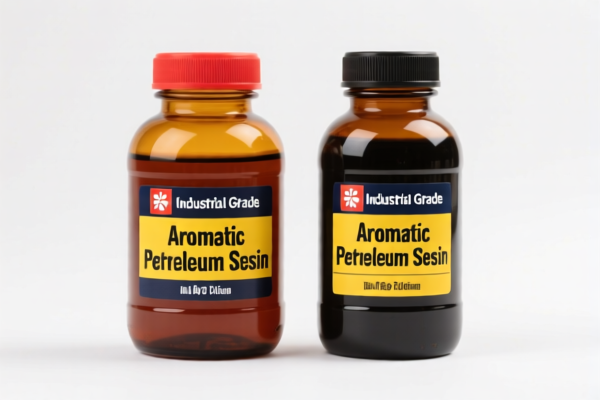
AI Analysis
🧪 Industrial Solvent with Aromatic Modifiers
🌐 HS Code Reference & Customs Clearance Guide | 2026 Latest Tariff Analysis | Professional Compliance Strategy
📌 I. Product Definition & Classification: Do You Truly Understand "Aromatic Industrial Solvents"?
Industrial solvents with aromatic modifiers are complex chemical mixtures primarily used as degreasers, paint strippers, and cleaning agents for industrial machinery. The key differentiator in customs classification is the composition of aromatic hydrocarbons and the chemical nature of the solvent base.
Aromatic-Heavy Preparations (Preparations):
If the product is a mixture dominated by non-specific organic solvents but contains 5% or more aromatic substances (like toluene, xylene), it is generally classified as a chemical preparation.
Specific Chemical Compounds:
If the solvent component is primarily specific alkylbenzenes or other defined ring structures, it may be classified under Chapter 29 (Organic Chemicals) rather than Chapter 38.
⚠️ Key Distinction Point:
- If the product is a mixture/formulation used for cleaning/dissolving and contains ≥5% aromatic substances → Classified under 3814 or 3824.
- If the aromatic component constitutes >25% of the volume and is classified as a general solvent/diluent → Classified under 3814.20.
- If the primary aromatic ingredient is specifically identified as alkylbenzenes → Classified under 2902.
📦 II. HS Code Classification Details (2026 Latest Tariff Authority Comparison)
Based on the provided data structure, here are the possible classifications for "Industrial Solvent with Aromatic Modifiers" depending on specific composition and use:
| HS Code | Product Description | Applicable Scenario | Aromatic Content/Characteristics |
|---|---|---|---|
3814.00.10.00 |
Preparations containing aromatic solvents (Paint/Varnish Removers) | Industrial cleaners, paint strippers, degreasers | Contains ≥5% aromatic substances; specifically for removing paint/varnish. |
3814.00.20.00 |
Other preparations, organic solvents & diluents | General industrial cleaning, thinning agents | Contains >25% aromatic or modified aromatic substances; classified as organic solvents/diluents. |
2902.90.30.50 |
Other alkylbenzenes & polyalkylbenzenes | Solvents where the main component is chemically defined as alkylbenzene | Inferred to contain cyclic hydrocarbon components like alkylbenzene; classified under Organic Chemicals. |
3824.99.29.00 |
Other chemical products & preparations | Industrial cleaners not fitting 3814 or 3821-3823 | Contains ≥5% aromatic substances; classified as "Other" chemical preparations. |
3824.99.21.00 |
Chemical products for industrial processes | Specialized industrial cleaning agents | Contains ≥5% aromatic substances; classified as "Chemical Industry Related Preparations." |
🔍 Critical Reminder:
- 3814 vs. 3824: If the primary function is as a solvent/diluent and it contains high aromatic content, 3814 is preferred. If it is a specialized formulation/preparation that doesn't fit the definition of a pure solvent mixture, 3824 is used. - Chapter 29 (2902): Only apply if the product is essentially pure alkylbenzene or a specific compound, not a multi-component mixture. If it's a "solvent blend," Chapter 38 is almost always correct. - Thresholds: The difference between 5% and 25% aromatic content often dictates whether it falls under3814.00.10(lower concentration/preparation) or3814.00.20(higher concentration/solvent definition).
💰 III. 2026 Latest Tariff Rate Details (Including Surtaxes & Policy Add-ons)
✅ Applicable Country: United States (US)
✅ Country of Origin: China (CN)
✅ Effective Date: November 10, 2025 (and onwards)
All categories below are subject to the same surtax structure due to their origin and nature.
🎯 1. 3814.00.10.00 & 3814.00.20.00 —— Preparations Containing Aromatic Solvents
| Item | Content |
|---|---|
| Base Tariff | 6.5% (Ad Valorem) |
| Section 301 Surtax | +25.0% (USITC Footnote 9903.88.01) |
| IEEPA Surtax | +10.0% (Against China/HK products, effective Nov 10, 2025) |
| Total Tariff Rate | 41.5% |
| Tax Calculation | CIF Value × 41.5% |
| De Minimis Eligibility | ❌ NO (Denied due to surtaxes and chemical nature) |
| Legal Basis Path | IEEPA:9903.01.25 → IEEPA:9903.01.24 → USITC:3814.00.10.00/20.00 → FOOTNOTE:9903.88.01 |
📌 Explanation:
- The 6.5% base rate reflects the standard MFN tariff for chemical preparations.
- The +25% is the Section 301 tariff on Chinese chemical products.
- The +10% is the additional IEEPA tariff imposed in late 2025.
- Total 41.5% makes this a high-cost item for importers. Strategic sourcing or supply chain adjustments are highly recommended.
🎯 2. 2902.90.30.50 —— Other Alkylbenzenes
| Item | Content |
|---|---|
| Base Tariff | 0.0% |
| Section 301 Surtax | +25.0% |
| IEEPA Surtax | +10.0% |
| Total Tariff Rate | 35.0% |
| Tax Calculation | CIF Value × 35.0% |
| De Minimis Eligibility | ❌ NO |
| Legal Basis Path | IEEPA:9903.01.25 → IEEPA:9903.01.24 → USITC:2902.90.30.50 |
📌 Note:
- Even though the base rate is 0%, the surtaxes bring the total to 35%.
- This classification is only valid if the product is chemically defined as alkylbenzene. If it’s a mixture, this classification will be rejected by customs, leading to penalties.
🎯 3. 3824.99.29.00 & 3824.99.21.00 —— Other Chemical Preparations
A. 3824.99.29.00 (Other Chemical Products)
| Item | Content |
|---|---|
| Base Tariff | 6.5% |
| Section 301 Surtax | +25.0% |
| IEEPA Surtax | +10.0% |
| Total Tariff Rate | 41.5% |
| Tax Calculation | CIF Value × 41.5% |
| De Minimis Eligibility | ❌ NO |
B. 3824.99.21.00 (Chemical Industry Related Preparations)
| Item | Content |
|---|---|
| Base Tariff | 0.0% |
| Section 301 Surtax | +25.0% |
| IEEPA Surtax | +10.0% |
| Total Tariff Rate | 35.0% |
| Tax Calculation | CIF Value × 35.0% |
| De Minimis Eligibility | ❌ NO |
📌 Strategic Insight:
- If your product can be legally justified as a "Chemical Industry Related Preparation" (3824.99.21.00) rather than a general preparation (3824.99.29.00), you save 6.5% on the base tariff.
- However, the Surtaxes (35%) remain constant.
- Warning: Misclassification from 3824.99.21 to 3824.99.29 can lead to audits and back-taxes.
🛠️ IV. Customs Clearance Practical Advice (Real-World Pitfall Avoidance)
✅ 1. Required Documentation Checklist (All Mandatory)
| Document | Required | Purpose |
|---|---|---|
| ✅ MSDS (Safety Data Sheet) | ✔️ | CRITICAL. Must list exact percentage of aromatic hydrocarbons (e.g., Toluene, Xylene, Ethylbenzene). |
| ✅ Certificate of Analysis (COA) | ✔️ | Verifies chemical composition, confirming it meets the definition for 3814 vs 2902. |
| ✅ Product Label/Photos | ✔️ | Must show hazard symbols (flammable, toxic) and intended use (cleaner, degreaser). |
| ✅ Commercial Invoice | ✔️ | Must describe as "Industrial Cleaner" or "Solvent Blend," NOT just "Chemical." |
| ✅ Usage Statement | ✔️ | Explicitly state if it is a "Paint Remover" (for 3814.10) or "General Degreaser" (for 3814.20/3824). |
| ✅ Supply Chain Proof | ✔️ | If claiming non-China origin, full traceability documents are required to avoid IEEPA surtax. |
✅ 2. Declaration Strategy (Key Principles)
🔥 “Composition Dictates Code, Use Dictates Subheading, Origin Dictates Surtax!”
| Scenario | Correct Declaration Approach | Incorrect Practice |
|---|---|---|
| Paint Remover with >5% Aromatics | 3814.00.10.00 |
Declaring as "General Cleaner" → Risk of misclassification. |
| General Degreaser with >25% Aromatics | 3814.00.20.00 |
Declaring as "Paint Remover" → Wrong subheading. |
| Pure Alkylbenzene Solvent | 2902.90.30.50 |
Declaring as "Preparation" → Unnecessary 6.5% base tariff (if validly pure). |
| Multi-Component Industrial Cleaner | 3824.99.29.00 or 3824.99.21.00 |
Declaring as "Solvent" → If it’s a complex formulation, 3814 may be rejected. |
✅ 3. Special Cases & Risk Management
| Situation | Handling Advice |
|---|---|
| Aromatic Content Between 5%-25% | Verify if it’s a "preparation" (3814/3824) or if the aromatic is the main ingredient. If <25% and not for paint removal, 3814.10 might not apply; consider 3824. |
| OEM/Private Label Products | Provide the original manufacturer’s technical sheet. Customs may question the "Aromatic Modifier" claim without proof. |
| Mixed Containers (Solvents + Cleaners) | Declare each HS Code separately. Do not lump under the highest duty if items differ. |
| High Risk of Section 301 Audit | Since 3814 and 3824 are high-surtax categories, ensure the Product Name matches the HS description exactly (e.g., "Industrial Aromatic Solvent Cleaner"). |
🌍 V. Global Market Customs Comparison (2026 Latest)
| Country/Region | Recommended HS Code | Total Duty (China Origin) | Certification Requirements | Notes |
|---|---|---|---|---|
| 🇺🇸 USA | 3814.00.10.00 / 3814.00.20.00 |
41.5% | EPA Registration, SDS | High Barrier. Surtaxes are significant. |
| 🇨🇳 China | 3814.00.00.00 |
6.5% | CNCA Certification | No additional surtaxes. |
| 🇪🇺 EU | 3814.00.00 |
6.5% | REACH Registration | No Section 301/IEEPA equivalent. |
| 🇦🇺 Australia | 3814.00.00 |
5% | AICIS Registration | Moderate duty, lower than US. |
| 🇯🇵 Japan | 3814.00.00 |
6.0% | PRTR Notification | Stable low rates. |
📌 Conclusion:
- USA is the most expensive market for aromatic industrial solvents due to the combined Section 301 + IEEPA tariffs.
- EU/Asia markets offer significantly lower costs (~6%), making them attractive for re-export or local use.
- Supply Chain Strategy: Consider sourcing non-Chinese aromatic solvents (e.g., from Singapore, Malaysia, or EU) to bypass the 35-41.5% surtaxes.
📌 VI. Common Errors & Pitfall Guide (Lessons Learned)
❌ Error 1: Misclassifying "Aromatic Solvent" as "Non-Aromatic"
👉 Consequence: If the MSDS shows >5% aromatics, customs will reclassify to 3814/3824 + Surtaxes + Penalties.
❌ Error 2: Using "Chemical Mixture" as a generic description
👉 Consequence: Customs will request MSDS. If not provided, shipment will be held or returned.
❌ Error 3: Ignoring the "Paint Remover" vs. "General Cleaner" distinction
👉 Consequence: 3814.10 (Paint Remover) and 3814.20 (Other Solvents) have different base descriptions. Mislabeling can trigger audits.
❌ Error 4: Assuming "De Minimis" applies
👉 Consequence: Chemicals with surtaxes are explicitly excluded from the $800 de minimis threshold in the US. All duties apply.
✅ Correct Practice:
"Industrial Degreaser, Aromatic Solvent Blend, Toluene 15%, Xylene 10%, Other Hydrocarbons 75%, For Use in CNC Machine Maintenance"
🎯 VII. Conclusion: Professional Declaration, Cost Control, Risk Mitigation
🎯 Remember the Golden Rules:
🔹 "SDS is King: If it’s not on the MSDS, it doesn’t exist for Customs.
🔹 "Aromatics = Surtax: Any product with >5% aromatic hydrocarbons from China faces 35-41.5% total duty in the US.
🔹 "Code Match: Paint Remover ≠ General Solvent. Get the subheading right to avoid delays."
📌 Pro Tip:
If your aromatic solvent content is <5%, you might avoid Chapter 38 aromatic rules, but you must still declare the chemical composition accurately.
For US imports, pre-classification rulings are highly recommended for bulk shipments to avoid surprise 41.5% duties at the port.
📣 Immediate Action:
📞 Contact a licensed Customs Broker
📄 Prepare the latest SDS with exact aromatic percentages
🚀 Evaluate supply chain options to mitigate the 35-41.5% US tariff burden!
✨ Professional Customs Clearance Starts with Accurate Classification!
💼 Your Cost Efficiency Depends on Precision!
Customer Reviews
About HS Code Classification
The Harmonized System (HS) is an internationally standardized nomenclature developed by the World Customs Organization (WCO) to classify traded products. Over 200 countries use the HS system as the basis for customs tariffs, trade statistics, and import/export regulations.
Each HS code follows a hierarchical structure:
- Chapter (2 digits) — Broad category of goods (e.g., Chapter 84: Machinery and Mechanical Appliances)
- Heading (4 digits) — More specific grouping within the chapter
- Subheading (6 digits) — Internationally standardized breakdown, used by all WCO member countries
- National subdivisions (8-10 digits) — Country-specific extensions for further classification, such as US HTSUS 10-digit codes
Correct HS code classification is essential for smooth customs clearance, accurate duty payment, and compliance with trade regulations. Misclassification can lead to customs delays, overpayment of duties, or penalties.
When importing from CN to US, the applicable tariff rates may include:
- Most-Favored-Nation (MFN) rate — The standard duty rate applied to WTO members
- General rate — Applied to countries without trade agreements
- Trade remedy duties — Additional tariffs such as Section 301 (anti-dumping), Section 232 (national security), or countervailing duties
The information provided on this page is for reference purposes only. For official classification, please consult with your local customs authority or a licensed customs broker.