Industrial Spruce and Fir Timber
CN → US| HS Code | Tariff Rate | Origin | Destination | Doc |
|---|---|---|---|---|
| 4401110000 | 35.0% | CN | US | Official Doc |
| 4407120059 | 35.0% | CN | US | Official Doc |
| 4407120020 | 35.0% | CN | US | Official Doc |
| 4403240135 | 35.0% | CN | US | Official Doc |
| 4403230135 | 35.0% | CN | US | Official Doc |
Product Images
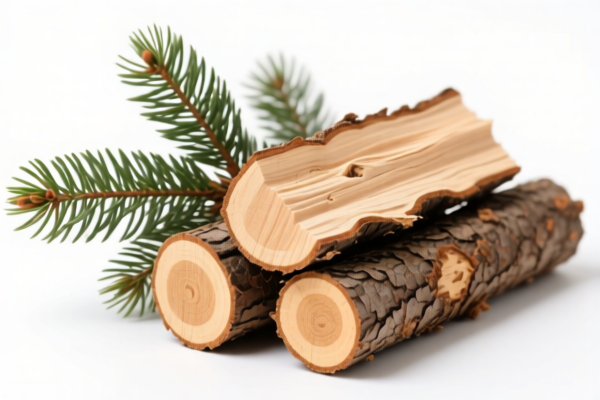
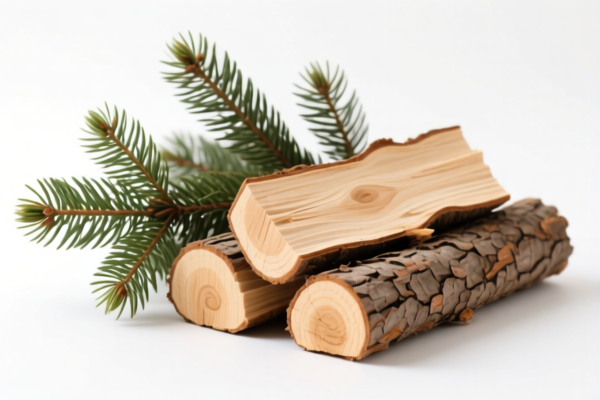
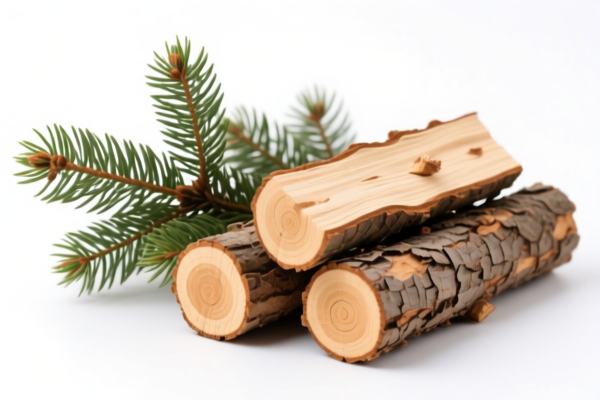
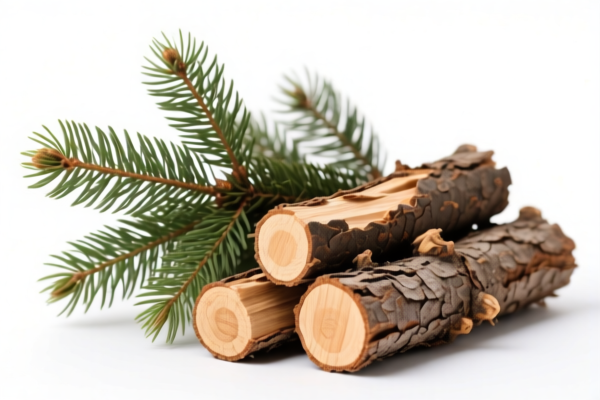
AI Analysis
🌲 Industrial Spruce & Fir Timber (Wood in the Rough / Sawn)
🌐 HS Code Reference & Customs Clearance Guide | 2026 Latest Tariff Analysis | Professional Entry Strategy
📌 Part I: Product Definition & Classification: Do You Really Understand "Spruce and Fir"?
Industrial Spruce and Fir Timber primarily refers to the raw wood of trees from the Picea (Spruce) and Abies (Fir) genera. In international trade, especially when importing into the United States, these materials are strictly regulated due to phytosanitary concerns and specific tariff classifications based on their physical form (raw logs vs. processed lumber).
The classification hinges on one critical factor: The Degree of Processing.
1. Raw Logs (Unprocessed):
Wood that is simply felled, stripped of bark, and cut to length, but not sawn, chipped, or mechanically worked. This is considered "Fuelwood" or "Raw Material" in certain contexts.
2. Sawn or Chipped Wood (Processed):
Wood that has been longitudinally sawn, chipped, or sliced to a certain thickness. This falls under the category of "Sawn Wood."
⚠️ Critical Distinction Point:
- If the wood is intact logs (cylindrical or roughly trimmed) → It may fall under 4401.11.00.00 (Fuelwood logs) or other raw wood codes depending on exact dimensions.
- If the wood is sawn, edged, or sliced → It falls under 4407 series or 4403 series (Treated/Sawn timber).
- Material Specificity: Must explicitly be Picea (Spruce) or Abies (Fir). Mixed softwoods may require different codes.
📦 Part II: HS Code Classification Details (2026 Latest Tariff Authority Mapping)
| HS Code | Product Description | Application Scenario | Processing State |
|---|---|---|---|
4401.11.00.00 |
Spruce and Fir wood, in the rough, whether or not decorticated or roughly squared (often classified as fuelwood logs if <20cm diameter) | Raw logs, firewood, rough-sawn material for biomass | ✅ Raw / Unprocessed |
4407.12.00.59 |
Spruce and fir wood, sawn or chipped lengthwise, sliced or peeled, being of a thickness exceeding 6 mm | Sawn lumber, planed boards, structural timber | ✅ Sawn / Processed |
4407.12.00.20 |
Spruce and fir wood, sawn or chipped, explicitly containing Spruce/Fir material | Standard construction lumber, framing studs | ✅ Sawn / Processed |
4403.24.01.35 |
Wood treated with paint, stain, creosote, etc. (Spruce/Fir) | Treated lumber for outdoor use, railway sleepers | ✅ Treated & Sawn |
4403.23.01.35 |
Wood treated otherwise than with paint, stain, creosote (Spruce/Fir) | Chemically treated wood, pressure-treated timber | ✅ Treated & Sawn |
🔍 Key Reminder:
- Raw Logs (4401) and Sawn Lumber (4407/4403) are treated differently by customs inspectors.
- Phytosanitary Certificates are mandatory for all wood products to prevent pest introduction (e.g., Emerald Ash Borer, Pine Wood Nematode).
- Section XVI Note: Do not confuse "Spruce/Fir" with generic "Softwood." Specific species matter for some subheadings.
💰 Part III: 2026 Latest Tariff Rate Breakdown (Including Add-ons & Policy Surcharges)
✅ Applicable Country: United States (US)
✅ Country of Origin: China (CN)
✅ Effective Date: November 10, 2025 onwards (for subsequent imports)
All items below share the same total tax burden due to current trade policies:
🎯 1. 4401.11.00.00 – Spruce & Fir, in the rough (Raw Logs/Fuelwood)
| Item | Content |
|---|---|
| Base Tariff Rate | 0.0% (ad valorem) |
| Section 301 Surcharge | +25.0% (Additional Tariff under USITC Footnote) |
| Section 122 Surcharge | +10.0% (Specific 122 Clause Tariff for certain wood products) |
| Total Effective Rate | 35.0% |
| Tax Calculation | CIF Value × 35% |
| De Minimis Exemption | ❌ Not Eligible (deny_de_minimis) |
| Legal Basis Path | Section 301: 9903.88.01 → Section 122: 9903.12 → USITC: 4401.11.00.00 |
📌 Explanation:
- Base Rate 0%: Wood in the rough often has a low base duty.
- Section 301 (+25%): Applied to many Chinese-origin goods.
- Section 122 (+10%): A specific surcharge applicable to certain wood products under current trade enforcement.
- Total 35%: This is a high tariff rate. Importers must factor this into landed cost calculations immediately.
🎯 2. 4407.12.00.59 & 4407.12.00.20 – Sawn Spruce & Fir (Processed Lumber)
| Item | Content |
|---|---|
| Base Tariff Rate | 0.0% |
| Section 301 Surcharge | +25.0% |
| Section 122 Surcharge | +10.0% |
| Total Effective Rate | 35.0% |
| Tax Calculation | CIF Value × 35% |
| De Minimis Exemption | ❌ Not Eligible |
| Legal Basis Path | Section 301: 9903.88.01 → Section 122: 9903.12 → USITC: 4407.12.00.00 |
📌 Note:
- Whether the wood is sawn (4407) or chipped/sliced, if it originates from China, it attracts the same 35% total tariff.
- No preference is given to "more processed" vs. "less processed" regarding the surcharge percentage in this specific 2026 policy window.
🎯 3. 4403.24.01.35 & 4403.23.01.35 – Treated Spruce & Fir
| Item | Content |
|---|---|
| Base Tariff Rate | 0.0% |
| Section 301 Surcharge | +25.0% |
| Section 122 Surcharge | +10.0% |
| Total Effective Rate | 35.0% |
| Tax Calculation | CIF Value × 35% |
| De Minimis Exemption | ❌ Not Eligible |
| Legal Basis Path | Section 301: 9903.88.01 → Section 122: 9903.12 → USITC: 4403.24.01.35 |
📌 Warning:
- Treated wood requires additional documentation (Chemical Composition, Treatment Method Certificate).
- Even though the base tariff is 0%, the 35% total burden remains unchanged.
🛠️ Part IV: Customs Clearance Practical Advice (Real-World Pitfall Avoidance)
✅ 1. Mandatory Documentation Checklist (Non-Negotiable)
| Document | Required? | Explanation |
|---|---|---|
| ✅ Phytosanitary Certificate | ✔️ | Issued by the country of origin's plant protection agency. Mandatory for all wood. |
| ✅ ISPM 15 Marking | ✔️ | Fumigated wood must bear the IPPC mark. |
| ✅ Commercial Invoice | ✔️ | Must clearly state: "Spruce and Fir," Species (if known), Dimensions, Quantity. |
| ✅ Packing List | ✔️ | Detail pallets, bundles, and total CBM. |
| ✅ Bill of Lading | ✔️ | Proof of shipment. |
| ✅ HTS Code Declaration | ✔️ | Explicitly list the 10-digit HS code (e.g., 4407.12.00.59). |
| ✅ Treatment Certificate | If 4403 |
If wood is chemically treated, provide proof of treatment method. |
✅ 2. Declaration Tips (Key Mantras)
🔥 "Species Clear, Form Defined, Phytosanitary Ready, 35% Tax Paid!"
| Scenario | Correct Declaration Approach | Wrong Approach |
|---|---|---|
| Raw Logs | Declare as 4401.11.00.00 + "Spruce/Fir in the rough" |
Calling it "Lumber" → Audit risk |
| Sawn Lumber | Declare as 4407.12.00.59 + "Sawn Spruce" |
Calling it "Raw Wood" → Misclassification |
| Treated Wood | Declare as 4403.23/24 + Treatment Details |
Omitting treatment type → Quarantine hold |
| Mixed Species | Separate by species if possible | Mixing "Softwood" generic → Rejection |
✅ 3. Special Situations Handling
| Situation | Handling Advice |
|---|---|
| OEM Custom Sizes | Provide technical drawings to prove dimensions. Avoid "generic" descriptions. |
| Wood with Bark | If bark is intact, it’s definitely 4401 (Raw). If debarked, confirm if still "in the rough." |
| High Moisture Content | May require additional fumigation. Ensure ISPM 15 compliance. |
| Destination: USA | Strict EPA & CBP checks. Expect delays if docs are missing. |
🌍 Part V: Global Market Comparison (2026 Latest)
| Country/Region | Recommended HS Code | Tariff (China Origin) | Certification Required | Notes |
|---|---|---|---|---|
| 🇺🇸 USA | 4407.12.00.59 (Sawn) |
35% (Total) | Phytosanitary + ISPM 15 | Highest burden due to 301+122 clauses |
| 🇨🇳 China | 4407.12.00.59 |
5% - 10% | None specific | No Section 301/122 |
| 🇪🇺 EU | 4407.12.00 |
0% (if FLEGT) | FLEGT License + EUTR | Strict illegal logging rules |
| 🇨🇦 Canada | 4407.12.00 |
0% (CUSMA) | Phytosanitary | Free trade under USMCA/CUSMA |
| 🇯🇵 Japan | 4407.12.00 |
2.6% | Phytosanitary | Moderate duty |
📌 Conclusion:
- The USA imposes a massive 35% tariff on Chinese Spruce/Fir timber due to Section 301 (25%) and Section 122 (10%).
- Alternatives: Consider sourcing from Canada (4407.12) or EU if tariffs are prohibitive.
- Compliance is Key: Failure to provide Phytosanitary Certificates results in shipment rejection or destruction.
📌 Part VI: Common Mistakes & Pitfalls (Lessons Learned)
❌ Mistake 1: Declaring "Sawn Wood" as "Raw Logs" to save on inspection time
👉 Consequence: CBP audit → Back taxes + Penalties + Delay
❌ Mistake 2: Ignoring Section 122 surcharge
👉 Consequence: Underpayment of 10% → 35% total vs. expected 25% → Surprise bill
❌ Mistake 3: Forgetting Phytosanitary Certificate
👉 Consequence: Shipment held at port → Demurrage charges + Re-export
❌ Mistake 4: Vague Description ("Wood Planks")
👉 Consequence: Customs cannot verify species → Rejection
✅ Correct Practice:
"Spruce (Picea abies) Lumber, Sawn, Dimensional, 2x4x8ft, ISPM 15 Fumigated, Origin: China"
🎯 Part VII: Conclusion: Precision Classification Saves Money!
🎯 Remember the Mantra:
🔹 "Raw vs. Sawn defines the Code."
🔹 "China Origin = 35% Total Tax (0% Base + 25% 301 + 10% 122)."
🔹 "No Phytosanitary Cert = No Entry."
📌 Pro Tip:
If your spruce/fir timber is sourced from Canada, Vietnam, or Malaysia, you may qualify for lower or zero tariffs (e.g., CUSMA for Canada).
Recommendation:
📞 Engage a licensed customs broker immediately.
📝 Apply for a Pre-Ruling (Binding Tariff Information) if uncertain.
🚀 Ensure smooth customs clearance, minimize costs, and maximize efficiency!
✨ Professional Customs Clearance Starts with Accurate Classification!
💼 Every percentage point matters in timber trade!
Customer Reviews
About HS Code Classification
The Harmonized System (HS) is an internationally standardized nomenclature developed by the World Customs Organization (WCO) to classify traded products. Over 200 countries use the HS system as the basis for customs tariffs, trade statistics, and import/export regulations.
Each HS code follows a hierarchical structure:
- Chapter (2 digits) — Broad category of goods (e.g., Chapter 84: Machinery and Mechanical Appliances)
- Heading (4 digits) — More specific grouping within the chapter
- Subheading (6 digits) — Internationally standardized breakdown, used by all WCO member countries
- National subdivisions (8-10 digits) — Country-specific extensions for further classification, such as US HTSUS 10-digit codes
Correct HS code classification is essential for smooth customs clearance, accurate duty payment, and compliance with trade regulations. Misclassification can lead to customs delays, overpayment of duties, or penalties.
When importing from CN to US, the applicable tariff rates may include:
- Most-Favored-Nation (MFN) rate — The standard duty rate applied to WTO members
- General rate — Applied to countries without trade agreements
- Trade remedy duties — Additional tariffs such as Section 301 (anti-dumping), Section 232 (national security), or countervailing duties
The information provided on this page is for reference purposes only. For official classification, please consult with your local customs authority or a licensed customs broker.